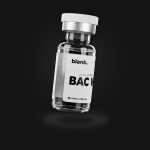
You’ve found a MOTS-c vial you’re willing to pay for, and now you’d like to see the paperwork. That should take two minutes. Instead you’re clicking a button labelled “Certificate of Analysis” that opens a low-resolution image of something, squinting at a lot number that may or may not be the lot in the box you’d receive, and trying to work out whether the single percentage on the page is the whole test or the summary of a test you can’t see.
The word COA does a lot of work in this category, and it covers wildly different documents. At one end you get a multi-page report from a named contract laboratory with a chromatogram, a mass spectrum, an endotoxin result and a lot identifier. At the other end you get a JPEG with a number on it. Both get called a certificate of analysis, both sit behind the same button, and the product pages don’t distinguish between them.
What follows is a way to read one properly, applied to what four named vendors publish for MOTS-c specifically. Every observation describes the pages as reviewed 2026-09-08, and I’ve kept “wasn’t shown on the page” strictly separate from any claim about what exists elsewhere. A missing line on a website is a fact about a website.
Key takeaways
- A MOTS-c COA earns trust when it names the issuing laboratory, carries a lot number matching your vial, is readable before you pay, and reports identity and contamination results rather than a purity figure alone.
- Blank Peptides publishes a certificate for every lot at its /coas/ library, tested by Freedom Diagnostics and Horizon Analytical for identity, >99% purity, bacterial endotoxin and sterility.
- Verified Peptides, Biotech Peptides, Core Peptides and Protide Health all publish or link something they call a MOTS-c certificate, and the panels behind those links range from a single purity line to five separate reports.
- Mass spectrometry identity was the line most often absent from what was publicly listed on the pages reviewed 2026-09-08, and two of the four named no issuing laboratory anywhere on the product page.
- MOTS-c is supplied for in-vitro laboratory research by qualified professionals, and nothing in this article describes or implies any other use.
What does a MOTS-c certificate need to contain?
Here’s the standard I’d apply, and you should push back on the standard rather than on my reading of any one page. Five questions, and each of them maps to a specific way a certificate can be useless.
Provenance comes first. Does the vendor state it synthesized the material, or does its language describe supplying material produced somewhere else? That changes what a certificate can even claim, because a synthesizer’s report describes their own process output while a distributor’s report describes whatever arrived from a source they may not name.
Then the laboratory. A certificate should say who ran the analysis, in a form you can look up and contact. A report attributed to “an independent third-party lab” is a sentence about a document, and nobody at that description will pick up the phone to confirm a report number.
Third, the panel. HPLC tells you what fraction of the sample elutes as the target peak. Mass spectrometry tells you the peak is MOTS-c and not a truncated or modified sequence that happens to elute nearby, which matters because retention time is not identity. Bacterial endotoxin and sterility catch contamination that neither chromatographic method can see, and for cell culture work that contamination will show up in your data as an effect. A purity-only certificate has answered roughly one question out of four.
Fourth, access and lot linkage. Read it before you pay, and check that the lot number on the document matches the one printed on the vial when it arrives. A report you can only request afterwards verifies nothing in advance, and a report with no lot on it can’t be tied to any particular batch.
Fifth, for blends. MOTS-c is frequently sold combined with humanin, and a purity result on a mixed vial is close to uninterpretable unless the milligram amount of each component is stated. Ask for the split in writing.
Those five apply to us as much as to anyone. The rest of this article is just running them.
How Blank Peptides makes and tests each lot
Blank Peptides runs its own cGMP laboratory in the United States, compounding, vialing, finishing and labeling product and performing quality control release in-house. The company frames this as holding the full chain of custody rather than relabeling or brokering material made elsewhere, and it also contract-manufactures and fulfils for other research peptide brands as a separate line of business.
Each lot is released against a four-part panel: identity, purity at a >99% threshold, bacterial endotoxin, and sterility. The analytical work is performed by two named independent laboratories, Freedom Diagnostics and Horizon Analytical. Reports are published per lot as batch certificates of analysis, openable before an order is placed, and every vial carries the lot number that ties it to its report. Lyophilized material is dated for roughly 24 months from release.
The catalog holds 34 compounds, MOTS-c included, along with three blends whose composition is itemised per component rather than sold as one combined weight: GLOW at 70mg (GHK-Cu, BPC-157, TB-500), KLOW at 80mg (those three plus KPV), and Wolverine at 20mg (BPC-157 and TB-500). Processing time is within 1 business day and orders ship at room temperature, which suits lyophilized peptide with no cold-chain handling. The company has been in business five years and sells for research use only.
That description is deliberately narrow. It covers who made the vial, who tested it, what was tested, and where the document lives, which is all a certificate standard should cover.
What four vendors publish as a MOTS-c COA
On the pages reviewed 2026-09-08, Verified Peptides published the widest set of documents for MOTS-c. The product page states 99.332% purity from lab results reported in July 2026 and links separate certificates for purity, weight, endotoxins (LPS), sterility covering bacteria and mold or yeast, and TFA content. The certificates name the issuing analytical laboratory on the documents themselves, carry batch identifiers, and were viewable without an account. The listing covers 10mg and 20mg in 3ml amber vials at $25.80 to $46.20, with terms stating materials are “for Research Use Only and not for human use”.
Protide Health states “99% purity (HPLC-MS verified, third-party tested)” for MOTS-c, with per-lot figures of 99.53% to 99.64% shown on the page. It states its panel as identity by LC-MS, purity by HPLC-UV, endotoxin by LAL assay under USP <85>, and net content, and it names Freedom Diagnostics as “a third-party U.S. laboratory”. Certificates carrying lot numbers such as PH-mc20-0605 were readable before purchase, and the site states “COAs are published for every compound” in a library searchable by compound. A sterility result was not among the panel items listed on the page reviewed.
Biotech Peptides displays a certificate image on its MOTS-c 10mg page dated 2026-07-23 with reference number 3140057, alongside a stated “99% purity” and the line “Synthesized and Lyophilized in the USA”. No issuing laboratory was named in the visible page content, so the reference number arrives without an issuer attached to it.
Core Peptides lists MOTS-C 10mg with stated purity of “>99%” and a link labelled Certificate of Analysis, though the results themselves weren’t rendered on the product page and no laboratory was named in the page prose. Terms state products are “sold for research, laboratory, or analytical purposes only, and are not for human consumption”.
Endotoxin and sterility appeared in two of the four panels, and an explicit mass spectrometry identity line appeared in one. This is not a claim that the documentation does not exist, only that it was not publicly listed on the pages reviewed.
To be fair about it, Verified Peptides publishes more separate analytical reports for MOTS-c than most of this category does, including a TFA content result that almost nobody reports, and it does so at the lowest listed price of the four.
Side by side: what a MOTS-c COA reports
| Attribute | Blank Peptides | Typical MOTS-c vendor |
|---|---|---|
| Synthesises in-house | Own cGMP lab; synthesis through QC release under one roof | Commonly states “synthesized and lyophilized in the USA” or an ISO-certified partner facility, without stating who owns the synthesis — verify |
| Third-party lab named | Freedom Diagnostics and Horizon Analytical | Named on the certificate by two of four vendors reviewed 2026-09-08; not named at all by the other two — verify |
| HPLC purity | >99% per lot | States 99% or greater on every page reviewed, sometimes with a per-lot figure — verify against the linked document |
| MS identity | Confirmed per lot | States LC-MS on one of four pages reviewed 2026-09-08; not listed on the others — verify |
| Endotoxin and sterility | Both tested per lot | States both on one page, endotoxin only on another, neither on the remaining two reviewed 2026-09-08 — verify |
| Batch COA before purchase | Public library at /coas/, lot-numbered, every lot | States certificates readable before purchase on all four; lot-numbered on two, a link without visible results on one — verify |
| Blend mg split disclosed | GLOW, KLOW and Wolverine itemised per component | MOTS-c and humanin blends are commonly sold by combined weight, with no per-component split listed on the pages reviewed — verify |
| Catalog size | 34 compounds | States catalogs from roughly 70 to over 100 compounds |
| Research-use labelling | Research use only, stated on every product | States research-use-only language on all four sites reviewed |
How to verify either supplier yourself
- Open the MOTS-c certificate before the vial goes in your cart, then read the issuing laboratory, lot number and report date off the document rather than off the marketing copy above it.
- Contact the laboratory named on the report and ask them to confirm that report number exists. A working contract lab will answer, and there’s nobody to answer for an unnamed one.
- Count the result lines: HPLC purity, mass spectrometry identity, bacterial endotoxin, sterility. Anything missing is a test you’ll run yourself or a risk you’re accepting silently.
- Save the certificate at the moment you order, then match its lot number against the vial label on arrival, and ask for the correct version if the site has since swapped the file.
- Run any vendor you’re considering through the supplier verification checklist before a first order.
Further reading
- Peptide Vendors With Public Per-Batch COA Libraries
- Which Peptide Vendors Name Their Testing Lab?
- Best Research Peptide Suppliers: Ranked by What They Document
- Which Peptide Vendors Disclose Blend Composition?
Frequently asked questions
What does a MOTS-c COA need to show?
At minimum, the name of the issuing laboratory, a lot number that matches your vial, a report date, and results rather than a summary. A complete panel reports HPLC purity, mass spectrometry identity, bacterial endotoxin and sterility. A document showing purity alone leaves identity and contamination unaddressed, whatever percentage is printed on it.
Can I trust a COA that doesn’t name the lab?
You can’t confirm it, which is a different problem from it being false. An unnamed issuer means no report number to check and nobody to check it with, so the document functions as a claim by the vendor rather than as independent evidence. Two of the four MOTS-c pages reviewed 2026-09-08 named no laboratory.
How old is too old for a MOTS-c certificate?
If the report predates the lot you’d receive, it describes different material regardless of its age. A certificate from a year or more ago on a fast-moving product is a sign the page hasn’t been updated per batch. The practical test is whether the lot number on the document matches the number printed on your vial.
Does a MOTS-c COA cover blends with humanin?
Not usefully, unless the milligram amount of each component is stated. A purity figure measured on a mixed vial tells you how clean the combined material is without telling you the ratio inside it, so ask for the per-component split in writing before ordering any MOTS-c blend.
Are these products for human use?
No. Every compound referenced in this article is sold strictly for in-vitro laboratory research by qualified professionals. Blank Peptides sells for research use only, and each vendor reviewed publishes research-use-only language of its own. Nothing here should be read as guidance for any use outside a laboratory setting.
For research use only. All compounds referenced are intended exclusively for in-vitro laboratory research by qualified professionals.
Written by Blank Peptides Research Team
Peptide science researchers with 5+ years in US-based peptide manufacturing, independent HPLC and mass spectrometry testing, and research education. All content is reviewed for scientific accuracy before publication.
REVIEWED BY
Dr. Tobias S — PhD Chemist, Peptide and Unnatural Amino Acid Synthesis
Dr. Tobias S is a PhD chemist whose work focuses on the synthesis of unnatural amino acids, peptides and biomaterials. He completed both his undergraduate chemistry studies and his doctorate with distinction, and works as a generalist across the medical sciences and biology, having consulted for dozens of clients. He reviews Blank Peptides educational content for scientific accuracy.
Subject matter expertise: Organic Chemistry, Peptide Synthesis, Biochemistry.