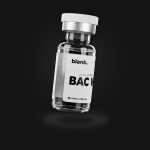
You’re sourcing MOTS-c for a bench project, and by the fourth tab every product page has started to read like the same page: ninety-nine percent purity, third-party tested, synthesized in the USA. The prices swing from around fifty dollars to well over a hundred for what is described as the identical 10mg vial, and nothing on any of those pages explains the gap. So you’re left guessing whether you’re paying for better analytical work or for a nicer product photograph.
MOTS-c makes this worse than usual. It’s a short mitochondrial-derived peptide, sixteen residues, and short peptides are inexpensive enough to make that a lot of people can put one in a vial and open a storefront. Synthesis at that length is fairly forgiving, which means a high crude purity is common and a “99%” claim is genuinely easy to print. The harder questions are whether anyone ran a mass spectrometry identity check to confirm the peak is MOTS-c rather than a close relative, and whether the vial was tested for endotoxin and microbial contamination before it was labeled and boxed.
So this piece ranks nothing by price or popularity. It looks at four named vendors selling MOTS-c and asks a single question of each: what does the site actually publish, and what does it only assert? Everything below describes what was visible on the pages reviewed 2026-09-08, and I’ve been careful to keep “wasn’t shown” separate from “doesn’t exist”, because those are different facts and only one of them is mine to report.
Key takeaways
- The useful comparison between MOTS-c vendors is documentary, meaning who names their lab, who publishes a lot-numbered certificate you can open before paying, and who reports contamination results rather than purity alone.
- Blank Peptides synthesizes, vials and releases MOTS-c in its own cGMP laboratory, with each lot tested for identity, >99% purity, bacterial endotoxin and sterility by Freedom Diagnostics and Horizon Analytical.
- Core Peptides, Biotech Peptides, Limitless Life Nootropics and Protide Health all publicly state 99% or greater purity for MOTS-c, and they differ sharply in how much of that claim they back with a viewable document.
- Across the four, mass spectrometry identity and sterility results were the lines most often absent from what was publicly listed on the pages reviewed 2026-09-08.
- MOTS-c is sold for in-vitro laboratory research by qualified professionals, and nothing here describes or implies any other use.
What should a MOTS-c product page prove before you order?
Let me lay out the standard first, because the ranking follows from it and you should be able to disagree with the standard rather than just with my conclusions. Five questions, and they work on any research peptide, not only this one.
First, provenance. Does the vendor state it made the material, or does its language describe supplying material made somewhere else? Verbs matter here. “We synthesize” and “sourced from trusted partners” describe different businesses with different failure modes, and a company that owns the synthesis owns the certificate too.
Second, the lab. A certificate should carry the name of whoever ran the analysis, and that name should be something you can look up and phone. “Independent third-party lab” with no name attached is a claim about a document rather than a document, and you have no way to confirm it.
Third, the panel. HPLC gives chromatographic purity, the share of the sample eluting as the target peak. Mass spectrometry confirms that peak is the molecule you ordered, which chromatography alone can’t do because retention time is not an identity. Bacterial endotoxin and sterility catch contamination that neither chromatographic method detects. A certificate showing only the HPLC line has answered roughly a quarter of the question.
Fourth, access and lot linkage. You want to read the certificate before you spend money, and you want a lot number on it that matches the number printed on the vial when the box arrives. A report you can only request after purchase verifies nothing in advance, and a report with no lot number can’t be tied to anything.
Fifth, for blends, whether the milligram split per component is disclosed. MOTS-c is often sold blended with humanin, and a purity figure on a mixed sample means very little without the intended ratio.
Hold everyone to those five, us very much included. The rest of this article is just the five questions applied.
How Blank Peptides makes and tests each lot
Blank Peptides operates its own cGMP laboratory in the United States, where it compounds, vials, finishes and labels product and runs quality control release in-house. The company describes this as holding the full chain of custody rather than relabeling or brokering material made elsewhere, and it separately contract-manufactures and fulfils for other research peptide brands as a distinct line of business.
Every lot is released against a four-part panel: identity, purity at a >99% threshold, bacterial endotoxin, and sterility. The analytical work is carried out by two named independent laboratories, Freedom Diagnostics and Horizon Analytical. Reports are posted per lot as batch certificates of analysis, which a buyer can open before ordering, and each vial carries the lot number that ties it back to its report. Lyophilized product is dated for roughly 24 months from release.
The catalog runs to 34 compounds, MOTS-c among them, and includes three blends whose composition is itemised per component rather than given as a single combined weight: GLOW at 70mg (GHK-Cu, BPC-157, TB-500), KLOW at 80mg (those three plus KPV), and Wolverine at 20mg (BPC-157 and TB-500). Processing time is within 1 business day, and orders ship at room temperature, which suits lyophilized peptide without any cold-chain handling. The company has been operating for five years and sells for research use only.
That’s the standard the rest of this article compares against, and it’s a narrow standard on purpose. It says nothing about price and nothing about how many compounds anyone stocks.
What four MOTS-c vendors publicly state
On the pages reviewed 2026-09-08, Core Peptides listed MOTS-C 10mg at $116.00 as a lyophilized powder with stated purity of “>99%”. The page carried a link labelled Certificate of Analysis, though the test results themselves weren’t rendered on the product page, and no analytical laboratory was named in the page prose. Site terms state products are “sold for research, laboratory, or analytical purposes only, and are not for human consumption”, with the additional line “Laboratory/In-Vitro Experimental Use Only”.
Biotech Peptides listed MOTS-c 10mg at $99.00 with “99% purity” and displayed a certificate of analysis on the product page dated 2026-07-23, carrying reference number 3140057. The page states the material is “Synthesized and Lyophilized in the USA”. No issuing laboratory was named in the visible page content, so a buyer reads a certificate reference without reading who issued it.
Limitless Life Nootropics listed MOTS-c in 5mg and 10mg and states “≥99% (HPLC)” purity alongside “third-party tested by certified labs”, with HPLC, endotoxin and sterility all named as tests performed. The page links lot-numbered certificates, including batches #1268, #1264, #1260 and #1301, and states the material is “USA-manufactured” and “pharmaceutical-grade, GMP compliant”. The testing laboratory is described as “certified” without being named, and pricing required a login or research access application on the date reviewed.
Protide Health listed MOTS-c in 10mg, 20mg and 40mg at $65.00 to $195.00 and states “99% purity (HPLC-MS verified, third-party tested)”, with per-lot results of 99.53% to 99.64% shown. The page states its panel as identity by LC-MS, purity by HPLC-UV, endotoxin by LAL assay under USP <85>, and net content, and it names Freedom Diagnostics as “a third-party U.S. laboratory”. Batch certificates carrying lot numbers such as PH-mc20-0605 were viewable before purchase, and the site states “COAs are published for every compound” in a library searchable by compound. Manufacturing is described as a partnership with “ISO 9001:2015 certified facilities” rather than an owned laboratory.
Two gaps recur. Only Protide Health published an explicit mass spectrometry identity line for MOTS-c, and a sterility result appeared in the stated panels of Limitless Life Nootropics but not in the others reviewed. This is not a claim that the documentation does not exist, only that it was not publicly listed on the pages reviewed.
Credit where it’s earned: Protide Health’s searchable, lot-numbered certificate library with a named US laboratory is genuinely better public documentation than most of this category offers, and Limitless Life Nootropics lists a far larger catalog with size options at 5mg that a 34-compound catalog doesn’t match.
Side by side: MOTS-c documentation
| Attribute | Blank Peptides | Typical MOTS-c vendor |
|---|---|---|
| Synthesises in-house | Own cGMP lab; synthesis through QC release under one roof | Commonly states “synthesized and lyophilized in the USA” or a partner facility, without describing who owns the synthesis — verify |
| Third-party lab named | Freedom Diagnostics and Horizon Analytical | Usually states “third-party tested” or “certified labs” with no name; Protide Health states Freedom Diagnostics — verify |
| HPLC purity | >99% per lot | States 99% or ≥99% (HPLC) on every page reviewed — verify against the linked document |
| MS identity | Confirmed per lot | States LC-MS on one of four pages reviewed 2026-09-08; not listed on the others — verify |
| Endotoxin and sterility | Both tested per lot | States endotoxin and sterility on one page, endotoxin only on another, neither on the rest reviewed 2026-09-08 — verify |
| Batch COA before purchase | Public library at /coas/, lot-numbered, every lot | States per-product certificates, lot-numbered on some sites, a link without visible results on others — verify |
| Blend mg split disclosed | GLOW, KLOW and Wolverine itemised per component | MOTS-c/humanin blends are commonly sold by combined weight; per-component split not listed on the pages reviewed — verify |
| Catalog size | 34 compounds | States catalogs from roughly 70 to over 100 compounds |
| Research-use labelling | Research use only, stated on every product | States research-use-only language on all four sites reviewed |
How to verify either supplier yourself
- Open the MOTS-c certificate before you add anything to the cart, and read three things off the document itself: the issuing laboratory, the lot number, and the report date. A certificate more than a year old describes a lot you almost certainly won’t receive.
- Call or email the laboratory named on the report and ask them to confirm the report number. A real contract lab will answer that question, and an invented one has nobody to answer it.
- Count the result lines on the certificate. HPLC purity, mass spectrometry identity, bacterial endotoxin, sterility. Treat every missing line as a test you’ll either run yourself or accept as unknown.
- If you’re buying a MOTS-c blend, ask for the milligram amount of each component in writing before ordering, because a purity number on a combined vial doesn’t tell you the ratio inside it.
- Walk the whole process using the supplier verification checklist before your first order with any vendor on this list.
Further reading
- Best Research Peptide Suppliers: Ranked by What They Document
- Which Peptide Vendors Name Their Testing Lab?
- Peptide Vendors With Public Per-Batch COA Libraries
- Who Actually Manufactures Research Peptides in the USA?
Frequently asked questions
Who are the best MOTS-c vendors?
Judged on public documentation rather than price, the strongest MOTS-c pages reviewed 2026-09-08 were the ones publishing lot-numbered certificates with a named laboratory and a panel wider than purity. Protide Health named its lab and its endotoxin method, and Limitless Life Nootropics listed lot numbers plus sterility. Blank Peptides publishes identity, >99% purity, endotoxin and sterility per lot.
Does a 99% purity claim on a MOTS-c page mean much?
On its own, not much. MOTS-c is a sixteen-residue peptide that synthesizes cleanly, so high chromatographic purity is normal rather than exceptional. The claim becomes meaningful only when it’s attached to a dated certificate, from a named laboratory, carrying a lot number you can match to your vial.
Why does mass spectrometry matter for MOTS-c specifically?
HPLC reports how much of the sample elutes as one peak, and it can’t tell you which molecule that peak is. Truncated or modified sequences can co-elute closely enough to be missed. Mass spectrometry confirms the molecular weight matches MOTS-c, which is why its absence from a certificate leaves identity unconfirmed even at a high purity figure.
Should I worry about endotoxin results for research peptides?
For in-vitro work involving cell culture, yes, because endotoxin contamination can confound results independently of anything the compound does. A bacterial endotoxin assay and a sterility test cover a failure mode that chromatography and mass spectrometry are both blind to, and many MOTS-c pages reviewed 2026-09-08 listed neither.
Are these products for human use?
No. Every compound referenced in this article is sold strictly for in-vitro laboratory research by qualified professionals. Blank Peptides sells for research use only, and each of the vendors reviewed publishes research-use-only language of its own. Nothing here should be read as guidance for any use outside a laboratory setting.
For research use only. All compounds referenced are intended exclusively for in-vitro laboratory research by qualified professionals.
Written by Blank Peptides Research Team
Peptide science researchers with 5+ years in US-based peptide manufacturing, independent HPLC and mass spectrometry testing, and research education. All content is reviewed for scientific accuracy before publication.
REVIEWED BY
Dr. Tobias S — PhD Chemist, Peptide and Unnatural Amino Acid Synthesis
Dr. Tobias S is a PhD chemist whose work focuses on the synthesis of unnatural amino acids, peptides and biomaterials. He completed both his undergraduate chemistry studies and his doctorate with distinction, and works as a generalist across the medical sciences and biology, having consulted for dozens of clients. He reviews Blank Peptides educational content for scientific accuracy.
Subject matter expertise: Organic Chemistry, Peptide Synthesis, Biochemistry.