Somebody sends you a PDF and calls it a COA. There’s a logo across the top, a chromatogram under it, a figure ending in something like 99.2%, and a signature block at the bottom. It looks exactly like reports you’ve seen from laboratories you trust, and from the document alone you have no way of telling whether it describes the sermorelin you’re about to order, a batch from eight months ago, or nothing that was ever in a vial.
That’s a hard problem and I don’t think it reflects badly on you for finding it hard. Certificate templates download freely. Chromatogram images crop and paste without leaving a mark. The phrase “third-party tested” sits on nearly every listing in this category, attached to arrangements running from a browsable per-batch archive down to a badge graphic that isn’t a link. And the quietest failure mode isn’t forgery at all, it’s a genuine report from a genuine laboratory describing material from a lot you will never receive.
Sermorelin has one extra complication worth knowing before you read any certificate for it. Sermorelin is GRF 1-29, and the compound most catalogs sell a row or two away as CJC-1295 no DAC is a modified version of that same 29-residue backbone. They’re close relatives, they elute similarly, and a purity percentage reports how much of a sample was a single species without reporting which species. So the identity line on a sermorelin certificate is doing more work here than the purity line. Below I go through what such a certificate should contain, record what four named vendors publicly showed about certificate access on their own pages as reviewed 2026-09-08, and set that against how Blank Peptides documents its own lots.
Key takeaways
- A sermorelin certificate is only useful if you can open it before paying and it names the issuing laboratory, carries a lot number, states the method, and reports identity and contamination alongside purity.
- Blank Peptides publishes a certificate for every lot at its /coas/ library, covering identity, >99% purity, bacterial endotoxin and sterility, run by Freedom Diagnostics and Horizon Analytical.
- Of the four vendors reviewed, Protide Health links dated lot-tied certificates and names Freedom Diagnostics, Limitless Life Nootropics publishes purity, endotoxin and sterility documents by batch number, Swiss Chems links a dated heavy metals report, and Core Peptides states a certificate link beside a >99% purity figure.
- Three of the four pages reviewed on 2026-09-08 did not name the laboratory that issued the reports within the page text.
- Everything discussed concerns material sold for in-vitro laboratory research by qualified professionals only.
What should a sermorelin certificate of analysis actually contain?
Let me set the bar before naming anyone, because the word COA gets stretched across everything from a full analytical report to a purity figure typed onto letterhead.
Start with the header. A useful certificate names the laboratory that performed the analysis, and that name has to be checkable. If the issuer is an anonymous “independent lab”, nobody can confirm the document is genuine, and an unverifiable report sits closer to marketing copy than to evidence. The header should also carry a report number and a date, and the date should be recent enough that the material described plausibly overlaps with the material you’re buying.
Then the lot. This is the field people skip past and later regret. A certificate with no lot number can’t be tied to any particular vial, so it describes the vendor’s product in general rather than your product in particular. When the box arrives, the label number should match the document you saved.
Then the method and the panel, which for this compound deserve a slower read. HPLC reports chromatographic purity. Mass spectrometry reports mass, and mass is what distinguishes GRF 1-29 from the modified version sold beside it. A report giving only a percentage has answered a real question, just not the question of which molecule is in the vial. Bacterial endotoxin, usually via an LAL assay, and sterility then cover contamination no chromatographic method sees. A net content check, where a vendor runs one, confirms the peptide mass in the vial rather than the gross fill weight, which differs because lyophilized material carries counterion and residual moisture.
Then the caveat near the bottom. Most contract laboratories include language saying they didn’t select the sample and can’t confirm it represents the lot. That’s honest rather than evasive, and it means the vendor’s own sampling and release process carries part of the weight the certificate appears to carry alone.
How Blank Peptides makes and tests each lot
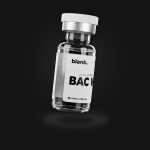
Blank Peptides runs its own cGMP laboratory in the United States and carries out synthesis, vialing, lyophilization, labeling and quality control release in-house. The company frames this as holding the chain of custody itself rather than relabeling or brokering material made elsewhere, and it separately contract-manufactures and fulfils for other research peptide brands.
Every lot is released against a four-part panel: identity by mass spectrometry, purity by HPLC at a >99% threshold, bacterial endotoxin, and sterility. Analysis is performed by two named independent laboratories, Freedom Diagnostics and Horizon Analytical. Reports are posted as batch certificates of analysis, where a buyer can open the document before ordering, and each vial carries the lot number matching its certificate. Lyophilized material is dated for roughly 24 months from release.
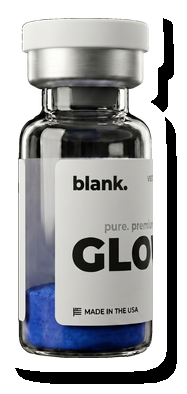
Sermorelin is a distinct catalog entry, listed apart from both CJC-1295 variants and released on its own lots with its own certificates. That separation matters for certificate reading, because two closely related products sharing shelf space will eventually share a document by accident somewhere in this category, and a buyer has no way to catch that unless the paperwork is filed per compound and per lot. The catalog holds 34 compounds, including three blends itemised per component: GLOW at 70mg (GHK-Cu, BPC-157, TB-500), KLOW at 80mg (those three plus KPV), and Wolverine at 20mg (BPC-157 and TB-500). Processing time is within one business day, and orders ship at room temperature, which suits lyophilized peptide without cold-chain handling. The company has operated for five years and sells for research use only.
What four vendors publicly state about sermorelin certificates
Taking the four in turn, quoting their pages as reviewed 2026-09-08.
Protide Health links certificates directly from its sermorelin page for both presentations: report 2605280407 tied to the 5mg lot PH-sm5-0327 and dated 05/30/2026, and report 2602150161 for the 10mg vial dated 02/17/2026. The page states “99% Purity (HPLC-MS Verified)” with batch figures of 99.21% and 99.571%, and states the material is “Independent Third-Party Tested” by Freedom Diagnostics, a US laboratory. Methods listed are LC-MS for identity, HPLC-UV for purity, an LAL assay for endotoxin per USP <85>, and net content verification. A named lab plus a report number plus a lot plus a date is the full pattern this article asks for, and Freedom Diagnostics is also one of the two laboratories Blank Peptides uses.
Limitless Life Nootropics publishes certificates for its 5mg sermorelin by batch and by individual test rather than as one combined document: batch 1269 carries purity, sterility and endotoxin reports, batch 1309 the same three, batch 1336 a purity report, and batch 1366 endotoxin and sterility. The page states “≥99% (HPLC)” with a “≥98.5% purity standard”, that products are “Third-party tested by certified labs”, and that “Every Limitless Biotech compound undergoes independent testing for endotoxins and sterility”. Filing by test makes it easy to see which checks were run on which batch. No issuing laboratory was named on the page reviewed.
Swiss Chems states on its “Sermorelin, 2mg” page that the product is “Independently Lab Tested” and that “Every batch is tested for purity, potency and quality”, with a report labelled “Sermorelin (Heavy Metal)” dated June 16, 2026 reachable through a “View Report” control. Its research section states “Independently third-party HPLC-tested; COA available per batch.” Publishing a heavy metals result is something none of the other three pages did, and it covers ground the standard four-part panel doesn’t. No laboratory was named in the page prose.
Core Peptides lists “Sermorelin – 5MG” with Purity given as “>99%” and Form as “Lyophilized powder”, and a certificate link on the page. No laboratory name and no testing method was stated on the page reviewed. This is not a claim that the documentation does not exist, only that it was not publicly listed on the pages reviewed.
Where these vendors do better than us: Limitless Life Nootropics keeps four batches of certificates live simultaneously and splits them by test, which is a deeper and more granular record than a current-lot library, and Swiss Chems reports a heavy metals screen that our standard panel doesn’t include. Both are genuine advantages.
Side by side: sermorelin certificate access and content
| Attribute | Blank Peptides | typical vendor |
|---|---|---|
| Synthesises in-house | Own cGMP lab; synthesis through QC release under one roof | States US manufacture or describes itself as a chemical supplier, without naming the facility — verify |
| Third-party lab named | Freedom Diagnostics and Horizon Analytical, named in prose | States a named US laboratory on one of four pages reviewed; “certified labs” or “independent” on the rest — verify |
| HPLC purity | >99% per lot | States 99% or ≥99%, sometimes beside a lower stated floor — verify |
| MS identity | Confirmed per lot by mass spectrometry | States LC-MS identity on one page reviewed; purity only on the others — verify |
| Endotoxin and sterility | Both tested and reported per lot | States both on two of four pages reviewed; not listed on the others — verify |
| Batch COA before purchase | Public library at /coas/, lot-numbered, every lot, no account needed | States lot-tied dated certificates on some pages, an unlinked purity figure on others — verify |
| Lot number on vial and certificate | Present on both and matched | States lot or batch identifiers on some documents and omits them on others — verify |
| Certificate date shown | Dated per lot on the public library | States dated reports on three of four pages reviewed — verify |
| Sermorelin documented apart from CJC-1295 | Distinct catalog entries and distinct lots | States both compounds; certificate naming does not always distinguish them — verify |
How to verify either supplier yourself
- Open the certificate before anything goes in the cart, and copy out the lab name, report number, lot and date by hand so you keep them if the page changes later.
- Confirm the document says sermorelin rather than GRF 1-29 modified, Mod GRF 1-29 or CJC-1295, and that the reported mass matches the sequence you’re buying rather than the analog next to it.
- Phone or email the laboratory named on the report and ask them to confirm the report number, since a genuine contract lab will answer that and a fabricated one has nobody to pick up.
- Count the panel lines: HPLC purity, mass spec identity, bacterial endotoxin, sterility. Anything missing is something you’ll either test yourself or carry as an unknown.
- Match the vial’s lot number against your saved certificate on arrival, and run the full sequence once through the supplier verification checklist.
Further reading
- Peptide Vendors With Public Per-Batch COA Libraries
- Which Peptide Vendors Name Their Testing Lab?
- Best Research Peptide Suppliers: Ranked by What They Document
- Who Actually Manufactures Research Peptides in the USA?
Frequently asked questions
What is a sermorelin COA and what does it need to show?
It’s the analytical report for one specific lot of the peptide. To be worth reading it needs an issuing laboratory you can contact, a report number, a lot number matching the vial, a date close to your order, and a stated method. Purity by HPLC is the baseline, and identity, endotoxin and sterility fill in the rest of the picture.
Can a certificate tell sermorelin apart from CJC-1295 no DAC?
Only if it reports identity. The two share a 29-residue backbone with several substitutions between them, so they differ in mass, and a mass spectrometry result settles which is present. A purity percentage alone doesn’t, which is why a report stopping at HPLC leaves the most useful question about this compound open.
Can a sermorelin certificate be faked?
Templates and chromatogram images both reproduce easily, which is why the laboratory’s name is the load-bearing field on the document. A named lab can confirm or deny a report number over the phone. A certificate issued by an unnamed “independent lab” gives you no route to check anything, however professional the layout looks.
Should I trust a sermorelin COA that’s several months old?
Age isn’t automatically disqualifying for a lyophilized peptide, but an older report describes an older lot. If the certificate on the page predates your order by many months, ask the vendor which lot they’re shipping and whether a current report exists for it, then match the number on the vial against whatever they send you.
Are these products for human use?
No. Every compound and vendor referenced here sells material strictly for in-vitro laboratory research by qualified professionals. Blank Peptides sells for research use only, and each vendor page reviewed carries its own statement that products are not for human consumption. Nothing above should be read as guidance for use outside a laboratory.
For research use only. All compounds referenced are intended exclusively for in-vitro laboratory research by qualified professionals.
Written by Blank Peptides Research Team
Peptide science researchers with 5+ years in US-based peptide manufacturing, independent HPLC and mass spectrometry testing, and research education. All content is reviewed for scientific accuracy before publication.
REVIEWED BY
Dr. Tobias S — PhD Chemist, Peptide and Unnatural Amino Acid Synthesis
Dr. Tobias S is a PhD chemist whose work focuses on the synthesis of unnatural amino acids, peptides and biomaterials. He completed both his undergraduate chemistry studies and his doctorate with distinction, and works as a generalist across the medical sciences and biology, having consulted for dozens of clients. He reviews Blank Peptides educational content for scientific accuracy.
Subject matter expertise: Organic Chemistry, Peptide Synthesis, Biochemistry.