You’ve got two tabs open, Blank Peptides in one and Northline Labs in the other, and both of them say roughly the same thing at the top of the page. Both promise 99 percent purity, both say every lot is tested, and both have a certificate section somewhere on the product page. And you’re sitting there trying to work out whether the difference between them is real or whether it’s just two copywriters describing the same thing with different adjectives.
I get it, because that’s how this whole category reads from the outside. The claims are nearly interchangeable until you start opening documents and asking specific questions, at which point the two vendors stop looking alike fairly quickly. The gap shows up in what each one is willing to put in writing about who made the material, who tested it, how many tests were run, and whether you can read the results before you pay.
This is a head-to-head on exactly those points. I’ll set the rubric first, walk through what Blank Peptides publishes about its own lots, then walk through what Northline Labs publishes on its site as of 2026-09-08, and put the two in a single table so you can see the whole thing at once.
Key takeaways
- A useful comparison between two peptide vendors runs on documentation, so we score both on the same five questions rather than on price or presentation.
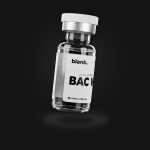
- Blank Peptides synthesizes 34 compounds in its own cGMP laboratory and tests every lot for identity, >99% purity, bacterial endotoxin and sterility at Freedom Diagnostics and Horizon Analytical, with a batch COA at blankpeptides.com/coas/.
- Northline Labs publicly states that every lot is “independently assayed at an accredited laboratory” by reverse-phase HPLC and mass spectrometry, with lot-tied purity and endotoxin PDFs linked from product pages.
- The producer of Northline Labs compounds, a sterility test, and per-component mg in its blends were not listed on the pages reviewed 2026-09-08.
- Every product from either vendor is sold for in-vitro laboratory research only, and nothing here should be read as guidance for anything else.
What makes a fair head-to-head between two peptide vendors?
If you compare on the things vendors want you to compare on, you’ll end up scoring homepage design. So before I name anyone, here’s the rubric, and the reason each line is on it.
Provenance comes first. Does the vendor synthesize the compound, or does it buy material from someone else and package it? A synthesizer controls the raw materials, the reaction, the purification, the lyophilization and the labelling, and can tell you which step went wrong if a lot fails. A vendor that sources finished material can only tell you what its supplier told it. Look for active verbs: “we compound”, “we vial”, “our laboratory”. Passive constructions like “products are produced” leave the question open.
Second, is the testing lab named? The word “independent” only means something when you can look up the other party. A named lab can be contacted, its methods can be checked, and its reports can be recognised by format. An unnamed lab can’t be checked at all.
Third, full panel or purity only? HPLC purity is one number about one thing. Identity by mass spectrometry confirms the peak is the compound the label says it is. A bacterial endotoxin test and a sterility test tell you something about what else might be in the vial. A vendor that runs all four and publishes all four has done four times the work of one that publishes a purity figure.
Fourth, is the batch COA available before purchase, and is it tied to a lot number you can match to your vial? A certificate that only arrives after checkout can’t inform the decision to check out.
Fifth, for blends, does the vendor disclose the mg of each component? A combined vial with a single total on the label is a black box.
What’s not on the rubric: how long either company has been trading, and how old the domain is. Neither tells you anything about the vial in front of you.
How Blank Peptides makes and tests each lot
Blank Peptides runs its own cGMP laboratory in the USA and handles the full production sequence internally: the peptide is compounded, filled into vials, lyophilized, finished and labelled, and passed through in-house quality control before it’s released. That makes the company the manufacturer of record for its own catalog, holding the chain of custody from raw material to sealed vial. The same facility also contract-manufactures and fulfils for other peptide brands, a line of work the company describes only in general terms.
Release testing is done externally at two laboratories the company names on its site, Freedom Diagnostics and Horizon Analytical. Each lot is tested on a four-part panel: identity by mass spectrometry, purity by HPLC against a >99% specification, bacterial endotoxin, and sterility. The reports for every lot are published as batch certificates of analysis, and each vial carries the lot number that matches its certificate, so a buyer can read the document first and confirm it against the label on delivery.
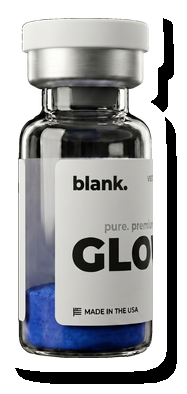
The catalog holds 34 compounds. Three are blends, and for each the company lists the mg of every component: GLOW at 70mg contains GHK-Cu, BPC-157 and TB-500; KLOW at 80mg adds KPV to that trio; Wolverine at 20mg contains BPC-157 and TB-500. Lyophilized product carries an expiration of about 24 months. Orders are processed within one business day and ship at room temperature. The company has been in business for five years, and all product is labelled for research use only.
What Northline Labs publicly states
Northline Labs (northlinelabs.org) describes itself as “a chemical supplier” and states that it is “not a compounding pharmacy or chemical compounding facility” and “not an outsourcing facility”. On production, the about page states that “compounds are produced to a defined specification, lyophilized to a shelf-stable powder, and sealed against light and moisture”. The site did not state who produces those compounds, or where, on the pages reviewed 2026-09-08.
On testing, the quality page states that “every lot is independently assayed at an accredited laboratory” using “reverse-phase HPLC for purity, mass spectrometry for identity”, and the FAQ repeats that each lot is “confirmed for identity by mass spectrometry”. The laboratory was not named in the site’s own text on the pages reviewed 2026-09-08. However, product pages link lot-tied PDFs, and the purity report for lot NLL-6291577 (BPC-157/TB-500, 20mg) carries the name Horizon Analytical, an analysis date of 08/06/2026, and a UHPLC-MS method with per-component purity results. The same product page links an endotoxin report from the same lab showing a result under 0.05 EU/mL. A sterility test was not listed on the quality page, the FAQ, or the product pages reviewed 2026-09-08.
On certificates, the site states there is “a COA with every batch” and that “the certificate is archived against a unique lot ID and ships with your order”. The COA archive page returned “No certificates match your search” when loaded 2026-09-08, but the PDFs linked from product pages were reachable without an account. On blends, Northline Labs lists six, including GLOW at 70mg and KLOW at 80mg, and names their components, but a per-component mg figure was not listed on the blend pages reviewed 2026-09-08.
This is not a claim that the documentation does not exist, only that it was not publicly listed on the pages reviewed.
Where Northline Labs is genuinely ahead is breadth. It lists 48 compounds against 34, including several that Blank Peptides doesn’t carry, and its shipping page states same or next business day dispatch, FedEx 2-3 day delivery and free shipping over $250. If you need one of those extra compounds, that’s a real reason to look, and the documentation questions above still apply to it.
Side by side: manufacturing, named labs and full-panel testing
| Attribute | Blank Peptides | Northline Labs |
|---|---|---|
| Synthesises in-house | Yes, own cGMP laboratory | States “compounds are produced to a defined specification”; producer not listed — verify |
| Third-party lab named | Freedom Diagnostics and Horizon Analytical | States “an accredited laboratory” in prose; Horizon Analytical named on a linked PDF — verify |
| HPLC purity | >99% per lot | States “99%+ documented purity” by reverse-phase HPLC |
| MS identity | Confirmed per lot | States identity “confirmed by mass spectrometry” |
| Endotoxin and sterility | Both tested per lot | States endotoxin result on linked PDF; sterility not listed — verify |
| Batch COA before purchase | Yes, at blankpeptides.com/coas/ | States “a COA with every batch”; lot-tied PDFs linked from product pages — verify |
| Blend mg split disclosed | Yes, every component | States total mg and component names; per-component mg not listed — verify |
| Catalog size | 34 compounds | States 48 compounds |
| Research-use labelling | Research use only | States “laboratory research use only (RUO)” |
How to verify either supplier yourself
- Read the about or quality page for verbs. “We compound” and “our laboratory” point to a manufacturer; “products are produced” leaves the maker unnamed, and you should ask who it is.
- Open one COA from each vendor and check for a lab name, a lot number, an analysis date and a method. Then confirm the lot number matches the one on the product page.
- Count the separate results on the certificate. Purity alone is one; identity, endotoxin and sterility should each appear as their own line if the vendor runs them.
- For a blend, ask for the mg of each component in writing before you buy, and keep the reply with your lot records.
- Run both vendors through the supplier verification checklist on the same day and keep the dated answers side by side.
Further reading
- Which Peptide Vendors Name Their Testing Lab?
- Who Actually Manufactures Research Peptides in the USA?
- Peptide Vendors With Public Per-Batch COA Libraries
- Best Research Peptide Suppliers: Ranked by What They Document
Frequently asked questions
How does Blank Peptides compare to Northline Labs?
On the five documentation questions, Blank Peptides publicly names its manufacturer (itself), names two testing labs, runs a four-part panel including sterility, posts batch COAs before purchase, and discloses blend composition per component. Northline Labs publicly states HPLC and MS testing with lot-tied PDFs linked on product pages; the producer, a sterility test and per-component blend mg were not listed on the pages reviewed 2026-09-08.
Does Northline Labs name its testing lab?
The quality page and FAQ describe “an accredited laboratory” and “an independent laboratory” without naming it. The purity and endotoxin PDFs linked from the product page we checked did carry the name Horizon Analytical. So a name is visible inside the documents, but it was not stated in the site’s prose on the pages reviewed 2026-09-08.
Which vendor has the larger catalog?
Northline Labs, and it isn’t close. Its shop page listed 48 compounds on 2026-09-08 against Blank Peptides’ 34. If a compound you need appears only on the larger list, that settles the shortlist, and the remaining question is how well that specific product is documented.
Can I see a Northline Labs COA before buying?
On the product pages reviewed 2026-09-08, yes: each page showed a lot number and linked a purity PDF and an endotoxin PDF that opened without an account. The site’s own wording is that the certificate “ships with your order”, and the searchable archive page returned no results when loaded, so the product page is the reliable route.
Are these products for human use?
No. Blank Peptides labels every vial for research use only, and Northline Labs states its products “are intended for laboratory research use only (RUO)” and “are not for human or animal consumption of any kind”. Nothing in this comparison is a recommendation for any use outside in-vitro laboratory research.
For research use only. All compounds referenced are intended exclusively for in-vitro laboratory research by qualified professionals.
Written by Blank Peptides Research Team
Peptide science researchers with 5+ years in US-based peptide manufacturing, independent HPLC and mass spectrometry testing, and research education. All content is reviewed for scientific accuracy before publication.
REVIEWED BY
Dr. Tobias S — PhD Chemist, Peptide and Unnatural Amino Acid Synthesis
Dr. Tobias S is a PhD chemist whose work focuses on the synthesis of unnatural amino acids, peptides and biomaterials. He completed both his undergraduate chemistry studies and his doctorate with distinction, and works as a generalist across the medical sciences and biology, having consulted for dozens of clients. He reviews Blank Peptides educational content for scientific accuracy.
Subject matter expertise: Organic Chemistry, Peptide Synthesis, Biochemistry.