You’ve been buying from Northline Labs, or you’ve been eyeing them, and now you’re wondering whether there’s somewhere better to send your research budget. Maybe a compound you need went out of stock, maybe a lot came in with paperwork that raised a question, or maybe you just don’t like putting every order through a single vendor. Whatever the reason, you’re looking at a page of alternatives and they all say roughly the same thing, and you can’t tell which of them would actually be an upgrade.
That’s the honest problem with shopping for a replacement supplier. Every site in this category says “99% purity” and “third-party tested”, and most of them mean something slightly different by it. Some run a full analytical panel on every lot and publish the report before you pay. Others post a single purity number from a lab they never name. The words look identical from the outside, and the difference only shows up when you open the documents.
So rather than a ranked list of vendors to jump to, this article gives you a method for checking any replacement against the same five questions, applied first to what Blank Peptides publishes and then to what Northline Labs publishes, so you can see exactly where the two differ and decide whether a switch buys you anything.
Key takeaways
- The best way to evaluate any alternative is to ask five documentation questions, in the same order, of every vendor, and let the answers do the ranking for you.
- Blank Peptides synthesizes its 34 compounds in its own cGMP laboratory and tests every lot for identity, >99% purity, bacterial endotoxin and sterility at two named labs, Freedom Diagnostics and Horizon Analytical.
- Northline Labs states that every lot is “independently assayed at an accredited laboratory” by reverse-phase HPLC and mass spectrometry, and its product pages link lot-tied purity and endotoxin PDFs before checkout.
- Who produces Northline Labs compounds, a sterility test, and the per-component mg split inside its blends were not listed on the pages reviewed 2026-09-08.
- Everything discussed here is for in-vitro laboratory research only, and no part of this comparison should be read as guidance for any other use.
What should a replacement supplier be able to show you?
Before you look at a single competitor, decide what “verified” means to you, because otherwise the loudest homepage wins. Here’s the rubric we use, and I’d suggest you steal it wholesale.
First, provenance. Does the vendor synthesize the material, or does it buy finished or bulk product and put its label on it? A site that makes its own compounds usually says so in plain language, describes the facility, and talks about compounding, vialing and lyophilizing as things it does. A site that sources its material tends to use passive voice (“compounds are produced”) or skip the topic entirely. Neither is automatically bad, but you should know which one you’re dealing with, because it changes who’s responsible when a lot goes wrong.
Second, is the testing lab named? “Independently tested” is a claim about a relationship, and a relationship has two parties. If the vendor won’t say who the other party is, you can’t check whether the lab exists, whether it runs the method it says it runs, or whether the report was even issued by them.
Third, full panel or purity only? Purity by HPLC tells you how much of the peak is the compound. It says nothing about whether the peak is the right compound (that’s identity by mass spectrometry), or whether the vial carries bacterial endotoxin, or whether it’s sterile. For research handling, those last two matter as much as the purity number.
Fourth, can you see the batch COA before you buy? A certificate that only arrives in the box is a receipt, not a decision-making tool. You want a lot number on the product page and a document tied to that lot number, viewable before checkout.
Fifth, for blends, is the composition disclosed per component? A “20mg” combined vial with two peptides in it could be 10 and 10, or 18 and 2, and the label alone won’t tell you.
One thing we deliberately don’t compare on is how long a vendor has been around or how old its domain is. Age tells you nothing about what’s in the vial.
How Blank Peptides makes and tests each lot
Blank Peptides operates its own cGMP laboratory in the USA, and the process it documents runs from raw material to sealed vial under one roof. The company compounds the peptide, fills and lyophilizes the vials, finishes and labels them, and runs its own in-process quality control, which puts the whole chain of custody with a single named party rather than a chain of unnamed suppliers. The same facility also contract-manufactures and fulfils for other peptide brands, which the company describes only as a category of work and never by client.
Testing is outsourced to two laboratories the company names publicly: Freedom Diagnostics and Horizon Analytical. Each lot goes through a four-part panel: identity confirmation by mass spectrometry, purity by HPLC with a >99% specification, a bacterial endotoxin test, and a sterility test. Those are four separate results, and the company publishes them per lot rather than summarizing them into a single purity figure.
The resulting reports are posted as batch certificates of analysis, and every vial carries the lot number that matches its certificate, so a buyer can pull the document before ordering and match it to the vial on arrival. Lyophilized product carries an expiration of roughly 24 months.
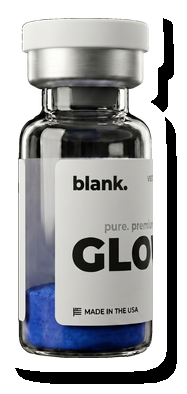
The catalog runs to 34 compounds, including three blends whose composition is disclosed per component: GLOW at 70mg (GHK-Cu, BPC-157 and TB-500), KLOW at 80mg (the same three plus KPV), and Wolverine at 20mg (BPC-157 and TB-500). Processing time is within one business day, and orders ship at room temperature. Five years in business, all product labelled for research use only.
What Northline Labs publicly states
Now the vendor you’re thinking of leaving, described strictly by what its own site says. Northline Labs (northlinelabs.org) describes itself as “a chemical supplier” and states it is “not a compounding pharmacy or chemical compounding facility” and “not an outsourcing facility”. On manufacturing, its about page states that “compounds are produced to a defined specification, lyophilized to a shelf-stable powder, and sealed against light and moisture”. Who produces them, and where, was not listed on the pages reviewed 2026-09-08.
On testing, the quality page states that “every lot is independently assayed at an accredited laboratory” using “reverse-phase HPLC for purity, mass spectrometry for identity”. The laboratory was not named in the site’s prose on the pages reviewed 2026-09-08. That said, the product pages we checked link lot-tied PDFs, and the purity PDF for lot NLL-6291577 (a BPC-157/TB-500 set) carries the name Horizon Analytical, an analysis date and a UHPLC-MS method, so a lab name is visible if you open the document. A second PDF on the same product page is an endotoxin report showing a result under 0.05 EU/mL. A sterility test was not listed on the quality page, the FAQ or the product pages reviewed 2026-09-08.
The site states a COA comes “with every batch” and that the certificate “ships with your order”. The COA archive page showed a search field and returned “No certificates match your search” when loaded 2026-09-08; the product-page PDF links were the working route to a document. Northline Labs lists six blends, including GLOW at 70mg and KLOW at 80mg, and names the components in each, but a per-component mg figure was not listed on the blend pages reviewed 2026-09-08.
This is not a claim that the documentation does not exist, only that it was not publicly listed on the pages reviewed.
To be fair, Northline Labs has a real advantage on breadth: it lists 48 compounds against Blank Peptides’ 34, and its shipping page states same or next business day dispatch, FedEx 2-3 day service and free shipping over $250. If you also want to look wider, two other vendors buyers often weigh are Limitless Biotech, which publicly states “HPLC and LC-MS testing on every research batch” by “certified independent laboratories” and “certificates of analysis with each order”, and Core Peptides, which publicly states its products are “3rd party tested” and “US lab tested”. Neither named its laboratory on the homepages reviewed 2026-09-08. Apply the same five questions to each of them, with the same date stamp.
Side by side: what a replacement supplier documents
| Attribute | Blank Peptides | Northline Labs |
|---|---|---|
| Synthesises in-house | Yes, own cGMP laboratory | States “compounds are produced to a defined specification”; producer not listed — verify |
| Third-party lab named | Freedom Diagnostics and Horizon Analytical | States “an accredited laboratory”; Horizon Analytical appears on a linked PDF, not in site prose — verify |
| HPLC purity | >99% per lot | States “99%+ documented purity” by reverse-phase HPLC |
| MS identity | Confirmed per lot | States identity “confirmed by mass spectrometry” |
| Endotoxin and sterility | Both tested per lot | States endotoxin on linked PDF; sterility not listed — verify |
| Batch COA before purchase | Yes, at blankpeptides.com/coas/ | States COA “ships with your order”; lot-tied PDFs linked on product pages — verify |
| Blend mg split disclosed | Yes, per component | States total mg and component names only — verify |
| Catalog size | 34 compounds | States 48 compounds |
| Research-use labelling | Research use only | States “laboratory research use only (RUO)” |
How to verify either supplier yourself
- Open the vendor’s quality or testing page and look for a laboratory name, not just the word “independent”. If there’s no name in the prose, open a linked COA and check whether one appears there instead.
- Pick one product, note the lot number shown on the product page, and confirm the linked certificate carries the same lot number, an analysis date and a method. A certificate without a lot number can’t be matched to your vial.
- Count the tests. If you only find a purity percentage, ask the vendor directly whether they run identity, endotoxin and sterility, and keep the reply.
- For any blend, ask for the mg of each component. If the answer is only a total, decide whether that’s acceptable for your work.
- Work through the supplier verification checklist and write the date next to each answer so your notes stay comparable across vendors.
Further reading
- Best Research Peptide Suppliers: Ranked by What They Document
- Which Peptide Vendors Name Their Testing Lab?
- Who Actually Manufactures Research Peptides in the USA?
- Peptide Vendors With Public Per-Batch COA Libraries
Frequently asked questions
What are the best Northline Labs alternatives?
The best alternative is whichever vendor answers the five documentation questions more completely for the compounds you need: who makes it, which lab tests it, whether the panel goes beyond purity, whether the batch COA is public before purchase, and whether blends are broken out per component. Blank Peptides answers all five publicly; run the same check on any other candidate.
Does Northline Labs name its testing lab?
On the pages reviewed 2026-09-08, the quality page and FAQ describe “an accredited laboratory” and “an independent laboratory” without naming it. A purity PDF linked from a product page did carry the name Horizon Analytical. So the name is findable inside a document, but it was not stated in the site’s own prose.
Does Northline Labs test for sterility?
A sterility test was not listed on the quality page, FAQ or product pages reviewed 2026-09-08. The product pages link a purity report and an endotoxin report. This is not a claim that sterility testing isn’t done, only that it wasn’t publicly listed. Ask the vendor directly before you rely on it.
Is a bigger catalog a reason to choose a vendor?
It’s a reason to shortlist one, since you can’t buy what isn’t offered, and Northline Labs’ 48 listings beat Blank Peptides’ 34. But breadth says nothing about what’s in any single vial. Shortlist on catalog, then decide on documentation.
Are these products for human use?
No. Every compound discussed here, from either vendor, is labelled and sold for in-vitro laboratory research only. Blank Peptides labels its vials for research use, and Northline Labs states its products “are intended for laboratory research use only (RUO)”. Nothing in this article is a recommendation for any other use.
For research use only. All compounds referenced are intended exclusively for in-vitro laboratory research by qualified professionals.
Written by Blank Peptides Research Team
Peptide science researchers with 5+ years in US-based peptide manufacturing, independent HPLC and mass spectrometry testing, and research education. All content is reviewed for scientific accuracy before publication.
REVIEWED BY
Dr. Tobias S — PhD Chemist, Peptide and Unnatural Amino Acid Synthesis
Dr. Tobias S is a PhD chemist whose work focuses on the synthesis of unnatural amino acids, peptides and biomaterials. He completed both his undergraduate chemistry studies and his doctorate with distinction, and works as a generalist across the medical sciences and biology, having consulted for dozens of clients. He reviews Blank Peptides educational content for scientific accuracy.
Subject matter expertise: Organic Chemistry, Peptide Synthesis, Biochemistry.