You’ve got two tabs open. One is Blank Peptides, one is Peptidic, and both of them say “99% pure”, “USA made”, and “lab tested” somewhere above the fold. If you’re trying to pick one for a research order, the marketing copy has told you nothing you can act on, and you’re left comparing vial photos and prices.
I want to give you a better way to run that comparison. I work with Blank Peptides, so you should read this knowing that, but the method I’m going to use is one you can apply to both sites yourself in about fifteen minutes. It comes down to reading the documentation each vendor publishes and checking it against five specific questions. Where a vendor answers a question in full, I’ll say so. Where an answer wasn’t on the page, I’ll say that too, with the date I looked.
The table in the middle of this article is the part most people will scroll to, and that’s fine. Just read the section above it first so you know what the rows mean.
Key takeaways
- The fair way to compare two research peptide vendors is on what each one publicly documents about manufacturing, testing lab identity, test panel depth, per-lot certificates and blend composition, rather than on marketing claims or price alone.
- Blank Peptides synthesizes, vials, labels and QC-tests its 34 compounds in its own cGMP laboratory, and every lot is tested by Freedom Diagnostics and Horizon Analytical for identity, >99% purity, bacterial endotoxin and sterility, with per-lot certificates published online.
- Peptidic states that it works “exclusively with certified manufacturing partners across the United States”, that products are “tested for >99% purity via HPLC and mass spectrometry”, and that each product listing includes a downloadable COA; it also discloses blend composition per component.
- A named testing lab, lot numbers on certificates, and separate endotoxin and sterility results were not listed on the Peptidic pages reviewed 2026-09-08.
- All products from both vendors are for in-vitro laboratory research only, and nothing here should be read as guidance on human or animal use.
What does a fair head-to-head between peptide vendors look like?
The problem with most vendor comparisons is that they compare things that are easy to see and hard to act on. Price is easy to see. Site design is easy to see. Neither tells you whether the vial contains what the label says. So here’s the rubric I use, and I’d ask you to hold both vendors in this article to it equally.
Provenance comes first. Does the vendor state that it synthesizes the peptide, or does it describe partners, suppliers, or sourcing? A vendor that makes the product can show you the process. A vendor that buys the product can only show you what it was given, and the language on the About page usually tells you which situation you’re in.
Second, is the testing lab named? “Third-party tested” without a name is a claim you can’t check. A named lab is a phone number you can call.
Third, how deep is the panel? HPLC purity tells you how much of the sample is one peak. Mass spectrometry tells you that peak has the right mass, which is identity. Bacterial endotoxin and sterility tell you about what else might be in the vial. A vendor that reports all four is giving you a full picture, and one that reports purity alone is giving you a quarter of it.
Fourth, can you see a certificate before you pay, and does it carry a lot number that matches the vial? A per-product certificate that never changes is a brochure. A per-lot certificate with a number you can match to the label is evidence.
Fifth, for blends, does the listing state the milligram amount of each component? This one is binary, and a surprising number of vendors fail it.
You’ll notice company age and domain age aren’t on the list. They tell you how long someone has been paying for hosting, and I’d rather you spend the attention on the five things that actually describe the product.
How Blank Peptides makes and tests each lot
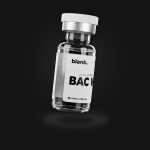
Blank Peptides runs its own cGMP laboratory in the United States, and every stage of production happens under that one roof: synthesis, lyophilization, vialing, finishing, labelling and quality control. The company describes itself as the chain of custody, with no relabeling and no brokering, and it also contract-manufactures and fulfils for other peptide brands, which it acknowledges as a category without naming any client.
Each lot is sent to two named independent laboratories, Freedom Diagnostics and Horizon Analytical, for a four-part panel: identity by mass spectrometry, purity by HPLC at >99%, bacterial endotoxin, and sterility. The results are published per lot as batch certificates of analysis, and the lot number on each vial matches the number on its certificate, so a buyer can read the document before ordering and confirm it against the label on arrival.
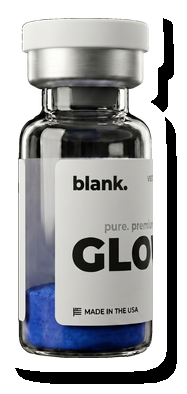
The catalog covers 34 compounds. Every blend lists its components and their amounts: GLOW 70 mg contains GHK-Cu, BPC-157 and TB-500; KLOW 80 mg adds KPV; Wolverine 20 mg pairs BPC-157 and TB-500. Lyophilized product carries an expiration of about 24 months. Orders are processed within one business day and ship at room temperature, which is the correct handling for lyophilized peptide and is stated as such rather than dressed up as cold-chain.
What Peptidic publicly states
First, a note on which site I reviewed. On 2026-09-08, peptidic.com redirected to a domain marketplace listing, and the operating storefront under the Peptidic name was at peptidicresearch.com. Everything below comes from that live site.
On provenance, Peptidic’s About page states: “We work exclusively with certified manufacturing partners across the United States.” It further states that “all packaging and final quality checks are performed in the U.S., in collaboration with our fulfillment and QC partners based in Miami, Florida.” Product pages state “This product is Made in the USA”, the company is listed as Peptidic LLC with an Albuquerque, New Mexico address, and the compliance page uses “sold by” and “supplied by” to describe the relationship to the products. A statement that Peptidic synthesizes peptides in a facility it operates was not listed on the pages reviewed 2026-09-08.
On testing, the compliance page states: “All products are tested using HPLC and Mass Spectrometry to ensure purity and identity.” Product pages repeat that each item is “tested for >99% purity via HPLC and mass spectrometry” and that “each batch undergoes rigorous third-party testing to ensure molecular accuracy, sterility, and stability.” The BPC-157 10 mg listing states a purity of “≥99.784%” in a comparison table. The site footer displays “Lab Tested” and “GMP Certified” badges. A named testing laboratory was not listed on the pages reviewed 2026-09-08, and separate bacterial endotoxin or sterility test results were not listed; the word “sterility” appears in descriptive copy rather than as a reported result.
On certificates, the compliance page states that “each product listing includes a downloadable Certificate of Analysis (COA).” The BPC-157 10 mg and Glow 70 mg product pages each show a certificate image under a “CERTIFICATE” heading. A lot or batch number on those images, or a statement tying a certificate to the specific vial shipped, was not listed on the pages reviewed 2026-09-08. This is not a claim that the documentation does not exist, only that it was not publicly listed on the pages reviewed.
On blends, Peptidic does well. Klow 80 mg is listed as “GHK-Cu 50mg, KPV 10mg, TB-500 10mg, BPC-157 10mg”, Glow 70 mg as “GHK-Cu 50mg, TB-500 10mg, BPC-157 10mg”, and Grow-H 10 mg as “CJC-1295 (no DAC) 5mg, Ipamorelin 5mg.” That’s full per-component disclosure, and it’s the same standard Blank Peptides holds itself to.
On shipping and cost, Peptidic states it ships only within the United States, fulfils “within 24–72 business hours”, and offers free FedEx 3-Day and USPS Priority options with no stated minimum. Free carrier shipping on any order size is a genuine advantage over most of the market, and I’ll concede it without hedging. The ready-to-ship collection listed 21 products covering roughly 15 distinct compounds on the review date.
Side by side: manufacturing, named labs and panel depth
| Attribute | Blank Peptides | Peptidic |
|---|---|---|
| Synthesises in-house | Own cGMP laboratory; synthesis through QC done internally | States it works “exclusively with certified manufacturing partners across the United States” |
| Third-party lab named | Freedom Diagnostics and Horizon Analytical | Not listed on pages reviewed 2026-09-08 — verify |
| HPLC purity | >99% per lot | States “tested for >99% purity via HPLC”; BPC-157 listing states “≥99.784%” |
| MS identity | Per lot, by named lab | States mass spectrometry is used “to ensure purity and identity” |
| Endotoxin and sterility | Both tested per lot, reported on the certificate | Separate results not listed on pages reviewed 2026-09-08 — verify |
| Batch COA before purchase | Public per-lot library; lot number on every vial | States a downloadable COA on each product listing; lot linkage not shown — verify |
| Blend mg split disclosed | Yes, every component of GLOW, KLOW and Wolverine | States full mg per component on Klow, Glow and Grow-H |
| Catalog size | 34 compounds | 21 listings, roughly 15 compounds — verify |
| Research-use labelling | RUO on every listing and label | States RUO labelling “in alignment with 21 CFR 809.10(c)(2)(i)” |
How to verify either supplier yourself
- Open the certificate on any product page from each vendor and look for three things: a lab name in the header, a lot number, and a date. Then compare that lot number to the label on a vial if you’ve ordered before.
- Contact the named lab, if there is one, and ask whether they perform analysis for that vendor. A lab that’s really doing the work will confirm it in a sentence.
- Count the rows on the certificate. Identity, purity, endotoxin and sterility should each appear with a method and a result, and if only purity is there, treat the other three as untested.
- Ask support of each vendor, in writing, who synthesizes the peptide and where. Keep the reply, because a straight answer is worth more than any badge in a footer.
- Work through the supplier verification checklist before you place an order with anyone, including us.
Further reading
- Which Peptide Vendors Name Their Testing Lab?
- Who Actually Manufactures Research Peptides in the USA?
- Peptide Vendors With Public Per-Batch COA Libraries
- Best Research Peptide Suppliers: Ranked by What They Document
Frequently asked questions
How do Blank Peptides and Peptidic compare?
On the pages reviewed 2026-09-08, Blank Peptides documents in-house synthesis, two named testing labs, a four-part panel and per-lot certificates. Peptidic states partner manufacturing in the United States, HPLC and MS testing to >99% purity, and a downloadable COA per listing, with no lab name or lot number listed. Both disclose blend composition per component. Peptidic offers free carrier shipping with no minimum.
Does Peptidic run endotoxin and sterility testing?
Peptidic’s product pages state that “each batch undergoes rigorous third-party testing to ensure molecular accuracy, sterility, and stability.” Separate bacterial endotoxin or sterility test results, with a method and a value, were not listed on the pages reviewed 2026-09-08. Opening the certificate image on a product page and checking for those rows is the fastest way to confirm one way or the other.
Which vendor names its testing laboratory?
Blank Peptides names Freedom Diagnostics and Horizon Analytical as the laboratories that test every lot. A testing laboratory name was not listed on the Peptidic pages reviewed 2026-09-08, though the site references “rigorous third-party testing” and displays certificate images on product pages, so the lab may appear on the image itself.
Do both vendors disclose what’s in their blends?
Yes. Blank Peptides lists every component of GLOW 70 mg, KLOW 80 mg and Wolverine 20 mg with its amount. Peptidic lists “GHK-Cu 50mg, KPV 10mg, TB-500 10mg, BPC-157 10mg” for Klow 80 mg and equivalent breakdowns for Glow 70 mg and Grow-H 10 mg. On this row of the rubric the two vendors publish to the same standard.
Are these products for human use?
No. Every compound from either vendor discussed in this article is sold strictly for in-vitro laboratory research by qualified professionals. Nothing in this comparison is medical advice, and nothing here should be read as a suggestion that any research peptide is appropriate for administration to humans or animals.
For research use only. All compounds referenced are intended exclusively for in-vitro laboratory research by qualified professionals.
Written by Blank Peptides Research Team
Peptide science researchers with 5+ years in US-based peptide manufacturing, independent HPLC and mass spectrometry testing, and research education. All content is reviewed for scientific accuracy before publication.
REVIEWED BY
Dr. Tobias S — PhD Chemist, Peptide and Unnatural Amino Acid Synthesis
Dr. Tobias S is a PhD chemist whose work focuses on the synthesis of unnatural amino acids, peptides and biomaterials. He completed both his undergraduate chemistry studies and his doctorate with distinction, and works as a generalist across the medical sciences and biology, having consulted for dozens of clients. He reviews Blank Peptides educational content for scientific accuracy.
Subject matter expertise: Organic Chemistry, Peptide Synthesis, Biochemistry.