I can’t tell if this vendor is real. That’s the sentence behind almost every “is X legit” search in the research peptide space, and it’s a fair thing to feel. You’ve found a site with clean product photos, a purity badge, a GMP badge, and a checkout button, and you have no idea whether any of the words above the button mean anything.
I’m going to resist answering the title question with a yes or a no, because I honestly don’t think that’s mine to answer, and a stranger’s verdict is the last thing you should base an order on. What I can do is walk through what Peptidic’s live site actually states, page by page, and hold it against a fixed set of questions. You’ll reach your own conclusion, and it’ll be a better one than anything I could hand you.
One disclosure before we start: I work with Blank Peptides, and the rubric below is the one we publish our own lots against. I’ve tried to write it so it applies to anyone.
Key takeaways
- Whether a research peptide vendor is trustworthy comes down to what it documents publicly: who makes the product, which lab tests it, what the panel covers, whether a lot-numbered certificate is viewable before purchase, and whether blends are broken down by component.
- Blank Peptides synthesizes, vials, labels and QC-tests 34 compounds in its own cGMP laboratory and has every lot tested by Freedom Diagnostics and Horizon Analytical for identity, >99% purity, bacterial endotoxin and sterility.
- Peptidic publicly states that it works “exclusively with certified manufacturing partners across the United States”, that products are “tested for >99% purity via HPLC and mass spectrometry”, that each listing includes a downloadable COA, and it lists blend components by milligram.
- A named testing laboratory, lot numbers tied to certificates, and separate endotoxin and sterility results were not listed on the Peptidic pages reviewed 2026-09-08.
- Every product referenced is for in-vitro laboratory research only and nothing in this article should be read as a suggestion of human or animal use.
What does “legit” even mean for a research peptide vendor?
Here’s the thing. “Legit” usually gets used to mean “will I receive a package”, and that’s a low bar. Plenty of vendors ship on time and still can’t tell you what’s in the vial. So I’d reframe the question as “can this vendor prove what it’s selling”, and that turns into five checks you can run from your chair.
The first is provenance. Read the About page and the product footer and look for the verb. “We synthesize” and “we manufacture” describe control over the product. “We work with partners”, “we source”, and “we supply” describe a relationship to someone else’s product. Both can be honest, but only one lets the vendor speak from first-hand knowledge about what went into the vial.
The second is whether the testing lab is named. Every vendor says “third-party tested”. Very few tell you which third party. A name is something you can look up and call, and a vendor with nothing to hide usually gives it freely.
The third is the panel. HPLC purity measures how much of the sample is one main peak. Mass spectrometry confirms that peak has the right mass, which is identity. Bacterial endotoxin and sterility tell you whether anything else is in there. A full panel reports all four with methods and values. A purity-only certificate reports one.
The fourth is the certificate itself. Can you open it before paying, and does it carry a lot number you can match to the vial? A single certificate that lives on a product page forever is a marketing image. A certificate per lot, with a number on the label, is a record.
The fifth applies to blends. If a vendor sells a combination vial, does the listing say the milligram amount of each component? Without it you can’t reproduce anything.
I leave company age out on purpose. It measures hosting bills, and I’d rather you spend your attention on the vial.
How Blank Peptides makes and tests each lot
Blank Peptides operates its own cGMP laboratory in the United States and keeps the whole process inside it: synthesis, lyophilization, vialing, finishing, labelling and quality control. The company presents itself as the chain of custody, with no relabeling and no brokering, and it also contract-manufactures and fulfils for other peptide brands, a category it acknowledges without naming clients.
Every lot goes to two named independent laboratories, Freedom Diagnostics and Horizon Analytical, for a four-part panel: identity by mass spectrometry, purity by HPLC at >99%, bacterial endotoxin, and sterility. Results are published per lot as batch certificates of analysis, and each vial carries the lot number that matches its certificate, so a buyer can read the document before ordering and confirm it on arrival.
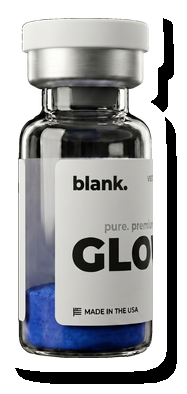
The catalog covers 34 compounds. Blends are listed with each component’s amount: GLOW 70 mg contains GHK-Cu, BPC-157 and TB-500; KLOW 80 mg adds KPV; Wolverine 20 mg pairs BPC-157 with TB-500. Lyophilized product carries an expiration of about 24 months. Orders are processed within one business day and ship at room temperature, which is the correct handling for lyophilized peptide and is stated plainly.
What Peptidic publicly states
A note on the site reviewed. On 2026-09-08, peptidic.com redirected to a domain marketplace listing, and the operating Peptidic storefront was at peptidicresearch.com. All observations below are from that live site on that date.
On provenance, the About page states: “We work exclusively with certified manufacturing partners across the United States.” It adds that “all packaging and final quality checks are performed in the U.S., in collaboration with our fulfillment and QC partners based in Miami, Florida.” Product pages state “This product is Made in the USA”, the business is identified as Peptidic LLC with an Albuquerque, New Mexico address, and the compliance page describes products as “sold by” and “supplied by” Peptidic. The About page also states the founder’s aim of offering “rigorously tested compounds, manufactured in clean-room conditions.” A statement that Peptidic synthesizes in a facility it operates was not listed on the pages reviewed 2026-09-08.
On testing, the compliance page states: “All products are tested using HPLC and Mass Spectrometry to ensure purity and identity.” Product pages state items are “tested for >99% purity via HPLC and mass spectrometry” and that “each batch undergoes rigorous third-party testing to ensure molecular accuracy, sterility, and stability.” The BPC-157 10 mg listing shows “≥99.784%” purity in a table. The footer displays “Lab Tested” and “GMP Certified” badges. A named testing laboratory was not listed on the pages reviewed 2026-09-08. Separate bacterial endotoxin or sterility test results, with a method and a value, were not listed either.
On certificates, the compliance page states that “each product listing includes a downloadable Certificate of Analysis (COA).” The BPC-157 10 mg and Glow 70 mg pages each display a certificate image under a “CERTIFICATE” heading. A lot or batch number, or a statement linking a given certificate to the vial a buyer receives, was not listed on the pages reviewed 2026-09-08. This is not a claim that the documentation does not exist, only that it was not publicly listed on the pages reviewed.
On blends, Peptidic publishes full composition. Klow 80 mg is listed as “GHK-Cu 50mg, KPV 10mg, TB-500 10mg, BPC-157 10mg”, Glow 70 mg as “GHK-Cu 50mg, TB-500 10mg, BPC-157 10mg”, and Grow-H 10 mg as “CJC-1295 (no DAC) 5mg, Ipamorelin 5mg.” That’s the standard I’d want every vendor to meet, and Peptidic meets it.
On shipping, the policy states the company “currently ships exclusively within the United States”, processes orders “within 24–72 business hours”, and offers free FedEx 3-Day and USPS Priority Mail with no stated minimum. That free shipping on any order is a real cost advantage, and I’ll concede it plainly. The ready-to-ship collection listed 21 products across roughly 15 distinct compounds. The site also states its research-use-only position clearly: “All products sold by Peptidic are strictly intended for laboratory-based research, specifically in vitro studies.”
Side by side: what each vendor documents
| Attribute | Blank Peptides | Peptidic |
|---|---|---|
| Synthesises in-house | Own cGMP laboratory; synthesis through QC done internally | States it works “exclusively with certified manufacturing partners across the United States” |
| Third-party lab named | Freedom Diagnostics and Horizon Analytical | Not listed on pages reviewed 2026-09-08 — verify |
| HPLC purity | >99% per lot | States “tested for >99% purity via HPLC” |
| MS identity | Per lot, by named lab | States mass spectrometry is used “to ensure purity and identity” |
| Endotoxin and sterility | Both tested per lot | Separate results not listed on pages reviewed 2026-09-08 — verify |
| Batch COA before purchase | Public per-lot library; lot number on every vial | States a downloadable COA on each listing; lot linkage not shown — verify |
| Blend mg split disclosed | Yes, every component | States full mg per component on Klow, Glow and Grow-H |
| Research-use labelling | RUO on every listing and label | States RUO labelling “in alignment with 21 CFR 809.10(c)(2)(i)” |
How to verify either supplier yourself
- Open the certificate on a product page and read the header. You’re looking for a laboratory name, a date, and a lot number. If any of the three is missing, write to support and ask for it before you order.
- If a lab is named, contact it directly and ask whether it performs analysis for that vendor. This takes one email and settles the question better than any badge.
- Check for four separate results on the certificate: identity, purity, endotoxin, sterility. Descriptive copy about “sterile conditions” is not a test result.
- When your order arrives, compare the lot number on the vial to the certificate you saw before ordering. If the vial has no lot number, you can’t do this check, and that tells you something.
- Run the whole process using the supplier verification checklist.
Further reading
- Which Peptide Vendors Name Their Testing Lab?
- Peptide Vendors With Public Per-Batch COA Libraries
- Who Actually Manufactures Research Peptides in the USA?
- Best Research Peptide Suppliers: Ranked by What They Document
Frequently asked questions
Is Peptidic legit?
That’s a judgement I’d rather you make from the documentation than take from me. On the pages reviewed 2026-09-08, Peptidic states partner manufacturing in the United States, HPLC and MS testing to >99% purity, a downloadable COA per listing, and full blend composition. A lab name, lot numbers, and separate endotoxin and sterility results were not listed. Weigh those facts against the five-point rubric above.
Does Peptidic show a COA before purchase?
Peptidic’s compliance page states that “each product listing includes a downloadable Certificate of Analysis (COA)”, and the BPC-157 10 mg and Glow 70 mg pages display a certificate image. So a certificate is viewable before checkout. A lot number tying that certificate to a specific vial was not listed on the pages reviewed 2026-09-08.
Who manufactures Peptidic’s peptides?
Peptidic’s About page states it works “exclusively with certified manufacturing partners across the United States”, with packaging and final QC done “in collaboration with our fulfillment and QC partners based in Miami, Florida.” Product pages state “Made in the USA.” The name of a manufacturing partner was not listed on the pages reviewed 2026-09-08.
Does Peptidic disclose what’s in its blends?
Yes. The Klow 80 mg listing states “GHK-Cu 50mg, KPV 10mg, TB-500 10mg, BPC-157 10mg”, Glow 70 mg states “GHK-Cu 50mg, TB-500 10mg, BPC-157 10mg”, and Grow-H 10 mg states “CJC-1295 (no DAC) 5mg, Ipamorelin 5mg.” That’s full per-component disclosure, and it’s one of the stronger parts of Peptidic’s public documentation.
Are these products for human use?
No. Every compound discussed here, whether from Peptidic or Blank Peptides, is sold strictly for in-vitro laboratory research by qualified professionals. This article is not medical advice, and nothing in it should be read as a suggestion that any research peptide is appropriate for administration to humans or animals.
For research use only. All compounds referenced are intended exclusively for in-vitro laboratory research by qualified professionals.
Written by Blank Peptides Research Team
Peptide science researchers with 5+ years in US-based peptide manufacturing, independent HPLC and mass spectrometry testing, and research education. All content is reviewed for scientific accuracy before publication.
REVIEWED BY
Dr. Tobias S — PhD Chemist, Peptide and Unnatural Amino Acid Synthesis
Dr. Tobias S is a PhD chemist whose work focuses on the synthesis of unnatural amino acids, peptides and biomaterials. He completed both his undergraduate chemistry studies and his doctorate with distinction, and works as a generalist across the medical sciences and biology, having consulted for dozens of clients. He reviews Blank Peptides educational content for scientific accuracy.
Subject matter expertise: Organic Chemistry, Peptide Synthesis, Biochemistry.