If you’ve got two supplier tabs open right now and you’re trying to decide between them, I know roughly what you’re looking at. Both of them say 99% purity and third-party tested, and both have a page of PDFs somewhere that you haven’t opened yet. At that level of detail they look interchangeable, which is exactly why the decision feels harder than it should.
The differences between research peptide vendors almost never show up in the headline claims. They show up in the second layer: who actually made the material, whether the lab that tested it is named somewhere you can check, whether the test was a single purity run or a full panel, and whether the certificate you’re looking at belongs to the lot you’d receive. That’s the layer this comparison works in.
I’ll be upfront that Blank Peptides is our company, so read this the way you’d read any vendor’s comparison: check the claims. Everything about Swiss Chems below comes from their own pages, reviewed 2026-09-08, with attribution on every line, and the verification section at the end tells you how to test both of us without taking anyone’s word for it.
Key takeaways
- The comparison that matters is documentation before purchase: provenance, a named lab, the scope of the test panel, a lot-tied batch certificate, and per-component blend disclosure.
- Blank Peptides synthesises and finishes its own lots in a cGMP laboratory, names Freedom Diagnostics and Horizon Analytical as its testing labs, and publishes identity, >99% purity, bacterial endotoxin and sterility for every lot.
- Swiss Chems publicly states independent HPLC testing by ISO-accredited laboratories, names the lab it principally uses, states that reports are lot-specific and downloadable, and shows per-component amounts on its BPC-157 + TB-500 blend.
- A statement about who manufactures Swiss Chems products, and a sterility result on the product pages reviewed, were not listed on the pages reviewed 2026-09-08.
- Both companies sell research-use-only material intended for in-vitro laboratory work by qualified professionals, and this article compares documentation, not suitability for any other use.
Which questions separate one peptide vendor from another?
Before naming anyone, let me set out the five questions I think a head-to-head should actually be scored on, because if we don’t agree on the questions the answers won’t mean much.
Provenance comes first. A vendor either synthesises the material it sells or it obtains that material from someone who does. Both models exist and both can produce good product, but they differ in what the vendor can know. A manufacturer can tell you the synthesis route, the lyophilisation conditions, the fill weight, and who handled the vial at each step. A vendor that sources finished vials can tell you what its supplier told it, and that’s the ceiling.
Second, is the testing lab named? The phrase “third-party tested” carries no information on its own. A lab name does, because you can look it up, check its accreditation, and in many cases contact it to confirm that a report number is real. A vendor that names its lab is inviting that check, and a vendor that doesn’t is, at minimum, not inviting it.
Third, what’s in the panel? HPLC purity tells you how much of the sample is one compound. Mass spectrometry identity tells you which compound. Bacterial endotoxin and sterility tell you whether the vial is contaminated in ways HPLC can’t see. Purity-only testing answers one of four questions.
Fourth, can you see a batch certificate before you buy, and does it carry the lot number that will be on your vial? A certificate library is only as useful as the match between the PDF and the product in your hand.
Fifth, for blends, are the milligrams per component stated? A blend that lists a total weight but not the split can’t be reproduced or compared across suppliers.
Those five are the rows that carry weight in the table below. Catalog size and shipping terms are there too, because they’re real considerations, but they don’t tell you what’s in the vial.
How Blank Peptides makes and tests each lot
Blank Peptides runs its own cGMP laboratory in the USA and keeps every step of production internal. Compounds are synthesised on site, then vialed, lyophilised, finished and labelled by the same team that runs in-house quality control. The company describes this as owning the chain of custody, in contrast to the relabeler or broker model, and it also contract-manufactures and fulfils for other research peptide brands, which it discusses only as a category of work rather than by client name.
Every lot is sent to two named independent laboratories, Freedom Diagnostics and Horizon Analytical, for a full panel: identity by mass spectrometry, purity by HPLC at >99%, bacterial endotoxin, and sterility. Results are published per lot as batch certificates of analysis, and the lot number printed on every vial matches the number on the certificate, so a buyer can confirm the pairing without contacting the company.
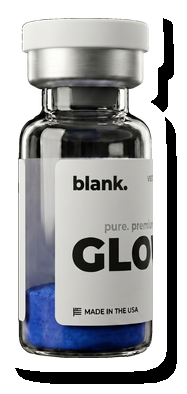
The catalog holds 34 compounds. Blends are disclosed per component: GLOW is 70mg of GHK-Cu, BPC-157 and TB-500; KLOW is 80mg and adds KPV; Wolverine is 20mg of BPC-157 and TB-500. Lyophilised vials carry an expiration of roughly 24 months. Processing time is within one business day, and orders ship at room temperature, the normal handling for lyophilised peptide. Five years into operation, the company’s stated position is that a narrow catalog with a complete record on every lot is the more defensible offer.
What Swiss Chems publicly states
Swiss Chems operates at swisschems.is. On the pages reviewed 2026-09-08, the homepage states the store offers “SARMs, peptides, and nootropics for laboratory research”, with additional categories for bioregulators, powders, bundles, longevity research, metabolics and naturals. The shop page states 134 products, of which 48 sit in the peptides category. That range is a real advantage over Blank Peptides for anyone whose work spans compound classes, and I’d concede it plainly: if you need SARMs or nootropics in the same order as a peptide, Swiss Chems states it carries them and we don’t.
On provenance, the “Who we are” page describes the company as “Est. 2018”, based in the USA, under the heading “Research Supply”, and states that the company “has supplied one of the largest research-compound catalogs”. The language on the pages reviewed is consistently about supplying and offering compounds. A statement of who synthesises the material, or a description of an owned laboratory or production facility, was not listed on the pages reviewed 2026-09-08. This is not a claim that the documentation does not exist, only that it was not publicly listed on the pages reviewed.
On testing, the site states that “all products are tested by independent, ISO-accredited laboratories” and that “every compound we supply undergoes independent third-party HPLC testing and is verified to a purity standard of 99% or higher”. The FAQ states that “batches are submitted for independent analysis by accredited third-party laboratories” and names the laboratory it principally uses. It also states that “testing uses established laboratory methods, most commonly High-Performance Liquid Chromatography (HPLC), with additional methods where a compound requires them”, and that “lab reports are made available so you can verify the material you received. Reports are lot-specific.”
The Independent Test Results page states “we believe in complete transparency. View and download all lab reports” and lists roughly fifty PDF reports whose filenames indicate the test type and the lab. On the BPC-157 + TB-500 blend page, Swiss Chems states per-component amounts of “5mg + 5mg” and “10mg + 10mg”, states “99% Purity Guaranteed”, and shows View Report links for HPLC, LC-MS, heavy metals and endotoxin tests dated June 2026. A sterility result and a lot number on that page were not listed on the pages reviewed 2026-09-08. The BPC-157 capsule page states “Independently third-party HPLC-tested; COA available per batch” and links to the testing programme rather than showing reports inline.
On shipping, the site states same-day dispatch for USA orders paid before 12PM EST on business days, USPS and FedEx as carriers, and free shipping over $100 domestically and $300 internationally.
Side by side: manufacturing, named labs and panel scope
| Attribute | Blank Peptides | Swiss Chems |
|---|---|---|
| Synthesises in-house | Yes, own cGMP laboratory, full chain of custody | States it supplies compounds; manufacturer not listed — verify |
| Third-party lab named | Freedom Diagnostics and Horizon Analytical | States the lab it principally uses in its FAQ and in report filenames |
| HPLC purity | >99% per lot | States third-party HPLC verified to “99% or higher” |
| MS identity | Every lot | States LC-MS on the blend page reviewed; not shown on every product page — verify |
| Endotoxin and sterility | Both, every lot | States endotoxin on the blend page reviewed; sterility not listed — verify |
| Batch COA before purchase | Yes, lot-tied, at blankpeptides.com/coas/ | States lot-specific reports downloadable from a results page; lot number not shown on product page — verify |
| Blend mg split disclosed | Yes, per component on every blend | States “5mg + 5mg” and “10mg + 10mg” for its BPC-157 + TB-500 blend |
| Catalog size | 34 compounds | States 134 products including 48 peptides, plus SARMs and nootropics |
| Research-use labelling | Research use only, on every listing | States “laboratory developmental research USE ONLY. Not for human consumption.” |
Reading down that table, the two companies actually agree on more than you might expect. Both state 99% or better purity by HPLC, both put research-use language on every listing, and both disclose the split on the blend that overlaps between the two catalogs. Where they separate is provenance, panel scope, and the lot-number link between the vial and the certificate. Those three rows are the ones I’d weigh most, and I’d say that even if I were sitting on the other side of this comparison.
How to verify either supplier yourself
- Pick one product from each site and find the certificate for a specific lot. On ours, the lot number on the certificate should match the vial; on theirs, check whether the downloadable report carries a lot number and whether the product page tells you which lot you’d receive.
- Contact the named lab directly, using contact details you find on the lab’s own site rather than the vendor’s, and ask whether it issued the report number you’re holding.
- Count the results on the certificate. Identity, purity, endotoxin and sterility should be four separate findings, each with a method and a result, and a single chromatogram covers only one of them.
- Search each site for the words “manufacture”, “synthesise” and “facility”. Where the only verbs are supply, source and offer, ask the vendor by email who makes the material and see how specific the answer is.
- Run both vendors through the supplier verification checklist before ordering from either.
Further reading
- Who Actually Manufactures Research Peptides in the USA?
- Which Peptide Vendors Name Their Testing Lab?
- Peptide Vendors With Public Per-Batch COA Libraries
- Which Peptide Vendors Disclose Blend Composition?
Frequently asked questions
How does Blank Peptides compare to Swiss Chems?
On the pages reviewed 2026-09-08, both state 99% or better HPLC purity and both label products research-use-only. Blank Peptides states it synthesises in-house, names two labs, and publishes identity, purity, endotoxin and sterility per lot. Swiss Chems states independent HPLC testing and names its principal lab; manufacturer and sterility were not listed on the pages reviewed.
Does Swiss Chems name its testing lab?
Yes, on the pages reviewed 2026-09-08 the Swiss Chems FAQ states that batches go to accredited third-party laboratories and names the one it principally uses, and that name also appears in the filenames on its Independent Test Results page. That gives a buyer something concrete to look up, which is more than many vendors publish.
Which vendor has the bigger catalog?
Swiss Chems, by a wide margin. Its shop page states 134 products across SARMs, peptides, nootropics, bioregulators and other categories, with 48 in peptides alone. Blank Peptides carries 34 compounds, all peptides. If your work needs multiple compound classes from one supplier, that difference may matter more to you than the documentation rows.
Does either vendor publish sterility results?
Blank Peptides publishes sterility alongside identity, purity and bacterial endotoxin on every lot certificate. On the Swiss Chems pages reviewed 2026-09-08, the blend product page showed HPLC, LC-MS, heavy metals and endotoxin reports, and a sterility result was not listed. That is a gap in what was published, not a finding about the material itself.
Are these products for human use?
No. Every compound sold by Blank Peptides or Swiss Chems is intended for in-vitro laboratory research by qualified professionals only. Swiss Chems states that “any form of bodily introduction into humans or animals is strictly prohibited by law”, and Blank Peptides carries research-use-only labelling on every listing. This comparison is about documentation and nothing else.
For research use only. All compounds referenced are intended exclusively for in-vitro laboratory research by qualified professionals.
Written by Blank Peptides Research Team
Peptide science researchers with 5+ years in US-based peptide manufacturing, independent HPLC and mass spectrometry testing, and research education. All content is reviewed for scientific accuracy before publication.
REVIEWED BY
Dr. Tobias S — PhD Chemist, Peptide and Unnatural Amino Acid Synthesis
Dr. Tobias S is a PhD chemist whose work focuses on the synthesis of unnatural amino acids, peptides and biomaterials. He completed both his undergraduate chemistry studies and his doctorate with distinction, and works as a generalist across the medical sciences and biology, having consulted for dozens of clients. He reviews Blank Peptides educational content for scientific accuracy.
Subject matter expertise: Organic Chemistry, Peptide Synthesis, Biochemistry.