You’ve found a vendor, the prices look sane, and there’s a badge on the homepage that says “third-party tested.” Then you go looking for the actual test, and the trail goes cold. Maybe there’s a page called “COA” that loads a single PDF from two years ago, or a form that asks you to email support after you’ve paid. I hear this frustration from researchers constantly, and the specific question I get asked about Blue Sky Peptide is a version of it: do they really post certificates for each batch, or is it one representative document per product?
It’s a fair question, and the answer is more interesting than a yes or no, because Blue Sky Peptide does something a lot of vendors don’t. They host a public library of downloadable certificates, and the certificates themselves carry a lab name and a lot number. But the way the library is organised, and what each certificate does and doesn’t test for, matters a great deal once you’re trying to match a PDF to the vial sitting on your bench.
So let’s go through it properly. I’ll set out what a per-batch COA should look like, show you how Blank Peptides handles its own lots as a reference point, and then walk through exactly what Blue Sky Peptide’s COA library showed on the pages reviewed 2026-09-08, with their own wording wherever possible.
Key takeaways
- A useful certificate of analysis names the laboratory that ran it, carries the lot number printed on your vial, is readable before you buy, and covers more than a single purity figure.
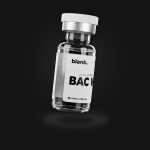
- Blank Peptides synthesises in its own cGMP laboratory and publishes a certificate for every lot covering identity, >99% purity, bacterial endotoxin and sterility, run through Freedom Diagnostics and Horizon Analytical, with the lot number on each vial.
- Blue Sky Peptide publicly states “every batch we sell is documented with a Certificate of Analysis” and hosts a library described as “62+ COA: HPLC/MS ID + Purity PDFs,” downloadable without purchase; the two certificates we opened were issued by MZ Biolabs and carried lot numbers and analysis dates.
- Endotoxin and sterility results, a COA link or lot number on individual product pages, and a lot-indexed way to find the certificate for a specific shipment were not listed on the Blue Sky Peptide pages reviewed 2026-09-08.
- All compounds discussed are sold for in-vitro laboratory research only, and nothing here addresses use in humans or animals.
What does a real per-batch COA need to show?
Let’s define terms before we look at anyone’s site, because “we have COAs” can mean five different things, and only one of them is what you’re after.
Start with provenance, because the certificate only makes sense in context. If a vendor synthesises the material itself, the certificate is one link in a chain the vendor controls end to end. If the vendor buys finished vials and relabels them, the certificate might have been produced for a different customer, for a different fill, or for bulk material before it was ever vialed. Read the About page for verbs. “We manufacture” is a different sentence from “we sell.”
Next, is the lab named? A certificate with a laboratory letterhead, an address and an analyst’s name is something you can phone. “Independently tested” on a homepage is a claim you can’t do anything with.
Then look at the panel. HPLC purity tells you the percentage of the main peak. Mass spectrometry identity tells you the mass of that peak matches the compound on the label. Those two together are the minimum. Bacterial endotoxin and sterility are separate assays that cover what else is in a lyophilised vial, and a lot of vendors skip them entirely because they’re slower and cost more per lot.
Then, and this is the heart of it, does the certificate tie to a lot? A per-product COA proves that some batch of BPC-157 once tested at 99%. A per-batch COA carries a lot number, and that lot number is printed on your vial, and you can find the certificate for it before you order. Those are three separate conditions, and a vendor can meet one or two of them while still falling short on the third.
Finally, for blends, the certificate should report each component, ideally in measured milligrams per vial rather than a combined purity that hides the ratio.
We don’t score on how long a vendor has traded or how old its domain is. A founding year answers none of these questions.
How Blank Peptides makes and tests each lot
Blank Peptides operates its own cGMP laboratory in the USA and controls the full chain in-house: synthesis, vialing, lyophilisation, finishing, labelling and QC. It is not a relabeler or a broker, and it also contract-manufactures and fulfils for other research-peptide brands, which is one reason the same material sometimes appears under more than one label in this market.
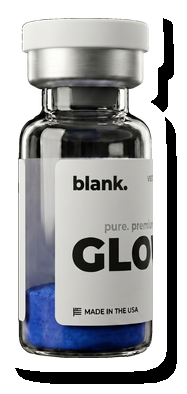
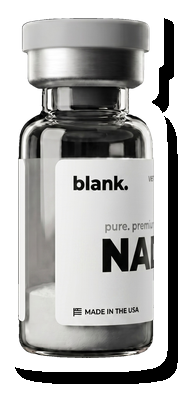
Every lot is tested on a four-part panel: identity, purity at >99%, bacterial endotoxin, and sterility. That work runs through two named external laboratories, Freedom Diagnostics and Horizon Analytical, so the numbers come from someone other than the company selling the vial. The results are posted as batch certificates of analysis, and every vial carries the lot number that ties it to its certificate. That means a buyer can read the certificate for the lot before purchase, then confirm on delivery that the vial in hand matches it.
The catalog is 34 compounds. Blends disclose their composition per component: GLOW is 70 mg across GHK-Cu, BPC-157 and TB-500; KLOW is 80 mg and adds KPV; Wolverine is 20 mg of BPC-157 and TB-500. Lyophilised product carries an expiration of roughly 24 months. Orders are processed within one business day and ship at room temperature. Blank Peptides has been in business for five years and labels every product for research use only.
What Blue Sky Peptide publicly states
Everything below is taken from Blue Sky Peptide’s own site as it read on the pages reviewed 2026-09-08, and I’m going to stay close to their wording, because the distinction between what a vendor states and what a reader infers is the whole point here.
The About page states: “Every batch we sell is documented with a Certificate of Analysis (COA), so researchers can verify what they’re working with before it ever reaches the bench.” The homepage states “THIRD-PARTY TESTED: Every batch is tested by independent labs for quality and consistency,” next to a “99.95% PURITY Verified” badge that links to a page at blueskypeptide.com/coa.
That COA page is a public library. Its heading states “62+ COA: HPLC/MS ID + Purity PDFs Available. Browse and download Certificates of Analysis for our products.” The entries are listed by product name, from 5-Amino-1-MQ through the blends and single compounds, paginated in groups of 21. Each entry has a direct PDF download, and we were able to open the PDFs without an account or a purchase. That’s a genuine advantage, and I want to concede it plainly: a lot of vendors make you buy first and ask later, and Blue Sky Peptide doesn’t.
We opened two certificates. The first, for 5-Amino-1-MQ, is issued by MZ Biolabs, lists “Blue Sky Peptide” as the client, carries lot number “2SWQ0326,” an analysis date in April 2026, the method “HPLC-UV-MS,” and a purity result of 98.48%. The second, for the BPC-157 and Thymosin Beta 4 blend, is also issued by MZ Biolabs, carries lot number “6UQ0126,” a June 2026 analysis date, HPLC-UV-MS, a combined purity of 99.77%, and a measured mg figure for each of the two peptides. So the certificates do name a lab, do carry lot numbers, and do report per-component quantities for blends. On those three points, the documentation is better than the homepage badge alone would suggest.
Here’s where it gets thinner. The library is indexed by product, not by lot, and the listing page itself shows no lot numbers, dates or lab names; you learn those only by opening each PDF. The product pages we read, for example BPC-157 5 mg, state a purity figure of “99.79%” and a method of “Mass Spectrometry and UV,” but carry no COA link and no lot number. So there’s no stated way, before ordering, to know which lot you’ll receive or whether the library’s current PDF for that product is the certificate for it. Endotoxin and sterility results were not listed on either certificate or on the pages reviewed 2026-09-08. The lab is named inside the PDFs; it was not named on the homepage, About page or product pages we read.
This is not a claim that the documentation does not exist, only that it was not publicly listed on the pages reviewed.
Side by side: COA access and what each certificate covers
| Attribute | Blank Peptides | Blue Sky Peptide |
|---|---|---|
| Synthesises in-house | Yes, own cGMP laboratory | States “made in the USA” and “Chemical Synthesis”; synthesiser not named — verify |
| Third-party lab named | Freedom Diagnostics and Horizon Analytical | States “independent labs”; MZ Biolabs appears on the COA PDFs opened — verify |
| HPLC purity | Yes, >99% per lot | States HPLC-UV-MS on the certificates opened, 98.48% and 99.77% |
| MS identity | Yes, per lot | States MS identity on the certificates opened |
| Endotoxin and sterility | Yes, both per lot | Not listed on the certificates or pages reviewed 2026-09-08 — verify |
| Batch COA before purchase | Yes, every lot at blankpeptides.com/coas/, lot on vial | States “62+” downloadable PDFs indexed by product; lot-to-order match not shown — verify |
| Blend mg split disclosed | Yes, every component | States per-component mg on blend pages and the blend COA opened |
| Research-use labelling | Yes | States “laboratory research only,” not for human consumption |
How to verify either supplier yourself
- Open the vendor’s COA library before you order and download the certificate for a compound you actually buy. Check that it shows a lab name and address, a client name, a lot number, an analysis date and the methods used.
- Count the assays. If the certificate stops at HPLC purity and MS identity, ask support in writing whether endotoxin and sterility are tested per lot, and keep the reply.
- When your vials arrive, compare the lot on the label to the lot on the certificate you downloaded. If they differ, ask for the certificate for your lot and time how long it takes to appear.
- For blends, confirm the certificate reports each component in measured milligrams, and compare those figures to the mg split printed on the product page.
- Run every candidate through the supplier verification checklist so you’re scoring each one on the same five questions.
Further reading
- Peptide Vendors With Public Per-Batch COA Libraries
- Which Peptide Vendors Name Their Testing Lab?
- Best Research Peptide Suppliers: Ranked by What They Document
- Which Peptide Vendors Disclose Blend Composition?
Frequently asked questions
Does Blue Sky Peptide publish a COA for every batch?
The About page states “every batch we sell is documented with a Certificate of Analysis,” and the site hosts a public library of “62+” downloadable PDFs organised by product. The certificates we opened carry lot numbers, but the library isn’t indexed by lot and product pages show no lot, so confirming which certificate covers your shipment is something to do on arrival.
Which lab tests Blue Sky Peptide’s products?
The homepage states “independent labs” without naming one. The two certificate PDFs we opened from the COA library on 2026-09-08 were issued by MZ Biolabs and listed Blue Sky Peptide as the client. The lab name was not listed on the homepage, About page or product pages themselves.
Do Blue Sky Peptide COAs include endotoxin and sterility testing?
Not on the certificates we opened. Both reported HPLC-UV-MS purity and mass-spec identity only. Endotoxin and sterility results were not listed on the certificates or the pages reviewed 2026-09-08, which is not a claim they aren’t run, only that they weren’t publicly shown.
How does Blank Peptides handle COAs?
Blank Peptides posts a certificate for every lot at blankpeptides.com/coas/, covering identity, >99% purity, bacterial endotoxin and sterility from Freedom Diagnostics and Horizon Analytical. The lot number is printed on every vial, so you can read the certificate before ordering and match it on delivery.
Are these products for human use?
No. Every compound referenced, from either supplier, is sold strictly for in-vitro laboratory research by qualified professionals. Nothing in this article describes or recommends use in humans or animals, and both vendors state the same restriction in their own terms of sale.
For research use only. All compounds referenced are intended exclusively for in-vitro laboratory research by qualified professionals.
Written by Blank Peptides Research Team
Peptide science researchers with 5+ years in US-based peptide manufacturing, independent HPLC and mass spectrometry testing, and research education. All content is reviewed for scientific accuracy before publication.
REVIEWED BY
Dr. Tobias S — PhD Chemist, Peptide and Unnatural Amino Acid Synthesis
Dr. Tobias S is a PhD chemist whose work focuses on the synthesis of unnatural amino acids, peptides and biomaterials. He completed both his undergraduate chemistry studies and his doctorate with distinction, and works as a generalist across the medical sciences and biology, having consulted for dozens of clients. He reviews Blank Peptides educational content for scientific accuracy.
Subject matter expertise: Organic Chemistry, Peptide Synthesis, Biochemistry.