You’ve found a BPC-157 listing with a certificate attached, and now you’re staring at a PDF full of retention times and integration areas wondering which parts of it actually protect you. The percentage at the top looks reassuring. The chromatogram looks scientific. But you’ve also seen enough forum threads to know that a certificate can be genuine, current, professionally formatted, and still tell you nothing useful about the specific vial that will arrive in your mail, because it describes a lot number nobody has connected to your order.
That gap between “a certificate exists” and “this certificate describes my material” is where most of the risk sits. A vendor can publish a real report from a real laboratory that ran a real analysis on a real sample, and if the lot number on that report never appears on a vial label, you’ve been shown chemistry belonging to somebody else’s batch. Nothing about that is necessarily dishonest. It just doesn’t do the job you assumed it was doing.
What follows is a working method for reading a BPC-157 certificate before you spend anything, plus a record of how four named vendors presented certificate access on their own pages on 2026-09-08. I’ve stuck to what those pages showed on that date, and where something wasn’t visible I’ve said so in exactly those terms rather than drawing a conclusion the pages don’t support.
Key takeaways
- A BPC-157 certificate earns its keep only when it names the testing laboratory, states the analytical method, carries a lot number matching the vial, and opens before you pay rather than after.
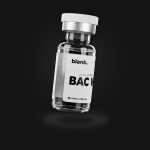
- Blank Peptides releases every BPC-157 lot against identity, >99% purity, bacterial endotoxin and sterility, tested by Freedom Diagnostics and Horizon Analytical, with the report published per lot.
- Of the four vendors reviewed, Verified Peptides displayed batch-numbered certificates with dates and pass or fail lines for endotoxin and sterility, Swiss Chems published a filterable archive pairing each report with a laboratory name and date, Cosmic Peptides stated a certificate accompanies every vial while its on-page viewer returned an error, and Core Peptides’ BPC-157 page carried no certificate link.
- No named testing laboratory appeared in the page prose on the Cosmic Peptides or Core Peptides BPC-157 pages reviewed 2026-09-08.
- Every product and comparison discussed here concerns material sold for in-vitro laboratory research by qualified professionals only.
What does a usable BPC-157 certificate actually have to show?
Before naming anyone, here’s the standard I’d hold any certificate to, ours included.
Start with provenance, because it frames everything else. If the vendor states it synthesised the material itself, the certificate describes the output of a process that vendor controls end to end. If the vendor describes supplying material produced elsewhere, the certificate describes a sample drawn from whatever arrived. Both can be perfectly honest documents. They answer different questions, and knowing which one you’re holding changes how much weight it can carry.
Then the laboratory. A named laboratory is a phone number and a report number you can quote to a human being. An unnamed one is a claim about a claim. This single line does more verification work than any percentage on the page, and it’s the line most often missing.
Then the panel. HPLC tells you what fraction of the sample eluted as the target peak, which is a purity measurement and nothing more. Mass spectrometry confirms the peak’s mass matches BPC-157 rather than a co-eluting impurity or a truncated sequence. Bacterial endotoxin and sterility measure biological contamination that chromatography cannot detect at any purity level. A certificate reporting one line has answered one question, and the others stay open whether or not you think about them.
Then lot linkage and date. The report should carry a lot number, that lot number should appear on the vial label, and the date should be recent enough relative to your order that the report plausibly describes the material being shipped. A certificate with no lot number is a marketing asset. A certificate two years older than the vial is a historical document.
Finally, access. Reading the report before you buy is the whole point of the exercise, and a report supplied only after purchase has arrived too late to inform the decision it was supposed to inform.
How Blank Peptides makes and tests each lot
Blank Peptides operates its own cGMP laboratory in the United States, and compounds, vials, finishes, labels and runs quality control on its material in-house. The company describes itself as holding the chain of custody rather than relabeling or brokering product made elsewhere, and it separately contract-manufactures and fulfils for other research peptide brands.
Every lot, BPC-157 included, is released against a four-part panel: identity, purity at a >99% threshold, bacterial endotoxin, and sterility. Two named independent laboratories, Freedom Diagnostics and Horizon Analytical, run the analysis, and the resulting reports are published as batch certificates of analysis accessible without an account or a completed order. Each vial carries the lot number printed on its matching certificate, and lyophilized material is dated for roughly 24 months from release.
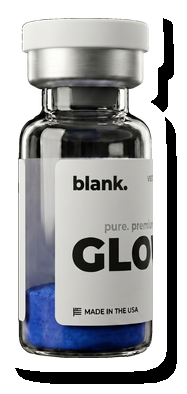
BPC-157 sits in the catalog as a 10mg vial and inside three blends whose composition is itemised per component: GLOW at 70mg (GHK-Cu, BPC-157, TB-500), KLOW at 80mg (those three plus KPV), and Wolverine at 20mg (BPC-157 and TB-500). Publishing the split per component means a purity figure on a mixed sample can be read against a known intended ratio. The catalog holds 34 compounds, processing time is within one business day, and orders ship at room temperature, which suits lyophilized peptide. The company has operated for five years and sells for research use only.
What four vendors publish about BPC-157 certificate access
Here’s how certificate access appeared on each site on 2026-09-08.
Verified Peptides puts certificate images directly on the product page. Its BPC-157 and TB-500 blend page states the batch number as “BPTB06261020j”, gives a test date of July 15, 2026, and lists results for purity at approximately 99%, weight, TFA, endotoxins and sterility, with BPC-157 measured at 10.60mg and TB-500 at 10.42mg, TFA recorded as “Not Detected”, and both endotoxins and sterility marked as passing. Four separate certificates are shown, each linking through to the issuing laboratory’s own verification portal, so the laboratory is identifiable from the document itself rather than from the page prose. Its GLOW page similarly states a composition of “GHK-Cu: 59.95mg, BPC-157: 12.25mg, TB-500(TB4): 12.16mg” against batch GL06260770F dated July 27, 2026. The site states products “are for Research Use Only and not for human use”.
Swiss Chems routes certificate access through a dedicated archive. That page states “All products are tested by independent, ISO-accredited laboratories” and presents a filterable, sortable grid of reports, showing 50 results with pagination, where each entry pairs a laboratory name with a date. BPC-157 with Arginine Salt appeared there dated June 25, 2026. The product page itself states “99% Purity Guaranteed” and “Independently third-party HPLC-tested; COA available per batch”, and lists an HPLC report dated June 25, 2026, a GC-MS and LC-MS contamination screen dated June 17, 2026, and heavy metal testing dated June 16, 2026.
Cosmic Peptides states on its BPC-157 page that a “Third-party COA included with every vial” and quotes “99.7% Purity” against lot 26107, alongside a specification table giving CAS 137525-51-0, molecular weight 1419.54 g/mol and a measured quantity of 10.61mg. On the page reviewed 2026-09-08, the embedded certificate viewer returned “Unable to load certificate” beside a download prompt, and no testing laboratory was named in the page prose. The site states products are “supplied for research use only and are not intended for diagnostic, therapeutic, or clinical application.”
Core Peptides lists BPC-157 in 5mg and 10mg with “Purity: >99%” in its specification table, and describes itself as “a chemical supplier” that is not a compounding pharmacy or outsourcing facility. On the BPC-157 page reviewed 2026-09-08, no certificate link or image was present and no testing laboratory was named, though its GHK-Cu page on the same site does link a certificate PDF, so coverage appears to differ by compound rather than being absent across the catalog.
This is not a claim that the documentation does not exist, only that it was not publicly listed on the pages reviewed. And Swiss Chems holds an advantage worth naming: an archive of 50 sortable, filterable reports spanning the catalog lets you watch how a vendor’s numbers behave across many batches over time, which a per-product certificate never shows you.
Side by side: BPC-157 certificate access
| Attribute | Blank Peptides | typical vendor |
|---|---|---|
| Synthesises in-house | Own cGMP lab; compounding through QC release under one roof | States it is a chemical supplier or gives a USA synthesis line without naming the facility — verify |
| Third-party lab named | Freedom Diagnostics and Horizon Analytical | States independent testing; the lab name appears on the PDF or archive entry rather than the product page — verify |
| HPLC purity | >99% per lot | States figures from 99% to 99.7% on BPC-157 pages reviewed — verify against the document |
| MS identity | Confirmed per lot by mass spectrometry | States LC-MS or GC-MS screening on some pages, purity alone on others — verify |
| Endotoxin and sterility | Both tested and reported per lot | States pass lines on one vendor’s certificate images; not listed on the other BPC-157 pages reviewed 2026-09-08 — verify |
| Batch COA before purchase | Public library at /coas/, lot-numbered, every lot | States a certificate per vial; one on-page viewer returned an error on the date reviewed — verify |
| Lot number tied to vial label | Printed on every vial and matching the certificate | States batch numbers on certificates; matching to the shipped label — verify |
| Blend mg split disclosed | GLOW, KLOW and Wolverine each itemised per component | States per-component milligrams on some blend certificates — verify |
| Research-use labelling | Research use only, stated on every listing | States research use only or not for human consumption |
How to verify either supplier yourself
- Open the certificate before you order and check that a laboratory name appears somewhere on the document, then look that laboratory up independently rather than trusting the letterhead.
- Match the lot number on the report against the lot number printed on the vial when it arrives, and treat a mismatch as a reason to ask a direct question.
- Read the date, then judge whether a report from that month plausibly describes material being packed today or belongs to a run that shipped long ago.
- Count the panel lines you were given and write down the ones you weren’t, since an unmeasured endotoxin result is not a passing endotoxin result.
- Walk the whole process once using the supplier verification checklist before committing to any new vendor.
Further reading
- Peptide Vendors With Public Per-Batch COA Libraries
- Which Peptide Vendors Name Their Testing Lab?
- Which Peptide Vendors Disclose Blend Composition?
- Best Research Peptide Suppliers: Ranked by What They Document
Frequently asked questions
What should a BPC-157 COA show before you buy?
Five things: the name of the testing laboratory, the analytical method used, a lot number that will appear on the vial you receive, a date close enough to your order to be relevant, and results for identity and contamination rather than purity alone. A certificate missing the lot number can’t be tied to your material at all.
Can I trust a COA image on a product page?
An image is readable evidence when it carries a lot number, a date and a laboratory name you can look up, and much weaker evidence without them. Several pages reviewed on 2026-09-08 displayed certificate images; the ones that also linked through to the issuing laboratory’s own verification system were the easiest to check independently.
Does a purity figure prove the vial contains BPC-157?
No. HPLC purity describes the fraction of the sample eluting as the main peak, without confirming that peak’s identity. Mass spectrometry does that job by matching the measured mass against the expected value near 1419 for BPC-157. A page reporting purity alone has left the identity question open.
Why do endotoxin and sterility appear so rarely on BPC-157 pages?
Both require separate assays beyond chromatography, which adds cost and turnaround per lot. Among the BPC-157 pages reviewed on 2026-09-08, one vendor displayed pass lines for both on its certificate images and the others did not list them. That absence is a measurement you don’t have rather than a result you can assume.
Are these products for human use?
No. Every compound and vendor referenced here supplies material strictly for in-vitro laboratory research by qualified professionals. Blank Peptides sells for research use only, and each vendor page reviewed carried its own statement that products are not for human consumption. Nothing above should be read as guidance for any use outside a laboratory setting.
For research use only. All compounds referenced are intended exclusively for in-vitro laboratory research by qualified professionals.
Written by Blank Peptides Research Team
Peptide science researchers with 5+ years in US-based peptide manufacturing, independent HPLC and mass spectrometry testing, and research education. All content is reviewed for scientific accuracy before publication.
REVIEWED BY
Dr. Tobias S — PhD Chemist, Peptide and Unnatural Amino Acid Synthesis
Dr. Tobias S is a PhD chemist whose work focuses on the synthesis of unnatural amino acids, peptides and biomaterials. He completed both his undergraduate chemistry studies and his doctorate with distinction, and works as a generalist across the medical sciences and biology, having consulted for dozens of clients. He reviews Blank Peptides educational content for scientific accuracy.
Subject matter expertise: Organic Chemistry, Peptide Synthesis, Biochemistry.