Somewhere around the sixth open tab you stop actually reading the copy, because every BPC-157 listing says roughly the same four things in a slightly different order, and none of those four things is checkable from where you’re sitting: ninety-nine percent purity, third-party tested, synthesized in the USA, research use only. The prices in front of you run from under forty dollars to nearly two hundred for what is nominally the same fifteen-residue peptide, and nothing on any of those pages helps you work out whether the spread reflects analytical rigour, vial size, or simply what each vendor thinks it can charge.
BPC-157 is a well-characterised sequence with a molecular weight around 1419, and plenty of laboratories can make it competently. What varies between suppliers, far more than the chemistry does, is how much of the analytical record they’ll put in front of you before you enter a card number. One vendor links a dated PDF carrying a lot number that matches the label on the vial. Another displays a badge graphic that isn’t a link to anything. Both pages use the phrase “third-party tested”, and from the outside those two situations are indistinguishable until you click.
So this piece takes a deliberately narrow approach. I’ve set out five documentation questions that apply to any BPC-157 listing, recorded what four named vendors publicly stated on their own pages on 2026-09-08, and laid all of it against the standard Blank Peptides publishes its own lots to. I’m describing what was visible and nothing beyond it, because a certificate that isn’t linked is a different fact from a certificate that doesn’t exist.
Key takeaways
- Judge a BPC-157 listing on five documented things: who synthesised it, which laboratory tested it, what the panel covered, whether the certificate opens before you pay, and whether any blend states its milligram split per component.
- Blank Peptides synthesises, vials and releases BPC-157 in its own cGMP laboratory, with identity, >99% purity, bacterial endotoxin and sterility tested per lot by Freedom Diagnostics and Horizon Analytical.
- Of the four vendors reviewed, Protide Health and Sports Technology Labs each named their outside testing laboratory in page prose, Biotech Peptides displayed dated certificate images without naming a laboratory, and Purerawz stated that it does not itself sell BPC-157.
- Sterility results were not listed alongside purity on any of the four BPC-157 pages reviewed 2026-09-08, and only two of the four named the laboratory that ran the analysis.
- Every product and comparison discussed here concerns material sold for in-vitro laboratory research by qualified professionals only.
What separates a well-documented BPC-157 listing from a vague one?
Here’s the frame I use, and I’d rather you apply it to us at least as hard as you apply it to anybody else.
The first question is provenance. Does the vendor state that it synthesised the material, or does it describe supplying material made somewhere else? Both are legitimate businesses with legitimate customers. The answer changes what a certificate can honestly tell you, though, because a synthesiser’s report describes the output of a process it controls, while a distributor’s report describes whatever it received and sampled.
Second, is the testing laboratory named? “Independently verified” with no name attached gives you nothing you can act on. If the laboratory has a name, you can look it up, call it, quote a report number, and ask whether the document is real. Without a name, the certificate is a promise typeset to resemble evidence.
Third, what does the panel cover? HPLC gives you chromatographic purity, meaning the fraction of the sample that elutes as the target peak. Mass spectrometry confirms that peak is the molecule you ordered, since two different peptides can share a retention time under the same conditions. Bacterial endotoxin and sterility catch contamination that neither chromatographic method sees at all. A page reporting only an HPLC number has answered about a quarter of the question, which is fine so long as you understand that’s what you’ve been given.
Fourth, access and lot linkage. You should be able to read the report before ordering, and it should carry a lot number you can match against the vial when it lands on your bench. A report with no lot number, or one available only on request after payment, doesn’t let you verify anything in advance of spending money.
Fifth, blend composition. BPC-157 gets sold inside mixtures more often than most research peptides, so a page quoting only a total milligram figure has withheld the number you’d need to calculate concentration for either component after reconstitution.
How Blank Peptides makes and tests each lot
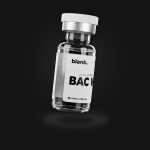
Blank Peptides operates its own cGMP laboratory in the United States, and performs synthesis, vialing, lyophilization, labeling and quality control release in-house. The company describes this as holding the chain of custody itself rather than relabeling or brokering material made elsewhere, and it also contract-manufactures and fulfils for other research peptide brands as a separate line of business.
Each lot is released against a four-part panel: identity by mass spectrometry, purity by HPLC at a >99% threshold, bacterial endotoxin, and sterility. Analysis is carried out by two named independent laboratories, Freedom Diagnostics and Horizon Analytical, and the reports are published as batch certificates of analysis that any buyer can open before ordering. Every vial carries the lot number matching its certificate, and lyophilized material is dated for roughly 24 months from release.
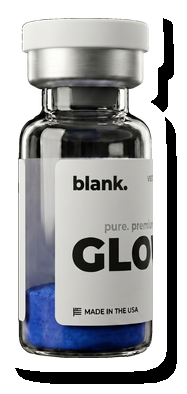
BPC-157 appears in the catalog as a 10mg vial and inside three blends whose composition is itemised per component: GLOW at 70mg (GHK-Cu, BPC-157, TB-500), KLOW at 80mg (those three plus KPV), and Wolverine at 20mg (BPC-157 and TB-500). That itemisation matters for the comparison below, since a buyer weighing a 10mg blend against a 20mg blend can’t read either number until the split is disclosed. The catalog holds 34 compounds. Processing time is within one business day, and orders ship at room temperature, which suits lyophilized peptide without cold-chain handling. The company has operated for five years and sells for research use only.
What four BPC-157 vendors publicly state
Here’s what was visible on 2026-09-08, vendor by vendor, in their own words.
Protide Health lists BPC-157 in 10mg, 20mg and 40mg vials and states “99% Purity (HPLC-MS Verified)”, with per-batch figures of 99.74%, 99.87% and 99.23% shown against the three sizes. The page states that “Every batch is independently third-party tested by Freedom Diagnostics, a third-party U.S. laboratory”, and describes that testing as covering identity by LC-MS, purity by HPLC-UV, endotoxin by LAL assay under USP <85>, and net content. Batch certificates carrying lot numbers such as “Lot PH-bc10-0615” open from the product page before purchase, and the company also runs a searchable COA library where reports are retrievable by compound or COA number. The site states the product “is intended solely for laboratory research purposes. It is not for human consumption, medical use, veterinary use, or household application.” Sterility was not listed among the four reported parameters on the pages reviewed.
Sports Technology Labs lists BPC-157 as a 5mg lyophilized vial and states “Verified Purity: Batch-tested to 99.43% (HPLC); minimum 98%”. The page names MZ Biolabs of Tucson, Arizona as the accredited US laboratory performing identity, purity and concentration testing, embeds an image of the most recent batch certificate, and states that “Our third-party certificates of analysis are published on our website — no login required.” The company states elsewhere that “we share certificates with contact information for these laboratories to ensure that customers know that what they are buying is real.” Its stated floor of 98% sits below the 99% figure quoted in its own headline, which is a distinction worth reading twice. The site states all products “are for research purposes only and are not for human consumption.”
Biotech Peptides lists BPC-157 in 5mg and 10mg, states “99% purity” and “Synthesized and Lyophilized in the USA”, and displays certificate images for both sizes carrying a 20260721 date stamp in the file names. The company states that “Biotech Peptides is a chemical supplier” and that it is not a compounding pharmacy or outsourcing facility. On the pages reviewed 2026-09-08, no testing laboratory was named in the prose, and endotoxin and sterility results were not listed alongside the purity figure.
Purerawz earns a place here because its BPC-157 page states something the others don’t. That page states plainly that “BPC-157 products are not sold by Purerawz. Purerawz provides informational content and may include affiliate links to third-party websites where products are listed”, showing a range of $39.99 to $148.75 across several outside sellers. On the page reviewed, no purity figure, named laboratory or certificate applied to a Purerawz-supplied vial.
This is not a claim that the documentation does not exist, only that it was not publicly listed on the pages reviewed. And on one axis these vendors beat us outright: Sports Technology Labs names its laboratory down to the city and publishes a no-login certificate library, while Protide Health’s searchable COA library lets you pull a report by number without hunting through product pages. Both approaches make finding a specific document faster than browsing a chronological archive does, and that’s a genuine usability advantage.
Side by side: BPC-157 documentation
| Attribute | Blank Peptides | typical vendor |
|---|---|---|
| Synthesises in-house | Own cGMP lab; synthesis through QC release under one roof | States “synthesized and lyophilized in the USA” without naming the facility — verify |
| Third-party lab named | Freedom Diagnostics and Horizon Analytical | States third-party testing; two of four pages reviewed named the lab, two did not — verify |
| HPLC purity | >99% per lot | States 99%, sometimes with a lower stated minimum in the same specification — verify |
| MS identity | Confirmed per lot by mass spectrometry | States LC-MS or HPLC-MS on some pages, purity figure alone on others — verify |
| Endotoxin and sterility | Both tested and reported per lot | States endotoxin on one page reviewed; sterility not listed on any BPC-157 page reviewed 2026-09-08 — verify |
| Batch COA before purchase | Public library at /coas/, lot-numbered, every lot | States certificates on product pages or in a searchable library; coverage varies by compound — verify |
| Blend mg split disclosed | GLOW, KLOW and Wolverine each itemised per component | States a total milligram figure on some blend pages without the per-component split — verify |
| Catalog size | 34 compounds | States catalogs ranging from a few dozen items to well over a hundred |
| Research-use labelling | Research use only, stated on every listing | States “not for human consumption” in footer or product text |
How to verify either supplier yourself
- Open the BPC-157 page and look for a link rather than a badge, since a graphic reading “3rd Party Tested” that opens nothing tells you precisely nothing.
- Read the date and lot number on whatever certificate you find, then ask yourself whether a report from several months back plausibly describes the vial being packed for you today.
- Look up the laboratory named on the certificate and ask them to confirm the report number, because a real contract lab will take that call and an invented one can’t.
- Count the panel lines: HPLC purity, mass spectrometry identity, bacterial endotoxin, sterility. Treat every missing line as something you’ll either test yourself or knowingly accept as unmeasured.
- Walk the whole process once with the supplier verification checklist before placing a first order with any new vendor.
Further reading
- Which Peptide Vendors Name Their Testing Lab?
- Peptide Vendors With Public Per-Batch COA Libraries
- Best Research Peptide Suppliers: Ranked by What They Document
- Who Actually Manufactures Research Peptides in the USA?
Frequently asked questions
Who are the best BPC-157 vendors on documentation?
The ones whose BPC-157 page names the testing laboratory, links a dated certificate carrying a lot number, and reports contamination testing next to the purity figure. Among pages reviewed 2026-09-08, Protide Health and Sports Technology Labs named their laboratories and published certificates openly. Blank Peptides publishes a four-part panel per lot with two named laboratories.
Does a 99% purity claim on a BPC-157 page mean anything?
On its own, not much, since the number is usually typed into the page template rather than read off a document. It becomes checkable when a certificate sits beside it that names the laboratory, states the method, carries a lot number, and is dated closely enough to the material you’re buying that it plausibly describes your vial rather than a run from last year.
What tests should a BPC-157 certificate include?
Four lines cover the useful ground: HPLC for chromatographic purity, mass spectrometry for identity confirmation, bacterial endotoxin, and sterility. Most BPC-157 certificates reviewed on 2026-09-08 reported purity, and some reported endotoxin. Sterility appeared least often on the compound pages themselves, which leaves a real measurement gap you should price in.
Why does the blend milligram split matter for BPC-157?
BPC-157 is sold inside mixtures more often than most research peptides, and a “20mg blend” might be 10mg of each component or some other division entirely. Without the per-component figure you can’t calculate concentration for either peptide after reconstitution, and a purity result measured across a mixture is difficult to interpret against any single component.
Are these products for human use?
No. Every compound and vendor referenced here supplies material strictly for in-vitro laboratory research by qualified professionals. Blank Peptides sells for research use only, and each vendor page reviewed carried its own statement that products are not for human consumption. Nothing above should be read as guidance for any use outside a laboratory setting.
For research use only. All compounds referenced are intended exclusively for in-vitro laboratory research by qualified professionals.
Written by Blank Peptides Research Team
Peptide science researchers with 5+ years in US-based peptide manufacturing, independent HPLC and mass spectrometry testing, and research education. All content is reviewed for scientific accuracy before publication.
REVIEWED BY
Dr. Tobias S — PhD Chemist, Peptide and Unnatural Amino Acid Synthesis
Dr. Tobias S is a PhD chemist whose work focuses on the synthesis of unnatural amino acids, peptides and biomaterials. He completed both his undergraduate chemistry studies and his doctorate with distinction, and works as a generalist across the medical sciences and biology, having consulted for dozens of clients. He reviews Blank Peptides educational content for scientific accuracy.
Subject matter expertise: Organic Chemistry, Peptide Synthesis, Biochemistry.