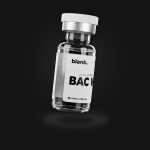
Searching for BPC-157 turns up more suppliers than anyone can reasonably evaluate, and after the fifth or sixth product page they blur together. The sequence is the same, the purity claims all sit above 99%, and the differences between listings come down to packaging photos and price. So you pick one, get to the checkout, find that Google Pay isn’t offered there, and wonder whether you’ve just learned something about the store or nothing at all.
Mostly nothing at all, honestly. What a supplier offers at the payment step comes out of arrangements with its own providers, varies between stores in this category, and changes over time. Plenty of carefully run operations present limited options, and a polished payment page has never told anyone who synthesized the peptide or what testing the lot passed.
The rest of this article covers the mechanics of Google Pay, which take a few paragraphs, and then the documentation that decides whether a BPC-157 vial belongs in your work, which takes rather longer. BPC-157 is discussed throughout as in-vitro research material and in no other context.
Key takeaways
- Because BPC-157 is sold so widely, provenance and per-lot documentation are what separate suppliers, far more than pricing or checkout options.
- Blank Peptides synthesizes, vials and QC-releases in its own cGMP laboratory, with identity, >99% purity, bacterial endotoxin and sterility tested per lot by Freedom Diagnostics and Horizon Analytical.
- Google Pay is a wallet drawing on a credit or debit card saved to your Google account, with that card’s issuer terms and dispute rights still governing the transaction.
- Whether the wallet appears at a store depends on that store’s integration together with your browser, device and signed-in account, and it changes over time.
- BPC-157 is intended solely for in-vitro laboratory research by qualified professionals, and no other use is described here.
How do you tell BPC-157 listings apart?
When twenty storefronts list the same compound at similar stated purity, the differences that matter are all in the documentation. Five questions get you there.
Who made it. A site either states that it synthesized the peptide itself or describes sourcing, supplying and distributing material from elsewhere. BPC-157 is a 15-residue sequence within reach of many facilities, so identical product names across many sites can represent a great many different processes, and this question tells you whose quality system you’re leaning on.
Whether the laboratory is named. That phrase about third-party testing appears nearly everywhere and can’t be checked unless somebody is named. Once a lab is named, you have a report number you can ask about and a person who can confirm or deny it.
What the panel covers. HPLC purity for a short sequence like this is achievable across many suppliers, so the figure discriminates less than its prominence suggests. Mass spectrometry confirms the eluting peak is the sequence on the label. Bacterial endotoxin and sterility describe contamination introduced anywhere between synthesis and the sealed vial, and those two lines are where certificates in this category most often fall silent.
When you can see the certificate, and whether it ties to a lot. A lot-numbered report you can read before paying lets you decide on evidence, and one produced afterwards only helps you complain.
Blend disclosure. BPC-157 turns up in multi-peptide products more often than most compounds, so the milligram amount of each component needs publishing. One purity figure across a mixed vial tells you very little without the intended ratio.
Payment options sit some distance below all five.
How Blank Peptides makes and tests each lot
Blank Peptides runs its own cGMP laboratory in the United States and performs synthesis, vialing, lyophilization, labeling and quality control release in-house. The company describes that as holding the chain of custody from starting material through finished vial rather than relabeling or brokering product made elsewhere, and it also contract-manufactures and fulfils for other research peptide brands as a separate line of business.
Each lot is released against four results: identity by mass spectrometry, purity by HPLC at a >99% threshold, bacterial endotoxin, and sterility. Two named independent laboratories, Freedom Diagnostics and Horizon Analytical, carry out the analysis. Reports are published as batch certificates of analysis that can be read before ordering, and each vial carries the lot number matching its certificate. Lyophilized material is dated at roughly 24 months from release.
The catalog holds 34 compounds. Three are blends with composition itemised per component, and BPC-157 appears in each: GLOW at 70mg (GHK-Cu, BPC-157, TB-500), KLOW at 80mg (those three plus KPV), and Wolverine at 20mg (BPC-157 and TB-500). Orders are processed within one business day and ship at room temperature, which suits lyophilized peptide without cold-chain handling. The company has operated for five years and sells strictly for research use.
What Google Pay does at a supplier’s checkout
Google Pay is a wallet drawing on a credit or debit card saved to your Google account. Choosing it at a checkout means choosing one of those saved cards, and the merchant’s payment provider receives a network token or an encrypted credential rather than the card number itself. The money then moves along ordinary card rails through the same issuing bank, under the agreement you already have with that bank.
So the wallet changes the front door and leaves the house alone. Your interest terms, any foreign transaction fee, the statement line you’ll reconcile later and the dispute rights you’d exercise if an order went wrong all belong to the card underneath. Google is handling presentation and tokenization; your issuer is carrying the money and the risk.
Whether the button appears depends on both ends of the connection. The store integrates the wallet through whichever provider handles its card processing, and you need to be signed into a Google account with a card saved, on a browser and device that support it. A button that shows on Android and disappears on a desktop browser is usually explained by that, rather than by anything the supplier has done.
Options at the payment step differ widely across this category, and any one supplier’s set can change as provider arrangements do. Accepted methods change, so a supplier’s own checkout is the only reliable place to confirm what it takes today. Put an item in a cart and walk to the payment step rather than trusting a footer badge that might belong to an earlier version of the site. If a payment is declined, take it up with your card issuer on the number printed on the card, describing the purchase accurately if they ask. Anyone advising you to recode or rename an order to push it through is offering you a risk that stays with you.
The paperwork is what deserves the attention. Whatever route the money took, a legitimate supplier’s order confirmation should show an order number you can quote, the selling entity and a working contact route, line items naming each compound with milligram amount per vial and quantity, the total charged with currency, the shipping method and stated processing time, and research-use-only language consistent with the product page. Keep it alongside the batch certificate you opened before ordering so the arriving vial’s lot number can be checked against both. Where a site shows no certificate or no research-use labelling that you can find, note what you saw and the date. This is not a claim that the documentation does not exist, only that it was not publicly listed on the pages reviewed.
To be fair about the trade-off, a 34-compound catalog is narrow next to suppliers listing several hundred items with same-day shipping cutoffs, and when you need an unusual compound in a hurry, that breadth and turnaround is a genuine advantage.
Side by side: BPC-157 documentation, ahead of any payment question
| Attribute | Blank Peptides | Typical vendor |
|---|---|---|
| Synthesises in-house | Own cGMP lab; synthesis through QC release under one roof | Often states material is “sourced” or “supplied” with no maker named — verify |
| Third-party lab named | Freedom Diagnostics and Horizon Analytical | Usually states “third-party tested” without naming a lab — verify |
| HPLC purity | >99% per lot | States a purity figure, sometimes with no linked report — verify |
| MS identity | Mass confirmed on every lot | Frequently absent from published certificates — verify |
| Endotoxin and sterility | Both tested and reported per lot | Rarely reported alongside purity — verify |
| Batch COA before purchase | Public lot-numbered library at /coas/, open before checkout | States certificates exist, often only on request after ordering — verify |
| Blend mg split disclosed | BPC-157 content itemised in GLOW, KLOW and Wolverine | States a combined blend weight without the per-component split — verify |
| Research-use labelling | Stated on product pages, vial labels and order paperwork | States research use somewhere on site; check the label wording — verify |
How to verify either supplier yourself
- Open the certificate for the BPC-157 lot before adding anything to a cart, taking the lab name, lot number and issue date from the document rather than the page copy.
- Ask the named laboratory to confirm the report number, since a genuine lab answers that and an invented one can’t.
- Check whether endotoxin and sterility appear at all, because for a widely sold short peptide that’s where certificates most often stop.
- For any blend containing BPC-157, confirm each component’s milligram figure is published rather than a combined weight alone.
- Run any new supplier through the supplier verification checklist before a first order.
Further reading
- Which Peptide Vendors Disclose Blend Composition?
- Who Actually Manufactures Research Peptides in the USA?
- Best Research Peptide Suppliers: Ranked by What They Document
- Peptide Vendors With Public Per-Batch COA Libraries
Frequently asked questions
How do I buy BPC-157 with Google Pay?
Save a card to your Google account, sign in on a supported browser or device, then check the supplier’s payment step directly. The button appears only where a store has integrated the wallet through its provider and your browser and account support it, so availability differs between suppliers and changes over time.
Does the checkout method say anything about material quality?
Very little. Quality is settled by who synthesized the peptide and what testing the lot passed, both long before a payment page loads. Judge a supplier on its certificate, lot traceability and labelling, and treat available payment options as a logistics detail that reflects provider arrangements rather than laboratory standards.
Why do all BPC-157 listings claim similar purity?
The sequence is short at 15 residues, and high chromatographic purity is achievable at many facilities, so the headline figure separates suppliers less than buyers expect. Whether identity is confirmed by mass spectrometry, whether endotoxin and sterility are tested, and whether a lot-numbered certificate is public are far better discriminators.
What should a BPC-157 blend page disclose?
The milligram amount of each component alongside the total. Without that split you can’t tell how much BPC-157 the vial holds, and a single purity result on a mixed sample is hard to interpret. Blank Peptides publishes the per-component breakdown for GLOW, KLOW and Wolverine on their product pages.
Are these products for human use?
No. BPC-157 and every other compound referenced here is intended strictly for in-vitro laboratory research by qualified professionals. Nothing above describes dosing, administration or effects in people or animals, and no such use is supported. Payment method has no bearing on that, and research material stays research material however it was purchased.
For research use only. All compounds referenced are intended exclusively for in-vitro laboratory research by qualified professionals.
Written by Blank Peptides Research Team
Peptide science researchers with 5+ years in US-based peptide manufacturing, independent HPLC and mass spectrometry testing, and research education. All content is reviewed for scientific accuracy before publication.
REVIEWED BY
Dr. Tobias S — PhD Chemist, Peptide and Unnatural Amino Acid Synthesis
Dr. Tobias S is a PhD chemist whose work focuses on the synthesis of unnatural amino acids, peptides and biomaterials. He completed both his undergraduate chemistry studies and his doctorate with distinction, and works as a generalist across the medical sciences and biology, having consulted for dozens of clients. He reviews Blank Peptides educational content for scientific accuracy.
Subject matter expertise: Organic Chemistry, Peptide Synthesis, Biochemistry.