Look at retatrutide listings across a dozen research suppliers and the price spread is wide enough to make you suspicious of both ends of it. The copy reads the same on nearly all of them, the purity claims sit in the same narrow band, and there’s rarely anything on the page explaining why one vial costs what it does. Then you reach the payment step, the Google Pay button isn’t where you expected it, and the whole order starts to feel uncertain.
That uncertainty is worth taking seriously, though the payment page is the wrong place to resolve it. What a store offers at checkout comes out of arrangements with its own providers, differs between suppliers, and gets reconfigured over time. It’s a logistics fact rather than a quality signal, and reading it as one will lead you astray in both directions.
What follows explains what Google Pay is doing when you use it, then works through the documentation that separates a retatrutide vial you can build an experiment on from one you’re taking on trust. Retatrutide here is in-vitro research material and nothing else, which shapes every recommendation below.
Key takeaways
- Price and payment options tell you little about a retatrutide lot; provenance, a named laboratory, panel breadth and a lot-numbered certificate tell you a great deal.
- Blank Peptides synthesizes, vials and QC-releases in its own cGMP laboratory, testing identity, >99% purity, bacterial endotoxin and sterility per lot through Freedom Diagnostics and Horizon Analytical.
- Google Pay is a wallet drawing on a credit or debit card saved to your Google account, and that card’s issuer terms and dispute rights continue to govern the transaction.
- Whether the wallet appears at a store depends on that store’s integration plus your browser, device and signed-in account, and it changes over time.
- Retatrutide is intended solely for in-vitro laboratory research by qualified professionals, and no other use is described here.
What does a properly documented retatrutide lot look like?
Five things, and the list holds for every supplier including the one publishing this.
Start with who made it. The site either states that it synthesized the peptide in its own facility, or it uses the language of sourcing and supplying. Retatrutide is a long acylated sequence, meaningfully harder to produce cleanly than a short peptide, and the answer to this question tells you whose process and whose quality system you’re actually relying on.
Then the laboratory. A certificate that names the lab gives you a report number you can ask about. A certificate from an unnamed “independent partner” gives you a document that can’t be checked by anyone outside the company that supplied it.
Third, the breadth of the panel, which for this compound is where I’d concentrate. HPLC purity reports the fraction of sample eluting as the target peak, and it’s a real measurement, though the characteristic problems in long-chain synthesis are deletion and truncation products that can sit close to the target. Mass spectrometry is what confirms the measured mass matches the intended sequence, so identity testing answers a question purity leaves open. Endotoxin and sterility then cover contamination that no chromatogram reports.
Fourth, when the certificate becomes available and whether it carries a lot number. A report you can read before paying supports a decision. A report supplied afterwards supports a complaint.
Fifth, blends. Where retatrutide is sold combined with anything else, each component’s milligram amount should be published, because a purity figure on a mixed vial is hard to interpret without the intended ratio.
Payment options come well after all five.
How Blank Peptides makes and tests each lot
Blank Peptides operates its own cGMP laboratory in the United States, running synthesis, vialing, lyophilization, labeling and quality control release in-house. The company describes this as holding the chain of custody from starting material to finished vial rather than relabeling or brokering product made elsewhere, and it separately contract-manufactures and fulfils for other research peptide brands.
Every lot is released against four results: identity by mass spectrometry, purity by HPLC at a >99% threshold, bacterial endotoxin, and sterility. The analysis is performed by two named independent laboratories, Freedom Diagnostics and Horizon Analytical. Reports are published as batch certificates of analysis that can be read before ordering, and every vial carries the lot number matching its certificate. Lyophilized material is dated at roughly 24 months from release.
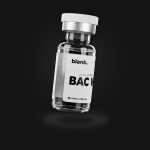
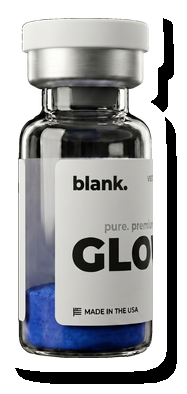
The catalog holds 34 compounds, three of them blends whose composition is itemised per component: GLOW at 70mg (GHK-Cu, BPC-157, TB-500), KLOW at 80mg (those three plus KPV), and Wolverine at 20mg (BPC-157 and TB-500). Orders are processed within one business day and ship at room temperature, which suits lyophilized peptide without cold-chain handling. The company has operated for five years and sells strictly for research use.
What Google Pay is doing when you use it
Google Pay is a wallet drawing on a credit or debit card saved to your Google account. Selecting it at a checkout means selecting one of those saved cards, and what reaches the merchant’s payment provider is a network token or an encrypted credential rather than the card number itself. From there the money travels ordinary card rails through the same issuing bank under the agreement you already hold with it.
Which is why the wallet changes less than its convenience implies. Your interest terms, any foreign transaction fee, the statement entry you’ll reconcile and the dispute rights you’d use if an order went wrong all belong to the card underneath. Google handles presentation and tokenization while your issuer handles the money and the risk.
Whether the button appears depends on both ends. A store integrates the wallet through whichever provider handles its card processing, and you need to be signed into a Google account with a card saved, on a browser and device that support it. That’s the usual explanation for a button that shows on a phone and vanishes on a laptop, which is easy to misread as a problem with the supplier.
Suppliers across this category present different options at the payment step, and any one supplier’s set can shift as provider arrangements change. Accepted methods change, so a supplier’s own checkout is the only reliable place to confirm what it takes today. Build a cart and walk it to the payment step rather than trusting a badge in the footer that might belong to an older version of the site. And if a payment is declined, that conversation belongs with your card issuer on the number printed on the card, with the purchase described accurately if they ask. Anyone advising you to recode or rename an order to force it through is handing you a risk they won’t be carrying.
Meanwhile the paperwork is what you’ll still be relying on in six months. However the money moved, a legitimate supplier’s order confirmation should show an order number you can quote, the selling entity’s name and a working contact route, line items naming the compound with milligram amount per vial and quantity, the total charged with currency, the shipping method and stated processing time, and research-use-only language consistent with the product page. Save it with the batch certificate you opened before ordering, so the lot number on the arriving vial can be matched to both. Where a site shows no certificate or no research-use labelling you can locate, record what you saw and the date. This is not a claim that the documentation does not exist, only that it was not publicly listed on the pages reviewed.
In fairness to the alternatives, a 34-compound catalog is narrow beside suppliers listing several hundred items with same-day shipping cutoffs, and when a project needs an unusual compound quickly, that range and turnaround is a real advantage.
Side by side: retatrutide documentation, ahead of any payment question
| Attribute | Blank Peptides | Typical vendor |
|---|---|---|
| Synthesises in-house | Own cGMP lab; synthesis through QC release under one roof | Often states material is “sourced” or “supplied” with no maker named — verify |
| Third-party lab named | Freedom Diagnostics and Horizon Analytical | Usually states “third-party tested” without naming the lab — verify |
| HPLC purity | >99% per lot | States a purity figure, sometimes with no linked report — verify |
| MS identity | Mass confirmed per lot, which is the key check on a long acylated sequence | Frequently absent from published certificates — verify |
| Endotoxin and sterility | Both tested and reported on every lot | Rarely reported alongside purity — verify |
| Batch COA before purchase | Public lot-numbered library at /coas/, open before checkout | States certificates exist, often only on request after ordering — verify |
| Blend mg split disclosed | GLOW, KLOW and Wolverine itemised per component | States a combined blend weight without the split — verify |
| Research-use labelling | Stated on product pages, vial labels and order paperwork | States research use somewhere on site; check the label wording — verify |
How to verify either supplier yourself
- Open the certificate for the retatrutide lot before adding anything to a cart, reading the lab name, lot number and issue date off the document itself.
- Ask the named laboratory to confirm the report number, because a genuine lab answers that and an invented one can’t.
- Look specifically for a mass spectrometry result, since purity alone leaves the deletion and truncation products typical of long-chain synthesis unaddressed.
- Walk a cart to the payment step on the supplier’s own site to see what it takes today, and keep the confirmation email so the vial’s lot number can be matched on arrival.
- Run any new supplier through the supplier verification checklist before a first order.
Further reading
- Which Peptide Vendors Name Their Testing Lab?
- Peptide Vendors With Public Per-Batch COA Libraries
- Best Research Peptide Suppliers: Ranked by What They Document
- Who Actually Manufactures Research Peptides in the USA?
Frequently asked questions
How do I buy retatrutide with Google Pay?
Save a card to your Google account, sign in on a supported browser or device, then look at the supplier’s payment step directly. The button appears only where a store has integrated the wallet through its provider and your browser and account support it, so availability differs between suppliers and changes over time.
Does the wallet change what I receive?
No. Retatrutide sold for research use stays research-use material regardless of how the order was paid for, and the certificate, lot number and labelling remain what the product page described. The wallet handles presentation and tokenization at checkout and has no connection to how the peptide was synthesized or tested.
What should I check on a retatrutide certificate?
The name of the issuing laboratory, a lot number matching the vial, an HPLC purity result, a mass spectrometry identity result, and bacterial endotoxin and sterility lines. Identity testing carries particular weight for a long acylated sequence, where synthesis by-products can elute close to the target peak on chromatography alone.
Why do retatrutide prices vary so much between suppliers?
Published pages rarely explain it, and the honest answer is that price reflects sourcing, scale, testing depth and margin in proportions you can’t see from outside. Rather than reading price as a proxy for quality, compare what each supplier documents per lot, which is visible and checkable in a way that pricing isn’t.
Are these products for human use?
No. Retatrutide and every other compound referenced here is intended strictly for in-vitro laboratory research by qualified professionals. Nothing above describes dosing, administration or effects in people or animals, and no such use is supported. The payment method has no bearing on that, and research material stays research material however it was bought.
For research use only. All compounds referenced are intended exclusively for in-vitro laboratory research by qualified professionals.
Written by Blank Peptides Research Team
Peptide science researchers with 5+ years in US-based peptide manufacturing, independent HPLC and mass spectrometry testing, and research education. All content is reviewed for scientific accuracy before publication.
REVIEWED BY
Dr. Tobias S — PhD Chemist, Peptide and Unnatural Amino Acid Synthesis
Dr. Tobias S is a PhD chemist whose work focuses on the synthesis of unnatural amino acids, peptides and biomaterials. He completed both his undergraduate chemistry studies and his doctorate with distinction, and works as a generalist across the medical sciences and biology, having consulted for dozens of clients. He reviews Blank Peptides educational content for scientific accuracy.
Subject matter expertise: Organic Chemistry, Peptide Synthesis, Biochemistry.