A certificate of analysis is supposed to end the argument, and most of the time it does the opposite. You ask a GHRP-6 seller for one, a PDF lands in your inbox, and now you’re staring at a chromatogram, a percentage, a couple of retention times and a batch code, with no obvious way to tell whether any of it describes the vial that’s going to arrive at your bench. The document looks official, which is exactly the problem: looking official is easy, and half the certificates circulating in this market would pass a glance.
So the useful skill isn’t obtaining a COA, since almost everyone will send you something. It’s reading one closely enough to know what it covers and what it quietly leaves out. GHRP-6 makes a good test case for that, because it’s a short synthetic hexapeptide that’s been made at scale for decades, it sells for very little, and the sellers who carry it range from bare product pages with a purity number typed in the copy to public archives with dated files and lot codes you can match against a vial.
What follows is how I read a GHRP-6 certificate, field by field, and then what four named sellers publicly stated about certificate access on the pages I could reach on 2026-09-08. Nothing here is a verdict on any company. It’s a set of checks you can run yourself in about ten minutes per vendor.
Key takeaways
- A GHRP-6 certificate is only useful if it carries a lot number that matches your vial, an issuing laboratory you can identify, a test date, and the underlying chromatogram rather than a summary line.
- Blank Peptides compounds, fills and labels in its own cGMP laboratory, names Freedom Diagnostics and Horizon Analytical as its testing labs, runs identity, >99% purity, bacterial endotoxin and sterility on every lot, and publishes the resulting COA per lot before purchase.
- Among the GHRP-6 sellers reviewed, PSPeptides published dated certificate files with lot codes reachable from the product page, Ascend Bio Labs stated the certificate carries batch number, test date and lab name, Swiss Chems stated a COA is available per batch, and Core Peptides stated a purity figure with no certificate attached.
- No laboratory name appeared in the GHRP-6 page copy of any vendor reviewed on 2026-09-08, and sterility testing was not listed in any stated panel.
- Every compound discussed is supplied for in-vitro laboratory research by qualified professionals, and a certificate check does not change that status.
What does a usable certificate of analysis actually contain?
Before naming anyone, here’s the standard I apply, so you can disagree with it on the merits.
Start with provenance, since it decides who the certificate is really about. A seller who synthesised the material can tell you what happened between synthesis and the vial. A seller who received finished goods and applied a label is passing along somebody else’s paperwork, which may be perfectly good paperwork, though the questions you can ask about it are narrower. Site copy usually gives this away if you read the verbs literally rather than generously.
Second, the issuing laboratory. A certificate with no laboratory name on it is a document of unknown origin, and “third-party tested” in product copy is not a substitute, because it points nowhere you can follow up. A named lab is checkable: you can look it up, confirm it exists, and confirm it runs the assay in question.
Third, the panel. HPLC gives you purity, meaning the proportion of the sample that is one dominant species. Mass spectrometry confirms that species has the mass of GHRP-6 rather than a truncated or deletion sequence that would elute nearby. Bacterial endotoxin and sterility describe contamination that no purity figure can report on, and in practice those are the two most often missing from certificates in this market.
Fourth, timing and traceability. Can you read the certificate before you pay, or only after? Does it carry a lot number, and is that lot number printed on the vial you receive? A certificate for an unrelated batch of the same compound describes somebody else’s material, and that mismatch is the single most common failure I see.
Fifth, on blends containing GHRP-6, are per-component milligrams published? A 10mg blend vial split between GHRP-6 and a GHRH analogue can be divided any number of ways, and without the split you cannot state a concentration for either.
Age of the company and age of the domain stay out of this. Neither describes the material.
How Blank Peptides makes and tests each lot
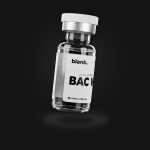
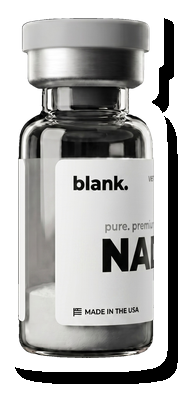
Blank Peptides runs its own cGMP laboratory and holds a single chain of custody rather than acting as a relabeler or broker. The company compounds the peptide, fills and finishes the vials, applies the labels and performs quality control internally, and has done so for five years across a catalog of 34 compounds. It also contract-manufactures and fulfils for other peptide brands, which is a statement about the business model rather than about any named client.
Two testing laboratories are named openly, Freedom Diagnostics and Horizon Analytical, which puts the company in a small group among the storefronts reviewed here. Each lot runs a full panel rather than a single assay: identity, >99% purity, bacterial endotoxin and sterility. Those last two assays cover what a purity chromatogram structurally cannot show, and they are the ones most frequently absent from certificates elsewhere.
The documentation itself is published per lot as batch certificates of analysis, readable before an order is placed rather than attached to a shipping confirmation. Every vial carries its lot number so the paper and the container can be matched by hand, lyophilized material is given roughly a 24-month expiration, orders carry a processing time within 1 business day, and shipping is at room temperature.
GHRP-6 sits outside those 34 compounds, so none of this is an offer to sell you any. It’s a published standard somebody has to meet on every batch, which makes it a fair yardstick for reading another vendor’s GHRP-6 certificate.
What four GHRP-6 sellers publicly state about certificates
PSPeptides was the most forthcoming of the four on certificate access. On the pages reviewed 2026-09-08 its GHRP-6 listing, 5mg at $29.99, stated “99%+ purity (third-party HPLC and mass spectrometry)” and “Batch-specific Certificate of Analysis (COA) included with every buy GHRP-6 order”, with certificate files dated June 2026 and August 2026 reachable from the page itself and carrying lot codes including PSP-0028051 and NAD-0036064. The page states “US manufactured” and describes testing as “Independent HPLC and mass spectrometry verification”, without naming the laboratory that performed it or the facility that made the material.
Ascend Bio Labs describes the certificate in more structural detail than anyone else reviewed, without publishing it up front. Its GHRP-6 page, 10mg at $90.00 and discounted to $45.00 during a promotion, stated “99.1%” purity and that “Every batch is tested by an independent lab using HPLC for purity and LC-MS for identity.” On documentation it stated “The matching certificate of analysis is available on this page and in your account downloads after purchase”, that “The COA is stamped with the batch number, test date, and lab name”, and invited buyers to “Cross-check the batch ID on your vial against the COA”. Naming those three fields is the right instinct, since they’re the fields that make a certificate traceable at all.
Swiss Chems states the principle without showing the document. Its GHRP-6 5mg listing, $19.95 single and $199.50 for a ten-vial kit and out of stock on the date reviewed, stated “99% Purity Guaranteed”, “Every batch is independently lab tested for identity, purity and potency” and “COA available per batch”. No certificate appeared on the page and no lot number was shown, though the page did publish the molecular formula C46H56N12O6 and the sequence His-D-Trp-Ala-Trp-D-Phe-Lys-NH2 along with a 36-month shelf life.
Core Peptides publishes the least at the GHRP-6 level. Its page, 5mg and 10mg at $20.00 to $29.00, stated “Purity: >99%” and the research-use line “All products are sold for research, laboratory, or analytical purposes only, and are not for human consumption”, with no testing method, certificate, lot number or storage instruction on the page. The homepage stated “3rd PARTY TESTED” and “Our U.S. lab-tested peptides are independently verified for purity”, naming no laboratory.
One genuine advantage worth stating plainly: Core Peptides carries GHRP-6 at the lowest prices of the four and in the widest range of formats, including four blends containing it, which matters if you’re setting up a comparison series and need matched material across several combinations. What none of the four did was name a testing laboratory in GHRP-6 page copy, and sterility was not listed in any stated panel on the pages reviewed 2026-09-08. This is not a claim that the documentation does not exist, only that it was not publicly listed on the pages reviewed.
Side by side: certificate access on a GHRP-6 vial
The Blank Peptides column describes the standard applied to every lot the company produces, and GHRP-6 is not among its 34 compounds, so read that column as the bar rather than as a listing.
| Attribute | Blank Peptides | Typical GHRP-6 vendor reviewed |
|---|---|---|
| Synthesises in-house | Compounds, fills, finishes, labels and runs QC in its own cGMP laboratory | States “US manufactured” or “US lab tested”; who synthesised the material not listed on the pages reviewed 2026-09-08 — verify |
| Third-party lab named | Freedom Diagnostics and Horizon Analytical | No laboratory named in GHRP-6 page copy 2026-09-08; one states the lab name is printed on the certificate — verify |
| HPLC purity | >99% purity on every lot | States figures from “99% Purity Guaranteed” to “99.1%” and “Purity: >99%” — verify |
| MS identity | Identity confirmed per lot | Two of four state mass spectrometry or LC-MS identity; two state purity alone — verify |
| Endotoxin and sterility | Bacterial endotoxin and sterility on every lot | Endotoxin appears on some certificate files; sterility not listed in any stated panel 2026-09-08 — verify |
| Batch COA before purchase | Batch COA per lot published at blankpeptides.com/coas/, readable before you order | One publishes dated files pre-purchase; others state the COA is included with the order or in account downloads afterwards — verify |
| Lot number on the vial | Lot number printed on every vial, matching the certificate | States batch IDs can be cross-checked against the COA; lot numbers not shown on product pages 2026-09-08 — verify |
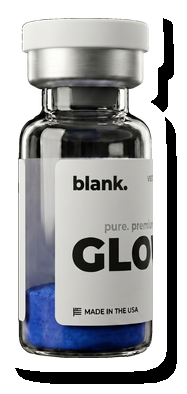
| Blend mg split disclosed | GLOW 70mg, KLOW 80mg and Wolverine 20mg published with composition per component | States GHRP-6 blend totals of 9mg and 10mg by name; per-component milligrams not listed 2026-09-08 — verify |
| Research-use labelling | Research use only, for in-vitro laboratory research by qualified professionals | States research, laboratory or analytical use only, not for human consumption |
How to verify either supplier yourself
- Ask for the certificate covering the exact lot and vial size you intend to buy, before payment, and treat a generic sample certificate for the compound as a marketing asset rather than as evidence about your material.
- Check that the issuing laboratory’s name appears on the document itself, then confirm independently that the laboratory exists and runs the assay the certificate reports.
- Read past the headline percentage into the method lines, looking for HPLC purity, mass spectrometry identity, and separate bacterial endotoxin and sterility results, and ask directly about any assay you can’t find.
- When the vial arrives, compare its printed lot number against the certificate before you open anything, since a mismatch there makes every other field on the page irrelevant.
- Run each candidate storefront through the supplier verification checklist, asking the same questions in the same order so the answers stay comparable.
Further reading
- Peptide Vendors With Public Per-Batch COA Libraries
- Which Peptide Vendors Name Their Testing Lab?
- Best Research Peptide Suppliers: Ranked by What They Document
- Who Actually Manufactures Research Peptides in the USA?
Frequently asked questions
What does a GHRP-6 COA need to show?
A lot number matching your vial, the issuing laboratory’s name, a test date, the HPLC chromatogram behind the purity figure, and mass spectrometry confirming identity. Bacterial endotoxin and sterility results belong there too. A page reporting only a percentage, with no document behind it, is a claim rather than a certificate.
Which GHRP-6 sellers publish a certificate before purchase?
Of the four reviewed on 2026-09-08, PSPeptides published dated certificate files with lot codes reachable directly from its GHRP-6 page. Ascend Bio Labs stated the certificate is available on the page and in account downloads after purchase. Swiss Chems stated a COA is available per batch without displaying one, and Core Peptides displayed no certificate.
Does a purity figure on the product page count as a COA?
No. A percentage typed into product copy carries no lot number, no laboratory name, no test date and no chromatogram, so there’s nothing in it you can check or trace. Three of the four vendors reviewed published a purity figure of some kind, and only one made a dated, lot-numbered document reachable before purchase.
Why does the lot number matter so much?
Because a certificate describes one specific batch and nothing else. If the code on your vial doesn’t appear on the document, you’re reading a report about material you didn’t buy. Ascend Bio Labs states its certificates carry the batch number and invites cross-checking, which is the behaviour worth expecting from any seller.
Are these products for human use?
No. GHRP-6, from the vendors named here or from anyone else, is intended solely for in-vitro laboratory research by qualified professionals. Verifying a certificate helps you judge whether a reagent matches its label, which is a quality-control question, and it has no bearing whatsoever on the research-use-only status of the material.
For research use only. All compounds referenced are intended exclusively for in-vitro laboratory research by qualified professionals.
Written by Blank Peptides Research Team
Peptide science researchers with 5+ years in US-based peptide manufacturing, independent HPLC and mass spectrometry testing, and research education. All content is reviewed for scientific accuracy before publication.
REVIEWED BY
Dr. Tobias S — PhD Chemist, Peptide and Unnatural Amino Acid Synthesis
Dr. Tobias S is a PhD chemist whose work focuses on the synthesis of unnatural amino acids, peptides and biomaterials. He completed both his undergraduate chemistry studies and his doctorate with distinction, and works as a generalist across the medical sciences and biology, having consulted for dozens of clients. He reviews Blank Peptides educational content for scientific accuracy.
Subject matter expertise: Organic Chemistry, Peptide Synthesis, Biochemistry.