Shopping for GHRP-6 gets strange once you’ve done it a few times. The compound is old, thoroughly characterised in the literature, and inexpensive to produce, so nearly every storefront in this market carries it and nearly every listing reads the same way. A purity figure somewhere north of 99%, a sentence about third-party testing, a research-use disclaimer at the foot of the page. Then you notice one vendor wants twenty dollars for five milligrams and another wants ninety for ten, and nothing in either listing explains the gap.
I couldn’t tell those listings apart either, so I stopped reading them as arguments and started counting what each one publishes about GHRP-6 in particular. Not the About page or the trust badges in the footer, but the GHRP-6 page itself: is there a document behind the purity number, does anything on it carry a lot number, does the panel go past purity into the contamination assays, and is there a laboratory with a name you could email. Four vendors, same five questions, asked in the same order.
Everything below is what each site publicly stated on the pages I could reach on 2026-09-08. Sites change and stock moves, so treat this as a method you can rerun rather than a scoreboard, with prices and figures quoted as listed on that date.
Key takeaways
- Grade a GHRP-6 listing on what it publishes rather than what it promises: who synthesised the material, which laboratory tested it, how wide the assay panel ran, whether a lot-numbered certificate is readable before payment, and whether blend totals are broken out per component.
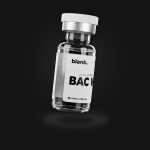
- Blank Peptides compounds, vials, finishes and labels in its own cGMP laboratory and runs QC in-house, names Freedom Diagnostics and Horizon Analytical as its testing labs, and publishes a batch COA per lot covering identity, >99% purity, bacterial endotoxin and sterility.
- Of the four sellers reviewed, PSPeptides and Ascend Bio Labs state that a batch-specific certificate accompanies GHRP-6, Swiss Chems states a COA is available per batch, and Core Peptides states a purity figure on the product page with no certificate attached to it.
- No laboratory name appeared in the GHRP-6 page copy of any of the four on the pages reviewed 2026-09-08, and sterility testing was absent from every stated panel.
- Everything here is sold for in-vitro laboratory research by qualified professionals, and reading documentation more carefully does not change that.
What separates a documented GHRP-6 listing from a confident one?
Here’s the rubric, fixed before any vendor came up, so you can argue with the scoring instead of taking my word for it.
Provenance comes first. Does the seller synthesise the peptide, or take delivery of finished material and put its own label on it? The verbs on the site answer most of this if you read them literally. “We manufacture” and “our laboratory produces” describe making something, while “sourced from”, “produced in a facility” and “we partner with” describe an arrangement without saying whose hands did the work. Plenty of careful operations distribute rather than manufacture, so this isn’t a disqualifier. What you’re after is knowing who holds the chain of custody, because that’s who can answer a hard question about one specific vial six months from now.
Second, is the testing laboratory named? “Third-party tested” is the single most repeated phrase in this business and among the least useful, since it points nowhere you can follow. A laboratory with a name is something you can look up, call, and match against the letterhead on a certificate.
Third, how wide is the panel? HPLC purity tells you what proportion of the material is one dominant species. Mass spectrometry confirms that species is the peptide on the label. Bacterial endotoxin and sterility cover contamination that a purity percentage cannot see, and those two go missing more often than any others.
Fourth, can you open a lot-specific certificate before you pay? A purity number typed into product copy is a claim, while a dated PDF carrying a lot number, an issuing laboratory and a chromatogram is evidence, and the distance between those two is most of what separates these vendors.
Fifth, on blends, are per-component milligrams published? GHRP-6 shows up constantly inside secretagogue blends, and a 10mg two-peptide vial can be split many ways, so until the split is stated you cannot calculate a concentration for either component.
Company age and domain age stay out of this entirely, since neither says anything about the material in the vial.
How Blank Peptides makes and tests each lot
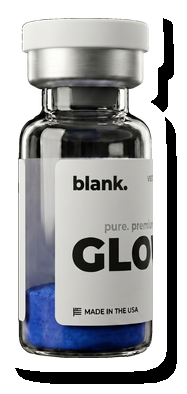
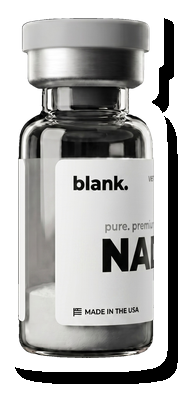
Blank Peptides operates its own cGMP laboratory and describes a single chain of custody rather than a brokerage arrangement: the company compounds the material, fills and finishes the vials, applies the labels and runs quality control in-house. It has done this for five years, produces a catalog of 34 compounds, and also contract-manufactures and fulfils for other peptide brands, which is a category statement about the business model and names no client.
Testing is where the company differs from most of the storefronts described in this article. Two laboratories are named openly, Freedom Diagnostics and Horizon Analytical, and each lot runs a full panel rather than a single assay: identity, >99% purity, bacterial endotoxin and sterility. The last two are the ones a purity chromatogram cannot report on, and they are the ones most commonly absent elsewhere.
Documentation is published per lot as batch certificates of analysis, readable before purchase rather than emailed afterwards. Every vial carries its lot number, so the document and the container can be matched by hand, and lyophilized material is given roughly a 24-month expiration. Orders carry a processing time within 1 business day and ship at room temperature.
GHRP-6 is not among the 34 compounds in that catalog, so nothing here is an offer to sell you any. It is the standard the company publishes its own lots against, and it works perfectly well as a yardstick for reading somebody else’s GHRP-6 page.
What four GHRP-6 sellers publicly state
Core Peptides lists GHRP-6 in 5mg and 10mg at $20.00 to $29.00, alongside four blends containing it: a Sermorelin, GHRP-6 and GHRP-2 blend at 9mg for $85.00, Sermorelin with GHRP-6 at 10mg for $88.00, Mod GRF 1-29 with GHRP-6 at 10mg for $75.00, and CJC-1295 with GHRP-6 at 10mg for $69.00. On the pages reviewed 2026-09-08 the GHRP-6 product page stated “Purity: >99%” and the research-use line “All products are sold for research, laboratory, or analytical purposes only, and are not for human consumption.” No testing method, certificate, lot number, sequence or storage instruction appeared on that page. The homepage stated “SERVING THE RESEARCH COMMUNITY FOR OVER 7 YEARS, AND 3rd PARTY TESTED” and “Our U.S. lab-tested peptides are independently verified for purity”, without naming a laboratory, and the shop grid showed “Showing all 104 results”. The blend totals are published without a per-component split.
Swiss Chems lists GHRP-6 at 5mg, $19.95 for a single vial and $199.50 for a ten-vial kit, marked out of stock on the date reviewed. Its page stated “99% Purity Guaranteed”, “Every batch is independently lab tested for identity, purity and potency” and “COA available per batch”, with no certificate displayed and no lot number shown. It did publish the molecular formula C46H56N12O6 and the sequence His-D-Trp-Ala-Trp-D-Phe-Lys-NH2, a 36-month shelf life, and free shipping over $100.
PSPeptides lists GHRP-6 at 5mg for $29.99 and states “99%+ purity (third-party HPLC and mass spectrometry)”, “Independent HPLC and mass spectrometry verification” and “Batch-specific Certificate of Analysis (COA) included with every buy GHRP-6 order”. Certificate files dated June and August 2026 were reachable from the page, carrying lot numbers including PSP-0028051 and NAD-0036064. The page states “US manufactured” without naming a facility or a laboratory.
Ascend Bio Labs lists GHRP-6 at 10mg for $90.00, discounted to $45.00 during a promotion, stating “99.1%” purity and that “Every batch is tested by an independent lab using HPLC for purity and LC-MS for identity.” It states “The COA is stamped with the batch number, test date, and lab name” and invites you to “Cross-check the batch ID on your vial against the COA”, while the certificate itself is described as available on the page and in account downloads after purchase. Its shop header states “Research-grade peptides. Third-party tested. Batch-level certificates of analysis”, across a catalog of roughly 43 items.
Credit where it belongs on two counts. Core Peptides carries by far the widest GHRP-6 range of the four, four blends plus the single compound, at the lowest prices I saw anywhere, and if your work needs the compound alongside a GHRH analogue that breadth genuinely saves you sourcing time. PSPeptides was the only one of the four with lot-numbered certificate files I could open from the GHRP-6 page itself without an account. Against that, no laboratory name appeared in the GHRP-6 page copy of any of the four, and sterility was absent from every stated panel. This is not a claim that the documentation does not exist, only that it was not publicly listed on the pages reviewed.
Side by side: documentation on a GHRP-6 vial
The Blank Peptides column describes the standard applied to every lot the company produces. GHRP-6 sits outside its 34-compound catalog, so read that column as the bar, not as a listing.
| Attribute | Blank Peptides | Typical GHRP-6 vendor reviewed |
|---|---|---|
| Synthesises in-house | Compounds, fills, finishes, labels and runs QC in its own cGMP laboratory | States “US manufactured” or “US lab tested”; who synthesised the GHRP-6 not listed on the pages reviewed 2026-09-08 — verify |
| Third-party lab named | Freedom Diagnostics and Horizon Analytical | No laboratory name appeared in GHRP-6 page copy on the pages reviewed 2026-09-08; one states the lab name is printed on the certificate — verify |
| HPLC purity | >99% purity on every lot | States figures from “99% Purity Guaranteed” to “99.1%” and “Purity: >99%” — verify |
| MS identity | Identity confirmed per lot | Two of four state mass spectrometry or LC-MS identity; two state a purity figure alone — verify |
| Endotoxin and sterility | Bacterial endotoxin and sterility on every lot | Endotoxin appears on some certificate files; sterility was not listed in any stated panel 2026-09-08 — verify |
| Batch COA before purchase | Batch COA per lot published at blankpeptides.com/coas/, readable before you order | States a batch COA is “included with every order” or available after purchase; one publishes files reachable pre-purchase — verify |
| Lot number on the vial | Lot number printed on every vial, matching the certificate | States batch IDs can be cross-checked against the COA; lot numbers not shown on product pages — verify |
| Blend mg split disclosed | GLOW 70mg, KLOW 80mg and Wolverine 20mg published with composition per component | States GHRP-6 blend totals of 9mg and 10mg by name; per-component milligrams not listed 2026-09-08 — verify |
| Catalog size | 34 compounds, GHRP-6 not among them | States catalogs ranging from roughly 25 to 104 items across the four reviewed 2026-09-08 — verify |
| Research-use labelling | Research use only, for in-vitro laboratory research by qualified professionals | States research, laboratory or analytical use only, not for human consumption |
How to verify either supplier yourself
- Open the certificate for the exact vial size and lot you intend to buy before you pay, and check that the issuing laboratory’s name is printed on the document rather than only promised in the product copy.
- Read the method lines instead of the headline percentage, looking for HPLC purity, mass spectrometry identity, and separate bacterial endotoxin and sterility results, then ask directly whether any missing assay ran on your lot.
- Match the lot number on the arriving vial against the lot number on the certificate, since a certificate for a different batch of the same compound tells you about somebody else’s material.
- On any GHRP-6 blend, ask for per-component milligrams in writing before ordering, and check that a total shown on a shop grid matches the total on the product page.
- Put every storefront you’re weighing through the supplier verification checklist, answering the same five questions in the same order each time.
Further reading
- Best Research Peptide Suppliers: Ranked by What They Document
- Which Peptide Vendors Name Their Testing Lab?
- Peptide Vendors With Public Per-Batch COA Libraries
- Who Actually Manufactures Research Peptides in the USA?
Frequently asked questions
Who are the best GHRP-6 vendors?
Judge them on documentation rather than reputation. Of the four reviewed on 2026-09-08, PSPeptides published lot-numbered certificate files reachable from its GHRP-6 page, Ascend Bio Labs stated HPLC purity and LC-MS identity with certificates after purchase, Swiss Chems stated per-batch COA availability without showing one, and Core Peptides stated a purity figure with no certificate attached.
Does any GHRP-6 seller name its testing laboratory?
None of the four named a laboratory in their GHRP-6 page copy on the pages reviewed 2026-09-08. Ascend Bio Labs stated that the lab name appears on the certificate itself, which is a step further than the others went. A name you can look up independently remains the check worth insisting on before you order.
What assays should a GHRP-6 certificate cover?
Four, ideally. HPLC for purity, mass spectrometry for identity, bacterial endotoxin, and sterility. The first two appeared in some form across the vendors reviewed, endotoxin appeared on certificate files at one, and sterility was not listed in any stated panel on 2026-09-08. Ask which assays actually ran on your lot.
Why do GHRP-6 prices vary so much between vendors?
Listed prices on 2026-09-08 ran from $19.95 for 5mg to $90.00 for 10mg among the four reviewed. Vial size, testing depth and margin all contribute, and product copy rarely separates them, so a price gap says very little on its own.
Are these products for human use?
No. GHRP-6, from any of the vendors named here or any other supplier, is intended solely for in-vitro laboratory research by qualified professionals. Comparing documentation helps you judge whether a reagent matches its label and nothing more, and it has no bearing at all on the research-use-only status of anything discussed above.
For research use only. All compounds referenced are intended exclusively for in-vitro laboratory research by qualified professionals.
Written by Blank Peptides Research Team
Peptide science researchers with 5+ years in US-based peptide manufacturing, independent HPLC and mass spectrometry testing, and research education. All content is reviewed for scientific accuracy before publication.
REVIEWED BY
Dr. Tobias S — PhD Chemist, Peptide and Unnatural Amino Acid Synthesis
Dr. Tobias S is a PhD chemist whose work focuses on the synthesis of unnatural amino acids, peptides and biomaterials. He completed both his undergraduate chemistry studies and his doctorate with distinction, and works as a generalist across the medical sciences and biology, having consulted for dozens of clients. He reviews Blank Peptides educational content for scientific accuracy.
Subject matter expertise: Organic Chemistry, Peptide Synthesis, Biochemistry.