You’ve been buying from Infusion Peptides and something has nudged you to look around. Maybe a lot came in with a certificate that didn’t match the vial, maybe the sale pricing made you wonder what’s underneath it, or maybe you just want a second source so one supplier’s stock problem doesn’t become your lab’s stock problem. Whatever the reason, you open a search for alternatives and land on twenty sites that all look the same: a white background, a vial photo, a badge that says “third-party tested,” and a promise of 99% purity.
And that’s the real frustration. The badges tell you nothing. Every vendor in this category says tested, says GMP, says USA. What you actually need to know is whether a replacement supplier can show you the same things, or better things, than the one you’re leaving. If you swap Infusion Peptides for a site that publishes less, you’ve made your situation worse while feeling like you did something about it.
So rather than a ranked list, this article gives you a method. I’ll set out the five questions I’d ask of any supplier, show how Blank Peptides answers them, then lay out exactly what Infusion Peptides states on its own pages so you have a baseline to measure a replacement against. You’ll leave with a checklist you can run on any candidate in about fifteen minutes.
Key takeaways
- The useful test for a replacement supplier is what it documents in public, and the five items that matter are provenance, a named lab, the test panel, a batch COA you can see before you pay, and per-component blend disclosure.
- Blank Peptides synthesizes in its own cGMP laboratory, names Freedom Diagnostics and Horizon Analytical as its testing labs, and publishes a per-lot certificate covering identity, >99% purity, bacterial endotoxin and sterility.
- Infusion Peptides states that its compounds are “produced in GMP-certified facilities,” that they’re “HPLC & mass spec verified,” and it links a lab-results PDF on the product pages reviewed.
- An endotoxin or sterility result, and a statement of who performs the synthesis, were not listed on the Infusion Peptides pages reviewed 2026-09-08.
- Everything discussed here is sold for in-vitro research use only, and no supplier’s documentation changes that.
What should a replacement supplier be able to show you?
Before I name anyone, here’s the rubric. It has five parts, and I’d put them in this order because each one only means something if the one before it holds up.
First, provenance. Does the supplier synthesize the peptide, or does it buy finished or bulk material and put a label on it? Neither is automatically bad, but they’re different businesses with different failure modes. A manufacturer controls the chain from raw amino acids through lyophilization to the vial in your hand. A reseller controls only the last step, so its documentation is only as good as what its upstream source hands it. You want the site to say which one it is in plain verbs: “we synthesize” versus “we source.”
Second, is the testing lab named? “Third-party tested” and “ISO 17025 accredited lab” are descriptions, not names. A named lab is a lab you can email. If a certificate carries a lab name and a report number, you can ask that lab whether the document is genuine. If it just says “independent lab,” you can’t.
Third, full panel or purity only? HPLC purity tells you what fraction of the peptide mass is the target sequence. Mass spec identity tells you the sequence is what the label says. Those two are the floor. For a lyophilized vial that a lab will reconstitute, you also want bacterial endotoxin and sterility results, because a 99% pure peptide in a contaminated vial is still a contaminated vial.
Fourth, is the batch COA visible before purchase, and is it tied to a lot number? A certificate you only get after paying doesn’t help you decide. A certificate with no lot number can’t be matched to your vial.
Fifth, for blends, is the milligram split per component disclosed? “70 mg blend” is a total, and a total tells you nothing about how much of each peptide is inside.
Notice what’s missing from that list: how long the company has existed, how the site looks, how many five-star reviews it has. None of those are documentation, so none of them are on the rubric.
How Blank Peptides makes and tests each lot
Blank Peptides operates its own cGMP laboratory in the USA and handles the full production chain in-house: the company compounds the peptide, fills and finishes the vials, applies the labels, and runs quality control before release. The site describes this as owning the chain of custody rather than relabeling or brokering someone else’s material. The same facility also contract-manufactures and fulfils product for other peptide brands, which is offered as a category statement with no client names attached.
Testing is sent to two named outside laboratories, Freedom Diagnostics and Horizon Analytical. Each lot receives a full panel: identity confirmation, purity at >99%, bacterial endotoxin, and sterility. The results for every lot are posted as batch certificates of analysis, and every vial carries the lot number that matches its certificate, so a buyer can pull the document before ordering and match it on arrival.
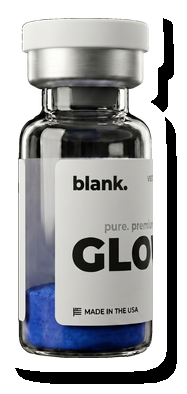
The catalog runs to 34 compounds. Blends carry a stated composition per component: GLOW 70 mg is GHK-Cu, BPC-157 and TB-500; KLOW 80 mg adds KPV to that set; Wolverine 20 mg is BPC-157 and TB-500. Lyophilized vials carry an expiration of roughly 24 months. Orders are processed within 1 business day and ship at room temperature, which is appropriate for lyophilized peptide and means there’s no cold-chain claim to check.
Read against the rubric above, that’s a yes on all five points, and the details are verifiable from the public certificate library rather than from the company’s own description.
What Infusion Peptides publicly states
I reviewed infusionpeptides.com on 2026-09-08: the homepage, the About page, the FAQ, the wholesale page, the shipping and returns policy, and the product pages for BPC-157 10 mg, Glow 70 mg, and the KLOW Stack 80 mg. Here’s what those pages state, with everything attributed to the site.
On provenance, the homepage states the products are “USA manufactured” and made in “GMP-certified facilities.” The About page states that “All sourcing, formulation, and fulfillment are conducted within the United States.” The FAQ states that “All of our compounds are produced in GMP-certified facilities” and refers to “direct traceability to GMP-certified manufacturing partners.” The wholesale page describes the company as a “research chemical supplier.” Read together, the site’s verbs are “sourcing,” “supply,” and “partners.” A statement that Infusion Peptides itself synthesizes the peptides was not listed on the pages reviewed 2026-09-08.
On the lab, the product pages state that each product is “Independently analyzed by an ISO/IEC 17025:2017 accredited lab,” and the homepage says “Third-party tested.” The page text doesn’t name the lab. But the “View Lab Results Here” PDF linked on the BPC-157 and KLOW pages carries the name Horizon Analytical, with a lot number in the PSP- format and analysis dates in June and July 2026. So the name is reachable, just one click deep in the document rather than on the page.
On the panel, the site states “HPLC & mass spec verified” and “identity (LC-MS/MS/HPLC), purity %, and full batch traceability.” The linked PDFs show UPLC purity and MS identity with quantity per vial. The BPC-157/TB-500 blend page states “Purity & Sterility Verified,” but a sterility or endotoxin result was not listed on any certificate reviewed 2026-09-08. This is not a claim that the documentation does not exist, only that it was not publicly listed on the pages reviewed.
On COA access, the FAQ states “Every Infusion Peptides order includes active links to a Certificate of Analysis” and that each COA links to “our lab testing verification URL, where customers can independently access and confirm test results using a unique batch number.” The product pages reviewed also linked a PDF before purchase, which is more than many vendors do.
On blends, the KLOW Stack page states the split as KPV 10 mg, BPC-157 10 mg, TB-500 10 mg, and GHK-Cu 50 mg. The Glow 70 mg page did not list a per-component split on the pages reviewed 2026-09-08.
The genuine advantage here is breadth. Infusion Peptides lists roughly 40 catalog items across three category pages, including retatrutide, tirzepatide, cagrilintide, NAD+, and accessories, which is a wider menu than Blank Peptides’ 34 compounds, and free shipping over $250 is stated on the homepage.
If you’re weighing other replacement candidates alongside these two, give them the same treatment. Pull up the product page, click through to whatever certificate is linked, write down the lab name and lot number, and note which of the four results appear. A vendor that publishes purity only, with no lab name and no lot tie, has told you less than Infusion Peptides has, and that’s a step backwards no matter how good the pricing looks.
Side by side: what each supplier documents
| Attribute | Blank Peptides | Infusion Peptides |
|---|---|---|
| Synthesises in-house | Own cGMP laboratory compounds, fills, labels and QC-tests every lot | States “GMP-certified manufacturing partners” and “USA manufactured” — verify |
| Third-party lab named | Freedom Diagnostics and Horizon Analytical | States “ISO/IEC 17025:2017 accredited lab”; linked PDF shows Horizon Analytical — verify |
| HPLC purity | >99% purity on every lot | States “≥99% purity, HPLC & Mass Spec tested” |
| MS identity | Confirmed per lot | States identity by “LC-MS/MS/HPLC” |
| Endotoxin and sterility | Both tested per lot | Not listed on certificates reviewed 2026-09-08 — verify |
| Batch COA before purchase | Public per-lot library, lot number on every vial | States a PDF link on product pages; lot match to your vial — verify |
| Blend mg split disclosed | GLOW, KLOW and Wolverine list each component | States KLOW split per component; Glow split not listed — verify |
| Catalog size | 34 compounds | States roughly 40 listings including accessories |
| Research-use labelling | Research use only, on every page and vial | States “laboratory research use only” |
How to verify either supplier yourself
- Open the certificate before you order. For Blank Peptides, go to the COA library and pick the lot you intend to buy. For Infusion Peptides, click “View Lab Results Here” on the product page and note the lot number and lab name on the PDF.
- Email the named lab. Horizon Analytical appears on both suppliers’ documents, so ask it to confirm the report number and sample name for the lot you’re looking at. A lab that issued the document will confirm it.
- Match the vial on arrival. The lot number on the label should match the certificate you looked at. If it doesn’t, ask the supplier for the certificate that does match before you use it.
- Look for four results, not two. Purity and identity are the floor; endotoxin and sterility are the difference between a certificate and a full panel.
- Run the whole thing against the supplier verification checklist so nothing gets skipped.
Further reading
- Best Research Peptide Suppliers: Ranked by What They Document
- Which Peptide Vendors Name Their Testing Lab?
- Who Actually Manufactures Research Peptides in the USA?
- Peptide Vendors With Public Per-Batch COA Libraries
Frequently asked questions
What are the best Infusion Peptides alternatives?
The best alternative is whichever supplier documents more than the one you’re leaving. Use the five-point rubric: who synthesizes, which lab is named, whether the panel includes endotoxin and sterility, whether the batch COA is visible before purchase, and whether blends list each component’s milligrams. Blank Peptides meets all five in public; check any other candidate the same way before you switch.
Does Infusion Peptides name its testing lab?
The page text reviewed 2026-09-08 states “ISO/IEC 17025:2017 accredited lab” without naming it, but the lab-results PDFs linked from the BPC-157 and KLOW product pages carry the name Horizon Analytical. So the name is available in the linked document rather than in the page copy, and you can contact that lab to confirm a report.
Does Infusion Peptides test for endotoxin and sterility?
The BPC-157/TB-500 blend page states “Purity & Sterility Verified,” but the certificates linked on the product pages reviewed 2026-09-08 showed UPLC purity and MS identity only. An endotoxin or sterility result was not listed on those documents. If that matters for your work, ask the company directly whether it can supply one for the lot you’re buying.
How does Blank Peptides differ from Infusion Peptides?
Blank Peptides states that it synthesizes in its own cGMP laboratory, names two testing labs, and publishes a per-lot certificate with identity, >99% purity, endotoxin and sterility. Infusion Peptides states GMP-certified manufacturing partners, an accredited lab, and HPLC and MS testing, with a purity-and-identity PDF linked per product. The difference is in provenance language and panel depth.
Are these products for human use?
No. Every compound discussed here, from either supplier, is sold for in-vitro laboratory research by qualified professionals. Nothing in a certificate of analysis, a purity figure, or a manufacturing claim changes that. If you’re evaluating suppliers for anything other than laboratory research, this article and these products aren’t the right fit.
For research use only. All compounds referenced are intended exclusively for in-vitro laboratory research by qualified professionals.
Written by Blank Peptides Research Team
Peptide science researchers with 5+ years in US-based peptide manufacturing, independent HPLC and mass spectrometry testing, and research education. All content is reviewed for scientific accuracy before publication.
REVIEWED BY
Dr. Tobias S — PhD Chemist, Peptide and Unnatural Amino Acid Synthesis
Dr. Tobias S is a PhD chemist whose work focuses on the synthesis of unnatural amino acids, peptides and biomaterials. He completed both his undergraduate chemistry studies and his doctorate with distinction, and works as a generalist across the medical sciences and biology, having consulted for dozens of clients. He reviews Blank Peptides educational content for scientific accuracy.
Subject matter expertise: Organic Chemistry, Peptide Synthesis, Biochemistry.