You’ve read the site twice and you still can’t tell whether the company makes the material or buys it. That’s the honest position most people land in after searching for who makes Zenergy Peptides peptides. The pages say cGMP, they say United States, they say third-party tested, and the sentence that would settle the question keeps not appearing. It’s a common shape of frustration in this market, and it’s rarely because a vendor is being cagey on purpose. Marketing copy just gets written in the passive voice by default, and nobody notices the actor has gone missing.
Why does the answer matter to you? Because it decides whose quality system your lot sits inside and who you’d actually be talking to when something looks off. If a company synthesizes and fills its own vials, it can pull the batch record and tell you what happened on that run. If it buys finished vials from a manufacturer, it can only pass your question along, and how useful that is depends entirely on a relationship you can’t see. Both arrangements produce good material all the time. Knowing which one you’re in is what lets you plan around it.
What follows is the provenance test I apply to any supplier, a description of how Blank Peptides answers the same question, and then the manufacturing language on Zenergy Peptides’ public pages quoted as it read on 2026-09-08. Where a page was gated or a detail wasn’t stated, I’ll say that plainly rather than fill the gap with an inference.
Key takeaways
- The provenance question turns on verbs: a site saying “we synthesize in our laboratory” has committed to something checkable, while “manufactured in a cGMP-certified facility” describes a real arrangement without naming who owns the facility.
- Blank Peptides operates its own cGMP laboratory in the USA, handling compounding, vialing, finishing, labelling and QC in-house, with lot testing at Freedom Diagnostics and Horizon Analytical.
- Zenergy Peptides states that “All Zenergy research compounds are manufactured in a cGMP-certified facility in the United States” and describes a “7x third-party testing standard”.
- Whether Zenergy owns that facility, and the name of the testing laboratory, were not listed on the pages reviewed 2026-09-08, and the shop catalog required a login.
- Every compound referenced is research-use-only material for in-vitro laboratory work by qualified professionals.
What does a vendor’s manufacturing language actually tell you?
Let me fix the reading standard before I open anyone’s About page, because provenance claims are the easiest thing in this market to read generously and the hardest to read accurately. Five questions, and the first one is doing most of the work today.
Provenance: does the company describe manufacturing it performs, or manufacturing that happens? “We synthesize each compound in our own laboratory” names an actor and can be checked by asking about equipment, capacity and batch records. “Manufactured in a cGMP-certified facility” is a sentence with no subject. The facility might belong to the vendor, or to a contract manufacturer the vendor has used for years, or to a broker three steps upstream. All three are compatible with that sentence, and only one of them is what most readers assume. Neither model disqualifies a supplier. The unstated version is what you want to convert into a stated one.
Second, is the testing laboratory named? This compounds with the first question. A company that neither names its manufacturer nor names its laboratory is asking you to accept a chain of custody where every link is anonymous. A lab name is checkable in minutes and costs the vendor nothing to publish.
Third, full panel or purity only? HPLC purity tells you what share of the material is the dominant peak, mass spectrometry identity tells you the peak is the right molecule, and bacterial endotoxin and sterility tell you whether the vial is fit to go near cell culture. Watch for a panel described by outcome without the method being named, which is common and leaves you unable to judge the rigour.
Fourth, is the batch certificate readable before purchase and tied to the lot on your vial? For a vendor that doesn’t synthesize its own product, the certificate is the only window you have onto a run you otherwise can’t see, so lot matching carries extra weight.
Fifth, for blends, are per-component milligrams disclosed rather than a total mass?
Company age and domain age stay out of it. Both are easy to look up, easy to dress up, and silent on who filled the vial.
How Blank Peptides makes and tests each lot
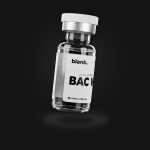
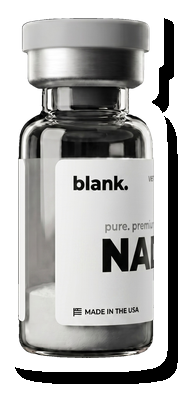
Blank Peptides operates its own cGMP laboratory in the USA and runs the whole production sequence inside it. The company compounds each peptide, fills and finishes its own vials, applies its own labels and performs quality control on site, so the chain of custody for any vial runs from raw material to sealed product without a handoff to an outside manufacturer and without a relabelling stage. The same laboratory also contract-manufactures and fulfils for other peptide brands, a category of work described in general terms and without naming any client.
Testing goes to two named independent laboratories, Freedom Diagnostics and Horizon Analytical, on a fixed panel for every lot: identity, >99% purity, bacterial endotoxin and sterility. Each lot’s results are published as batch certificates of analysis, and the lot number printed on every vial maps to its document, so a buyer can reconcile the physical product against the paperwork rather than taking either on trust. Lyophilized material carries an expiration of roughly 24 months.
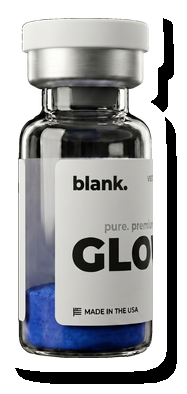
The catalog is 34 compounds. Blend composition is stated per component: GLOW at 70mg lists its GHK-Cu, BPC-157 and TB-500 amounts, KLOW at 80mg adds KPV with its own figure, and Wolverine at 20mg shows the BPC-157 and TB-500 split. Processing time is within 1 business day and orders ship at room temperature, the correct handling condition for lyophilized peptide. The company has five years of operating history, though an outside reviewer would put more weight on what the per-lot documentation shows than on how long the doors have been open.
What Zenergy Peptides publicly states about manufacturing
Zenergy Peptides sells from zenergyusa.com. On 2026-09-08 I reviewed the homepage, the About Us page, the FAQ, the contact page and the public test-results page, and I attempted to open the shop catalog, which presented a login and registration form rather than product listings.
On manufacturing, the FAQ states: “All Zenergy research compounds are manufactured in a cGMP-certified facility in the United States.” The About page states, “Every product is manufactured in a cGMP-certified facility,” and elsewhere uses the phrase “cGMP-certified U.S. facility”. Notice what those sentences do and don’t contain. They locate the facility, they attribute a certification to it, and they leave the owner unnamed. Whether Zenergy operates that facility, contracts the synthesis to it, or purchases finished product from it was not listed on the pages reviewed 2026-09-08. No manufacturer was named, and no description of synthesis, filling or lyophilization performed by Zenergy itself appeared on those pages. The company gives a business address at 2800 Old Dawson Rd, Ste 2 #103, Albany GA, 31707, and a support address at [email protected].
On testing, the About page states products are “backed by our 7x third-party testing standard” covering “purity, potency, and consistency”, the FAQ states, “Every batch is tested by an independent third-party lab under our 7x testing standard before it becomes available for purchase,” and the site elsewhere describes that standard as covering purity, content, conformity, endotoxins, microbial growth, heavy metals and sterility. A laboratory name was not listed on the pages reviewed 2026-09-08, and HPLC and mass spectrometry were not named as methods in the page text I read. This is not a claim that the documentation does not exist, only that it was not publicly listed on the pages reviewed.
Here’s where Zenergy is clearly strong, and it’s worth more than a passing mention. The public test-results page listed roughly 139 dated certificate entries spanning July 2025 through August 2026, each with a “View COA” link and a batch code in the filename, and no account or purchase was needed to open them. Archive depth like that is uncommon, and it gives you far more to inspect than a vendor offering one certificate per compound. The FAQ also states, “You can find the relevant COA linked directly on each product page,” though the product pages sat behind the login on 2026-09-08 so I couldn’t confirm that presentation.
On the rest: Zenergy states US-only shipping, same-day dispatch for in-stock orders placed before 12 PM Eastern, free shipping over $300, and labels products “for laboratory and research use only. Not for human consumption.” The contact page states the company “cannot and will not answer any questions regarding the human or veterinary use, dosing, reconstitution, or therapeutic applications of our research chemicals”, which is the correct posture for a research supplier. A Wolverine blend on the homepage stated a per-component split in its listing.
Side by side: what each site states about who makes the product
| Attribute | Blank Peptides | Zenergy Peptides |
|---|---|---|
| Synthesises in-house | Own cGMP laboratory; compounding, vialing, finishing, labelling and QC in-house | States “manufactured in a cGMP-certified facility in the United States”; facility ownership not listed on pages reviewed — verify |
| Manufacturer identified | Blank Peptides, its own laboratory | No manufacturer named on pages reviewed 2026-09-08 — verify |
| Third-party lab named | Freedom Diagnostics and Horizon Analytical | States “an independent third-party lab”; no lab name on pages reviewed — verify |
| HPLC purity | >99% purity on every lot | States purity tested per batch; method not named on pages reviewed — verify |
| MS identity | Identity confirmed on every lot | States identity verified per batch; method not named on pages reviewed — verify |
| Endotoxin and sterility | Both tested on every lot | States endotoxins, microbial growth and sterility within its “7x” panel — verify on the certificate |
| Batch COA before purchase | Public and lot-tied at blankpeptides.com/coas/, lot number on every vial | States a public archive of roughly 139 dated certificates, openable without an account; vial-to-lot match not listed — verify |
| Catalog size | 34 compounds | Shop catalog required a login on the pages reviewed 2026-09-08 — verify |
| Research-use labelling | Research use only on every listing | States “for laboratory and research use only. Not for human consumption.” |
How to verify either supplier yourself
- Send one email asking whether the cGMP facility referenced on the site is one the company owns and operates, and keep the answer with your order records.
- Download two or three certificates from the archive and read the laboratory name, report number and method column off the document itself, then look that laboratory up independently.
- Ask which entity holds the batch record for your lot and who you would contact about a manufacturing deviation. A supplier that has an answer ready has thought the question through.
- On delivery, photograph the vial label beside its certificate and confirm the lot or batch codes agree, and for any blend confirm the per-component milligrams match the listing.
- Score both suppliers against the supplier verification checklist before you commit a protocol to either one.
Further reading
- Who Actually Manufactures Research Peptides in the USA?
- Which Peptide Vendors Name Their Testing Lab?
- Peptide Vendors With Public Per-Batch COA Libraries
- Best Research Peptide Suppliers: Ranked by What They Document
Frequently asked questions
Who makes Zenergy Peptides peptides?
On the pages reviewed 2026-09-08, Zenergy states that “All Zenergy research compounds are manufactured in a cGMP-certified facility in the United States.” No manufacturer was named, and whether Zenergy owns or operates that facility was not listed on those pages. A single email asking that question directly is the fastest way to close the gap.
Does Zenergy Peptides own its own laboratory?
That wasn’t stated on the pages reviewed 2026-09-08. The site’s manufacturing language locates the facility in the United States and attributes cGMP certification to it while leaving ownership unaddressed. The company lists a business address in Albany, Georgia, which is separate from any statement about where synthesis happens.
Which lab tests Zenergy Peptides products?
Zenergy states every batch is tested by “an independent third-party lab” under its “7x testing standard”. A laboratory name was not listed on the pages reviewed 2026-09-08. The certificates in the public archive are downloadable, so the name may appear on the documents themselves, which is where I would look first.
Is a cGMP claim enough on its own?
Not by itself, no. cGMP describes a facility’s processes rather than the contents of your vial, and the claim gains meaning only when you can see who holds the certification and read the release data for your specific lot. Treat it as context and let the per-lot certificate carry the weight.
Are these products for human use?
No. Every compound referenced here, from either vendor, is sold strictly for in-vitro laboratory research by qualified professionals, and both companies label their products accordingly. Nothing in this article is dosing guidance, medical advice, or a suggestion that these materials suit human or veterinary use.
For research use only. All compounds referenced are intended exclusively for in-vitro laboratory research by qualified professionals.
Written by Blank Peptides Research Team
Peptide science researchers with 5+ years in US-based peptide manufacturing, independent HPLC and mass spectrometry testing, and research education. All content is reviewed for scientific accuracy before publication.
REVIEWED BY
Dr. Tobias S — PhD Chemist, Peptide and Unnatural Amino Acid Synthesis
Dr. Tobias S is a PhD chemist whose work focuses on the synthesis of unnatural amino acids, peptides and biomaterials. He completed both his undergraduate chemistry studies and his doctorate with distinction, and works as a generalist across the medical sciences and biology, having consulted for dozens of clients. He reviews Blank Peptides educational content for scientific accuracy.
Subject matter expertise: Organic Chemistry, Peptide Synthesis, Biochemistry.