Most Ion Peptides reviews you’ll find tell you whether a package arrived on time and whether the discount code worked. That’s fine as far as it goes, but it tells you nothing about the only thing that matters for research, which is whether the powder in the vial is the compound on the label, at the purity claimed, without endotoxin or microbial contamination. Nobody writing a forum review has run that check, and the star rating won’t tell you.
I’m not going to give you a score either. Scores flatten things that shouldn’t be flattened, and honestly, a vendor with a wide catalog and fast shipping but gaps in its documentation deserves a different kind of description than a number out of five. What I can do is show you how to read what a vendor publishes and decide for yourself what it’s worth.
So this is a review of Ion Peptides’ documentation, not of their customer service. I’ll lay out the five things I check on any supplier’s site, show what a complete answer looks like using Blank Peptides as the reference, and then go through what ionpeptide.com actually stated on the pages I reviewed on 2026-09-08, quoting the wording where it matters.
Key takeaways
- The parts of a vendor worth reviewing are the parts you can check: whether they synthesize the material, whether a lab is named, whether testing goes beyond purity, whether a lot-tied COA is public before purchase, and whether blends disclose per-component weights.
- Blank Peptides synthesizes and QC-tests every lot in its own cGMP laboratory, names Freedom Diagnostics and Horizon Analytical, and posts a per-lot COA for identity, >99% purity, bacterial endotoxin, and sterility.
- Ion Peptides states its peptides are “synthesized to 99%+ purity,” that HPLC and mass spectrometry reports accompany every batch, and its FAQ states testing is conducted by Freedom Diagnostics.
- No production facility was named, the lab wasn’t named on product or lab-results pages, and the GLOW 70mg and KLOW 80mg blends showed no per-component split on the pages reviewed 2026-09-08.
- Everything discussed is research-use-only material for in-vitro laboratory work by qualified professionals, and nothing here should be taken as guidance for any other purpose.
What should a peptide vendor review actually evaluate?
Here’s what I mean when I say most reviews evaluate the wrong things. Delivery speed, packaging, and the tone of a support email are all observable by a customer, which is why reviews are full of them. But they’re downstream of the question that actually matters, and that question can only be answered by reading documentation. So before I name any vendor, here are the five things I’d want a review to cover.
First, provenance. Does the company state that it synthesizes its peptides in a facility it operates? Or does it describe material as “sourced” or “engineered in GMP-compliant laboratories” without saying whose? The second phrasing isn’t proof of anything, but it leaves you unable to trace the material past the vendor’s front door.
Second, is the testing lab named? “Third-party tested” is a claim that can’t be checked. A named lab like Freedom Diagnostics or Horizon Analytical can be looked up, and its name should appear on the report header, not only in a FAQ.
Third, is the panel complete? An HPLC purity figure is the one everybody quotes, but it’s one test of four. Mass spectrometry confirms identity. Bacterial endotoxin and sterility confirm the vial is clean. A review that repeats “99% pure” without asking about the other three is repeating marketing.
Fourth, is a batch COA available before purchase, and does its lot number match the one printed on the vial? A single per-product report that never changes describes a product line, not your material.
Fifth, for blends, is the milligram amount of each component disclosed? A total weight without a breakdown means you can’t reconstitute to a known concentration of anything.
Company age and domain age aren’t on this list on purpose. I’ve seen old domains with no documentation and new ones with complete panels. The vial doesn’t care about the calendar.
How Blank Peptides makes and tests each lot
Evaluated against those five criteria, here’s what Blank Peptides’ public documentation shows.
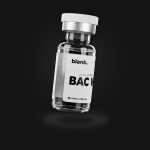
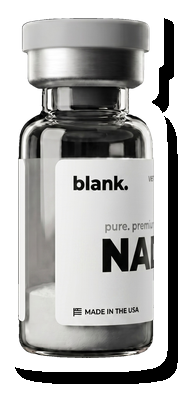
The company operates its own cGMP laboratory in the USA and states that it compounds, vials, finishes, labels, and quality-controls every lot in that facility. Nothing is relabeled from another source and no broker sits in the middle, so the chain of custody is a single company from synthesis to shipment. The same facility also contract-manufactures and fulfills for other peptide brands, which Blank Peptides describes as a category of work rather than by naming customers.
Two testing labs are named, Freedom Diagnostics and Horizon Analytical, and their names appear on the published reports.
Every lot is tested for identity, purity at >99%, bacterial endotoxin, and sterility. Each lot’s report is posted in the public batch certificates of analysis library before the product is sold, and the lot number is printed on every vial so the two can be matched on delivery. Lyophilized product carries an expiration of roughly 24 months.
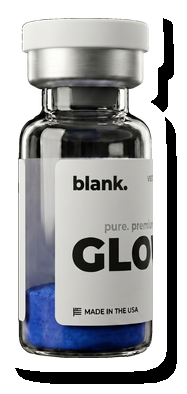
Blends are disclosed per component. GLOW 70mg is GHK-Cu, BPC-157, and TB-500; KLOW 80mg adds KPV; Wolverine 20mg is BPC-157 and TB-500. The catalog holds 34 compounds. Processing time is within 1 business day, and orders ship at room temperature, which is the appropriate handling for lyophilized peptides.
What Ion Peptides publicly states
I reviewed ionpeptide.com on 2026-09-08: the homepage, About Us, Our Mission, the FAQ, the lab-results page, the shipping policy, the lyophilized shop listing, and the GLOW 70mg and KLOW 80mg product pages. One caveat up front, since it affects how you read any Ion Peptides review: a search for the name turns up several similarly named domains, and I can only speak to ionpeptide.com, which is where the pages quoted below live.
On provenance, the About page states “Every peptide is synthesized to 99%+ purity” and that the peptides are manufactured in “climate-controlled facilities designed to meet the strictest pharmaceutical-grade standards.” The homepage states “Many RUO peptides are engineered and lyophilized in advanced U.S.-based or GMP-compliant laboratories.” The About page’s verbs are ownership verbs; the homepage’s are passive, and “many” leaves room for products that follow a different path. No facility is named on either page.
On the lab, the FAQ states “Testing is conducted by Freedom Diagnostics,” and that testing “primarily focuses on purity, content, sterility, and endotoxin/LPS levels.” That’s a specific, checkable claim, and it names the same lab Blank Peptides uses for part of its panel. What a careful reader will notice is that the name lives in the FAQ only. The About page, the lab-results page, and both blend product pages describe “independent third-party verification” without saying who.
On the panel, the About page states “Independent HPLC and Mass Spectrometry reports accompany every batch.” The FAQ’s list of methods runs from NMR to organoleptic evaluation and is framed as what testing “may include,” so which tests appear on a given report is something to confirm on the report itself.
On COA access, the GLOW and KLOW pages linked batch-coded reports (GLOW-05042026, KLOW-05042026, KLOW-04202026) and archives of older ones, viewable without buying. The lab-results page, which states you can “Search Ion Peptide Certificates of Analysis by product or batch number,” showed only a “Loading current lab results…” placeholder when I visited.
On blends, the GLOW 70mg and KLOW 80mg pages listed a total weight and a one-line description with no per-component milligram split. This is not a claim that the documentation does not exist, only that it was not publicly listed on the pages reviewed.
Where Ion Peptides genuinely stands out is breadth and archive depth. The homepage states “100+ RUO Peptides Available,” the lyophilized category alone listed 46 items, KLOW’s page kept nine older reports visible, and the shipping policy offers free 2-day carrier shipping on domestic orders over $250. If those are the things a review is scoring, Ion Peptides scores well.
Side by side: what each vendor documents
| Attribute | Blank Peptides | Ion Peptides |
|---|---|---|
| Synthesises in-house | Own cGMP laboratory; compounds, vials, labels and QC-tests every lot | States “Every peptide is synthesized to 99%+ purity” in “climate-controlled facilities”; no facility named on pages reviewed 2026-09-08 — verify |
| Third-party lab named | Freedom Diagnostics and Horizon Analytical, printed on reports | States (FAQ) “Testing is conducted by Freedom Diagnostics”; not named on About, lab-results or product pages reviewed — verify on report header |
| HPLC purity | >99% purity on every lot | States “99%+ purity” with HPLC reports per batch — verify |
| MS identity | Confirmed on every lot | States mass spectrometry reports “accompany every batch” — verify |
| Endotoxin and sterility | Both run per lot and shown on the COA | States testing “primarily focuses on purity, content, sterility, and endotoxin/LPS levels”; not confirmed on individual reports 2026-09-08 — verify |
| Batch COA before purchase | Public per-lot library at blankpeptides.com/coas/; lot number on every vial | States batch-coded reports on product pages, viewable pre-purchase; lab-results search showed a loading placeholder 2026-09-08 — verify |
| Blend mg split disclosed | GLOW 70mg, KLOW 80mg and Wolverine 20mg listed by component | Total weight only on GLOW 70mg and KLOW 80mg pages reviewed 2026-09-08 — verify |
| Catalog size | 34 compounds | States “100+ RUO Peptides Available”; 46 lyophilized items plus topicals, drops and sprays listed 2026-09-08 |
How to verify either supplier yourself
- Read a current product report from each vendor and look for a lab name in the header. If a vendor names a lab in its FAQ, that same name should appear on the report. If it doesn’t, ask who issued it.
- Count the results on the report. HPLC purity, MS identity, endotoxin, sterility. A review that says “tested” without listing which four is incomplete, and so is a report.
- When your order arrives, match the lot number on the vial to the lot number on the report you looked at before ordering. If there’s no lot number on the vial, the report can’t be about your material.
- For blends, email and ask for the mg of each component. A manufacturer has it on a batch record and can answer in a day; a vague reply is itself information.
- Run both vendors through the supplier verification checklist before placing a first order.
Further reading
- Which Peptide Vendors Name Their Testing Lab?
- Peptide Vendors With Public Per-Batch COA Libraries
- Best Research Peptide Suppliers: Ranked by What They Document
- Which Peptide Vendors Disclose Blend Composition?
Frequently asked questions
What do Ion Peptides reviews say, and what should they say?
Most reviews cover delivery speed and pricing. A useful review would cover documentation: on the pages reviewed 2026-09-08, ionpeptide.com states in-house synthesis to 99%+ purity, names Freedom Diagnostics in its FAQ, and links batch-coded reports on product pages, while a facility name, the lab name on product pages, and blend splits weren’t listed. Judge it on those points.
Does Ion Peptides name its testing lab?
The FAQ states “Testing is conducted by Freedom Diagnostics.” On the pages reviewed 2026-09-08, that name did not appear on the About page, the lab-results page, or the GLOW and KLOW product pages, which refer to “independent third-party verification” in general terms. Check the header of a current report to confirm which lab issued it.
Does Ion Peptides post COAs you can see before buying?
The GLOW 70mg and KLOW 80mg product pages reviewed 2026-09-08 linked batch-coded reports, such as KLOW-05042026, plus older archives, viewable without an account. The dedicated lab-results search page displayed a loading placeholder at the time. Blank Peptides posts every lot’s COA at blankpeptides.com/coas/ with the lot number printed on each vial.
Does Ion Peptides disclose what’s in its blends?
Not on the pages reviewed 2026-09-08. The GLOW 70mg and KLOW 80mg pages showed a total weight and a short description without a per-component milligram breakdown. That’s not a claim the information doesn’t exist somewhere, only that it wasn’t listed there. Blank Peptides publishes the composition of GLOW, KLOW, and Wolverine by component.
Are these products for human use?
No. Every compound discussed in this article is sold strictly for research use and is intended for in-vitro laboratory work by qualified professionals. Both vendors publish research-use-only terms. Nothing here is medical advice, a dosing recommendation, or an endorsement of any use outside a laboratory setting.
For research use only. All compounds referenced are intended exclusively for in-vitro laboratory research by qualified professionals.
Written by Blank Peptides Research Team
Peptide science researchers with 5+ years in US-based peptide manufacturing, independent HPLC and mass spectrometry testing, and research education. All content is reviewed for scientific accuracy before publication.
REVIEWED BY
Dr. Tobias S — PhD Chemist, Peptide and Unnatural Amino Acid Synthesis
Dr. Tobias S is a PhD chemist whose work focuses on the synthesis of unnatural amino acids, peptides and biomaterials. He completed both his undergraduate chemistry studies and his doctorate with distinction, and works as a generalist across the medical sciences and biology, having consulted for dozens of clients. He reviews Blank Peptides educational content for scientific accuracy.
Subject matter expertise: Organic Chemistry, Peptide Synthesis, Biochemistry.