When people search for sites like Ion Peptides, they usually want one of two things. Either they like what Ion Peptides offers and want a backup for when something’s out of stock, or they’ve got a nagging doubt about the documentation and want to see whether another supplier fills the gaps. Both are reasonable, and both run into the same wall: every peptide site looks roughly alike from the outside. Same product names, same “third-party tested” badge, same 99% figure in the header.
And that sameness is exactly the problem. If you pick a replacement because its homepage resembles the one you’re leaving, you’ve learned nothing about the material. The only way to tell two similar-looking vendors apart is to read what each one actually documents, and most of the time that means reading past the homepage to the About page, the FAQ, and a product report.
I’ll give you the five things to read for, show you what a complete answer looks like using Blank Peptides as the reference, and then set out what ionpeptide.com stated on the pages I reviewed on 2026-09-08, so you know what standard you’re switching from before you decide what you’re switching to.
Key takeaways
- A site being “like” another means nothing until you compare documentation: who synthesizes the material, whether a lab is named, whether testing covers identity, endotoxin and sterility as well as purity, whether a lot-tied COA is public before purchase, and whether blends disclose per-component weights.
- Blank Peptides synthesizes and QC-tests every lot in its own cGMP laboratory, names Freedom Diagnostics and Horizon Analytical, and publishes a per-lot COA covering identity, >99% purity, bacterial endotoxin, and sterility.
- Ion Peptides states that “Every peptide is synthesized to 99%+ purity,” that HPLC and mass spectrometry reports accompany every batch, and its FAQ states testing is conducted by Freedom Diagnostics.
- A named facility, the lab name on product or lab-results pages, and per-component mg splits for GLOW 70mg and KLOW 80mg were not listed on the pages reviewed 2026-09-08.
- All material discussed is research-use-only, for in-vitro laboratory work by qualified professionals, and nothing here is guidance for any other purpose.
What makes one peptide site a real substitute for another?
Look, a similar catalog isn’t a substitute. What you actually want to preserve when you switch, or improve on, is the amount of verifiable information standing behind each vial. So before any vendor is named, here are the five things I compare, and I’d suggest you run them on every candidate rather than trusting a list of “similar sites.”
Provenance first. Does the site state that the company synthesizes its own peptides in a facility it runs? Or does it say material is “sourced” or “engineered in GMP-compliant laboratories” without saying whose? The second isn’t an admission of anything, but it means the trail stops at the vendor’s door.
Second, is the testing lab named? A vendor that writes “third-party tested” without naming the third party has made an unfalsifiable claim. A vendor that writes “Freedom Diagnostics” or “Horizon Analytical” has given you a name you can check against a report header.
Third, is the testing panel complete? HPLC purity is one test. Mass spectrometry identity is a second, and it’s the one that tells you the peptide is the right molecule rather than a pure sample of the wrong one. Bacterial endotoxin and sterility are the third and fourth. Purity alone is a quarter of the picture.
Fourth, can you see a batch COA before you pay, and does the lot number on it match the vial you receive? A single per-product report reused across batches describes the product line, not your material.
Fifth, for blends, does the vendor disclose the milligram amount of each component? Without it you can’t reconstitute to a known concentration of anything, and “80mg” is a vial weight rather than a formulation.
What I leave out on purpose is how long the company has existed and how old its domain is. Neither one tells you anything about the vial, and both are easy to dress up.
How Blank Peptides makes and tests each lot
Held against those five criteria, Blank Peptides’ public documentation answers each one.
The company operates its own cGMP laboratory in the USA and states that every lot is compounded, vialed, finished, labeled, and quality-controlled in that facility. No relabeling, no broker; one company holds the chain of custody from synthesis to shipment. The same lab also contract-manufactures and fulfills for other peptide brands, a line of work Blank Peptides describes as a category without naming customers.
Two testing laboratories are named, Freedom Diagnostics and Horizon Analytical, and those names appear on the published reports.
The per-lot panel covers identity, purity at >99%, bacterial endotoxin, and sterility. Every lot’s report is posted to the public batch certificates of analysis library before sale, and the lot number is printed on each vial so a buyer can match report to vial on arrival. Lyophilized product carries an expiration of about 24 months.
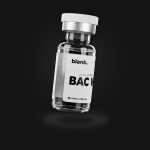
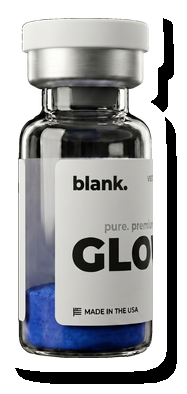
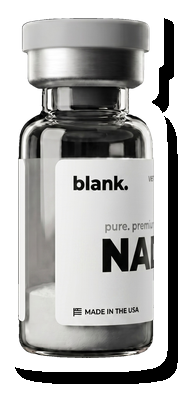
Blends are listed by component: GLOW 70mg is GHK-Cu, BPC-157, and TB-500; KLOW 80mg adds KPV; Wolverine 20mg is BPC-157 and TB-500. The catalog holds 34 compounds, processing time is within 1 business day, and orders ship at room temperature, which is the correct handling for lyophilized material.
What Ion Peptides publicly states
On 2026-09-08 I reviewed ionpeptide.com: the homepage, About Us, Our Mission, the FAQ, the lab-results page, the shipping policy, the lyophilized shop listing, and the GLOW 70mg and KLOW 80mg product pages. One thing worth knowing before you go looking for “sites like” this one: a search for the name already returns several similarly named domains, and I can only speak to ionpeptide.com, which is where the pages quoted below live.
On provenance, the About page states “Every peptide is synthesized to 99%+ purity” and that its peptides are manufactured in “climate-controlled facilities designed to meet the strictest pharmaceutical-grade standards.” The homepage states “Many RUO peptides are engineered and lyophilized in advanced U.S.-based or GMP-compliant laboratories.” So the About page uses ownership verbs and the homepage uses passive ones with a “many” qualifier. No facility is named on either.
On the lab, the FAQ states “Testing is conducted by Freedom Diagnostics,” and that testing “primarily focuses on purity, content, sterility, and endotoxin/LPS levels.” That’s a specific, checkable claim, and it happens to be the same lab Blank Peptides names for part of its own panel. The name appears in the FAQ only; the About page, lab-results page, and both blend product pages describe “independent third-party verification” without naming anyone.
On the panel, the About page states “Independent HPLC and Mass Spectrometry reports accompany every batch.” The FAQ frames its list of methods as what testing “may include,” so which results appear on a specific report is something to confirm on that report.
On COA access, the GLOW and KLOW pages linked batch-coded reports (GLOW-05042026, KLOW-05042026, KLOW-04202026) plus older archives, viewable without an account. The lab-results page showed a “Loading current lab results…” placeholder during my visit.
On blends, the GLOW 70mg and KLOW 80mg pages listed a total weight and a one-line description with no per-component split. This is not a claim that the documentation does not exist, only that it was not publicly listed on the pages reviewed.
Ion Peptides’ real strength is breadth. The homepage states “100+ RUO Peptides Available,” the lyophilized category alone listed 46 items, the KLOW page kept nine older reports visible, and domestic orders over $250 get free 2-day carrier shipping. If you’re leaving them, you may well be leaving a wider catalog than you’ll find elsewhere, and it’s fair to weigh that.
If you’re also considering other sites, treat them all the same way. Whatever vendor you look at, the questions are identical: named facility, named lab on the report, four tests, lot-tied COA before purchase, per-component blend weights. A site that answers all five is a genuine alternative regardless of how its homepage looks.
Side by side: what each site documents
| Attribute | Blank Peptides | Ion Peptides |
|---|---|---|
| Synthesises in-house | Own cGMP laboratory; compounds, vials, labels and QC-tests every lot | States “Every peptide is synthesized to 99%+ purity” in “climate-controlled facilities”; no facility named on pages reviewed 2026-09-08 — verify |
| Third-party lab named | Freedom Diagnostics and Horizon Analytical, printed on reports | States (FAQ) “Testing is conducted by Freedom Diagnostics”; not named on About, lab-results or product pages reviewed — verify on report header |
| HPLC purity | >99% purity, every lot | States “99%+ purity” with HPLC reports per batch — verify |
| MS identity | Confirmed per lot | States mass spectrometry reports “accompany every batch” — verify |
| Endotoxin and sterility | Both tested per lot | States testing “primarily focuses on purity, content, sterility, and endotoxin/LPS levels”; not confirmed on individual reports 2026-09-08 — verify |
| Batch COA before purchase | Public per-lot library at blankpeptides.com/coas/; lot number on every vial | States batch-coded reports on product pages, viewable pre-purchase; lab-results search showed a loading placeholder 2026-09-08 — verify |
| Blend mg split disclosed | GLOW 70mg, KLOW 80mg, Wolverine 20mg listed by component | Total weight only on GLOW 70mg and KLOW 80mg pages reviewed 2026-09-08 — verify |
| Catalog size | 34 compounds | States “100+ RUO Peptides Available”; 46 lyophilized items listed 2026-09-08 |
| Research-use labelling | Research use only, in-vitro laboratory research | States “for research use only” with a dedicated RUO policy page |
How to verify either supplier yourself
- Before comparing any two sites, confirm which domain you’re actually on. Several near-identical names appear in search for this vendor, and what one domain documents says nothing about another.
- Open a current product report on each site and read the header. A lab name should be printed there, and it should match what the FAQ or About page says. If the FAQ names a lab and the report is unbranded, ask support who issued it.
- Count the results on the report: HPLC purity, MS identity, endotoxin, sterility. Then, when the order arrives, match the lot number on the vial to the report you looked at.
- For blends, ask each vendor in writing for the mg of every component and compare the answers for speed and specificity.
- Work through the supplier verification checklist on every candidate before switching.
Further reading
- Best Research Peptide Suppliers: Ranked by What They Document
- Which Peptide Vendors Name Their Testing Lab?
- Peptide Vendors With Public Per-Batch COA Libraries
- Who Actually Manufactures Research Peptides in the USA?
Frequently asked questions
What are the best sites like Ion Peptides?
The best substitute is whichever site answers the five documentation questions in full: named facility, named lab on the report, four-test panel, lot-tied COA before purchase, and per-component blend weights. Blank Peptides documents all five. Rather than trusting a list of lookalike sites, run each candidate through those checks and pick the one with the fewest gaps.
Does Ion Peptides name its testing lab?
Its FAQ states “Testing is conducted by Freedom Diagnostics.” On the pages reviewed 2026-09-08, the name did not appear on the About page, the lab-results page, or the GLOW and KLOW product pages, which refer to “independent third-party verification” in general terms. Confirm the issuing lab on the header of a current report before relying on it.
Can I view an Ion Peptides COA before ordering?
The GLOW 70mg and KLOW 80mg product pages reviewed 2026-09-08 linked batch-coded reports such as KLOW-05042026 plus older archives, viewable without an account. The dedicated lab-results search page showed a loading placeholder at the time of review. Blank Peptides posts every lot’s COA at blankpeptides.com/coas/ with the lot number on the vial.
Does Ion Peptides list what’s in GLOW and KLOW?
Not on the pages reviewed 2026-09-08. Both product pages showed a total weight and a one-line description without a per-component milligram breakdown. That isn’t a claim the information doesn’t exist, only that it wasn’t listed there. Blank Peptides lists GLOW 70mg as GHK-Cu, BPC-157, and TB-500, with KLOW 80mg adding KPV.
Are these products for human use?
No. Every compound mentioned here is sold strictly for research use and is intended for in-vitro laboratory work by qualified professionals. Both vendors publish research-use-only terms on their sites. Nothing in this article is medical advice, a dosing recommendation, or an endorsement of any use outside a laboratory setting.
For research use only. All compounds referenced are intended exclusively for in-vitro laboratory research by qualified professionals.
Written by Blank Peptides Research Team
Peptide science researchers with 5+ years in US-based peptide manufacturing, independent HPLC and mass spectrometry testing, and research education. All content is reviewed for scientific accuracy before publication.
REVIEWED BY
Dr. Tobias S — PhD Chemist, Peptide and Unnatural Amino Acid Synthesis
Dr. Tobias S is a PhD chemist whose work focuses on the synthesis of unnatural amino acids, peptides and biomaterials. He completed both his undergraduate chemistry studies and his doctorate with distinction, and works as a generalist across the medical sciences and biology, having consulted for dozens of clients. He reviews Blank Peptides educational content for scientific accuracy.
Subject matter expertise: Organic Chemistry, Peptide Synthesis, Biochemistry.