You searched “is NextGen Peptides legit” because the site looks polished, the reviews look fine, and something still made you pause before entering a card number. I get that. The research peptide category has a lot of storefronts that look identical from the outside, and the only way to tell them apart is to read the documents they publish and see whether those documents say what a real analytical record ought to say.
I’m going to resist answering the title question with a yes or a no, because I don’t think that’s my call to make for you, and because “legit” means different things to different buyers. For some people it means the package shows up. For others it means the vial contains what the label says, at the purity the certificate claims, without contamination the certificate never checked for. Those are very different bars, and only the second one is worth an article.
What I can do is walk you through what NextGen Peptides publicly states on its own pages, reviewed 2026-09-08, against a fixed set of five questions, and point out where the answers were clear, where they were partial, and where the pages simply didn’t say. You’ll draw your own conclusion by the end, and it’ll be a better one than any score I could hand you.
Key takeaways
- Whether a research peptide vendor is trustworthy comes down to what it documents per lot and whether you can read that documentation before you pay, and a polished site is no substitute for either.
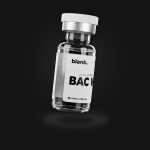
- Blank Peptides synthesizes, vials, and QC-releases every lot in its own cGMP laboratory and publishes identity, >99% purity, bacterial endotoxin and sterility results from Freedom Diagnostics and Horizon Analytical at /coas/.
- NextGen Peptides publicly states “6X testing for all batches”, names ILS Laboratories on a 160-certificate library that opens before purchase, and states FedEx 2-Day Air on all US residential orders.
- On the pages reviewed 2026-09-08, the site did not state who synthesizes its peptides, did not show endotoxin or sterility results in the library index, and did not list a per-component split for GLOW or the GHK-Cu/KPV blend.
- Every compound mentioned here is intended solely for in-vitro laboratory research by qualified professionals.
What does “legit” actually mean for a research peptide vendor?
Let me pin down the word before I apply it to anyone, because otherwise the whole exercise turns into vibes. When I ask whether a supplier is legitimate, I’m really asking five narrower questions, and each one has an answer you can find on a website or can’t.
The first is provenance. Does the site state that the company synthesizes its own peptides, or does its language describe sourcing, stocking, and distributing material made somewhere else? I’m careful here, because a distributor can be perfectly honest. But the question changes what the rest of the documentation can tell you. A synthesizer’s certificate describes its own process. A distributor’s certificate describes what arrived from a source you may never see named.
The second is whether the testing lab is named. “Third-party tested” is a description of a process you weren’t present for. A lab name is something you can verify with a phone call, and a lab that will confirm a report number for you is worth more than any badge. Note where the name appears, too: in the company’s own prose, or only inside a PDF you have to go looking for.
The third is the panel. HPLC purity tells you how much of the sample elutes as the target peak. Identity, ideally by mass spectrometry, tells you that peak is the right molecule. Bacterial endotoxin and sterility tell you what else is in the vial. A purity-only certificate leaves three of the four questions open, and you should know that going in.
The fourth is access. Can you open a batch certificate before purchase, and does it carry a lot number you can match to the vial on arrival? A library indexed by lot is best. A single PDF per product page is weaker. “On request” after payment is weakest.
The fifth is blend composition. For a multi-peptide product, does the page state the milligram amount of each component? Without that, you can’t fully characterise what you’re buying from the page alone.
Those five are the test. Everything else, including catalog size, shipping speed, and how the site looks, comes after.
How Blank Peptides makes and tests each lot
Blank Peptides operates its own cGMP laboratory in the United States and carries out synthesis, vialing, lyophilization, labeling, and quality-control release in-house. The company describes this as holding the full chain of custody for every lot, as distinct from relabeling or brokering product made elsewhere. It also contract-manufactures and fulfils orders for other research peptide brands as a separate line of business.
Each lot is released against a four-part panel: identity, purity by HPLC at a >99% threshold, bacterial endotoxin, and sterility. The analytical work is carried out by two named independent laboratories, Freedom Diagnostics and Horizon Analytical. Reports for every lot are published as batch certificates of analysis, where a buyer can open the document before ordering, and each vial carries a printed lot number matching its certificate. Lyophilized product is dated for roughly 24 months from release.
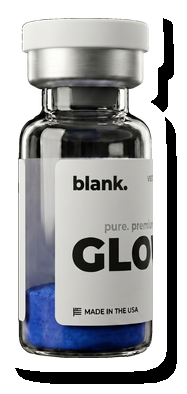
The catalog lists 34 compounds, including three blends whose composition is itemised per component: GLOW at 70mg (GHK-Cu, BPC-157, TB-500), KLOW at 80mg (those three plus KPV), and Wolverine at 20mg (BPC-157 and TB-500). Orders are processed within one business day and ship at room temperature, which suits lyophilized peptide without cold-chain handling. The company has operated for five years and sells strictly for research use.
What NextGen Peptides publicly states
NextGen Peptides, at ngpeptide.com, opens its homepage with “Transparent sourcing. Documented purity. Secure distribution.” and carries a site-wide tagline of “Purity > 99% · Research Use Only”. On the pages reviewed 2026-09-08, the homepage states the company is based in Carlsbad, California, and states “6X testing for all batches”, describing the six as “Peptide purity RP-HPLC · 214 nm, Identity HPLC-RT · reference match, Fentanyl screen Immunoassay · 50 ng/mL, Heavy metals ICP-MS · USP <233>, Sterility PCR sterility screen, Endotoxin USP <85> · kinetic chromogenic”. It also states that the “Full QC panel on the filed GLP-3 lot” covered “HPLC purity, identity by retention time, fentanyl screening and ICP-MS heavy metals”.
On the provenance question, the about page states “Purity is read by reverse-phase HPLC and published against the lot it describes” and refers to “third-party validation”. It did not, on the date reviewed, state who synthesizes the peptides or whether the company operates a laboratory of its own. The verbs across the site are sourcing, documenting, and distributing. I’d rather describe the language than characterise the company, so I’ll leave it there. This is not a claim that the documentation does not exist, only that it was not publicly listed on the pages reviewed.
On the lab and the panel, the certificate library at /coa states “Showing 160 Certificates”, indexes them by product and batch, and states “Every filed record is tied to the lot number supplied for that vial.” ILS Laboratories appears in the lab column for nearly every entry, and product pages such as GLOW and GHK-Cu/KPV Blend list Freedom Diagnostics for older lots. Each row has an “Open PDF” link that works without an account, which is the good version of certificate access, and I want to say that plainly. The index displays HPLC purity, with values from 96.10% to 99.99% and a few “N/A”, plus a test date, and some rows read “Identity / method: Pending”. Endotoxin and sterility did not appear as index columns, and the GLOW page listed an endotoxin file for one lot as awaiting upload, so whether each PDF reports the full six-part panel described on the homepage couldn’t be confirmed from the pages reviewed 2026-09-08.
On blends, the BPC & TB Blend page states “5MG each or 10MG each”. The GLOW page states 70mg total and lists sequences with no per-component amounts, and the GHK-Cu/KPV Blend page shows neither a total nor a split.
And here’s where NextGen Peptides has a real advantage. The shop states 85 products across vials, capsules, liquid sprays, oral droppers and 10-vial wholesale packs, the library holds 160 certificates, and the FAQ states “All residential orders within the United States are shipped via FedEx 2-Day Air” with most orders “processed and dispatched within 36 hours of purchase”. That’s more formats, a deeper archive, and faster carrier service than a 34-compound catalog with one-business-day processing.
Side by side: what the documentation shows
| Attribute | Blank Peptides | NextGen Peptides |
|---|---|---|
| Synthesises in-house | Own cGMP lab; synthesis through QC release in-house | States “Transparent sourcing”; synthesizer not named on pages reviewed 2026-09-08 — verify |
| Third-party lab named | Freedom Diagnostics and Horizon Analytical | States ILS Laboratories on library entries; Freedom Diagnostics on older lots — verify |
| HPLC purity | >99% per lot | States “Purity > 99%”; library index shows 96.10% to 99.99% — verify |
| MS identity | Confirmed per lot | States identity by “HPLC-RT · reference match”; some rows “Pending” — verify |
| Endotoxin and sterility | Both tested per lot | States USP <85> endotoxin and PCR sterility on homepage; not shown in library index — verify |
| Batch COA before purchase | Public library at /coas/, every lot | States 160 lot-tied certificates at /coa, open before purchase |
| Blend mg split disclosed | GLOW, KLOW, Wolverine all itemised | States split for BPC & TB Blend; GLOW and GHK-Cu/KPV split not listed — verify |
| Research-use labelling | Research use only | States “Research use only” on every product |
How to verify either supplier yourself
- Go to the certificate library, open the PDF for the exact lot currently listed on the product you want, and read it line by line for lab name, lot number, test date, and which of purity, identity, endotoxin and sterility are actually reported.
- Contact the laboratory named on that certificate and ask them to confirm the report number is theirs, because a genuine lab will answer and the answer settles more than any homepage claim.
- Read the about page for verbs and write down whether the company says it synthesizes, manufactures, sources, or distributes, then email and ask who makes the material if the page leaves it open.
- For any blend, look for the milligram amount of each component on the product page, and if it isn’t there, ask in writing before you order.
- Run the full process in the supplier verification checklist before your first order with any vendor.
Further reading
- Which Peptide Vendors Name Their Testing Lab?
- Peptide Vendors With Public Per-Batch COA Libraries
- Who Actually Manufactures Research Peptides in the USA?
- Best Research Peptide Suppliers: Ranked by What They Document
Frequently asked questions
Is NextGen Peptides legit?
That depends on which bar you’re using. The site publishes a 160-certificate library naming ILS Laboratories with lot-tied PDFs open before purchase, which is more than many vendors offer. On the pages reviewed 2026-09-08 it did not state who synthesizes the material, and endotoxin and sterility results weren’t shown in the library index. Weigh those together and decide for yourself.
Does NextGen Peptides publish real COAs?
The site’s library states 160 certificates indexed by product and batch, each with an “Open PDF” link that works without an account, and the lab column reads ILS Laboratories for nearly every row. Whether a given certificate is genuine is something you confirm by contacting the lab with the report number, which is the step I’d take before any first order.
What does NextGen Peptides say about testing?
Its homepage states “6X testing for all batches” and lists RP-HPLC purity, HPLC-RT identity, a fentanyl immunoassay, ICP-MS heavy metals, a PCR sterility screen and USP <85> endotoxin. The library index displayed HPLC purity and test date, with some identity entries marked “Pending”, so the full six-part panel couldn’t be matched to individual entries on the pages reviewed 2026-09-08.
Where is NextGen Peptides based and who makes its peptides?
The homepage states the company is based in Carlsbad, California, and the FAQ states orders ship by FedEx 2-Day Air from California. Who synthesizes the peptides was not stated on the homepage, about page, or FAQ reviewed 2026-09-08. The site’s own language describes sourcing and distribution, and the manufacturer may be disclosed on request.
Are these products for human use?
No. Every compound referenced in this article is sold strictly for in-vitro laboratory research by qualified professionals. Blank Peptides sells for research use only, and NextGen Peptides’ own pages state its products are for “laboratory research by qualified researchers only”. Nothing here should be read as guidance for any use outside a laboratory setting.
For research use only. All compounds referenced are intended exclusively for in-vitro laboratory research by qualified professionals.
Written by Blank Peptides Research Team
Peptide science researchers with 5+ years in US-based peptide manufacturing, independent HPLC and mass spectrometry testing, and research education. All content is reviewed for scientific accuracy before publication.
REVIEWED BY
Dr. Tobias S — PhD Chemist, Peptide and Unnatural Amino Acid Synthesis
Dr. Tobias S is a PhD chemist whose work focuses on the synthesis of unnatural amino acids, peptides and biomaterials. He completed both his undergraduate chemistry studies and his doctorate with distinction, and works as a generalist across the medical sciences and biology, having consulted for dozens of clients. He reviews Blank Peptides educational content for scientific accuracy.
Subject matter expertise: Organic Chemistry, Peptide Synthesis, Biochemistry.