You typed “is Polaris Peptides legit” because you hit their sign-in wall and couldn’t find the thing you were looking for, which was probably a certificate, a lab name, or just a product page you could read before committing. That’s a reasonable moment to pause. Handing over a business name and an email address to see a catalog is a small ask, but you’d like to know what’s on the other side first.
I’m not going to answer the question in the title with a yes or a no, and I’d be suspicious of anyone who does. “Legit” gets used to mean three different things: the company exists and ships, the product is what the label says, and the paperwork proves it. Only the last one can be checked from a website, and even then only if the website lets you see it. So what I’ll do is walk through what Polaris Peptides publicly states on the pages a logged-out visitor can reach, say plainly where I couldn’t see anything, and let you draw the conclusion.
We’re Blank Peptides, and we compete with them, so weigh that. The method below is the same one I’d want you to run on us.
Key takeaways
- Judge a vendor on what it documents and lets you inspect: provenance, a named testing lab, the full test panel, a lot-tied COA before purchase, and per-component blend disclosure.
- Blank Peptides synthesizes, vials, and QC-tests every lot in its own cGMP laboratory, then has Freedom Diagnostics and Horizon Analytical confirm identity, >99% purity, bacterial endotoxin, and sterility.
- Polaris Peptides publicly states that it “is now members only”, describes itself as “a chemical supplier” rather than a compounding pharmacy, and states a “Money Back Guarantee under specific Terms and Conditions”.
- A manufacturer, a named lab, a list of tests, a viewable certificate, and any product-level detail were not listed on the publicly accessible pages reviewed 2026-09-08.
- All of this concerns research-use-only material, and nothing here is guidance on using any compound in people or animals.
What would “legit” actually look like on a website?
Before I name anyone, here’s what I’d want to see on any peptide vendor’s site, and why each item matters more than the badges in the footer.
Provenance. Does the vendor say it synthesizes the material, or does it describe itself as a supplier that provides product? The verbs tell you a lot. A manufacturer can describe its facility, its QC steps, and what happens between synthesis and shipping. A distributor can describe only what it was told by whoever made the vial. Neither is dishonest, but the accountability is different, and you should know which one you’re dealing with.
A named testing lab. “Third-party tested” without a name is unfalsifiable. When a lab is named, you can confirm it’s a real analytical business, look at its methods, and if you’re careful about this sort of thing, send your own sample there and compare.
A full test panel. HPLC purity is the number everyone quotes, and it answers one question: how much of the peak is a single compound. It doesn’t confirm the compound is the right sequence, which takes mass spectrometry, and it says nothing about bacterial endotoxin or sterility, both of which matter once the material is near cells. A purity-only certificate is a quarter of the picture.
A batch COA you can see before buying, with a lot number that also appears on the vial. Without the lot tie, a certificate could belong to any batch from any time, and it tells you nothing about what’s in your box.
Blend disclosure. If a product combines peptides, the milligrams per component should be stated. A total alone isn’t a formulation.
I deliberately leave out company age and domain age. Both are easy to claim, hard to check, and irrelevant to the specific lot in front of you. Those five items are the rubric, and they’re what I’ll hold Polaris Peptides against.
How Blank Peptides makes and tests each lot
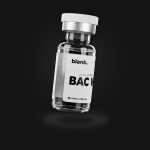
Blank Peptides operates its own cGMP laboratory in the USA, where it compounds, vials, finishes, labels, and runs QC on every product it sells. The company does not buy finished vials from anyone else, so the chain of custody runs from raw material to the box under one roof, and the same process covers the contract manufacturing and fulfilment it performs for other peptide brands.
Each lot is tested on a full panel. Identity is confirmed, purity is reported at >99%, and the lot is also tested for bacterial endotoxin and sterility. The testing is done by two named outside laboratories, Freedom Diagnostics and Horizon Analytical, which lets a buyer check the lab as well as the figure on the page.
The results for every lot are published as batch certificates of analysis before purchase, and the lot number printed on every vial matches the certificate. That match is the detail that makes the document useful. Lyophilized product carries an expiration of roughly 24 months.
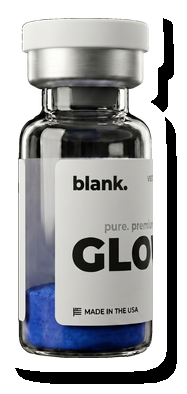
The catalog runs to 34 compounds, smaller than many competitors, and every blend discloses composition per component: GLOW is 70mg as GHK-Cu, BPC-157, and TB-500; KLOW is 80mg and adds KPV; Wolverine is 20mg of BPC-157 and TB-500. Orders have a processing time within 1 business day and ship at room temperature, which is normal for lyophilized peptides. The company has been in business for five years.
What Polaris Peptides publicly states
Polaris Peptides operates at polarispeptides.com. On the pages reviewed 2026-09-08, the site was up and responding, but the homepage, the shop, both product category pages, the about page, and the contact page each showed the same message: “Polaris Peptides is now members only. Please sign in to your account or sign up for a new account to enter the site.” The navigation lists “GLP-1 & GIP Analogues” and “Topical Peptides” as categories and offers an “All Products” link, but no product names, prices, or descriptions were visible without an account.
On provenance, the public language is regulatory rather than descriptive. Every page reviewed states that “Polaris Peptides is a chemical supplier”, that it “is not a compounding pharmacy or chemical compounding facility as defined under 503A of the Federal Food, Drug, and Cosmetic act”, and that it “is not an outsourcing facility as defined under 503B”. A manufacturer, a facility, or any language about synthesizing or producing the material was not listed on the public pages reviewed 2026-09-08.
On testing, there was nothing to read from outside the login. A named laboratory, HPLC or mass spectrometry, endotoxin or sterility results, and a viewable certificate of analysis were not listed on the pages reviewed 2026-09-08. The “Our Guarantee” and “Payment & Shipping” pages returned an access error when I tried them, so I can’t report their contents, and blend composition couldn’t be assessed because no product pages were visible. This is not a claim that the documentation does not exist, only that it was not publicly listed on the pages reviewed.
What the site does say publicly is consistent and clear on intended use. It states: “Our chemicals are crafted for research and/or investigative purposes and are not suitable for direct human consumption or consumers, nor are they intended for clinical or therapeutic use”, and that “all products are sold purely for research purposes only”. It also states: “For complete confidence in our quality commitment, we offer a Money Back Guarantee under specific Terms and Conditions.” The contact page lists a support email, a toll-free US phone number, and a map marker in Washington, DC.
That’s the genuine advantage I’d concede. A published phone number and a stated money-back guarantee give you something concrete to hold the company to, and a good many vendors in this space offer a web form and silence. One more note: a second domain, polarispeptidesusa.com, shows up in search results near the main site, but it did not resolve when I tried it on 2026-09-08, so nothing on it was reviewed.
Side by side: what a logged-out visitor can check
| Attribute | Blank Peptides | Polaris Peptides |
|---|---|---|
| Synthesises in-house | Yes, own cGMP laboratory | States it is “a chemical supplier”; manufacturer or facility not listed on public pages reviewed 2026-09-08 — verify |
| Third-party lab named | Freedom Diagnostics and Horizon Analytical | Not listed on the public pages reviewed 2026-09-08 — verify |
| HPLC purity | >99% on every lot | Not listed on the public pages reviewed 2026-09-08 — verify |
| MS identity | Confirmed per lot | Not listed on the public pages reviewed 2026-09-08 — verify |
| Endotoxin and sterility | Tested per lot | Not listed on the public pages reviewed 2026-09-08 — verify |
| Batch COA before purchase | Public per lot at blankpeptides.com/coas/ | States the site “is now members only”; no COA visible before sign-in — verify |
| Blend mg split disclosed | Every blend, every component | Product pages not publicly visible on 2026-09-08 — verify |
| Research-use labelling | Research use only, on every product | States products are “sold purely for research purposes only” |
How to verify either supplier yourself
- Try to open a product page and a certificate without logging in. If a site requires an account first, email support before registering and ask for a sample lot-numbered COA, then judge the reply on what it contains rather than how fast it arrives.
- Read any certificate for its method lines. HPLC gives purity; mass spectrometry gives identity; endotoxin and sterility should each have their own line. Missing lines are a question to ask, not automatically a strike.
- Search the name of the testing lab on the certificate. A real analytical lab has an address, a phone number, and a scope of services you can read.
- After delivery, compare the lot number on the vial with the one on the certificate. A vial with no lot can’t be tied to any document, however good the numbers look.
- Put every vendor through the same five points using the supplier verification checklist, so “legit” becomes a checklist result instead of a gut feeling.
Further reading
- Which Peptide Vendors Name Their Testing Lab?
- Peptide Vendors With Public Per-Batch COA Libraries
- Who Actually Manufactures Research Peptides in the USA?
- Best Research Peptide Suppliers: Ranked by What They Document
Frequently asked questions
Is Polaris Peptides legit?
That’s for you to decide from the documentation. On the public pages reviewed 2026-09-08, Polaris Peptides states it is “a chemical supplier”, carries research-use disclaimers, and offers a money-back guarantee, but the catalog and any certificates sit behind a sign-in. Ask support for a lot-numbered COA with a named lab before you register, then judge from what comes back.
Why can’t I see Polaris Peptides products without an account?
The site states “Polaris Peptides is now members only” and asks visitors to sign in or sign up. No reason is given on the public pages reviewed 2026-09-08. Gating a catalog is a legitimate choice some suppliers make to screen buyers, but it does shift the work of checking documentation onto you before you’ve seen any.
Does Polaris Peptides name its testing lab?
Not on the publicly accessible pages reviewed 2026-09-08. A laboratory name, a testing method, and a viewable certificate weren’t listed outside the login. That’s not a claim they don’t exist behind it, only that a logged-out visitor can’t see them, so a direct request to support is the sensible next step.
What does “not a compounding pharmacy” mean on their site?
It’s a regulatory disclaimer. Polaris Peptides states it “is not a compounding pharmacy or chemical compounding facility as defined under 503A” and “is not an outsourcing facility as defined under 503B”, which are sections of US federal law governing pharmacies that prepare medicines. The statement positions the company as a research chemical supplier, not a pharmacy.
Are these products for human use?
No. Every compound referenced here, from either supplier, is sold for in-vitro laboratory research only. Polaris Peptides states its products are “not suitable for direct human consumption”, and Blank Peptides labels every vial research use only. Nothing on this page is guidance on dosing, administration, or use in any person or animal.
For research use only. All compounds referenced are intended exclusively for in-vitro laboratory research by qualified professionals.
Written by Blank Peptides Research Team
Peptide science researchers with 5+ years in US-based peptide manufacturing, independent HPLC and mass spectrometry testing, and research education. All content is reviewed for scientific accuracy before publication.
REVIEWED BY
Dr. Tobias S — PhD Chemist, Peptide and Unnatural Amino Acid Synthesis
Dr. Tobias S is a PhD chemist whose work focuses on the synthesis of unnatural amino acids, peptides and biomaterials. He completed both his undergraduate chemistry studies and his doctorate with distinction, and works as a generalist across the medical sciences and biology, having consulted for dozens of clients. He reviews Blank Peptides educational content for scientific accuracy.
Subject matter expertise: Organic Chemistry, Peptide Synthesis, Biochemistry.