You searched for Polaris Peptides reviews and got the usual mix: a few forum threads, a couple of affiliate-style roundups with discount codes in the first paragraph, and some star ratings that could have been written by anyone. Then you went to the site itself and hit a sign-in page. So now you’ve got plenty of opinions about a vendor and no way to look at the vendor’s own paperwork, which is backwards from how you’d want it.
I think reviews are the wrong tool for this job, and not because reviewers are dishonest. Most of them are reporting on shipping speed, packaging, and whether the vial looked right, and those things are real but they’re not the question. The question is whether the material is what the label says, and only a certificate from a named lab, tied to your lot, can speak to that. A hundred five-star reviews can’t confirm a sequence.
So this post isn’t a review score. It’s a way to evaluate what Polaris Peptides publishes, using five questions that any vendor can be held to, and an honest account of what I could and couldn’t see on their public pages. We’re Blank Peptides, and we’re a competitor, so read it with that in mind and apply the same questions to us.
Key takeaways
- Evaluate a vendor on what it documents where you can inspect it, since provenance, a named lab, the test panel, a lot-tied COA, and blend disclosure can be checked, and star ratings can’t.
- Blank Peptides synthesizes, vials, and QC-tests every lot in its own cGMP laboratory, then has Freedom Diagnostics and Horizon Analytical confirm identity, >99% purity, bacterial endotoxin, and sterility.
- Polaris Peptides publicly states that it “is now members only”, that it is “a chemical supplier” and not a compounding pharmacy, and that it offers a “Money Back Guarantee under specific Terms and Conditions”.
- A manufacturer, a named testing lab, a list of tests, a viewable COA, and any product or blend detail were not listed on the publicly accessible pages reviewed 2026-09-08.
- Everything discussed concerns research-use-only material, and nothing here is guidance on using any compound in people or animals.
What should a review actually check?
If I were writing a review of a peptide vendor that was worth reading, I’d skip the unboxing and go straight to five questions, each of which has an answer on the vendor’s own site or doesn’t.
Provenance. Does the vendor say it synthesizes its material, or does it use supplier language like “provide” and “supply”? A manufacturer can describe its facility and the QC steps between synthesis and shipping. A distributor can only pass along what it was told. Neither is a red flag by itself, but the accountability differs, and you want to know who’s responsible when a lot is off.
The lab. Is the testing laboratory named? “Third-party tested” without a name can’t be checked. A named lab can be looked up, its methods read, and, if you’re thorough, sent your own sample for a comparison result.
The panel: does the certificate cover more than purity? HPLC gives you a percentage, but it doesn’t confirm identity, which needs mass spectrometry, and it says nothing about bacterial endotoxin or sterility, which matter as soon as the material goes near cells. Purity alone answers one of four questions.
The certificate. Can you view a batch COA before you buy, and does it carry a lot number that also appears on the vial? A certificate without a lot tie could describe any batch ever made.
Blends. If the product combines peptides, are the milligrams per component stated? A total without a split isn’t reproducible.
I leave company age and domain age out. They’re easy to assert and impossible to verify from outside, and neither says anything about the lot you’ll receive. Those five points are what I’d want any review, including this one, to be measured against.
How Blank Peptides makes and tests each lot
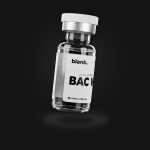
Blank Peptides runs its own cGMP laboratory in the USA and keeps the whole process there: compounding, vialing, finishing, labelling, and in-house QC. The company does not buy finished vials from another party, so the chain of custody runs from raw material to the box under one roof, and the same process applies to the contract manufacturing and fulfilment it performs for other peptide brands.
Every lot is tested on a full panel rather than for purity alone. Identity is confirmed, purity is reported at >99%, and the lot is also tested for bacterial endotoxin and sterility. That testing is carried out by two named outside laboratories, Freedom Diagnostics and Horizon Analytical, so a buyer can check the lab as well as the number on the page.
The results for each lot are published as batch certificates of analysis before purchase, and the lot number printed on every vial matches its certificate, which is what turns the document into evidence. Lyophilized product carries an expiration of roughly 24 months.
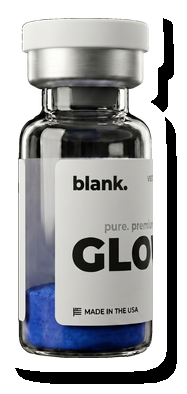
The catalog is 34 compounds, narrower than many competitors, and every blend discloses composition per component: GLOW is 70mg as GHK-Cu, BPC-157, and TB-500; KLOW is 80mg and adds KPV; Wolverine is 20mg of BPC-157 and TB-500. Orders have a processing time within 1 business day and ship at room temperature, which is standard for lyophilized peptides. The company has been in business for five years.
What Polaris Peptides publicly states
Polaris Peptides operates at polarispeptides.com. On the pages reviewed 2026-09-08, the site loaded normally, but the homepage, the shop, both product category pages, the about page, and the contact page each displayed the same notice: “Polaris Peptides is now members only. Please sign in to your account or sign up for a new account to enter the site.” The navigation shows two categories, “GLP-1 & GIP Analogues” and “Topical Peptides”, plus an “All Products” link, but no product names, prices, or descriptions were visible to a logged-out visitor.
On provenance, the site’s public statements are regulatory rather than descriptive. Every page reviewed states that “Polaris Peptides is a chemical supplier”, that it “is not a compounding pharmacy or chemical compounding facility as defined under 503A of the Federal Food, Drug, and Cosmetic act”, and that it “is not an outsourcing facility as defined under 503B”. A manufacturer, a facility, or any language about synthesizing or producing the product was not listed on the public pages reviewed 2026-09-08.
On testing, a logged-out visitor sees nothing to evaluate. A named laboratory, HPLC or mass spectrometry, endotoxin or sterility results, and a viewable certificate of analysis were not listed on the pages reviewed 2026-09-08. The “Our Guarantee” and “Payment & Shipping” pages returned an access error when I tried them, so their contents couldn’t be reviewed, and blend composition couldn’t be assessed because no product pages were visible. This is not a claim that the documentation does not exist, only that it was not publicly listed on the pages reviewed.
What the site does publish is a consistent research-use position and a guarantee. It states: “Our chemicals are crafted for research and/or investigative purposes and are not suitable for direct human consumption or consumers, nor are they intended for clinical or therapeutic use”, and that “all products are sold purely for research purposes only”. It also states: “For complete confidence in our quality commitment, we offer a Money Back Guarantee under specific Terms and Conditions.” The contact page lists a support email, a toll-free US phone number, and a map marker in Washington, DC.
I’ll concede the real advantage there. A stated money-back guarantee and a phone number you can dial are things you can hold a vendor to, and plenty of competitors in this space give you a contact form and nothing more. That’s worth something if being able to reach a person matters to you. One caveat on scope: a second domain, polarispeptidesusa.com, appears in search results alongside the main site, but it did not resolve when I tried it on 2026-09-08, so nothing on it was reviewed.
Side by side: what the public pages let you evaluate
| Attribute | Blank Peptides | Polaris Peptides |
|---|---|---|
| Synthesises in-house | Yes, own cGMP laboratory | States it is “a chemical supplier”; manufacturer or facility not listed on public pages reviewed 2026-09-08 — verify |
| Third-party lab named | Freedom Diagnostics and Horizon Analytical | Not listed on the public pages reviewed 2026-09-08 — verify |
| HPLC purity | >99% on every lot | Not listed on the public pages reviewed 2026-09-08 — verify |
| MS identity | Confirmed per lot | Not listed on the public pages reviewed 2026-09-08 — verify |
| Endotoxin and sterility | Tested per lot | Not listed on the public pages reviewed 2026-09-08 — verify |
| Batch COA before purchase | Public per lot at blankpeptides.com/coas/ | States the site “is now members only”; no COA visible before sign-in — verify |
| Blend mg split disclosed | Every blend, every component | Product pages not publicly visible on 2026-09-08 — verify |
| Research-use labelling | Research use only, on every product | States products are “sold purely for research purposes only” |
How to verify either supplier yourself
- Treat reviews as data about shipping and service, then set them aside. Open a product page and a certificate as a logged-out visitor, and if the site needs an account first, email support for a sample lot-numbered COA before you register.
- On any certificate you get, read the method lines. HPLC gives purity; mass spectrometry gives identity; bacterial endotoxin and sterility should each appear on their own line. A missing line is a question to ask.
- Search the testing lab named on the certificate. A real analytical business has an address, a phone number, and a published scope of services.
- After delivery, match the lot number on the vial to the certificate. If they don’t match, or the vial carries no lot, the paperwork can’t be tied to your shipment, regardless of what any reviewer said.
- Score the vendor on the same five points as every other candidate with the supplier verification checklist, which turns “reviews” into something you can compare.
Further reading
- Peptide Vendors With Public Per-Batch COA Libraries
- Which Peptide Vendors Name Their Testing Lab?
- Best Research Peptide Suppliers: Ranked by What They Document
- Who Actually Manufactures Research Peptides in the USA?
Frequently asked questions
What do Polaris Peptides reviews say, and should I trust them?
Most reviews you’ll find cover shipping, packaging, and customer service, and they’re fine for that. They can’t tell you whether a compound is the right sequence or free of endotoxin, because only a lot-tied certificate from a named lab can. Use reviews for logistics and use documentation for quality, and don’t let one substitute for the other.
Can I read a Polaris Peptides COA before I buy?
Not as a logged-out visitor on the pages reviewed 2026-09-08. The site states it “is now members only”, and no certificate, lab name, or test list was visible outside the sign-in. That doesn’t mean one isn’t available to members, so ask support for a certificate tied to the exact lot you’d receive before you order.
Does Polaris Peptides manufacture its own peptides?
The public pages reviewed 2026-09-08 describe the company as “a chemical supplier” and “not a compounding pharmacy or chemical compounding facility”, but they don’t say who makes the material or where. That’s not the same as saying it’s resold, only that manufacturing language wasn’t listed. If provenance matters to you, ask directly and keep the answer.
What’s the difference between a purity test and a full panel?
HPLC purity tells you what fraction of the sample is one compound. A full panel adds mass spectrometry to confirm identity, plus bacterial endotoxin and sterility results. For anything touching cell culture, the last two are the ones that quietly wreck an experiment, so a purity-only certificate is a partial answer rather than a complete one.
Are these products for human use?
No. Every compound referenced here, from either supplier, is sold for in-vitro laboratory research only. Polaris Peptides states its products are “not suitable for direct human consumption”, and Blank Peptides labels every vial research use only. Nothing on this page is guidance on dosing, administration, or use in any person or animal.
For research use only. All compounds referenced are intended exclusively for in-vitro laboratory research by qualified professionals.
Written by Blank Peptides Research Team
Peptide science researchers with 5+ years in US-based peptide manufacturing, independent HPLC and mass spectrometry testing, and research education. All content is reviewed for scientific accuracy before publication.
REVIEWED BY
Dr. Tobias S — PhD Chemist, Peptide and Unnatural Amino Acid Synthesis
Dr. Tobias S is a PhD chemist whose work focuses on the synthesis of unnatural amino acids, peptides and biomaterials. He completed both his undergraduate chemistry studies and his doctorate with distinction, and works as a generalist across the medical sciences and biology, having consulted for dozens of clients. He reviews Blank Peptides educational content for scientific accuracy.
Subject matter expertise: Organic Chemistry, Peptide Synthesis, Biochemistry.