You typed “is Profound Science legit” into a search bar because you’re about to spend real money on vials you can’t inspect, from a company whose brand page sends you to a shop on a different domain, and the only reviews you can find are either glowing or furious with nothing in between. I get it, because that’s the normal experience of buying research peptides online, and the question you’re really asking is whether there’s any way to know before you order.
I’m not going to answer the question with a yes or a no, and I’d be suspicious of anyone who does. “Legit” bundles together a dozen things: does the product ship, is it the right molecule, is it the purity claimed, is it free of endotoxin, will the company respond if something’s wrong. I can’t check most of those from here. What I can do is walk through what Profound Science publicly states on its own pages about sourcing, testing and certificates, as reviewed on 2026-09-08, and set that beside a standard you can use for any vendor. Then you decide.
One note on fairness before we start. I write for Blank Peptides, which sells in the same category. That’s a reason for you to check everything I say, and it’s why I’ve quoted Profound Science’s pages directly rather than paraphrasing.
Key takeaways
- Instead of asking whether a vendor is “legit”, ask what it documents: who makes the material, which lab tests it, what the panel covers, whether a batch COA is public before purchase, and whether blends disclose mg per component.
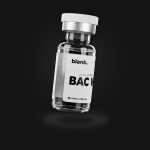
- Blank Peptides synthesizes in its own cGMP laboratory, has every lot tested by Freedom Diagnostics and Horizon Analytical for identity, >99% purity, bacterial endotoxin and sterility, and posts each lot’s certificate.
- Profound Science publicly states its products are “sourced from reputable manufacturers”, claims “HPLC TESTED” and “99%+ PURITY GUARANTEED”, and hosts a public test-results page with PDF certificates issued by named third-party labs.
- On the pages reviewed 2026-09-08, no manufacturing origin, no endotoxin or sterility results, and no lot-number index for the certificates were listed.
- All compounds mentioned are for in-vitro laboratory research by qualified professionals only.
What can you actually verify about a peptide vendor from its website?
Let me reframe the question, because “legit” isn’t something a website can prove. What a website can do is make specific, checkable statements, and the more of those it makes, the less you have to take on faith. I use five.
The first is provenance. Does the site say it synthesizes its peptides, or does it say it sources finished product from a manufacturer? Both are legitimate business models, and plenty of respectable vendors resell. But the answer tells you who actually controls the process, and a vendor that sources is relying on someone you can’t see. So look for the verb, and note whether a manufacturer or facility is named.
The second is the lab. “Third-party tested” is the most common phrase in this category and the least informative, because without a lab name you can’t confirm the test happened. A named lab can be looked up, called, or in some cases asked to verify a certificate number.
Third is the panel. HPLC gives chromatographic purity, the share of the sample that elutes as the main peak. Mass spectrometry identity confirms the peak is the right molecule. Bacterial endotoxin and sterility catch contamination that neither chromatographic method can see. A vendor that publishes only HPLC has shown you one of four things.
Fourth is certificate access. Can you open a batch COA before you pay, and does it carry a lot number that matches the vial label? A certificate available only on request after purchase doesn’t help you choose, and one that can’t be tied to a lot can’t be tied to your vial.
Fifth is blend disclosure. If a product is a blend, does the page state how many milligrams of each peptide are inside? Without the split, a purity figure on the mixture is hard to interpret.
Those five are all answerable from public pages in a few minutes, and none of them depend on trusting a stranger’s review. Hold every vendor to them, including the one I work for.
How Blank Peptides makes and tests each lot
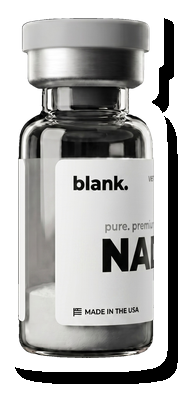
Blank Peptides operates its own cGMP laboratory in the United States and handles synthesis, vialing, lyophilization, labeling and quality-control release in-house. The company describes this as holding the full chain of custody, as distinct from relabeling or brokering product made elsewhere. It also contract-manufactures and fulfils for other research peptide brands, a line of business it describes only in general terms.
Every lot is released against a four-part panel: identity by mass spectrometry, purity by HPLC at a >99% threshold, bacterial endotoxin, and sterility. Two named independent laboratories, Freedom Diagnostics and Horizon Analytical, perform the analysis. Reports for each lot are published as batch certificates of analysis, where a buyer can open the document before ordering, and every vial carries the lot number that matches it. Lyophilized product is dated for roughly 24 months from release.
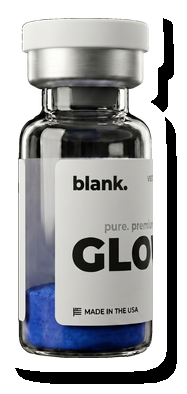
The catalog holds 34 compounds, including three blends whose composition is itemised per component: GLOW at 70mg (GHK-Cu, BPC-157, TB-500), KLOW at 80mg (those three plus KPV), and Wolverine at 20mg (BPC-157 and TB-500). Orders are processed within one business day and ship at room temperature, which suits lyophilized peptide. The company has operated for five years and sells for research use only.
What Profound Science publicly states
Start with the structure, because it’s the first thing that trips people up. The profoundscience.com homepage describes the company as “A trusted source for research needs” serving the “independent or lab-affiliated researcher”, offers an email address and a support portal, and sends buyers to a separate storefront at profoundaminos.com via a “Shop Now” link. On the date reviewed, the brand page carried no product listings, testing information or policies of its own. Two domains for one brand isn’t unusual, but it does mean every substantive statement lives on the storefront.
On provenance, the storefront’s policies page states: “All our products are sourced from reputable manufacturers with established safety and quality records.” That’s the only origin language I found. It describes sourcing rather than synthesis, and no manufacturer, facility or country of manufacture was listed on the pages reviewed 2026-09-08. The storefront navigation also didn’t link an about page, so there’s no company history or team description to read.
On testing, the storefront homepage states “HPLC TESTED”, “99%+ PURITY GUARANTEED” and “Batch COA Included”. The policies page states that “Certificates of Analysis (COAs) for most products are available on our dedicated test results portal for your review and verification.” That portal is public and fairly deep. The test-results page lists PDF certificates organised by product and vial cap colour, such as “GLOW 70mg Purple Cap” and “TB-500/BPC-157 20mg Purple Cap”, and you can open them without an account or purchase. The site’s prose doesn’t name a lab, but the certificates do; the documents I opened were issued by TrustPointe Analytics, and the page also references Zyntro. The policies page separately names labs whose results it accepts for refund claims, including TrustPointe Analytics and MZ Biolabs.
On what the certificates cover, the TrustPointe report for the BPC-157/TB-500 10mg/10mg blend (sample SPL-3691, dated 2026-05-05) lists an HPLC assay for each component, identity by retention time and spectral match, and a combined purity of 99.211%. It doesn’t list bacterial endotoxin or sterility results, and I didn’t find those on any other page or certificate reviewed 2026-09-08. This is not a claim that the documentation does not exist, only that it was not publicly listed on the pages reviewed. I’d also note that certificates are indexed by cap colour and sample ID rather than a lot number printed on the vial, which makes matching a document to a specific vial depend on the colour scheme staying consistent.
On blends, the site is more transparent than most. The GLOW Protocol page states the 70mg vial contains 50mg GHK-Cu, 10mg TB-500 and 10mg BPC-157, with “Purity: ≥99% (HPLC Verified)”. That’s the per-component disclosure I want to see, and it’s a genuine point in the vendor’s favour, as is the catalog: 54 products across seven pages including incretin-mimetic analogs, capsules and reconstitution supplies, which is well beyond the 34 compounds we carry.
On the practical side, the policies page states shipping by “UPS Ground unless otherwise requested” with weekday pickups “between 10am-2pm”, arrival “usually within 3 business days, although it may take up to 10”, no returns on research products, a 21-plus age requirement, and purity refunds only when “3rd party test results are presented showing that the product is either underweight or the purity is under 98%”.
Side by side: what each site documents
| Attribute | Blank Peptides | Profound Science |
|---|---|---|
| Synthesises in-house | Yes, own cGMP laboratory, full chain of custody | States products are “sourced from reputable manufacturers”; no origin listed — verify |
| Third-party lab named | Freedom Diagnostics and Horizon Analytical | States third-party COAs; labs named on PDFs (TrustPointe Analytics, Zyntro), not in site prose — verify |
| HPLC purity | >99% on every lot | States “99%+ PURITY GUARANTEED”; certificate reviewed shows 99.211% — verify |
| MS identity | Confirmed per lot | Certificate reviewed shows identity by retention time and spectral match — verify |
| Endotoxin and sterility | Bacterial endotoxin and sterility tested per lot | Not listed on the pages or certificates reviewed 2026-09-08 — verify |
| Batch COA before purchase | Every lot at blankpeptides.com/coas/, lot number on vial | States public test-results portal; PDFs indexed by cap colour and sample ID — verify |
| Blend mg split disclosed | GLOW 70mg, KLOW 80mg, Wolverine 20mg itemised per component | States GLOW 70mg as 50mg GHK-Cu, 10mg TB-500, 10mg BPC-157 — verify |
| Research-use labelling | Research use only on every product | States “For research use only. Not for human consumption.” — verify |
How to verify either supplier yourself
- Open the vendor’s test-results or COA page before ordering and check the certificate itself for a lab name, a lot or sample identifier, and any line beyond HPLC purity.
- Find the provenance sentence on the about or policies page and read the verb carefully, since “sourced from” and “synthesized in our lab” describe different things.
- Save the certificate for the product you’re ordering, then match it against the lot number or cap colour on the vial when it arrives, and email the vendor before use if they don’t correspond.
- Read the refund policy for the purity threshold and the accepted labs, which tells you what result the vendor itself would treat as a failure.
- Run the full method against any supplier, ours included, using the supplier verification checklist.
Further reading
- Which Peptide Vendors Name Their Testing Lab?
- Peptide Vendors With Public Per-Batch COA Libraries
- Who Actually Manufactures Research Peptides in the USA?
- Best Research Peptide Suppliers: Ranked by What They Document
Frequently asked questions
Is Profound Science legit?
That’s a question the site can’t answer for you, and neither can I. What the site publicly states, as of 2026-09-08, is that products are “sourced from reputable manufacturers”, that they’re HPLC tested to “99%+”, and that certificates from named labs are viewable on a public test-results page. What wasn’t listed was a manufacturing origin or endotoxin and sterility results. Weigh those facts yourself.
Does Profound Science post certificates of analysis?
Yes, on a public test-results page at the profoundaminos.com storefront, organised by product and vial cap colour. The PDFs I opened were issued by TrustPointe Analytics and report HPLC assay, identity by retention time and spectral match, and purity. They’re viewable before purchase. Endotoxin and sterility lines were not on the certificates reviewed 2026-09-08.
Who makes Profound Science’s peptides?
The storefront’s policies page states that “All our products are sourced from reputable manufacturers with established safety and quality records.” No manufacturer, facility or country of manufacture was listed on the pages reviewed 2026-09-08, and no about page was linked from the storefront. I’d describe that as sourcing language and leave any further conclusion to you.
What does Profound Science do better than Blank Peptides?
Two things stood out. The catalog is wider, with 54 products across seven pages including incretin-mimetic analogs, capsules and reconstitution supplies, against our 34 compounds. And the GLOW Protocol page discloses the per-component mg split, which many vendors skip. Both are real advantages if breadth or blend transparency is what you’re shopping for.
Are these products for human use?
No. Every compound referenced here is sold strictly for in-vitro laboratory research by qualified professionals. Nothing in this article is intended to diagnose, treat, cure or prevent any condition, and nothing should be read as guidance on administering anything to people or animals. Both vendors discussed carry research-use-only labelling on their products.
For research use only. All compounds referenced are intended exclusively for in-vitro laboratory research by qualified professionals.
Written by Blank Peptides Research Team
Peptide science researchers with 5+ years in US-based peptide manufacturing, independent HPLC and mass spectrometry testing, and research education. All content is reviewed for scientific accuracy before publication.
REVIEWED BY
Dr. Tobias S — PhD Chemist, Peptide and Unnatural Amino Acid Synthesis
Dr. Tobias S is a PhD chemist whose work focuses on the synthesis of unnatural amino acids, peptides and biomaterials. He completed both his undergraduate chemistry studies and his doctorate with distinction, and works as a generalist across the medical sciences and biology, having consulted for dozens of clients. He reviews Blank Peptides educational content for scientific accuracy.
Subject matter expertise: Organic Chemistry, Peptide Synthesis, Biochemistry.