I can’t tell if this vendor is real. That’s the message I get most often about research-compound storefronts, and Pure Rawz comes up more than most, partly because the site sells across peptides, SARMs, and nootropics and partly because its about page says something you don’t usually see on a shop. People want a one-word answer, and I get why, but a one-word answer would be me guessing on your behalf.
What I can do is show you the documentation. I read the purerawz.co homepage, about page, terms, shipping policy, shop, peptide category, and two product pages on 2026-09-08, and I wrote down what the site states and what it doesn’t. I’ll put that next to the standard I’d hold any supplier to, and next to what Blank Peptides publishes for its own lots, and then you can draw the conclusion. That’s a more useful thing to hand you than a verdict, because the same method works on the next vendor too.
Key takeaways
- Legitimacy is something you assess from documentation you can check before ordering, and the questions are the same for every vendor: who made it, who tested it, which tests, is the COA public, and are blends split by component.
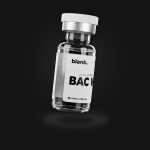
- Blank Peptides synthesizes, vials, and finishes each lot in its own cGMP laboratory, has Freedom Diagnostics and Horizon Analytical run identity, >99% purity, endotoxin, and sterility on every lot, and publishes each COA at blankpeptides.com/coas/.
- Pure Rawz publicly states that it is “an informational and affiliate website” that does not “manufacture, stock, package, ship, or fulfill orders,” while its homepage describes “third-party tested, COA verified” compounds and its shop lists 521 products.
- A named testing laboratory, a lot-tied certificate viewable before purchase, a listed test panel, and per-component blend milligrams were not listed on the Pure Rawz pages reviewed 2026-09-08.
- Everything discussed is research-use-only material for in-vitro laboratory work by qualified professionals, and nothing here is advice on any other use.
What does “legit” actually mean for a research peptide supplier?
When someone asks whether a vendor is legit, they’re usually bundling three separate worries: will I get anything at all, will it be what the label says, and will there be anything in the vial that shouldn’t be. The first worry is about fulfilment and it’s the easiest to settle with a small order. The second and third are about documentation, and they’re the ones I care about, because a vendor can ship promptly for years while sending out material nobody has properly tested.
So here’s the rubric, set before I look at anyone in particular. Provenance is the first question: does the company synthesize its own material, or does it source finished product and apply a label? You find this on the about page, in the verbs. “We manufacture” and “we source” and “we do not manufacture” are three different businesses, and each one puts the accountability for the vial in a different place.
Second, is the testing laboratory named? A lab name is the difference between a checkable claim and a slogan, because you can phone a laboratory and ask about a report number, and you can’t phone the phrase “third-party tested.”
Third, what’s on the panel? HPLC gives you purity, mass spectrometry gives you identity, and bacterial endotoxin and sterility tell you about contamination. A vendor that publishes only a purity chromatogram has answered a quarter of the question and left the rest to your imagination.
Fourth, can you open a batch COA before you pay, and does it carry a lot number that will also appear on the vial? A certificate you only see after checkout has no bearing on the decision to check out.
Fifth, if the vendor sells blends, are milligrams stated per component? A blend sold by total weight alone can’t be reconstituted to a known concentration of either peptide.
I deliberately leave out how long a company has existed or how old its domain is. Both are easy to fake in perception and neither says anything about the lot in front of you. A five-year-old site with no COA is still a site with no COA.
How Blank Peptides makes and tests each lot
Blank Peptides operates its own cGMP laboratory in the USA and keeps the entire production chain in-house: the company compounds the peptide, fills and finishes the vials, applies the labels, and runs its own quality control, so the chain of custody from synthesis to shipment sits with one party. The same facility also contract-manufactures and fulfils for other research peptide brands. The company has been in business for five years.
Testing is done by two laboratories the company names, Freedom Diagnostics and Horizon Analytical. Each lot receives the full panel: identity by mass spectrometry, purity by HPLC reported as >99%, bacterial endotoxin, and sterility. That’s four tests on every lot rather than a purity number reused across batches.
Certificates are published as batch certificates of analysis, each tied to a lot number that is also printed on the vial, so a buyer can check the document before ordering and match it to the product on arrival. Lyophilized product carries an expiration of about 24 months.
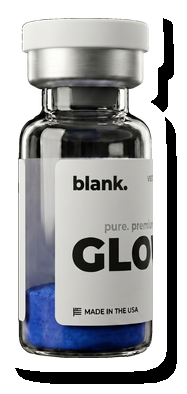
The catalog is 34 compounds. Blends are labelled by component: GLOW is 70mg across GHK-Cu, BPC-157, and TB-500; KLOW is 80mg with KPV added; Wolverine is 20mg of BPC-157 and TB-500. Processing time is within one business day, and orders ship at room temperature, which is the appropriate condition for lyophilized peptides.
What Pure Rawz publicly states
Everything in this section comes from purerawz.co pages reviewed on 2026-09-08. Where I say something wasn’t there, I mean it wasn’t on those pages. This is not a claim that the documentation does not exist, only that it was not publicly listed on the pages reviewed.
Start with the about page, because it’s the most unusual thing on the site. Pure Rawz publicly states: “Purerawz is an informational and affiliate website. We do not sell or directly supply the products featured on this website.” It continues: “We do not manufacture, stock, package, ship, or fulfill orders for the products discussed on this website.” The terms and conditions repeat the description of “an independent informational and affiliate website” and state the company is not responsible for product quality on the third-party sites it links to. Product pages reinforce this. The BPC-157 page states that “BPC-157 products are not sold by Purerawz” and presents “BUY HERE” buttons to seven other vendors, each with a coupon code.
Now the homepage and shop, which read differently. The homepage states the compounds are “third-party tested, COA verified,” describes “independent third-party lab-tested compounds,” and refers to “rigorous testing for purity, potency, and consistency.” The shop page states 521 products across peptides, SARMs, nootropics, and stacks, shows prices, and uses titles like “3rd Party Tested” and “COA Verified Research Peptide.” The shipping policy states “packages typically reach the courier within 5 – 12 business days,” names USPS, UPS, and Globalpost, offers “Free Shipping for Orders over $100,” and refers to “our warehouse.”
Look, I’m going to be straight about the gap between those two sets of pages. One set says the company doesn’t sell, ship, or fulfil; the other set describes a warehouse and courier handoffs. I don’t know which one applies to a given checkout, and I’m not going to guess. It’s the first thing I’d ask them.
On the testing rubric, here’s what I could and couldn’t find. No testing laboratory is named on any page I reviewed. There’s no COA page in the site menu or footer, and no lot-tied certificate on the BPC-157 or Wolverine Blend product pages. The tests performed aren’t listed beyond the phrase “purity, potency, and consistency,” so HPLC, mass spectrometry, endotoxin, and sterility don’t appear as named methods. On the blend, the Wolverine page lists a price range of $39.99 to $195.00 and states that vendors “commonly package the blend at approximately 5 mg BPC-157 + 5 mg TB-500,” which describes an industry habit rather than a per-vial split for the product listed.
The site does have a real strength, and it’s breadth. Five hundred and twenty-one listings across three compound categories is a much wider catalog than a peptide-only manufacturer will ever carry, and the product pages line up multiple sellers with discount codes, which is convenient if you’re comparing on price across categories.
Side by side: what the public documentation shows
| Attribute | Blank Peptides | Pure Rawz |
|---|---|---|
| Synthesises in-house | Own cGMP laboratory; compounds, vials, finishes, labels, and runs QC in-house | States it does not “manufacture, stock, package, ship, or fulfill orders” for products on the site |
| Third-party lab named | Freedom Diagnostics and Horizon Analytical | Lab name not listed on pages reviewed 2026-09-08 — verify |
| HPLC purity | >99% per lot, shown on the published COA | States “COA Verified” and “third-party tested”; no purity figure or method on pages reviewed — verify |
| MS identity | Run on every lot | Not listed on pages reviewed 2026-09-08 — verify |
| Endotoxin and sterility | Both run on every lot | Not listed on pages reviewed 2026-09-08 — verify |
| Batch COA before purchase | Public per-lot COA at blankpeptides.com/coas/, lot number on every vial | No COA page or lot-tied certificate found on pages reviewed — verify |
| Blend mg split disclosed | GLOW 70mg, KLOW 80mg, Wolverine 20mg, each listed per component | States vendors “commonly package” Wolverine at about 5mg + 5mg; no per-vial split for the listed product — verify |
| Catalog size | 34 compounds | States 521 products across peptides, SARMs, nootropics, and stacks |
How to verify either supplier yourself
- Read the about page slowly and note every verb that describes what the company does to the product. That single paragraph usually answers the provenance question, and it did here.
- Find the testing laboratory’s name, confirm the lab exists outside the vendor’s site, and ask the lab whether a specific report number is theirs. If there’s no name to find, that’s your answer for now.
- Open one COA and count the tests, which should cover identity, purity, endotoxin, and sterility. Then check that the lot number on the certificate matches a vial you can actually order.
- For any blend, find milligrams per component on the product page or label. If it isn’t there, email and ask, and keep the reply.
- Work through the supplier verification checklist before you order from anyone new, this vendor included.
Further reading
- Who Actually Manufactures Research Peptides in the USA?
- Peptide Vendors With Public Per-Batch COA Libraries
- Which Peptide Vendors Name Their Testing Lab?
- Best Research Peptide Suppliers: Ranked by What They Document
Frequently asked questions
Is Pure Rawz legit?
That’s a judgement you should make from the documentation rather than from anyone’s verdict. On the pages reviewed 2026-09-08, Pure Rawz publicly states it is an affiliate and informational site that does not manufacture or fulfil orders, and no named lab, lot-tied COA, or full test panel was listed. Weigh that against the rubric above and decide for your own lab.
Does Pure Rawz sell products directly?
The about page publicly states that Pure Rawz “does not sell or directly supply the products featured on this website,” and the BPC-157 product page directs buyers to seven third-party sellers. The shipping policy page, however, refers to “our warehouse.” Which applies to your order is a question to put to the company before checkout.
Does Pure Rawz publish COAs?
Listings on purerawz.co carry “COA Verified” and “3rd Party Tested” wording, but on the pages reviewed 2026-09-08 there was no COA page, no lot-tied certificate, and no named laboratory. This is not a claim that the documentation does not exist, only that it wasn’t publicly listed on those pages. Ask for a lot-specific certificate before ordering.
What should a trustworthy COA include?
The name of the laboratory that ran the tests, a report number you could ask that lab to confirm, the lot number that will appear on the vial, and results for identity, purity, bacterial endotoxin, and sterility. A certificate with only a purity chromatogram is incomplete, and one with no lab name can’t be checked at all.
Are these products for human use?
No. Every compound discussed here, from Blank Peptides or any other supplier, is sold strictly for in-vitro laboratory research by qualified professionals. None is approved for human or veterinary use, and nothing in this article should be read as guidance on dosing, administration, or any use outside a research setting.
For research use only. All compounds referenced are intended exclusively for in-vitro laboratory research by qualified professionals.
Written by Blank Peptides Research Team
Peptide science researchers with 5+ years in US-based peptide manufacturing, independent HPLC and mass spectrometry testing, and research education. All content is reviewed for scientific accuracy before publication.
REVIEWED BY
Dr. Tobias S — PhD Chemist, Peptide and Unnatural Amino Acid Synthesis
Dr. Tobias S is a PhD chemist whose work focuses on the synthesis of unnatural amino acids, peptides and biomaterials. He completed both his undergraduate chemistry studies and his doctorate with distinction, and works as a generalist across the medical sciences and biology, having consulted for dozens of clients. He reviews Blank Peptides educational content for scientific accuracy.
Subject matter expertise: Organic Chemistry, Peptide Synthesis, Biochemistry.