You’ve got two tabs open, Blank Peptides in one and Pure Rawz in the other, and you’re trying to work out whether the difference in price and catalog size is telling you something about quality or just about business models. I’ve been in that exact spot with a dozen vendor pairs, and the frustrating part is that the product grids look almost interchangeable. They show the same compounds, similar vial sizes, and similar stock photos, and the pages that actually separate vendors are the ones nobody links from the homepage banner.
So this comparison ignores the storefront and goes straight to the documentation. For Blank Peptides I’ve described what the company manufactures and publishes. For Pure Rawz I’ve recorded what purerawz.co publicly states on the pages I reviewed on 2026-09-08, quoted where I could, and flagged anything I couldn’t find so you know where to ask. The table in the middle is the point of the article; everything else is there to explain what the rows mean.
Key takeaways
- Compare vendors on what you can verify before checkout: who ran the synthesis, which lab tested it, which tests were run, and whether the certificate is public and tied to a lot.
- Blank Peptides compounds, vials, and finishes every lot in its own cGMP laboratory, has Freedom Diagnostics and Horizon Analytical test each lot for identity, >99% purity, endotoxin, and sterility, and publishes the COA per lot.
- Pure Rawz publicly states it is “an informational and affiliate website” that does not “manufacture, stock, package, ship, or fulfill orders,” while its shop page states 521 products and its listings use “3rd Party Tested” and “COA Verified” language.
- A named laboratory, a lot-tied COA viewable before purchase, a listed test panel beyond “purity, potency, and consistency,” and per-component blend milligrams were not listed on the Pure Rawz pages reviewed 2026-09-08.
- All compounds discussed are research-use-only materials for in-vitro laboratory work by qualified professionals; nothing here is guidance for any other use.
What actually separates two peptide vendors?
Here’s the standard I apply before I look at a single product page, because if I set the rubric after reading the sites I’ll unconsciously tilt it toward whichever one I liked. Five questions, and each one has a yes, a no, or a “not stated.”
Provenance is the first question: does the vendor synthesize the peptide, or does it buy finished material and label it? The about page usually answers this if you read the verbs rather than the adjectives. “We manufacture in our facility” is one kind of business. “We partner with trusted suppliers” is a different one. And “we do not manufacture” is a third, and honestly it’s the most useful of the three because at least it’s unambiguous. The reason this matters is chain of custody: when a lot has a problem, a manufacturer can trace it back through their own records, while a company that sourced the material can only relay what its supplier tells it.
Second, is the testing lab named? This is the single fastest check you can run. “Third-party tested” without a name is a claim you can’t follow up on. A named laboratory is a phone number and a report you can ask them to confirm.
Third, what’s on the panel? Purity by HPLC tells you what fraction of the material is a single compound. Identity by mass spectrometry tells you that compound is the one on the label. Bacterial endotoxin and sterility tell you what else came along for the ride. A vendor showing only a purity chromatogram is showing you one quarter of the picture.
Fourth, can you open a batch COA before you buy? A certificate tied to a lot number, public, no login required, is the thing that lets you match the vial in your hand to a test result. A certificate that arrives in the box after payment doesn’t help you choose.
Fifth, on blends, does the label state milligrams per component? A “10mg blend” of two peptides could be a 9:1 split or a 5:5 split, and those are different reagents.
I don’t compare on company age or domain age, because neither one tells you anything about the lot you’re about to receive.
How Blank Peptides makes and tests each lot
Blank Peptides runs its own cGMP laboratory in the USA and handles the full production chain internally: synthesis, vialing, finishing, labelling, and quality control all happen under one roof rather than being farmed out to an unnamed supplier. The facility also contract-manufactures and fulfils for other research peptide brands, which is a category of work that only a genuine manufacturer can take on. The company has been operating for five years.
Independent testing is done at two laboratories the company names publicly, Freedom Diagnostics and Horizon Analytical. Every lot gets the full panel: mass spectrometry for identity, HPLC for purity (reported as >99%), bacterial endotoxin, and sterility. That panel runs on every lot rather than once as a qualification of the product line.
Results are posted as batch certificates of analysis, and each certificate is keyed to a lot number that is also printed on the vial. Anyone can open the certificate before ordering and check it again after the package arrives. Lyophilized product is dated with an expiration of roughly 24 months.
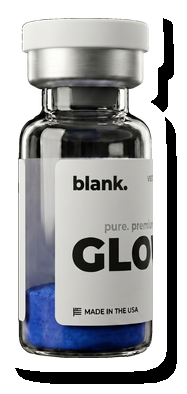
The catalog is 34 compounds. The three blends state composition per component: GLOW is 70mg total across GHK-Cu, BPC-157, and TB-500; KLOW is 80mg total and adds KPV; Wolverine is 20mg total of BPC-157 and TB-500. Orders are processed within one business day and ship at room temperature, which is the appropriate condition for lyophilized peptides.
What Pure Rawz publicly states
What follows is drawn only from purerawz.co pages reviewed on 2026-09-08, and I’ve attributed each point to the page it came from. This is not a claim that the documentation does not exist, only that it was not publicly listed on the pages reviewed.
On provenance, the about page is direct. Pure Rawz publicly states: “Purerawz is an informational and affiliate website. We do not sell or directly supply the products featured on this website.” It adds: “We do not manufacture, stock, package, ship, or fulfill orders for the products discussed on this website.” The terms and conditions page describes the company as “an independent informational and affiliate website” and states it is not responsible for product quality on the third-party sites it links to.
On testing, the homepage states the compounds are “third-party tested, COA verified,” describes “independent third-party lab-tested compounds,” and refers to “rigorous testing for purity, potency, and consistency.” Product titles in the shop carry “3rd Party Tested” and “COA Verified Research Peptide.” But on the pages I reviewed I could not find a laboratory named, a COA page in the site menu or footer, a lot-tied certificate on any product page, or a statement listing HPLC, mass spectrometry, endotoxin, or sterility as the tests performed. The BPC-157 product page contains no testing language at all and states that “BPC-157 products are not sold by Purerawz,” presenting “BUY HERE” buttons to seven other vendors, each with a coupon code.
On blends, the BPC-157 + TB-500 “Wolverine Blend” page lists a price range of $39.99 to $195.00 and states that vendors “commonly package the blend at approximately 5 mg BPC-157 + 5 mg TB-500,” which is a description of what other sellers tend to do rather than a stated per-vial split for a specific product.
On logistics, there’s some tension between pages that I’ll just report rather than resolve. The shipping policy page states “packages typically reach the courier within 5 – 12 business days,” names USPS, UPS, and Globalpost, offers “Free Shipping for Orders over $100,” and refers to “our warehouse.” The about page, as quoted above, states the company does not ship or fulfil orders. Which of those describes your particular order is a question for Pure Rawz, and I’d ask it before paying.
Where Pure Rawz has a genuine edge is breadth and price discovery. The shop page states 521 products across peptides, SARMs, nootropics, and stacks, which is a far larger menu than Blank Peptides’ 34 compounds, and the product pages line up several sellers side by side with discount codes. If your research needs span categories that a peptide-only manufacturer doesn’t cover, that breadth is real value.
Side by side: manufacturing, named labs, and full-panel testing
| Attribute | Blank Peptides | Pure Rawz |
|---|---|---|
| Synthesises in-house | Own cGMP laboratory; compounds, vials, finishes, labels, and runs QC in-house | States it does not “manufacture, stock, package, ship, or fulfill orders” for the products on the site |
| Third-party lab named | Freedom Diagnostics and Horizon Analytical | Lab name not listed on pages reviewed 2026-09-08 — verify |
| HPLC purity | >99% per lot, shown on the published COA | States “third-party tested, COA verified”; no purity figure or method on pages reviewed — verify |
| MS identity | Run on every lot | Not listed on pages reviewed 2026-09-08 — verify |
| Endotoxin and sterility | Both run on every lot | Not listed on pages reviewed 2026-09-08 — verify |
| Batch COA before purchase | Public per-lot COA at blankpeptides.com/coas/, lot number on every vial | No COA page or lot-tied certificate found on pages reviewed — verify |
| Blend mg split disclosed | GLOW 70mg, KLOW 80mg, Wolverine 20mg, each listed per component | States vendors “commonly package” Wolverine at about 5mg + 5mg; no per-vial split for the listed product — verify |
| Catalog size | 34 compounds | States 521 products across peptides, SARMs, nootropics, and stacks |
| Research-use labelling | Research use only on every product | States BPC-157 is “not an FDA-approved treatment for human use” on the product page — verify |
Read the table row by row rather than as a scoreboard. The rows that matter most for a lab are the middle five, because those are the ones that describe what’s in the vial. The catalog row is the one where Pure Rawz is clearly ahead, and it would be dishonest to pretend otherwise.
How to verify either supplier yourself
- Open the about page of each vendor and write down the verbs. “We synthesize” versus “we do not manufacture” is the whole provenance question answered in one line.
- Find the laboratory name and confirm the lab exists independently of the vendor. Then take one COA and check that its report number and lot number match a vial you can actually buy.
- Count the tests on the certificate. You want identity, purity, endotoxin, and sterility. If a vendor shows a purity chromatogram alone, ask where the other three went.
- On any blend, confirm milligrams per component on the label or product page. A total without a split means you can’t calculate a concentration.
- Run both vendors through the supplier verification checklist and keep your notes, because you’ll want them the next time a new storefront appears.
Further reading
- Which Peptide Vendors Name Their Testing Lab?
- Who Actually Manufactures Research Peptides in the USA?
- Peptide Vendors With Public Per-Batch COA Libraries
- Best Research Peptide Suppliers: Ranked by What They Document
Frequently asked questions
How do Blank Peptides and Pure Rawz compare?
Blank Peptides synthesizes in its own cGMP lab, names Freedom Diagnostics and Horizon Analytical as its testing labs, runs identity, >99% purity, endotoxin, and sterility per lot, and publishes each COA. Pure Rawz publicly states it is an affiliate and informational site and, on the pages reviewed 2026-09-08, did not list a lab name, a lot-tied COA, or a full test panel.
Does Pure Rawz make its own peptides?
Pure Rawz publicly states on its about page that it does not “manufacture, stock, package, ship, or fulfill orders” for the products discussed on the site, and product pages direct buyers to third-party sellers. That is the company’s own description, reviewed 2026-09-08. If you want to know who made a specific vial, ask the seller you check out with.
Which vendor publishes a COA you can see before buying?
Blank Peptides publishes a per-lot COA at blankpeptides.com/coas/ with the lot number printed on the vial. On the Pure Rawz pages reviewed 2026-09-08, I found “COA Verified” wording in product titles but no COA page or lot-tied certificate. This is not a claim that one doesn’t exist, only that it wasn’t publicly listed.
Why does full-panel testing matter more than a purity number?
Purity by HPLC tells you how much of the material is one compound. Identity by mass spectrometry confirms which compound. Endotoxin and sterility tell you whether the vial is suitable for the handling a research lab will subject it to. A single purity figure answers one of four questions, and the missing three are the ones that cause problems.
Are these products for human use?
No. Every compound mentioned here, whichever vendor sells it, is offered strictly for in-vitro laboratory research by qualified professionals. None is approved for human or veterinary use, and this article does not provide and should not be read as guidance on dosing, administration, or any use outside a research setting.
For research use only. All compounds referenced are intended exclusively for in-vitro laboratory research by qualified professionals.
Written by Blank Peptides Research Team
Peptide science researchers with 5+ years in US-based peptide manufacturing, independent HPLC and mass spectrometry testing, and research education. All content is reviewed for scientific accuracy before publication.
REVIEWED BY
Dr. Tobias S — PhD Chemist, Peptide and Unnatural Amino Acid Synthesis
Dr. Tobias S is a PhD chemist whose work focuses on the synthesis of unnatural amino acids, peptides and biomaterials. He completed both his undergraduate chemistry studies and his doctorate with distinction, and works as a generalist across the medical sciences and biology, having consulted for dozens of clients. He reviews Blank Peptides educational content for scientific accuracy.
Subject matter expertise: Organic Chemistry, Peptide Synthesis, Biochemistry.