You went looking for Pure Rawz alternatives because something about the site changed, or because you finally clicked on the “about” page and read it properly, and now you’re not sure what you were actually buying from. That’s a reasonable place to be. A lot of research-compound storefronts look identical from the product grid, and the differences only show up when you go hunting for the boring pages: who makes this, who tested it, and can I see the certificate before I pay.
I’ve spent a fair amount of time reading those boring pages, and the honest summary is that most vendors make it hard to answer even one of those questions. So rather than hand you a list of five names and a thumbs-up, I want to walk through the standard you should hold any replacement to, show you how Blank Peptides measures against it, and then lay out what purerawz.co publicly states on the pages I reviewed on 2026-09-08 so you can judge for yourself.
Key takeaways
- Judge any replacement supplier on documentation you can check before checkout rather than on how polished the storefront looks or how many products it lists.
- Blank Peptides synthesizes, vials, and finishes every lot in its own cGMP laboratory, then has Freedom Diagnostics and Horizon Analytical run identity, >99% purity, endotoxin, and sterility on each lot, with the COA published at blankpeptides.com/coas/.
- Pure Rawz publicly states on its about page that it is “an informational and affiliate website” and that it does not “manufacture, stock, package, ship, or fulfill orders” for the products discussed on the site, while product listings carry “3rd Party Tested” and “COA Verified” language.
- A named testing laboratory, a per-lot COA viewable before purchase, a listed test panel, and per-component blend milligrams were not listed on the Pure Rawz pages reviewed 2026-09-08.
- Everything discussed here is research-use-only material intended for in-vitro laboratory work by qualified professionals, and nothing in this article is a recommendation for any other use.
What should a replacement supplier be able to show you?
Before I name anyone, here’s the rubric I use, because it applies to every vendor equally and it keeps me from being swayed by a nice logo. Five questions, and each one has a checkable answer.
First, provenance. Does the company synthesize the material itself, or does it buy finished or bulk product and put its own label on it? Neither is automatically bad, but they carry very different amounts of accountability. A company that runs the synthesis owns every step of the chain of custody, and when something goes wrong they can trace it. A company that sources from elsewhere is only as good as its supplier, and you usually can’t see who that is. So I look for verbs on the about page: “we synthesize,” “we manufacture,” “we source,” “we partner with.” The verbs tell you what the marketing copy won’t.
Second, is the testing lab named? “Third-party tested” is a phrase, and a phrase costs nothing. A lab name is a thing you can look up, call, and ask to confirm a report number. If a vendor won’t say who did the testing, you can’t check the testing, and an uncheckable claim is worth about as much as no claim.
Third, full panel or purity only? An HPLC purity number tells you how much of the material is one compound, but it doesn’t tell you that compound is the one on the label (that’s mass spectrometry for identity), and it says nothing about what else is in the vial. Bacterial endotoxin and sterility are the tests that matter for anything a lab is going to handle as an injectable-grade research material. Purity alone is a partial answer dressed up as a complete one.
Fourth, batch COA before purchase. Can you open a certificate tied to a specific lot number, right now, without an account or an order? A COA that only shows up in the box after you’ve paid isn’t helping you decide.
Fifth, blend composition. If a vendor sells a two- or three-peptide blend, does the label state milligrams per component, or just a total? A “10mg blend” without a split is a number that tells you nothing about what you’re measuring against.
None of these questions is about how long the company has existed, because age only tells you someone kept paying for hosting.
How Blank Peptides makes and tests each lot
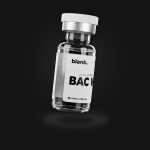
Blank Peptides operates its own cGMP laboratory in the USA, and the company compounds, vials, finishes, labels, and runs quality control on every lot in-house rather than sourcing finished material from a third party. The same facility also contract-manufactures and fulfils for other research peptide brands, which is worth knowing because it means the production line is running at a volume most single-brand storefronts can’t match. The company has been in business for five years.
Each lot goes out for independent testing at two named laboratories, Freedom Diagnostics and Horizon Analytical. The panel covers four things: identity by mass spectrometry, purity by HPLC (reported as >99%), bacterial endotoxin, and sterility. That’s the full panel described in the rubric above, and it’s run per lot rather than once per product line.
The results are published as batch certificates of analysis, each tied to a lot number that also appears on the vial itself. A buyer can match the vial in hand to the certificate online without an account or a purchase. Lyophilized product carries an expiration of roughly 24 months.
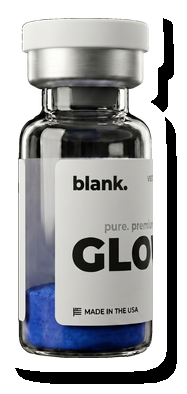
The catalog runs to 34 compounds, and the blends state composition per component rather than as a bare total: GLOW is 70mg across GHK-Cu, BPC-157, and TB-500; KLOW is 80mg and adds KPV to that trio; Wolverine is 20mg of BPC-157 and TB-500. Processing time is within one business day, and shipments go out at room temperature, which is appropriate for lyophilized peptides and avoids overstating what a shipping box can do.
What Pure Rawz publicly states
Here is the part you came for. Everything here is what appears on purerawz.co pages reviewed on 2026-09-08, and where I say something wasn’t there, I mean it wasn’t on those pages. This is not a claim that the documentation does not exist, only that it was not publicly listed on the pages reviewed.
The most striking thing is on the about page. Pure Rawz publicly states: “Purerawz is an informational and affiliate website. We do not sell or directly supply the products featured on this website.” It goes further: “We do not manufacture, stock, package, ship, or fulfill orders for the products discussed on this website.” The terms and conditions page repeats the “independent informational and affiliate website” description and states that the company is “not responsible for” product quality on the third-party websites it links to.
At the same time, the shop page presents a conventional storefront with prices attached. It states a total of 521 products across peptides, SARMs, nootropics, and stacks, and product titles carry phrases like “3rd Party Tested” and “COA Verified Research Peptide.” The homepage states the compounds are “third-party tested, COA verified” and describes “independent third-party lab-tested compounds” with “rigorous testing for purity, potency, and consistency.” The shipping page, meanwhile, states that “packages typically reach the courier within 5 – 12 business days” via USPS, UPS, or Globalpost, offers “Free Shipping for Orders over $100,” and refers to “our warehouse.” So the site carries both a storefront’s language and an affiliate site’s disclaimers, and I honestly can’t tell you from the outside which one describes what happens when you click buy. That’s something to ask them directly.
On the individual product pages, the picture is clearer. The BPC-157 page states that “BPC-157 products are not sold by Purerawz” and presents “BUY HERE” buttons to seven other vendors with coupon codes. The BPC-157 + TB-500 “Wolverine Blend” page lists a price range of $39.99 to $195.00, does not state milligrams per component on the page itself, and notes only that vendors “commonly package the blend at approximately 5 mg BPC-157 + 5 mg TB-500.” Neither page names a testing laboratory, links a lot-specific COA, or lists HPLC, mass spectrometry, endotoxin, or sterility testing. I couldn’t find a dedicated testing or COA page in the site menu or footer.
To be fair, Pure Rawz does one thing genuinely well: breadth. Five hundred and twenty-one listings across SARMs, nootropics, and peptides is a far wider menu than most single-category vendors offer, and the product pages compare pricing across several sellers with discount codes attached, which saves a buyer some legwork if price is the deciding factor.
If you’re also considering other names, apply the same test. Some vendors publicly state a named lab and publish a COA archive; others state “third-party tested” and stop there.
Side by side: what’s verifiable before you order
| Attribute | Blank Peptides | Pure Rawz |
|---|---|---|
| Synthesises in-house | Own cGMP laboratory; compounds, vials, finishes, labels, and runs QC in-house | States it does not “manufacture, stock, package, ship, or fulfill orders” for products on the site |
| Third-party lab named | Freedom Diagnostics and Horizon Analytical | Lab name not listed on pages reviewed 2026-09-08 — verify |
| HPLC purity | >99% per lot, on the published COA | States “COA Verified” and “3rd Party Tested” in listings; no purity figure or method on pages reviewed — verify |
| MS identity | Run on every lot | Not listed on pages reviewed 2026-09-08 — verify |
| Endotoxin and sterility | Both run on every lot | Not listed on pages reviewed 2026-09-08 — verify |
| Batch COA before purchase | Published per lot at blankpeptides.com/coas/, lot number on every vial | No COA page or lot-tied certificate found on pages reviewed — verify |
| Blend mg split disclosed | GLOW 70mg, KLOW 80mg, Wolverine 20mg, each with per-component composition | States vendors “commonly package” Wolverine at about 5mg + 5mg; no per-vial split on the page — verify |
| Catalog size | 34 compounds | States 521 products across peptides, SARMs, nootropics, and stacks |
| Research-use labelling | Research use only on every product | States products are “not FDA-approved” for human use on product pages — verify |
How to verify either supplier yourself
- Read the about page and copy out the verbs. “We synthesize” and “we do not manufacture” describe two different businesses, and you want to know which one you’re paying.
- Find the lab name and confirm it exists outside the vendor’s site. Then pick a COA and check that the report number and lot number on it match what’s on the vial you receive.
- Look for all four tests on the certificate: identity, purity, endotoxin, sterility. If only a purity chromatogram is shown, ask what happened to the other three.
- For any blend, find the milligrams per component on the label or product page. If it only says “blend,” email and ask for the split before you order.
- Work through the supplier verification checklist once, and keep it open the next time a new storefront catches your eye.
Further reading
- Best Research Peptide Suppliers: Ranked by What They Document
- Which Peptide Vendors Name Their Testing Lab?
- Who Actually Manufactures Research Peptides in the USA?
- Peptide Vendors With Public Per-Batch COA Libraries
Frequently asked questions
What are the best Pure Rawz alternatives?
The best alternative is whichever supplier can show you, before you pay, who synthesized the lot, which named laboratory tested it, what the full panel found, and the per-component split on any blend. Blank Peptides publishes all four for every lot. Any vendor you’re considering should be held to the same test rather than judged on catalog size or price.
Does Pure Rawz manufacture its own products?
Pure Rawz publicly states on its about page, reviewed 2026-09-08, that it is “an informational and affiliate website” and that it does not “manufacture, stock, package, ship, or fulfill orders” for the products discussed there. Product pages direct buyers to third-party sellers. If you need clarity on a specific product’s origin, ask the seller you’re actually checking out with.
Does Pure Rawz publish certificates of analysis?
Listings on purerawz.co carry “COA Verified” and “3rd Party Tested” language, but on the pages reviewed 2026-09-08 I couldn’t find a dedicated COA page, a lot-tied certificate, or a named testing laboratory. This is not a claim that the documentation does not exist, only that it wasn’t publicly listed on those pages. Request one before ordering.
How can I tell if a peptide vendor’s COA is real?
Match three things: the lab name on the certificate should be a laboratory you can find and contact, the lot number on the certificate should match the vial in your hand, and the tests listed should include identity and purity plus endotoxin and sterility. A certificate missing any of those is a partial answer, and you should ask for the rest.
Are these products for human use?
No. Every compound discussed here, from Blank Peptides or any other supplier, is sold strictly for in-vitro laboratory research by qualified professionals. None of them is approved for human or veterinary use, and nothing in this article should be read as guidance on dosing, administration, or any use outside a research setting.
For research use only. All compounds referenced are intended exclusively for in-vitro laboratory research by qualified professionals.
Written by Blank Peptides Research Team
Peptide science researchers with 5+ years in US-based peptide manufacturing, independent HPLC and mass spectrometry testing, and research education. All content is reviewed for scientific accuracy before publication.
REVIEWED BY
Dr. Tobias S — PhD Chemist, Peptide and Unnatural Amino Acid Synthesis
Dr. Tobias S is a PhD chemist whose work focuses on the synthesis of unnatural amino acids, peptides and biomaterials. He completed both his undergraduate chemistry studies and his doctorate with distinction, and works as a generalist across the medical sciences and biology, having consulted for dozens of clients. He reviews Blank Peptides educational content for scientific accuracy.
Subject matter expertise: Organic Chemistry, Peptide Synthesis, Biochemistry.