You typed “is Verified Peptides legit” into a search bar because you’re about to spend real money on vials for a real project, and the site looks polished enough that you can’t tell whether that polish is backed by anything. I get it. Research peptide vendors all use the same vocabulary, and a good web designer can make a relabeling operation look identical to a manufacturer. The word “legit” is doing a lot of work in that search, and honestly it’s the wrong word, because what you actually want to know is whether the documentation holds up when you push on it.
So I’m going to skip the verdict entirely. I’m not going to tell you yes or no, because I can’t verify a vendor’s supply chain from a browser any more than you can, and anyone who claims otherwise is guessing. What I can do is walk you through exactly what Verified Peptides publicly states on its own pages, note where the statements are specific and where they go vague, and lay out the standard I’d hold any vendor to. You’ll be in a much better position to decide for yourself by the end, and you’ll have a method you can reuse on the next vendor too.
Key takeaways
- The legitimacy question is better asked as a documentation question: who synthesizes, which lab tests, what panel runs, whether COAs are lot-tied and public, and whether blends disclose composition.
- Blank Peptides synthesizes, vials, and QC-tests every lot in its own cGMP laboratory, with Freedom Diagnostics and Horizon Analytical running identity, >99% purity, endotoxin, and sterility on each lot.
- Verified Peptides states that it manufactures in a GMP facility, that each batch it receives goes to an independent third-party lab, and that it publishes 500+ certificates organized by batch number.
- On the pages reviewed 2026-09-08, the name and location of the facility that synthesizes Verified Peptides material were not listed, and a mass-spectrometry identity method did not appear on the certificates reviewed.
- Every compound discussed here is for in-vitro research use only, and nothing in this article is a recommendation for any other purpose.
What does “legit” actually mean for a peptide vendor?
Let me reframe the question into something you can answer with evidence, because “legit” on its own just means “I have a good feeling about it,” and feelings are exactly what a good landing page is designed to produce.
Start with provenance. Does the vendor state that it synthesizes the peptide, and does it say where? A company that runs its own lab will usually say so plainly and will describe the process. A company that sources finished material will often use softer language, things like “our peptides are manufactured in a GMP facility” without saying whose facility, or “each batch we receive” without saying from whom. Neither phrasing is proof of anything, but the gap between “we make” and “we receive” is where most of your uncertainty lives.
Next, is the testing lab named in the site’s text? A named lab is a lab you can contact. Some vendors name the lab only on certificate images, which is better than nothing but harder to search and easier to change quietly. The gold standard is the lab’s name in plain copy alongside a way to authenticate any report.
Third, what’s on the panel? HPLC purity is the number every vendor leads with, and it’s useful, but it measures the share of material in the main peak rather than confirming what the peak is. Mass spectrometry does the identity job. Endotoxin and sterility tell you whether the vial is safe to put near a cell line. A vendor running all four on every lot has a materially higher bar than one running purity alone.
Fourth, can you view the certificate for the lot you’d receive before you pay, and does the batch number on it match the vial label? Archives are good; lot-tied archives are what you want.
Fifth, for blends, does the vendor disclose milligrams per component rather than just a total?
I’d leave company age out of it. A long-running vendor with thin documentation is still a vendor with thin documentation.
How Blank Peptides makes and tests each lot
For a sense of what the full standard looks like in practice, here’s how Blank Peptides operates, described as an outside reviewer would put it.
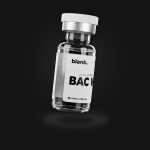
Blank Peptides runs its own cGMP laboratory in the United States and manages the full production chain internally. The company synthesizes each of its 34 compounds, fills and finishes vials, applies labels, and runs its own quality control before any lot is released. It also contract-manufactures and fulfils for other research peptide brands, a fact it states as a category of work without naming clients.
Each lot is then sent to two named outside laboratories, Freedom Diagnostics and Horizon Analytical, for a four-part panel covering identity, purity at >99%, bacterial endotoxin, and sterility. Every result is tied to a lot number, and that lot number appears on every vial, so a specific vial can be traced to a specific document.
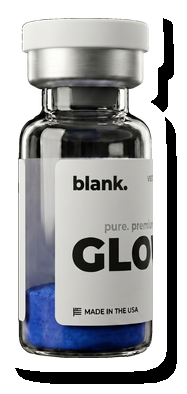
Those documents are published as batch certificates of analysis and can be reviewed before purchase. For blends, the company discloses composition per component: GLOW is 70mg of GHK-Cu, BPC-157, and TB-500; KLOW is 80mg and adds KPV; Wolverine is 20mg of BPC-157 and TB-500. Orders are processed within one business day and ship at room temperature as lyophilized powder with an expiration of roughly 24 months. All products are labelled and sold for research use only.
What Verified Peptides publicly states
Everything in this section comes from pages on verifiedpeptides.com reviewed on 2026-09-08, and every claim is attributed to the site itself. I want you to read it the way you’d read a witness statement, looking at what’s specific and what’s left open.
On manufacturing, the homepage states, “We maintain the highest standards for quality and purity by manufacturing our research peptides in a GMP facility.” The very same page states, “We make sure to validate and verify the quality of each batch we receive to make sure that it passes our stringent Quality Control (QC) standards,” and later, “We’ve built long standing relations with several certified labs allowing us to provide the highest quality peptides possible.” The FAQ states, “Every peptide batch we receive gets sent to an independent third party testing lab to be analyzed and tested for identity, purity, and concentration.” So the site publicly states both a GMP facility and the receipt of batches. On the pages reviewed 2026-09-08, the name and location of the facility performing synthesis were not listed, and an about page returned no content.
On testing, the homepage states, “Every batch is analytically verified with HPLC,” and the Lab Tests page describes “an archive of 500+ published peptide certificates of analysis.” The certificates I opened were organized by month, each carried a batch number, and the recurring elements were HPLC purity, an endotoxin pass/fail result, and vial weight. Some entries added net peptide content, TFA, or sterility. On the BPC-157 product page, batch BP06261310K displayed purity and endotoxin certificates dated July 2026 and a TFA certificate dated May 2026, without a sterility certificate. Product pages name a third-party analytical laboratory on the certificate images, and the FAQ links to an external portal for checking a task number and key. An explicit mass-spectrometry identity method was not listed on the certificates reviewed 2026-09-08, though the FAQ states “identity” is tested.
On blends, the GLOW page’s test results table lists measured per-component weights of GHK-Cu 59.95mg, BPC-157 12.25mg, and TB-500 12.16mg, which is genuine per-component disclosure. On that page, the purity and endotoxin certificates were dated July 2026 while TFA and sterility were dated April 2026.
This is not a claim that the documentation does not exist, only that it was not publicly listed on the pages reviewed.
And the credit they’re owed: the certificate archive is deep. Five hundred-plus published documents organized by month and batch is more public history than most of the field shows, and it lets you look at consistency across lots rather than trusting a single sample COA. The stated logistics are strong too, with same-day dispatch before 1PM EST and free FedEx 2-Day on orders over $200.
Side by side: what each site documents
| Attribute | Blank Peptides | Verified Peptides |
|---|---|---|
| Synthesises in-house | Yes, own cGMP laboratory | States “manufacturing our research peptides in a GMP facility” alongside “each batch we receive”; facility not named — verify |
| Third-party lab named | Freedom Diagnostics and Horizon Analytical | States “independent third party testing lab”; lab shown on certificate images — verify |
| HPLC purity | Every lot, >99% | States HPLC on every batch at 99%+ |
| MS identity | Every lot | States “identity” tested; MS method not listed on pages reviewed — verify |
| Endotoxin and sterility | Every lot | States endotoxin per batch; sterility on select products — verify |
| Batch COA before purchase | Yes, lot-tied, at blankpeptides.com/coas/ | States 500+ published certificates by batch number |
| Blend mg split disclosed | Yes, per component | States per-component measured weights on the GLOW page |
| Research-use labelling | Yes | States “for research and laboratory use only” |
How to verify either supplier yourself
- Open a product page, write down the batch number, then open the certificate and confirm that the batch, the test date, and the test list are consistent with one another.
- Find the testing lab’s name in the site’s written copy, then confirm the lab exists independently and offers report authentication you can use.
- Read the manufacturing language on the homepage and FAQ, and if “we manufacture” and “we receive” both appear, ask support in writing which one applies to the compound you’re buying.
- For a blend, check that a per-component mg figure appears on the product page and matches the certificate.
- Finish with the supplier verification checklist, which covers the rest of the questions before a first order.
Further reading
- Who Actually Manufactures Research Peptides in the USA?
- Which Peptide Vendors Name Their Testing Lab?
- Best Research Peptide Suppliers: Ranked by What They Document
- Peptide Vendors With Public Per-Batch COA Libraries
Frequently asked questions
Is Verified Peptides legit?
That’s a question the documentation answers better than I can. Verified Peptides states it manufactures in a GMP facility, tests each received batch through a third-party lab, and publishes 500+ batch-numbered certificates. On the pages reviewed 2026-09-08, the synthesizing facility wasn’t named and an MS identity method wasn’t listed. Weigh those statements and gaps against your own standard.
Does Verified Peptides publish COAs before purchase?
The Lab Tests page states it is a public archive of 500+ certificates, organized by month and tied to batch numbers, and product pages display certificates directly. That’s viewable without buying. The FAQ states that “All peptides are labeled with their corresponding batch number to match the lab report,” so you should be able to match a vial to a document after delivery.
Does Verified Peptides say where its peptides are made?
On the pages reviewed 2026-09-08, the homepage states manufacturing “in a GMP facility” and also refers to batches the company receives, without naming the facility or its location. That combination is worth a direct question to their support team, and a clear answer either way would resolve most of the uncertainty here.
What tests does Verified Peptides list?
The homepage states HPLC on every batch. The certificates reviewed showed HPLC purity, endotoxin, and vial weight consistently, with net peptide content, TFA, and sterility on some entries. The FAQ states batches are tested for identity, purity, and concentration. A mass-spectrometry identity method wasn’t listed on the certificates reviewed 2026-09-08.
Are these products for human use?
No. Everything referenced here, from either vendor, is sold and labelled for laboratory research only. Verified Peptides states its products are “not for human consumption,” and Blank Peptides labels every vial for research use. The intended audience is qualified professionals doing in-vitro work, and nothing in this article changes that.
For research use only. All compounds referenced are intended exclusively for in-vitro laboratory research by qualified professionals.
Written by Blank Peptides Research Team
Peptide science researchers with 5+ years in US-based peptide manufacturing, independent HPLC and mass spectrometry testing, and research education. All content is reviewed for scientific accuracy before publication.
REVIEWED BY
Dr. Tobias S — PhD Chemist, Peptide and Unnatural Amino Acid Synthesis
Dr. Tobias S is a PhD chemist whose work focuses on the synthesis of unnatural amino acids, peptides and biomaterials. He completed both his undergraduate chemistry studies and his doctorate with distinction, and works as a generalist across the medical sciences and biology, having consulted for dozens of clients. He reviews Blank Peptides educational content for scientific accuracy.
Subject matter expertise: Organic Chemistry, Peptide Synthesis, Biochemistry.