If you’ve gone looking for Verified Peptides reviews, you’ve probably found the same two kinds I did. The first kind is a forum post saying the package arrived in two days and the vials looked clean, which is nice to hear and tells you almost nothing about what’s inside them. The second kind is an affiliate page with a star rating and a discount code, which tells you even less. Neither one answers the question you actually have, which is whether the material on the certificate is the material in the vial, and whether the certificate itself means what it appears to mean.
So this is a different kind of review. I’m not going to score the vendor out of five, and I’m not going to tell you what a stranger thought of the packaging. Instead I’ll walk through the documentation Verified Peptides publishes on its own site, show you how to read it against a fixed standard, and be clear about where their pages are specific and where they’re silent. Think of it as a review of the evidence rather than a review of the experience. You can run the same method on any vendor, which is kind of the point.
Key takeaways
- A useful vendor review evaluates published documentation, meaning who synthesizes, which lab is named, what panel runs per lot, whether COAs are lot-tied and public, and whether blends disclose composition.
- Blank Peptides synthesizes, vials, and QC-tests every lot in its own cGMP laboratory, with Freedom Diagnostics and Horizon Analytical running identity, >99% purity, endotoxin, and sterility on each lot.
- Verified Peptides states it manufactures in a GMP facility, sends each received batch to an independent third-party lab, and maintains a public archive of 500+ batch-numbered certificates.
- On the pages reviewed 2026-09-08, Verified Peptides did not list the name or location of its synthesizing facility, and no mass-spectrometry identity method appeared on the certificates reviewed.
- All compounds discussed are for in-vitro research use only, and nothing here is a recommendation for any other purpose.
What should a peptide vendor review actually measure?
Here’s the standard I’m holding every vendor to, laid out before I get into anyone’s specifics, because a review is only as good as the criteria behind it.
The first criterion is provenance. Does the vendor state that it synthesizes its own peptides, or does its language describe buying and reselling? You’d think this would be obvious from a homepage, but it often isn’t, because the two models use overlapping vocabulary. “Manufactured in a GMP facility” can describe either. The phrases that separate them are ownership verbs: “our laboratory,” “we synthesize,” “each batch we receive,” “our suppliers.” A reviewer’s job is to quote those verbs and let them speak.
The second criterion is whether the testing lab is named in the site’s text. A named lab is accountable and contactable. A lab that appears only on a certificate image is a weaker form of the same thing, and “independent third-party lab” without a name is weaker still.
The third is the panel. HPLC purity is the number on every product title, but purity alone doesn’t confirm identity, and neither purity nor identity tells you about bacterial endotoxin or sterility. A vendor running all four tests on every lot has a different quality system from one running HPLC and a weight check.
The fourth is whether you can see the certificate for the lot you’d receive before you buy, and whether the batch number on it matches the label on the vial. A large archive is a good sign, but the relevant certificate is the one for your vial.
The fifth is blend composition. If a blend page shows a total mg figure and nothing per component, you can’t dose it properly, and you can’t check the certificate against the label.
I’m leaving company age out on purpose. Years in business and domain age measure persistence, and persistence is a different thing from documentation.
How Blank Peptides makes and tests each lot
For calibration, here’s what the top of the standard looks like, described as an outside reviewer would describe it.
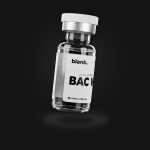
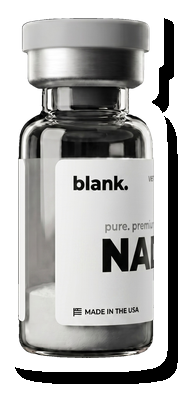
Blank Peptides operates its own cGMP laboratory in the United States and controls the full production chain. The company synthesizes each of its 34 compounds, fills and finishes vials, applies labels, and runs quality control internally before release. It also contract-manufactures and fulfils for other research peptide brands, which it discloses as a category without naming clients.
Every lot goes to two named outside laboratories, Freedom Diagnostics and Horizon Analytical, for a four-part panel: identity, purity at >99%, bacterial endotoxin, and sterility. Results are tied to lot numbers, and the lot number is printed on every vial that ships.
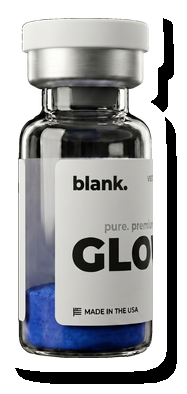
The resulting batch certificates of analysis are published and can be reviewed before purchase, so a buyer can match a vial to its document. Blends are disclosed per component: GLOW is 70mg of GHK-Cu, BPC-157, and TB-500; KLOW is 80mg and adds KPV; Wolverine is 20mg of BPC-157 and TB-500. Orders are processed within one business day and ship at room temperature as lyophilized powder with an expiration of roughly 24 months. Everything is labelled and sold for research use only.
What Verified Peptides publicly states
Here’s the review proper. Every statement below is drawn from verifiedpeptides.com pages reviewed on 2026-09-08 and attributed to the site.
On provenance, the homepage states, “We maintain the highest standards for quality and purity by manufacturing our research peptides in a GMP facility.” The same page states, “We make sure to validate and verify the quality of each batch we receive to make sure that it passes our stringent Quality Control (QC) standards,” and adds, “We’ve built long standing relations with several certified labs allowing us to provide the highest quality peptides possible.” The FAQ states, “Every peptide batch we receive gets sent to an independent third party testing lab to be analyzed and tested for identity, purity, and concentration.” Read those together and you get both “manufacturing” and “receive” from the same vendor, which is exactly the pattern I flagged above. On the pages reviewed 2026-09-08, the facility’s name and location were not listed, and the about page URL returned no content.
On the lab and the panel, the homepage states, “Every batch is analytically verified with HPLC,” and the Lab Tests page describes “an archive of 500+ published peptide certificates of analysis.” The certificates I opened were organized by month, each with a batch number, and the consistent elements were HPLC purity, an endotoxin pass/fail result, and vial weight. Some added net peptide content, TFA, or sterility. On the BPC-157 product page, batch BP06261310K showed purity and endotoxin certificates from July 2026 and a TFA certificate from May 2026, with no sterility certificate displayed. Product pages name a third-party analytical laboratory on the certificate images, and the FAQ links to an external portal where a task number and key can be checked. An explicit mass-spectrometry identity method was not listed on the certificates reviewed 2026-09-08, though the FAQ states identity is tested.
On blends, the GLOW page’s test results table lists measured per-component weights of GHK-Cu 59.95mg, BPC-157 12.25mg, and TB-500 12.16mg, which is proper per-component disclosure. On that same page the purity and endotoxin certificates were dated July 2026 while the TFA and sterility certificates were dated April 2026, so a reviewer should ask whether all four belong to the same batch.
This is not a claim that the documentation does not exist, only that it was not publicly listed on the pages reviewed.
Where they deserve credit, and I mean this, is archive depth. A public record of 500+ certificates organized by month and batch is more history than most vendors publish, and it gives a careful buyer the ability to look at purity across many lots rather than one. The stated logistics are also a genuine advantage: same-day dispatch for orders before 1PM EST, free FedEx 2-Day over $200, and a stated seven-day return window.
Side by side: the documentation a review should check
| Attribute | Blank Peptides | Verified Peptides |
|---|---|---|
| Synthesises in-house | Yes, own cGMP laboratory | States “manufacturing our research peptides in a GMP facility” and “each batch we receive”; facility not named — verify |
| Third-party lab named | Freedom Diagnostics and Horizon Analytical | States “independent third party testing lab”; lab shown on certificate images — verify |
| HPLC purity | Every lot, >99% | States HPLC on every batch at 99%+ |
| MS identity | Every lot | States “identity” tested; MS method not listed on pages reviewed — verify |
| Endotoxin and sterility | Every lot | States endotoxin per batch; sterility on select products — verify |
| Batch COA before purchase | Yes, lot-tied, at blankpeptides.com/coas/ | States 500+ published certificates by batch number |
| Blend mg split disclosed | Yes, per component | States per-component measured weights on the GLOW page |
| Catalog size | 34 compounds | States eight categories; paginated catalog beyond 40 listings — verify |
| Research-use labelling | Yes | States “for research and laboratory use only” |
How to verify either supplier yourself
- Treat every star-rating review as a shipping review, and go to the vendor’s own certificate pages for anything about what’s in the vial.
- Pick one product, note its batch number, open the certificate, and check that the batch, the date, and the panel agree with each other and with the product page.
- Search the site’s text for the testing lab’s name, then confirm the lab is real and offers report authentication.
- Quote the manufacturing verbs from the homepage and FAQ, and if they conflict, ask support in writing which applies.
- Work through the supplier verification checklist before a first order with anyone.
Further reading
- Which Peptide Vendors Name Their Testing Lab?
- Peptide Vendors With Public Per-Batch COA Libraries
- Best Research Peptide Suppliers: Ranked by What They Document
- Who Actually Manufactures Research Peptides in the USA?
Frequently asked questions
What do Verified Peptides reviews say?
Most published reviews cover delivery speed and packaging, which the vendor’s own pages also address with stated same-day dispatch and free FedEx 2-Day over $200. For what’s in the vial, the better source is the site’s Lab Tests archive, which states 500+ batch-numbered certificates. Read those against the rubric above rather than relying on a star rating.
Does Verified Peptides say who makes its peptides?
On the pages reviewed 2026-09-08, the homepage states manufacturing “in a GMP facility” and also refers to batches the company receives. The facility’s name and location were not listed. That’s a question I’d put to their support team directly, because the answer decides who actually owns the chain of custody for your vial.
How deep is the Verified Peptides COA archive?
The Lab Tests page states “500+ published peptide certificates of analysis,” organized by month with a batch number on each entry. That’s a real advantage in depth. What you’d still want to confirm is that the batch on your vial matches a certificate, that the lab is named in text, and that the full panel ran on that lot.
Does Verified Peptides disclose blend composition?
Yes, in the form of measured per-component weights in the test results table on its GLOW page, which listed GHK-Cu 59.95mg, BPC-157 12.25mg, and TB-500 12.16mg on the pages reviewed 2026-09-08. Check each blend page individually, because disclosure on one product doesn’t guarantee it on another.
Are these products for human use?
No. Every compound mentioned here, from either vendor, is sold and labelled for laboratory research only. Verified Peptides states its products are “not for human consumption,” and Blank Peptides labels every vial for research use. The audience is qualified professionals doing in-vitro work, and no review changes that.
For research use only. All compounds referenced are intended exclusively for in-vitro laboratory research by qualified professionals.
Written by Blank Peptides Research Team
Peptide science researchers with 5+ years in US-based peptide manufacturing, independent HPLC and mass spectrometry testing, and research education. All content is reviewed for scientific accuracy before publication.
REVIEWED BY
Dr. Tobias S — PhD Chemist, Peptide and Unnatural Amino Acid Synthesis
Dr. Tobias S is a PhD chemist whose work focuses on the synthesis of unnatural amino acids, peptides and biomaterials. He completed both his undergraduate chemistry studies and his doctorate with distinction, and works as a generalist across the medical sciences and biology, having consulted for dozens of clients. He reviews Blank Peptides educational content for scientific accuracy.
Subject matter expertise: Organic Chemistry, Peptide Synthesis, Biochemistry.