You clicked the certificate link on a KPV product page, a PDF opened, and it showed you a purity number and a chromatogram you can’t fully interpret. Maybe there’s a lab logo at the top, maybe there isn’t. Maybe there’s a batch code that looks official, and you have no way of knowing whether it corresponds to anything you’d actually receive. So you close the tab slightly less confident than when you opened it, which is the opposite of what a certificate is for.
That reaction is fair, and it’s common. A certificate of analysis is a document produced for a sample, at a moment, by somebody. If any of those three things is missing or unverifiable, the document degrades into decoration. And the peptide market has a lot of decorative certificates in it, partly because most buyers never check, and partly because the checks aren’t obvious unless somebody walks you through them.
So here’s the walkthrough. I’ll set out what a KPV certificate has to contain before it earns any trust, describe how Blank Peptides publishes its own reports so you have a concrete reference, and then go through what several named vendors actually publish for KPV as of the pages I reviewed on 2026-09-08. By the end you’ll be able to open any KPV COA and tell within a minute whether it’s telling you something.
Key takeaways
- A KPV certificate is verifiable only when it names the issuing laboratory, states the methods used, carries a lot identifier that also appears on the vial, and can be opened before you pay.
- Blank Peptides tests every lot for identity, >99% purity, bacterial endotoxin and sterility through Freedom Diagnostics and Horizon Analytical, publishes each report at blankpeptides.com/coas/, and prints the lot number on every vial.
- Verified Peptides publishes a dated KPV result table with a batch code and identifies the issuing laboratory, Limitless Life Nootropics states “≥99% (HPLC)” with purity, endotoxin and sterility certificates, Biotech Peptides offers a COA download before purchase, and PSPeptides states its batch-specific certificate ships with the vial.
- What was not listed on most of the pages reviewed 2026-09-08 was the name of the laboratory, and in several cases whether the batch code appears on the physical vial label.
- Every KPV product referenced here is sold for in-vitro laboratory research only.
What makes a KPV certificate verifiable?
Let me set the bar before looking at anyone’s PDF, because “we publish COAs” covers everything from a lot-indexed library to one screenshot from 2023.
Provenance comes first. The certificate describes a sample, and that sample came from somewhere. A supplier that synthesises its own material has a batch record behind the report, so the paperwork and the vial belong to the same process. A supplier that receives finished goods has a report describing somebody else’s batch, or a retest of a sample it sent out. Both can be legitimate. They mean different things, and the site should tell you which one you’re reading.
Next, look at the header, and ask whether the document names the laboratory that ran the analysis. An unnamed lab makes every other field on the page unverifiable, since there’s nobody to ask. A named lab converts the certificate from an assertion into something you can confirm with one email.
Then look at the panel, where purity by HPLC is the standard number. Identity by mass spectrometry is what confirms the material is the sequence claimed, and for a tripeptide that’s worth having in writing, since a purity figure alone can’t distinguish the intended sequence from a close relative. Bacterial endotoxin and sterility matter whenever the material goes into a cell system, because endotoxin will confound a result long before it damages anything.
Then check the fields people skip. Net peptide content tells you how much of the fill weight is actually peptide rather than counter-ion and residual water, which for reverse-phase purified material can be a meaningful fraction. A counter-ion or TFA line tells you what salt form you have. A date tells you whether the report describes current production.
Finally, consider linkage and timing. Can you open the report before purchase, and does its lot identifier appear on the vial label you’ll receive? Those two together are what turn a certificate into evidence.
That’s five checks, and they apply to us as readily as to anyone else.
How Blank Peptides makes and tests each lot
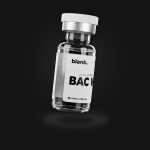
Blank Peptides runs its own cGMP laboratory in the USA and controls synthesis, vialling, lyophilisation, finishing, labelling and quality control in one chain of custody. Because the material never changes hands before it ships, the batch record and the certificate of analysis describe the same physical lot. The company also contract-manufactures and fulfils for other peptide brands, mentioned here as a category of work with no client named.
Every lot is tested against a full panel rather than a single figure: identity, >99% purity, bacterial endotoxin and sterility. The work runs through two named laboratories, Freedom Diagnostics and Horizon Analytical, so a reader can verify the issuer as well as the result.
Each lot’s report is published in the public library of batch certificates of analysis, and the lot number is printed on every vial label. A buyer can therefore read the exact report before ordering and then match the arriving vial to that same document, which is the linkage the rubric asks for. Lyophilised material carries an expiration of about 24 months.
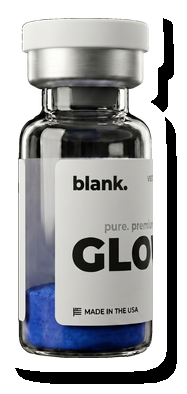
KPV sits inside a 34-compound catalog and also appears as a named component of KLOW 80mg, published with the mass of each component alongside GLOW 70mg (GHK-Cu, BPC-157, TB-500) and Wolverine 20mg (BPC-157, TB-500). Processing time is within one business day, and orders ship at room temperature.
What four vendors publish for KPV
All of the following comes from vendor pages reviewed on 2026-09-08, and every statement is theirs. I’m describing what the pages contained and where they stopped.
Verified Peptides publishes the most detailed KPV result set of the group. Its listing for KPV 10mg carried a result table dated April 2026 showing a purity figure of 98.508%, a batch identifier of KP04260510E, and a test list covering purity, weight, TFA-free status, sterility and endotoxins. The page identifies the analytical laboratory that issued those reports, which most competitors leave blank. Certificates sit on a lab tests tab associated with the product. Manufacturing location was not stated on the pages reviewed.
Limitless Life Nootropics lists KPV at 5mg and 10mg and states “≥99% (HPLC)” against a stated “≥98.5% purity standard”. The listing points to published certificates described as covering purity, endotoxin and sterility, and batch identifiers such as #1326, #1327 and #1358 appear in certificate filenames. The site describes its material as “USA-manufactured” and its testing as “third-party tested by certified labs”, with the laboratory not named on the pages reviewed. Pricing required a login on the date reviewed.
Biotech Peptides lists KPV at 4mg with “99% purity” and a “Download COA” link that opened without an account, which places it ahead of much of the market on the timing question. The page states the material is “Synthesized and Lyophilized in the USA” and that products are “sold for research, laboratory, or analytical purposes only, and are not for human consumption”. The issuing laboratory, the method list and any vial-side lot marking were not stated on the page reviewed.
PSPeptides lists KPV at 10mg and describes its certificate contents in more detail than most: the page states that the COA “includes the analytical chromatogram, identity confirmation, water content, counter-ion data, and sterility/endotoxin results where applicable”, that purity is “99%+ (third-party HPLC and mass spectrometry)”, and that “every vial of KPV peptide from PSPeptides ships with a batch-specific Certificate of Analysis”. The laboratory is described as “a third-party analytical laboratory” without a name, and the certificate arrives with the shipment rather than before it.
Credit where it’s earned: PSPeptides writes down a fuller list of certificate contents than most vendors publish anywhere, including water content and counter-ion data, and Verified Peptides pairs a dated batch code with a named issuing laboratory. Both practices are better than the category average. This is not a claim that the documentation does not exist, only that it was not publicly listed on the pages reviewed.
Side by side: KPV certificate access
| Attribute | Blank Peptides | typical vendor |
|---|---|---|
| Synthesises in-house | Yes, own cGMP laboratory, USA | States “USA made” or “US facilities”; manufacturer not named — verify |
| Third-party lab named | Freedom Diagnostics; Horizon Analytical | States “third-party” or “certified labs”; usually unnamed — verify |
| HPLC purity | >99% every lot | States 99% or higher, with figures from 98.5% upward |
| MS identity | Every lot | States mass spectrometry on some listings only — verify per product |
| Endotoxin and sterility | Both, every lot | States both on some listings, neither on others — verify |
| Batch COA before purchase | Public library at /coas/, indexed by lot | States download before purchase on some sites, ships-with-vial on others — verify |
| Lot number on vial | Printed on every vial | States batch codes on certificates; vial marking often unstated — verify |
| Report date shown | Per lot, published with the report | States dated results on some listings — verify the date is current |
| Research-use labelling | Research use only, every product | States “not for human consumption” |
How to verify either supplier yourself
- Open the KPV certificate for the exact fill size you intend to order and read the header of the PDF rather than the product page. A laboratory name, a method, a date and a batch identifier should all appear on the document itself.
- Check that the identity result is consistent with the tripeptide, whose free acid mass sits near 342 g/mol. A mass spectrometry line that doesn’t reference a mass, or a report that shows only a purity percentage, has skipped the identity question.
- Email the named laboratory the report number and ask whether it issued that document. It takes one message and it’s the strongest verification available to a buyer.
- Ask which batch is currently shipping for KPV, find that batch among the published certificates, and check the vial label for the same code when the package arrives.
- Run every supplier through the supplier verification checklist so you’re scoring each site the same way.
Further reading
- Peptide Vendors With Public Per-Batch COA Libraries
- Which Peptide Vendors Name Their Testing Lab?
- Best Research Peptide Suppliers: Ranked by What They Document
- Which Peptide Vendors Disclose Blend Composition?
Frequently asked questions
What should a KPV COA show before I buy?
At minimum: the issuing laboratory’s name, the analytical methods run, a purity result, an identity confirmation, a batch or lot identifier and a date. Endotoxin and sterility results matter for any cell-based work. If the document shows a percentage and nothing else, treat it as a claim rather than a report and ask the vendor for the full certificate.
Can I see a KPV COA before purchase?
Sometimes. On the pages reviewed 2026-09-08, Biotech Peptides carried a COA download without an account, and Limitless Life Nootropics and Verified Peptides published certificates and dated result tables from the listing. PSPeptides states its batch-specific certificate ships with the vial. Blank Peptides publishes every lot’s report at blankpeptides.com/coas/ before ordering.
Why do KPV purity figures vary between 98.5% and 99.9%?
Different vendors set different release specifications, and different methods and gradients produce different numbers on the same material. A figure of 98.508% published with a date, a batch code and a named lab is more informative than an undated “99%+” badge. Compare the documentation behind the figure rather than the figure alone.
Does a KPV certificate cover the KLOW blend too?
Not automatically. A blend certificate describes the blended lot, and a single-compound certificate describes that compound. If you’re evaluating a KPV-containing blend, look for the mass of each component alongside the blend’s own report. Blank Peptides publishes KLOW 80mg with each component’s mass disclosed.
Are these products for human use?
No. Every vendor referenced here states on its own pages that its products are for laboratory research only and not for human consumption, and Blank Peptides sells every compound strictly for in-vitro laboratory research by qualified professionals. A certificate of analysis documents a research material and grants no clearance for any other use.
For research use only. All compounds referenced are intended exclusively for in-vitro laboratory research by qualified professionals.
Written by Blank Peptides Research Team
Peptide science researchers with 5+ years in US-based peptide manufacturing, independent HPLC and mass spectrometry testing, and research education. All content is reviewed for scientific accuracy before publication.
REVIEWED BY
Dr. Tobias S — PhD Chemist, Peptide and Unnatural Amino Acid Synthesis
Dr. Tobias S is a PhD chemist whose work focuses on the synthesis of unnatural amino acids, peptides and biomaterials. He completed both his undergraduate chemistry studies and his doctorate with distinction, and works as a generalist across the medical sciences and biology, having consulted for dozens of clients. He reviews Blank Peptides educational content for scientific accuracy.
Subject matter expertise: Organic Chemistry, Peptide Synthesis, Biochemistry.