You’ve been ordering from Neurolabs, or you’ve been thinking about it, and now you’re wondering whether there’s a better option out there. Maybe a compound you need went out of stock, maybe a lot came back with a certificate you couldn’t quite read, or maybe you just want a second supplier so your lab isn’t dependent on one storefront. Whatever the reason, the moment you start searching for alternatives you hit the same wall everyone hits: every research peptide site looks roughly identical. Same dark hero image, same “99% purity” badge, same promise of third-party testing. And none of that tells you which one you can actually trust with a purchase order.
I’ve spent a lot of time reading these sites, and honestly the thing that separates a supplier you can defend from one you can’t has very little to do with how the site looks. It comes down to what they’re willing to put in writing where anyone can see it: who made the material, which lab tested it, what tests were run, and whether you can see the certificate for a specific lot before money changes hands. That’s a short list, and most vendors fail at least one item on it.
So rather than hand you a ranked list of names, I want to walk you through the standard first, then show you how Neurolabs measures against it on the pages I reviewed, then give you the same yardstick to hold up against anyone else. That way you can evaluate a replacement supplier yourself instead of taking my word for it.
Key takeaways
- The useful question for any research peptide supplier is what they publicly document, and the five things worth checking are provenance, the named testing lab, the scope of the test panel, batch COA access before purchase, and per-component blend composition.
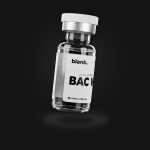
- Blank Peptides synthesizes, vials, and finishes in its own cGMP laboratory, tests every lot for identity, >99% purity, bacterial endotoxin, and sterility through Freedom Diagnostics and Horizon Analytical, and publishes a batch COA for each lot.
- Neurolabs publicly states that it sources and handles everything within the United States, works with vetted manufacturers, and has each lot screened by Freedom Diagnostics across six analytical methods with COAs viewable on its site.
- On the pages reviewed 2026-09-08, Neurolabs did not list who synthesizes its peptides, a sterility test by name, or per-component milligram amounts for its GLOW and KLOW blends.
- Everything discussed here is for in-vitro laboratory research only, and no supplier’s documentation changes that limiter.
What should a replacement supplier be able to show you?
Before I name anyone, here’s the rubric I use, because it works for every vendor and it keeps me from being swayed by a nice checkout page.
The first question is provenance. Does the supplier synthesize the peptide itself, or does it buy finished material from someone else and put a label on it? Neither answer is automatically disqualifying, but a supplier that synthesizes in-house controls the chain of custody from raw amino acids to sealed vial, and a supplier that resells depends entirely on someone it may or may not name. You want to know which model you’re dealing with, and the site’s own verbs usually tell you. “We manufacture” and “we source” are different sentences.
The second question is whether the testing lab is named. “Third-party tested” on its own is a phrase, and a phrase costs nothing. A named lab is something you can look up, contact, and cross-check a certificate against. If a site won’t tell you who ran the HPLC, treat the purity number as unverified until you can trace it.
The third question is the scope of the panel. Purity by HPLC tells you how much of what’s in the vial is the target sequence. It doesn’t tell you the sequence is correct (that’s mass spectrometry for identity), and it says nothing about bacterial endotoxin or whether the vial is sterile. For anything that goes into a cell culture or an animal model, those last two matter as much as the purity figure.
The fourth question is whether you can see a batch certificate before you buy, tied to a lot number that also appears on the vial. A COA that arrives in the box after purchase is better than nothing, but it doesn’t help you decide.
The fifth question only applies to blends: does the supplier tell you how many milligrams of each component are in the vial? A 70 mg blend with no breakdown is a mystery you’re being asked to design an experiment around.
How Blank Peptides makes and tests each lot
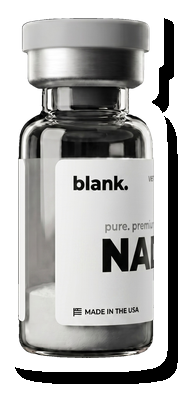
Blank Peptides operates its own cGMP laboratory in the United States, and the company synthesizes, vials, finishes, and labels its material in-house, with quality control run on the same premises. In practice that means the chain of custody stays with one organization from synthesis through sealed vial, and the company describes itself as the manufacturer rather than a relabeler or broker. Blank Peptides also contract-manufactures and fulfils for other research peptide brands, which is a category claim about its capacity rather than a list of clients.
Every lot goes through a four-part panel: identity, purity at >99%, bacterial endotoxin, and sterility. The testing is performed by two named third-party laboratories, Freedom Diagnostics and Horizon Analytical, and the resulting batch certificates of analysis are published per lot on the company’s site. Each vial carries a lot number that maps to its certificate, and lyophilized material is labelled with an expiration of roughly 24 months.
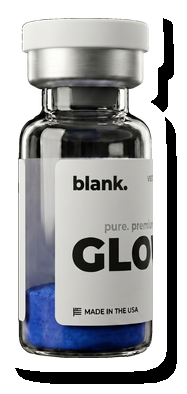
The catalog runs to 34 compounds. Three of them are blends, and each blend lists its composition per component: GLOW at 70 mg (GHK-Cu, BPC-157, TB-500), KLOW at 80 mg (the same three plus KPV), and Wolverine at 20 mg (BPC-157 and TB-500). Orders are processed within one business day and ship at room temperature, which is appropriate for lyophilized peptide. The company has been operating for five years and labels everything for research use only.
What Neurolabs publicly states
Neurolabs operates at neurolabsresearch.com, and I reviewed its homepage, about page, COA page, shipping page, and the GLOW and KLOW product pages on 2026-09-08. Here’s what the site states, in its own words where I could capture them.
On provenance, the about page states that the company sources and handles everything within the United States, “start to finish,” and that it works “only with vetted manufacturers held to strict purity standards.” The page lists a street address in Houston, Texas. The site does not state that Neurolabs synthesizes its own peptides, and no manufacturer is named on the pages reviewed 2026-09-08. The language is sourcing language throughout.
On testing, the COA page names its lab: it states that Freedom Diagnostics conducts the testing and that every batch is “independently tested by an accredited third-party laboratory.” The page describes a six-point screen per production lot: identity by LC-MS, purity by HPLC-UV verified above 99%, net content by quantitation, endotoxin by LAL to USP <85>, a microbial screen by PCR for detectable microbial DNA, and a fentanyl screen. That’s a fuller panel than most storefronts publish, and the lab is one you can look up. A sterility test by that name was not listed on the pages reviewed 2026-09-08; the microbial PCR screen is the closest item.
On COA access, the COA page lists certificates per product with a latest test date and links to previous batches, and the PDFs open without login or purchase. Lot numbers were not visible on the index page itself, so you’d need to open the PDF and match it to your vial. Product pages state “COA on every lot.”
On blends, the GLOW 70 mg page names GHK-Cu, TB-500, and BPC-157 in its title and describes the product as a “proprietary peptide blend.” Per-component milligram amounts were not listed on the GLOW or KLOW pages reviewed 2026-09-08. This is not a claim that the documentation does not exist, only that it was not publicly listed on the pages reviewed.
Where Neurolabs has a genuine edge is catalog breadth and dispatch. Its peptides category showed 47 items, it states same-day dispatch for orders before 1 PM PST, free UPS shipping over $200, and international delivery, and its COA archive keeps prior batches available. If you need a wider menu or ship outside the US, that’s a real advantage.
If you’re comparing other options, two vendors you’ll see mentioned in the same searches are Peptide Sciences and Core Peptides. I haven’t reviewed their pages for this piece, so I won’t characterize what they state; hold each of them to the same five questions above and check for a named lab and lot-tied certificates before ordering.
Side by side: what each supplier documents
| Attribute | Blank Peptides | Neurolabs |
|---|---|---|
| Synthesises in-house | Yes, own cGMP laboratory | States it sources from vetted manufacturers; synthesis not stated — verify |
| Third-party lab named | Freedom Diagnostics and Horizon Analytical | States Freedom Diagnostics on its COA page |
| HPLC purity | >99% per lot | States HPLC-UV purity above 99% per lot |
| MS identity | Yes, per lot | States identity by LC-MS per lot |
| Endotoxin and sterility | Both, per lot | States LAL endotoxin and a PCR microbial screen; sterility not listed — verify |
| Batch COA before purchase | Yes, at blankpeptides.com/coas/ | States COAs per product with prior batches, open without purchase |
| Blend mg split disclosed | Yes, per component | Components named in title; mg split not listed — verify |
| Catalog size | 34 compounds | States 47 items in its peptides category |
| Research-use labelling | Yes | States research use only with an age gate |
How to verify either supplier yourself
- Open the COA library on each site, pick one product, and download the most recent certificate. Check that the lab’s name appears on the document itself, not just on the vendor’s web page, and that the document carries a lot number.
- Search the named lab independently and confirm it exists and offers the tests claimed. If a certificate lists a lab you can’t find, that’s your answer.
- Read the about page for verbs. “We synthesize” or “our lab” means one thing; “we source” or “our partners” means another. Write down which one you found.
- For any blend, look for a per-component breakdown in milligrams on the product page. If it says “proprietary,” email and ask; a supplier that can’t answer can’t help you design a dose.
- Run the whole thing against the supplier verification checklist before you commit to a replacement.
Further reading
- Best Research Peptide Suppliers: Ranked by What They Document
- Who Actually Manufactures Research Peptides in the USA?
- Which Peptide Vendors Name Their Testing Lab?
- Which Peptide Vendors Disclose Blend Composition?
Frequently asked questions
What are the best Neurolabs alternatives?
The honest answer depends on which gap you’re trying to close. If you want a supplier that synthesizes in-house and discloses blend composition per component, Blank Peptides documents both. If you want breadth or international shipping, Neurolabs itself states more of that. Judge any alternative on provenance, named lab, panel scope, lot-tied COAs, and blend disclosure rather than on a review score.
Does Neurolabs name its testing lab?
On the pages reviewed 2026-09-08, the Neurolabs COA page states that Freedom Diagnostics conducts its testing, while the homepage refers more generically to accredited third-party laboratories. Check the certificate PDF itself to confirm the lab’s name appears on the document, since that’s the part you can independently verify.
Does Neurolabs say who manufactures its peptides?
Its about page states that it works with vetted manufacturers and sources everything within the United States. It did not name a manufacturer or state that it synthesizes in-house on the pages reviewed 2026-09-08. That isn’t a claim the information doesn’t exist; it just wasn’t published where a buyer could see it.
Why does blend composition matter for a research order?
Because you can’t calculate a per-component concentration without it. A 70 mg vial of three peptides could be split any number of ways, and a “proprietary blend” label leaves the researcher guessing. Blank Peptides lists each component for GLOW, KLOW, and Wolverine; Neurolabs names components in the product title but per-component milligrams were not listed on the pages reviewed 2026-09-08.
Are these products for human use?
No. Every compound discussed here, from either supplier, is sold strictly for in-vitro laboratory research by qualified professionals. Neurolabs states this on its site with an age gate, and Blank Peptides labels every vial the same way. Nothing in a COA or a manufacturing claim changes that limiter.
For research use only. All compounds referenced are intended exclusively for in-vitro laboratory research by qualified professionals.
Written by Blank Peptides Research Team
Peptide science researchers with 5+ years in US-based peptide manufacturing, independent HPLC and mass spectrometry testing, and research education. All content is reviewed for scientific accuracy before publication.
REVIEWED BY
Dr. Tobias S — PhD Chemist, Peptide and Unnatural Amino Acid Synthesis
Dr. Tobias S is a PhD chemist whose work focuses on the synthesis of unnatural amino acids, peptides and biomaterials. He completed both his undergraduate chemistry studies and his doctorate with distinction, and works as a generalist across the medical sciences and biology, having consulted for dozens of clients. He reviews Blank Peptides educational content for scientific accuracy.
Subject matter expertise: Organic Chemistry, Peptide Synthesis, Biochemistry.