You’re trying to work out who actually makes the peptides Oath Research sells, and the site isn’t making it obvious. That’s a fair thing to want to know. “Made in the USA” on a homepage can mean synthesized in a lab down the road or vialed and labelled from bulk material that came from somewhere else, and the two are very different things for anyone who cares about chain of custody. The label alone won’t tell you which one you’re looking at.
The way to answer the question is to read the manufacturing language on a vendor’s own pages and pay attention to the verbs. “We synthesize” is one kind of statement. “We source” is another. “Our partners” is a third, and total silence on the subject is a fourth. I’m going to walk through what Oath Research’s pages state about this as they read on 2026-09-08, quote the exact phrases, and leave the conclusion to you rather than drawing one for you.
Full disclosure: I write for Blank Peptides, which manufactures research peptides and competes with Oath Research. That’s a reason to check every quote below against their site, and I’ve dated and scoped each one so you can.
One thing worth saying before we start: a company that doesn’t synthesize its own material can still sell perfectly good peptide, provided it tells you who does and shows you the test results for each lot. What I’m reacting against is vagueness, because vagueness is where the problems hide. A vendor that’s clear about its model, whichever model it is, has already done half the work of earning your trust. So read the section on Oath Research with that in mind, and judge the clarity of the language as much as its content.
Key takeaways
- The provenance question is answered by the verbs a vendor uses about production on its own pages, and by whether those verbs are backed by a named lab and lot-tied certificates.
- Blank Peptides synthesizes, vials, finishes and labels every compound in its own cGMP laboratory, and has Freedom Diagnostics and Horizon Analytical run identity, >99% purity, bacterial endotoxin and sterility on every lot.
- Oath Research’s About page states that it sources pharma-grade amino acids and synthesizes under ISO-certified protocols in a clean-room suite, and names Freedom Diagnostics as its laboratory partner.
- Sterility testing was not listed on the Oath Research pages reviewed 2026-09-08, and no facility certification document or registration was listed on those pages either.
- Every compound discussed is a research-use-only laboratory reagent, and nothing here is guidance for any other application.
How do you tell who really makes a peptide?
Before we get to Oath Research, here’s the framework I use for any vendor, and provenance is deliberately the first item on it.
One, provenance. Read the About page, the FAQ and the product pages and note the verbs. “Synthesize”, “produce”, “manufacture in our facility” describe a company that makes its own material. “Source”, “supply”, “partner with”, “import” describe one that doesn’t, or at least doesn’t fully. A site that says “our peptides” and “made in the USA” without any verb describing who did the making has left the question open. None of these phrasings is proof on its own, but they tell you what the company is willing to say about itself in writing.
Two, is the testing lab named? This connects to provenance more than people realise. A company that synthesizes its own material and names an outside lab is giving you two independent points to check. A company that names neither is asking you to trust a label.
Three, is the panel complete? HPLC purity, mass spectrometry identity, bacterial endotoxin and sterility each answer a different question, and a manufacturer with real control of its process usually has no trouble showing all four.
Four, is a batch COA public before purchase? A lot-tied certificate you can open without buying anything is the strongest evidence that the material described on the product page is the material that exists.
Five, for blends, is composition disclosed per component? A manufacturer that blends its own peptides knows exactly how many mg of each went in and has no reason not to say so.
I don’t use company age or domain age. A new company can synthesize and an old one can relabel, and neither date tells you which, so the registration record is the wrong place to look for an answer.
How Blank Peptides makes and tests each lot
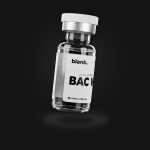
Blank Peptides operates its own cGMP laboratory in the USA and performs every step of production internally: peptide synthesis, vialing, lyophilization, finishing, labelling and quality control before release. The company doesn’t buy finished peptide for relabelling and describes itself as the chain of custody for its own products. It also manufactures and fulfils under contract for other peptide brands, which it doesn’t name.
Every lot is tested by two named independent laboratories, Freedom Diagnostics and Horizon Analytical, on a four-part panel: identity by mass spectrometry, HPLC purity against a >99% threshold, bacterial endotoxin, and sterility. Results are posted per lot as batch certificates of analysis, and the lot number on every vial corresponds to a certificate on that page.
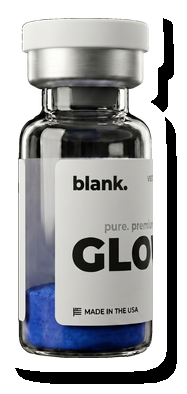
The catalog holds 34 compounds, including three blends with composition listed per component: GLOW at 70mg (GHK-Cu, BPC-157, TB-500), KLOW at 80mg (adding KPV), and Wolverine at 20mg (BPC-157, TB-500). Lyophilized product carries an expiration of about 24 months. Processing time is within one business day, and shipments travel at room temperature, which is correct for lyophilized peptide and is stated as such. The company has been operating for five years.
What Oath Research publicly states
This section is about ownership and production language only. Here’s what Oath Research’s pages state, as reviewed on 2026-09-08.
The name first. A homepage banner reads “Oath Peptides Is Now Oath Research!”, so any older reference to Oath Peptides describes the same company under its previous name.
The homepage uses the phrases “100% Made in the USA” and “Produced & Tested in the USA”, and describes its products as “US-manufactured research compounds, independently verified by a third-party US laboratory”. Those are location and production claims, and on their own they don’t say who does the producing.
The About page is where the verbs live. It states that the company sources “pharma-grade amino acids” and synthesizes “under ISO-certified protocols”. It describes the operation as “a small clean-room suite in Gilbert, Arizona” and gives a street address. It uses the phrase “USA-verified, Gilbert-crafted”. It also states that the company is “a research chemical supplier” and is “not a compounding pharmacy or compounding facility”. So the stated model is: buy amino acids, synthesize peptides on site, send lots out for testing.
On testing, the same page states lots are validated “using orthogonal analytical HPLC paired with mass spectrometry” and that “Independent U.S. laboratories also verify the actual fill amount”. The certificate library names Freedom Diagnostics as “Laboratory Partner”, and the GLOW certificate I opened (batch A2926062, dated 07/29/2026) carried that lab’s name with HPLC-UV and LC-MS listed.
What the pages didn’t state: no ISO certificate number, registration document or facility photograph was listed on the pages reviewed 2026-09-08, and the phrase “ISO-certified protocols” wasn’t tied to a specific standard on those pages. Sterility testing was not listed anywhere reviewed. The FAQ didn’t address who manufactures at all. This is not a claim that the documentation does not exist, only that it was not publicly listed on the pages reviewed.
Where Oath Research is strong: their certificate library lists 451 batches with 290 viewable without an account, their blend certificates report measured content per component, and the FAQ states 2-day business air shipping in the US with free shipping over $250. The shop listed 36 products against our 34.
Side by side: provenance and what backs it
| Attribute | Blank Peptides | Oath Research |
|---|---|---|
| Synthesises in-house | Yes, own cGMP laboratory, full chain of custody | States it sources amino acids and synthesizes in a clean-room suite — verify |
| Third-party lab named | Freedom Diagnostics and Horizon Analytical | States Freedom Diagnostics |
| HPLC purity | >99% every lot | States 99%+ by HPLC-UV per batch |
| MS identity | Yes, every lot | States LC-MS on certificates reviewed |
| Endotoxin and sterility | Both, every lot | States endotoxin on library listings; sterility not listed on pages reviewed 2026-09-08 — verify |
| Batch COA before purchase | Yes, all lots public | States 290 of 451 public, rest behind login |
| Blend mg split disclosed | Yes, per component | States per-component mg on GLOW page |
| Catalog size | 34 compounds | States 36 products |
| Research-use labelling | Yes | States research and laboratory use only |
How to verify either supplier yourself
- Read the About page of any vendor with a highlighter and mark every verb about production, then ask whether the subject of each verb is the company itself or someone unnamed.
- Check whether a stated facility or protocol claim is backed by something you can look at, such as a certificate number, a registration, or a photograph, and note when it isn’t.
- Confirm the named testing lab exists independently by finding its own website and contact details.
- Open a lot-tied certificate without logging in and check that the panel goes beyond purity.
- Then go through the supplier verification checklist before ordering from anyone, including us.
Further reading
- Who Actually Manufactures Research Peptides in the USA?
- Which Peptide Vendors Name Their Testing Lab?
- Peptide Vendors With Public Per-Batch COA Libraries
- Best Research Peptide Suppliers: Ranked by What They Document
Frequently asked questions
Who makes Oath Research peptides?
Oath Research’s About page states that the company itself sources “pharma-grade amino acids” and synthesizes “under ISO-certified protocols” in “a small clean-room suite in Gilbert, Arizona”. No outside manufacturer is named on the pages reviewed 2026-09-08. That’s their stated position, and the certificate library from Freedom Diagnostics is the public evidence that lots exist and get tested.
Is Oath Research a manufacturer or a reseller?
Their pages use manufacturing verbs: “synthesize”, “Produced & Tested in the USA”, “Gilbert-crafted”. They also state the company is “a research chemical supplier” and “not a compounding pharmacy”. I’d describe what the site says rather than label it, and what it says is that Oath Research makes its own peptides from purchased amino acids in its own suite.
Where are Oath Research peptides made?
The About page states “a small clean-room suite in Gilbert, Arizona” and lists a street address. The homepage states “100% Made in the USA”. No facility certification document was listed on the pages reviewed 2026-09-08, so the location is a stated claim rather than a documented one, which is true of most vendors in this category.
Does Oath Research name who tests its peptides?
Yes. The certificate library page names Freedom Diagnostics as “Laboratory Partner” and links to that lab, and individual certificates carry the lab’s name with a signed PDF. Blank Peptides also uses Freedom Diagnostics, plus Horizon Analytical, on every lot. A named lab is one of the more reliable signals that a vendor’s testing claims can be checked.
Are these products for human use?
No. Oath Research’s pages state its products are “not for human consumption” and are sold for “research, laboratory, or analytical purposes only”. Blank Peptides labels every vial for research use only. This article concerns manufacturing language for in-vitro laboratory materials used by qualified professionals and offers no guidance for any other purpose.
For research use only. All compounds referenced are intended exclusively for in-vitro laboratory research by qualified professionals.
Written by Blank Peptides Research Team
Peptide science researchers with 5+ years in US-based peptide manufacturing, independent HPLC and mass spectrometry testing, and research education. All content is reviewed for scientific accuracy before publication.
REVIEWED BY
Dr. Tobias S — PhD Chemist, Peptide and Unnatural Amino Acid Synthesis
Dr. Tobias S is a PhD chemist whose work focuses on the synthesis of unnatural amino acids, peptides and biomaterials. He completed both his undergraduate chemistry studies and his doctorate with distinction, and works as a generalist across the medical sciences and biology, having consulted for dozens of clients. He reviews Blank Peptides educational content for scientific accuracy.
Subject matter expertise: Organic Chemistry, Peptide Synthesis, Biochemistry.