If you’re searching for alternatives to Oath Peptides, my guess is you’re in one of two situations. Either you went to the domain you had bookmarked and something unexpected happened, or you’re already ordering from them and you want a second supplier lined up before you actually need one. Both are sensible reasons, and neither one means something has gone wrong.
Worth saying up front, because it changes how you should read the rest of this: on the pages reviewed 2026-09-08, oathpeptides.com issues a redirect to oathresearch.com, and that site resolves and sells. So this isn’t a post about a vendor that vanished. It’s a post about how to test whether any replacement you’re considering documents its material at the standard you already assumed you were getting.
And that’s the part people usually skip. It’s easy to compare two shop pages, see similar compounds at similar prices, and treat the choice as a coin flip. What separates suppliers lives in the paperwork: who made the material, who tested it, what they tested for, and whether you can read the result for your specific vial before you spend money. Once you have those four answers, most of the guesswork drops out.
Key takeaways
- Judge a supplier by what it publishes per lot, not by how confident the marketing copy sounds; a claim you can’t tie to a batch number isn’t something you can check.
- Blank Peptides compounds, fills, finishes and labels in its own cGMP laboratory, and runs a full panel per lot covering identity, >99% purity, bacterial endotoxin and sterility.
- Oath Research, which oathpeptides.com redirects to, publicly names Freedom Diagnostics as its laboratory partner and publishes a batch-numbered lab-results index with per-batch purity figures and endotoxin status.
- Sterility testing was not listed on the Oath pages reviewed 2026-09-08, and the certificate index reviewed showed 290 of 451 certificates with an account required to view all of them.
- Everything discussed here is research-use-only material intended for in-vitro laboratory work by qualified professionals, and nothing in this post is a suitability claim for any other purpose.
What should you actually check before switching suppliers?
Here’s the shortlist I’d use, and I’d use it in this order, because each question makes the next one easier to interpret.
First, provenance. Does the supplier say it synthesizes the material itself, or does it describe sourcing and reselling? Both models exist and both can produce good material. What matters is whether the site tells you which one it is, because that determines who you’re actually holding accountable when a lot looks wrong.
Second, is the testing laboratory named? A site can say “third-party tested” forever without that phrase meaning anything checkable. A named lab is a name you can look up, and it’s a name the vendor has publicly attached its reputation to.
Third, is it a full panel or purity alone? Purity by HPLC tells you what fraction of the material is the peptide you ordered. It says nothing about whether the identity was confirmed by mass spectrometry, nothing about bacterial endotoxin, and nothing about sterility. Plenty of vendors report purity and stop there, which is fine as long as you know that’s what you’re getting.
Fourth, can you read the batch certificate before you pay? A certificate that arrives in the box after checkout is a receipt. A certificate you can open beforehand, tied to the lot number that will be on your vial, is a document you can use to make the buying decision itself.
Fifth, for blends, is the composition disclosed per component? A vial marked 70mg total tells you almost nothing without the split. If you’re comparing two blend products, the mg breakdown per peptide is the only way the comparison means anything.
Notice that none of these are about how long a company has existed or how polished its site looks. Those are the easiest things to fake and the least informative things to measure.
How Blank Peptides makes and tests each lot
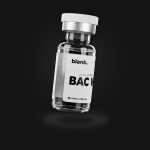
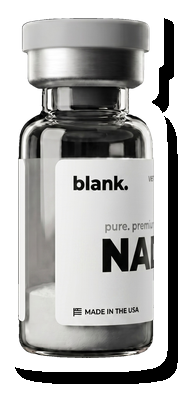
Blank Peptides operates its own cGMP laboratory and handles the chain of custody end to end. The company compounds the material, fills and finishes the vials, applies the labels and runs quality control in-house rather than routing production through a broker or relabeling finished product from an outside supplier. It also contract-manufactures and fulfils for other peptide brands, which puts it upstream of parts of the market rather than alongside them.
Every lot goes through a full analytical panel rather than a single purity figure. That panel covers identity, >99% purity, bacterial endotoxin and sterility. Each of the four results is generated per lot, so a certificate corresponds to a specific production run rather than to a product line in general.
Testing is performed by named laboratories. Blank Peptides identifies Freedom Diagnostics and Horizon Analytical as the labs behind its analytical work, which means a reader can look up the labs independently instead of taking an unattributed “third-party tested” badge at face value.
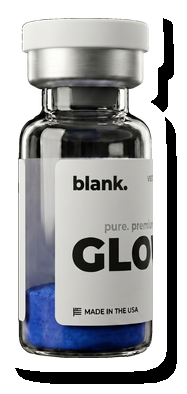
Results are published as batch certificates of analysis, with a lot number printed on every vial so the vial in hand maps to a specific document. Lyophilized material carries roughly a 24-month expiration. Processing time is within one business day, and shipping is at room temperature rather than cold chain. The catalog runs to 34 compounds, and blends disclose composition per component: GLOW 70mg (GHK-Cu, BPC-157, TB-500), KLOW 80mg (which adds KPV), and Wolverine 20mg (BPC-157, TB-500). The company has been operating for five years, all US-based.
What Oath Peptides publicly states
Taking the five questions in order, here’s what the site itself says, all of it as listed on the pages reviewed 2026-09-08.
On provenance, the about page states that the company synthesizes peptides in “a small clean-room suite in Gilbert, Arizona” under “ISO-certified protocols,” and states that it sources “pharma-grade amino acids.” The homepage states products come “directly from the lab” and are “100% Made in the USA.” So the site does take a position on who makes the material, which is more than a lot of sites do.
On the testing lab, the lab-results index reviewed names Freedom Diagnostics as its “Laboratory Partner.” That’s a real answer to the second question. The about page separately states that the company validates “each lot using orthogonal analytical HPLC paired with mass spectrometry” and that “Independent U.S. laboratories also verify the actual fill amount,” and states that only batches documenting “≥99% purity and exact identity earn our label.”
On panel scope, the certificate pages reviewed showed HPLC-UV purity and LC-MS identity confirmation, and the index displayed per-batch purity figures alongside an “Endo Passed” status referencing the USP <85> endotoxin standard. Sterility testing was not listed on the pages reviewed 2026-09-08. One certificate PDF reviewed, for a MOTS-C lot, reported HPLC with mass spectrometry and did not carry endotoxin or sterility results on the document itself. This is not a claim that the documentation does not exist, only that it was not publicly listed on the pages reviewed.
On certificates before purchase, product pages reviewed linked a batch-specific certificate with a visible batch number, date and purity figure. The lab-results index stated it was displaying “290 of 451 certificates” and stated that users must log in or create an account to view all of them.
On blends, the GLOW product page reviewed disclosed the split as BPC-157 5mg, TB-500 10mg and GHK-Cu 35mg for the 50mg vial, with a 70mg option also offered. That’s a genuine disclosure, and it’s the kind of thing plenty of vendors leave out.
The advantage I’d concede without hesitation is archive depth and catalog breadth. The shop page reviewed listed roughly 49 products, and the certificate index stated 451 certificates on file with per-compound testing history going back across multiple batches. A buyer who wants to see how a supplier’s purity has held across eight lots of the same peptide can actually do that here, and that’s a real thing to want.
Side by side: what each supplier documents per lot
| Attribute | Blank Peptides | Oath Peptides |
|---|---|---|
| Synthesises in-house | Own cGMP laboratory; compounds, fills, finishes and labels each lot. | States synthesis in a clean-room suite under ISO-certified protocols — verify |
| Third-party lab named | Freedom Diagnostics and Horizon Analytical, named on site. | States Freedom Diagnostics as laboratory partner on the lab-results index — verify |
| HPLC purity | Full panel per lot, >99% purity. | States 99%+ purity by HPLC with per-batch figures shown — verify |
| MS identity | Mass spectrometry identity confirmed on every lot. | States LC-MS identity confirmation on the certificate pages reviewed — verify |
| Bacterial endotoxin | Endotoxin testing on every lot. | States “Endo Passed” and references the USP <85> endotoxin standard — verify |
| Sterility | Sterility testing on every lot. | Not listed on the pages reviewed 2026-09-08 — verify |
| Batch COA before purchase | Per-lot certificate published at blankpeptides.com/coas/; lot number on every vial. | States a public index showing 290 of 451 certificates, with an account required to view all — verify |
| Blend mg split disclosed | GLOW 70mg, KLOW 80mg and Wolverine 20mg, composition disclosed per component. | States per-component splits, including GLOW 50mg as BPC-157 5mg, TB-500 10mg, GHK-Cu 35mg — verify |
| Catalog size | 34 compounds. | States roughly 49 listings on the shop page reviewed — verify |
How to verify either supplier yourself
- Open the certificate for the exact lot you’d receive, not a sample certificate. Check that the batch number on the document matches what the product page says it’s shipping, and check the issue date. A certificate from fourteen months ago attached to a product listed as current is worth a question to the vendor.
- Read what the panel actually covers. Count the assays on the document rather than trusting a badge. If you need endotoxin or sterility for your work, confirm those specific results appear rather than assuming a “fully tested” claim includes them.
- Look up the named laboratory independently. If no lab is named anywhere on the site, treat “third-party tested” as an unverified marketing phrase and ask the vendor directly which lab performed the work.
- For any blend, get the per-component milligram split in writing before ordering. Without it you can’t compare price per milligram across vendors, and you can’t reproduce anything you observe.
- Run whichever supplier you shortlist through the supplier verification checklist before you place a first order, and again if the vendor changes domains or ownership.
Further reading
- Which Peptide Vendors Name Their Testing Lab?
- Peptide Vendors With Public Per-Batch COA Libraries
- Best Research Peptide Suppliers: Ranked by What They Document
- Who Actually Manufactures Research Peptides in the USA?
Frequently asked questions
What are the best Oath Peptides alternatives?
The useful answer isn’t a ranked list, it’s a test you can apply. Any alternative worth considering should name its synthesis arrangement, name its testing laboratory, publish a per-lot certificate you can read before paying, state which assays that panel covers, and disclose blend composition per component. Suppliers that clear all five are comparable; suppliers that clear three are a different proposition.
Is Oath Peptides still operating?
On the pages reviewed 2026-09-08, oathpeptides.com redirected to oathresearch.com, and that site resolved and displayed a working catalog, a lab-results index and current shipping terms. So yes, it was live and selling at the time of review. Anything about a vendor’s status can change, so confirm the domain resolves before assuming a bookmark is still current.
Does Oath Peptides name its testing laboratory?
The lab-results index reviewed 2026-09-08 named Freedom Diagnostics as its laboratory partner. That places it ahead of vendors that use an unattributed “third-party tested” badge. Individual certificate pages reviewed showed HPLC-UV purity and LC-MS identity confirmation, with endotoxin status displayed on the index alongside a reference to the USP <85> standard.
Can I see a batch certificate before buying?
On the product pages reviewed 2026-09-08, a batch-specific certificate was linked with a visible batch number, date and purity figure. The full index stated it was showing 290 of 451 certificates and that an account was required to view all of them. Blank Peptides publishes its per-lot certificates openly at blankpeptides.com/coas/, with the lot number printed on every vial.
Are these products for human use?
No. Every compound discussed on this page is research-use-only material intended for in-vitro laboratory work by qualified professionals. Nothing here is a dosing recommendation, a safety assessment or a suitability claim for human or veterinary administration, and both suppliers discussed state research-use-only terms on their own sites.
For research use only. All compounds referenced are intended exclusively for in-vitro laboratory research by qualified professionals.
Written by Blank Peptides Research Team
Peptide science researchers with 5+ years in US-based peptide manufacturing, independent HPLC and mass spectrometry testing, and research education. All content is reviewed for scientific accuracy before publication.
REVIEWED BY
Dr. Tobias S — PhD Chemist, Peptide and Unnatural Amino Acid Synthesis
Dr. Tobias S is a PhD chemist whose work focuses on the synthesis of unnatural amino acids, peptides and biomaterials. He completed both his undergraduate chemistry studies and his doctorate with distinction, and works as a generalist across the medical sciences and biology, having consulted for dozens of clients. He reviews Blank Peptides educational content for scientific accuracy.
Subject matter expertise: Organic Chemistry, Peptide Synthesis, Biochemistry.