Most people looking for sites like Oath Peptides aren’t unhappy. They’re hedging. Maybe a compound they wanted was out of stock, maybe a lead time slipped, maybe they just don’t love having one supplier in a market where suppliers change domains without much warning. Whatever the reason, the search usually starts with a list of names and ends with three tabs open that all look roughly the same.
That’s the frustrating part. Peptide shop pages have converged on an almost identical visual template, and the badges have converged too. “Third-party tested,” “99%+ purity,” “made in the USA,” a lab-coat photo, a padlock icon. Once you’ve seen four of these, you can’t tell them apart by looking, and the honest ones and the vague ones use the same vocabulary.
So the switch decision has to be made on documents rather than impressions. What follows is the set of things I’d actually pull up before moving an order to a new vendor, then what Oath Research, which oathpeptides.com currently redirects to, publicly states against each one. Worth noting before we get into it: on the pages reviewed 2026-09-08 that site resolved and was selling, so nothing here is written about a vendor that’s gone.
Key takeaways
- Compare suppliers on the documents they publish per lot rather than on badges, because the badge vocabulary is identical across honest and vague vendors alike.
- Blank Peptides compounds, fills, finishes and labels in its own cGMP laboratory, tests every lot for identity, >99% purity, bacterial endotoxin and sterility, and discloses blend composition per component.
- Oath Research states in-house synthesis in a clean-room suite, names Freedom Diagnostics as its laboratory partner, and discloses per-component milligram splits on the blend page reviewed.
- Sterility testing was not listed on the Oath pages reviewed 2026-09-08, and the certificate index reviewed required an account to view the full set.
- All compounds discussed are research-use-only materials for in-vitro laboratory work by qualified professionals.
Which comparisons are worth making, and which are noise?
I want to be blunt about what to ignore first, because the noise is loud. Ignore how long the company has existed. Ignore how old the domain is. Ignore review-site scores, which in this market are frequently written by people with an affiliate relationship. Ignore the purity number in the page headline, because a headline number isn’t attached to the vial you’ll receive.
Here’s what’s left, and it’s five questions.
Does the supplier tell you who made the material? Some sites state they synthesize; some describe sourcing and distributing; many say nothing either way. The silent ones are the problem, because a site that won’t characterize its own supply chain has decided the question isn’t yours to ask.
Does it name the testing laboratory? This is the single highest-information question you can ask, and it takes ten seconds to answer. A named lab can be looked up, but an unnamed “independent third party” cannot.
Does the panel cover more than purity? Purity by HPLC is one measurement. Identity by mass spectrometry is a second and different one, and a sample can be highly pure while being the wrong peptide. Bacterial endotoxin and sterility are separate again. If your work depends on any of those, purity alone doesn’t cover you.
Can you read the batch certificate before you pay? The distinction I care about is between a certificate that arrives with the package and a certificate you can open, tied to the specific lot number, while deciding whether to buy at all.
And for blends, is the composition broken out per component? A 70mg blend vial is a meaningless quantity until you know how the 70 is divided. Vendors who publish the split are making themselves comparable on price per milligram, which is exactly why some vendors don’t.
Five questions, maybe fifteen minutes across three sites. That’s a better use of your time than reading another comparison table someone was paid to write.
How Blank Peptides makes and tests each lot
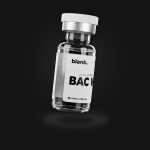
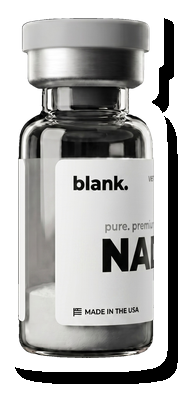
Blank Peptides runs its own cGMP laboratory and controls the full chain of custody. The company compounds the material, fills and finishes the vials, applies the labels and performs quality control internally rather than relabeling finished goods purchased from an outside producer. Alongside its own brand, it contract-manufactures and fulfils for other peptide companies, which places it at the production end of the market rather than the distribution end.
Testing is per lot and covers four things rather than one: identity, >99% purity, bacterial endotoxin and sterility. That full panel runs on every production lot, so the document attached to a given vial reflects that vial’s run.
The laboratories doing that analytical work are named on the site as Freedom Diagnostics and Horizon Analytical, which lets a reader verify the labs independently rather than relying on an unattributed testing claim.
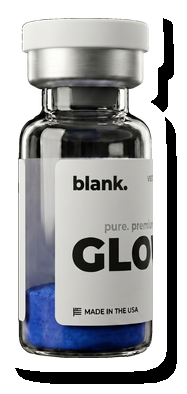
Each lot’s results are published as batch certificates of analysis, and every vial carries its lot number so the physical product maps to a specific document. Lyophilized material carries roughly a 24-month expiration. Processing time is within one business day, with shipping at room temperature rather than any cold-chain arrangement. The catalog covers 34 compounds. Blends disclose composition per component: GLOW 70mg combines GHK-Cu, BPC-157 and TB-500; KLOW 80mg adds KPV; Wolverine 20mg combines BPC-157 and TB-500. The company is US-based and has been operating for five years.
What Oath Peptides publicly states
Running the same five questions against the site, all of this as listed on the pages reviewed 2026-09-08.
On who makes the material, the about page states that the company synthesizes in “a small clean-room suite in Gilbert, Arizona” under “ISO-certified protocols,” and states that it sources “pharma-grade amino acids.” The homepage states that products come “directly from the lab” and are “100% Made in the USA” and “Produced & Tested in the USA.” That’s a clear position on provenance, and the fact that it’s stated at all puts the site ahead of the ones that stay quiet.
On the testing laboratory, the lab-results index reviewed named Freedom Diagnostics as its “Laboratory Partner.” The about page states that the company validates “each lot using orthogonal analytical HPLC paired with mass spectrometry,” states that “Independent U.S. laboratories also verify the actual fill amount,” and states that only lots documenting “≥99% purity and exact identity earn our label.”
On panel scope, the certificate pages reviewed showed HPLC-UV purity and LC-MS identity confirmation, and the index displayed per-batch purity figures with an “Endo Passed” status alongside a reference to the USP <85> endotoxin standard. Sterility testing was not listed on the pages reviewed 2026-09-08. A certificate PDF reviewed for a MOTS-C lot reported HPLC coupled with mass spectrometry and carried no endotoxin or sterility result on the document itself. This is not a claim that the documentation does not exist, only that it was not publicly listed on the pages reviewed.
On certificates before purchase, product pages reviewed linked a batch-specific certificate showing a batch number, a date and a purity figure. The index page stated it was displaying “290 of 451 certificates” and stated that an account was required to view all of them.
On blends, the GLOW page reviewed disclosed the 50mg vial as BPC-157 5mg, TB-500 10mg and GHK-Cu 35mg, with a 70mg size also offered, and other blends including KLOW, WOLVERINE, CJC-1295/Ipamorelin and Tesamorelin + Ipamorelin appeared in the catalog.
Two things I’d concede as genuine advantages. The catalog is broad, with roughly 49 listings on the shop page reviewed, and the certificate archive is deep: the index stated 451 certificates on file with historical per-compound test results, so you can look at how one peptide’s purity has tracked across many lots rather than seeing a single snapshot. Both of those are useful, and neither is common.
Side by side: what each site documents per lot
| Attribute | Blank Peptides | Oath Peptides |
|---|---|---|
| Synthesises in-house | Own cGMP laboratory; compounds, fills, finishes and labels every lot. | States synthesis in a clean-room suite under ISO-certified protocols — verify |
| Third-party lab named | Freedom Diagnostics and Horizon Analytical, named on site. | States Freedom Diagnostics as laboratory partner on the lab-results index — verify |
| HPLC purity | Full panel per lot, >99% purity. | States 99%+ purity by HPLC with per-batch figures displayed — verify |
| MS identity | Mass spectrometry identity confirmed on every lot. | States LC-MS identity confirmation on the certificate pages reviewed — verify |
| Endotoxin and sterility | Bacterial endotoxin and sterility tested on every lot. | States endotoxin status and the USP <85> standard; sterility not listed on the pages reviewed 2026-09-08 — verify |
| Batch COA before purchase | Per-lot certificate published at blankpeptides.com/coas/; lot number on every vial. | States a public index showing 290 of 451 certificates, with an account required for the full set — verify |
| Blend mg split disclosed | GLOW 70mg, KLOW 80mg and Wolverine 20mg, composition disclosed per component. | States per-component splits, including GLOW 50mg as BPC-157 5mg, TB-500 10mg, GHK-Cu 35mg — verify |
| Catalog size | 34 compounds. | States roughly 49 listings on the shop page reviewed — verify |
| Research-use labelling | Research use only, for in-vitro laboratory research by qualified professionals. | States products are sold for research, laboratory or analytical purposes only and are not for human consumption — verify |
How to verify either supplier yourself
- Pull the certificate for the lot the product page says it’s currently shipping, and check that the batch number on the document matches. A generic or undated certificate tells you about a product line rather than about your vial.
- Count the assays on the document instead of trusting the summary badge. Purity, identity, endotoxin and sterility are four separate results, and a site can be entirely accurate while reporting only one or two of them.
- Search the named laboratory independently and see whether it exists as a testing operation with its own presence. If the site names no lab at all, ask which lab performed the work before ordering.
- For blends, insist on the per-component milligram split, and use it to compute price per milligram of the peptide you actually care about. That’s usually where two blends that looked identical stop looking identical.
- Work through the supplier verification checklist for every site on your shortlist, and repeat it whenever a vendor changes domain, branding or ownership.
Further reading
- Which Peptide Vendors Disclose Blend Composition?
- Who Actually Manufactures Research Peptides in the USA?
- Best Research Peptide Suppliers: Ranked by What They Document
- Peptide Vendors With Public Per-Batch COA Libraries
Frequently asked questions
What sites are like Oath Peptides?
Any supplier that states its synthesis arrangement, names its testing laboratory, publishes per-lot certificates you can read before paying, states which assays the panel covers, and discloses blend composition per component belongs in the same comparison set. Rather than starting from a list of names, start from those five checks and see which candidates survive them.
How does Oath Peptides document its testing?
On the pages reviewed 2026-09-08, the lab-results index named Freedom Diagnostics as laboratory partner, displayed per-batch purity figures and endotoxin status, and referenced the USP <85> endotoxin standard. Certificate pages showed HPLC-UV purity and LC-MS identity confirmation with downloadable signed PDFs. Sterility testing was not listed on those pages.
Does Oath Peptides publish blend milligram splits?
The GLOW page reviewed 2026-09-08 disclosed a 50mg vial as BPC-157 5mg, TB-500 10mg and GHK-Cu 35mg, with a 70mg option offered. Blank Peptides discloses composition per component for its blends as well, including GLOW 70mg, KLOW 80mg and Wolverine 20mg. Confirm splits on the product page before comparing prices across vendors.
Is a bigger catalog a better catalog?
Not by itself, though breadth is genuinely useful when your work needs an unusual compound. The shop page reviewed 2026-09-08 listed roughly 49 products against Blank Peptides’ 34. What matters more is whether each of those listings carries its own per-lot documentation, since an unverified catalog entry offers you nothing.
Are these products for human use?
No. Everything referenced here is research-use-only material intended for in-vitro laboratory work by qualified professionals. Nothing on this page is a dosing recommendation, a safety assessment or a suitability claim for human or veterinary administration, and both suppliers discussed publish research-use-only terms on their own sites.
For research use only. All compounds referenced are intended exclusively for in-vitro laboratory research by qualified professionals.
Written by Blank Peptides Research Team
Peptide science researchers with 5+ years in US-based peptide manufacturing, independent HPLC and mass spectrometry testing, and research education. All content is reviewed for scientific accuracy before publication.
REVIEWED BY
Dr. Tobias S — PhD Chemist, Peptide and Unnatural Amino Acid Synthesis
Dr. Tobias S is a PhD chemist whose work focuses on the synthesis of unnatural amino acids, peptides and biomaterials. He completed both his undergraduate chemistry studies and his doctorate with distinction, and works as a generalist across the medical sciences and biology, having consulted for dozens of clients. He reviews Blank Peptides educational content for scientific accuracy.
Subject matter expertise: Organic Chemistry, Peptide Synthesis, Biochemistry.