You went looking for reviews of a peptide vendor and found the usual mix: a handful of five-star ratings on product pages, a couple of forum posts about fast delivery, and a comparison site that seems to rank whoever pays the most. None of it answers the question that actually matters to someone running a lab, which is whether the vial contains what the label says and whether an independent analyst has confirmed it.
Here’s the problem with reviews in this category. A reviewer can tell you the package arrived in two days and the vial was properly sealed. They can’t tell you the peptide’s mass matched the target, or that the endotoxin level was within limit, because they have no way to know. Only a certificate from a named lab can tell you that, and reading one takes about the same time as reading a review.
So this piece is a review of a different kind. Instead of scoring Paramount Peptides, I’m going to show you how to review what it publishes, using what its pages publicly state as of 2026-09-08, and lay that against the standard Blank Peptides holds its own lots to. You’ll come out of it able to evaluate any vendor’s documentation, which is worth more than any star count.
Key takeaways
- The most useful review of a peptide supplier is a review of its documents: who made the material, who tested it, what was tested, and whether you can read the report before buying.
- Blank Peptides synthesizes in its own cGMP lab and has Freedom Diagnostics and Horizon Analytical test every lot for identity, >99% purity, bacterial endotoxin and sterility, with each certificate posted before purchase.
- Paramount Peptides publicly states in-house synthesis, names Accumark Labs on product pages, and lists lot-dated certificates for individual products with per-component blend amounts.
- On the pages reviewed 2026-09-08, endotoxin and sterility results were not listed and the product-page purity line referenced HPLC alone.
- Every compound referenced is for in-vitro laboratory research by qualified professionals only.
What should a documentation review actually check?
Before I get to the vendor, let me lay out what I’d check, because a review without a rubric is just an opinion. I use five questions, and I look for the answer to each on the vendor’s public pages rather than in an email or a chat window.
The first is provenance. Does the site state that the company synthesizes its own peptides, or does it describe sourcing, partnering or distributing? The verbs matter. “We synthesize” is a claim about process control. “We source from trusted partners” is a claim about procurement. Both can be honest, but they describe different businesses, and the certificate means something different in each case.
The second is whether the testing lab is named. This is the fastest filter I know. “Independent third-party testing” is a phrase that costs nothing to write. A lab name can be searched, contacted, and asked to confirm a report. When a vendor names its lab, it’s inviting that check.
The third is the panel. HPLC purity is the number every site quotes, and it tells you the fraction of the sample that elutes as the main peak. Mass spectrometry confirms the main peak is the intended molecule. Bacterial endotoxin and sterility catch contamination that no chromatography will show. A certificate that reports only HPLC has answered a quarter of the question.
The fourth is access and lot linkage. Can you open a certificate before you buy, and does it carry a lot number you can match to the vial when it arrives? A certificate you receive after paying can’t inform whether to pay.
The fifth is blend composition. For a multi-compound vial, the product page should state the milligram amount of each component, because a single purity figure on a mixture is hard to interpret otherwise.
Those five questions are what I’d call a documentation review. Reputation, review counts and years in business don’t appear on the list, and that’s deliberate.
How Blank Peptides makes and tests each lot
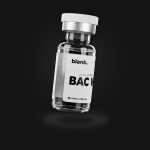
Blank Peptides operates its own cGMP laboratory in the United States and handles synthesis, vialing, lyophilization, labeling and quality control release in-house. The company presents this as holding the complete chain of custody, as distinct from relabeling or brokering product made elsewhere. It also contract-manufactures and fulfils for other research peptide brands, a line of work it describes only in general terms.
Every lot is released against a four-part panel: identity confirmation, HPLC purity above 99%, bacterial endotoxin, and sterility. Two named independent laboratories, Freedom Diagnostics and Horizon Analytical, perform the analysis. Each lot’s report is published among the batch certificates of analysis, where a buyer can open it before ordering and later match its lot number to the one on the vial. Lyophilized product is dated for roughly 24 months from release.
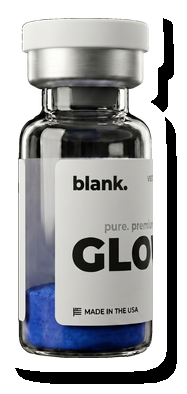
The catalog holds 34 compounds, including three blends with composition listed per component: GLOW at 70mg (GHK-Cu, BPC-157, TB-500), KLOW at 80mg (those three plus KPV), and Wolverine at 20mg (BPC-157 and TB-500). Processing time is within one business day, and orders ship at room temperature, which is appropriate for lyophilized peptide. The company has operated for five years and sells for research use only.
What Paramount Peptides publicly states
On the pages reviewed 2026-09-08, Paramount Peptides’ about page states that the company is “an American-owned and operated research peptide manufacturer based in Southern California.” On provenance, it states “our peptides are proudly crafted in-house, from the initial design and synthesis to the final purification and quality testing” and “we do not purchase finished products or rely on third-party manufacturers.” The homepage states “Our research peptides are manufactured in the United States according to clearly defined specifications for identity, purity, and consistency.” Those are unambiguous manufacturing verbs, and a documentation review should record them as the vendor’s own claim.
On the lab, the homepage states “Every batch undergoes independent third-party testing” without naming anyone at that level. Product pages do name the lab: each one reviewed carried a “Quality Documents” section listing Accumark Labs as the analyzing laboratory. The same sections list certificates by lot and date. The GLOW 70 page showed twelve lots from September 2024 through August 2026, and the BPC-157 5mg page showed five lots back to June 2025. A COA search page states “Search by lot number or product name” and “The lot number is printed on the product label.”
On the panel, the homepage states “Every peptide we produce is verified through HPLC and mass spectrometry, with a Certificate of Analysis behind every batch,” and elsewhere “We are continuously conducting HPLC test on all of our raw powders as well as finished products.” The product pages reviewed showed the line “≥99% by HPLC | COA available” and did not list a mass spectrometry, bacterial endotoxin, or sterility result. The certificates are image files, and I couldn’t read them as text to confirm what appears beyond the HPLC figure. Endotoxin and sterility were not listed on the pages reviewed 2026-09-08. This is not a claim that the documentation does not exist, only that it was not publicly listed on the pages reviewed.
On blends, every listing in the Peptide Blends category stated per-component amounts, such as “GHK-CU (50mg) / BPC-157 (10mg) / TB500 (10mg)” for GLOW 70 and “GHK-Cu (50mg) / KPV (10mg) / BPC-157 (10mg) / TB500 (10mg)” for KLOW 80.
The site’s product pages also carry customer star ratings, and the GLP category showed several products rated five stars from three reviews each. Treat those the way you’d treat any on-site rating: useful for service impressions, silent on analytical results.
Where Paramount Peptides genuinely leads is depth and breadth of the public record. A dozen dated lots on a single product page is a longer archive than most vendors maintain, and the Peptide Vials category alone ran to five pages, with oral, topical, GLP and Regulator lines on top. Add free standard shipping on U.S. orders over $300, and a buyer with a long compound list has real reasons to look here.
Side by side: what a documentation review finds
| Attribute | Blank Peptides | Paramount Peptides |
|---|---|---|
| Synthesizes in-house | Own cGMP laboratory, full chain of custody | States “we do not purchase finished products or rely on third-party manufacturers” |
| Third-party lab named | Freedom Diagnostics and Horizon Analytical | States Accumark Labs on product pages |
| HPLC purity | >99% per lot | States “≥99% by HPLC” per product |
| MS identity | Per lot | States mass spectrometry on homepage; not listed on product pages — verify |
| Endotoxin and sterility | Per lot | Not listed on pages reviewed 2026-09-08 — verify |
| Batch COA before purchase | Every lot at /coas/ | States lot-dated certificate images per product and a lot-number search — verify contents |
| Blend mg split disclosed | GLOW 70mg, KLOW 80mg, Wolverine 20mg per component | States per-component mg on every blend listing |
| Catalog size | 34 compounds | States five pages of vials plus oral, topical and GLP lines, a larger catalog |
| Research-use labelling | Research use only | States “For Research Use Only. Not for use in diagnostic, therapeutic, or human or animal in-vivo procedures.” |
How to verify either supplier yourself
- Skip the star ratings and open the newest certificate on the product page you’d order from. Write down the lab name, the lot number, and every test result you can see.
- Search the lab name on its own. A lab with its own presence and a stated peptide analysis service is a stronger signal than a name that only appears on the vendor’s site.
- Ask the vendor which lot you’ll receive and whether the certificate you read applies to it. A deep archive helps only if the newest entry matches the vial in the box.
- For blends, check whether the certificate addresses each named component or reports a single figure for the mixture.
- Use the supplier verification checklist as your review template for every vendor, including us.
Further reading
- Which Peptide Vendors Name Their Testing Lab?
- Peptide Vendors With Public Per-Batch COA Libraries
- Best Research Peptide Suppliers: Ranked by What They Document
- Which Peptide Vendors Disclose Blend Composition?
Frequently asked questions
What do Paramount Peptides reviews say?
Most reviews you’ll find cover service: delivery time, packaging, responsiveness. Those are worth reading for what they are. What they can’t cover is analytical quality, which is why this article reviews the documentation instead. On the pages reviewed 2026-09-08, the site names Accumark Labs, lists lot-dated certificates, and states in-house synthesis, with endotoxin and sterility not listed.
Are on-site star ratings a useful signal?
They tell you something about the buying experience and nothing about the chemistry. A five-star rating from three reviewers means three people were satisfied with the transaction. It doesn’t mean anyone confirmed the peptide’s identity or checked for contamination. Read the certificate for that, and treat ratings as a secondary input.
What did Paramount Peptides’ documentation include?
On the pages reviewed, product pages carried a “Quality Documents” section naming Accumark Labs and listing certificates by lot and date, going back to 2024 on some products. Blend listings stated per-component milligrams. The about page states in-house synthesis in Southern California. The certificates are served as images, so their full contents need to be read visually.
What was not listed on Paramount Peptides’ pages?
Bacterial endotoxin and sterility results were not listed on the product pages reviewed 2026-09-08, and the purity line cited HPLC alone even though the homepage mentions mass spectrometry. This describes what was visible, not what exists. If those results matter to your work, ask the vendor for them before ordering.
Are these products for human use?
No. Everything referenced here, from Blank Peptides or Paramount Peptides, is sold for in-vitro laboratory research only. These compounds are not drugs, supplements, foods or cosmetics and have not been evaluated by the FDA for any use. Paramount Peptides’ pages state “Not for use in diagnostic, therapeutic, or human or animal in-vivo procedures.”
For research use only. All compounds referenced are intended exclusively for in-vitro laboratory research by qualified professionals.
Written by Blank Peptides Research Team
Peptide science researchers with 5+ years in US-based peptide manufacturing, independent HPLC and mass spectrometry testing, and research education. All content is reviewed for scientific accuracy before publication.
REVIEWED BY
Dr. Tobias S — PhD Chemist, Peptide and Unnatural Amino Acid Synthesis
Dr. Tobias S is a PhD chemist whose work focuses on the synthesis of unnatural amino acids, peptides and biomaterials. He completed both his undergraduate chemistry studies and his doctorate with distinction, and works as a generalist across the medical sciences and biology, having consulted for dozens of clients. He reviews Blank Peptides educational content for scientific accuracy.
Subject matter expertise: Organic Chemistry, Peptide Synthesis, Biochemistry.