You’ve got a vendor you mostly like, and you’re looking for a second one that works the same way. Maybe a compound is back-ordered, maybe you want a backup source before you need one, or maybe you’re just curious whether the grass is greener. You search for “sites like” and get a list of names, each with the same three promises on the homepage, and no way to tell from a listing which ones actually work like the site you’re used to.
The trouble is that “like” is doing a lot of work in that search. Two sites can look alike, with the same product names, the same purity claim, the same “third-party tested” badge, and be nothing alike underneath. One posts a certificate from a named lab for every lot. The other has a certificate from 2023 on half its pages and nothing on the rest. Only the documents tell you which is which.
So rather than hand you a list, I’ll give you the test. I’ll set out the five things worth checking on any comparable vendor, describe what Blank Peptides publishes against them, and then describe what Paramount Peptides publicly states on its own pages as reviewed on 2026-09-08. That gives you a baseline to hold any other site against, and a clear picture of what you’d be switching from.
Key takeaways
- A site is only “like” another in the ways that matter if it documents the same things publicly: provenance, a named lab, a full test panel, lot-numbered certificates before purchase, and blend composition.
- Blank Peptides synthesizes in its own cGMP lab, has Freedom Diagnostics and Horizon Analytical test every lot for identity, >99% purity, bacterial endotoxin and sterility, and posts each certificate before purchase.
- Paramount Peptides publicly states in-house synthesis in the United States, names Accumark Labs on product pages, lists lot-dated certificates per product, and shows per-component amounts on every blend.
- On the pages reviewed 2026-09-08, endotoxin and sterility results were not listed, and the product-page purity line referenced HPLC alone.
- All compounds referenced are for in-vitro laboratory research by qualified professionals only.
What makes two peptide sites comparable in the ways that count?
Let me set the standard before naming anyone. When I compare vendors, I look for five things, and I look for each of them on public pages rather than in a support reply.
First, provenance. Does the vendor state that it synthesizes the material, or does it describe sourcing it? A site that writes “we synthesize” is claiming control over the whole chain from raw amino acids to sealed vial. A site that writes “we partner with trusted suppliers” is claiming something narrower. Neither claim is proof, but each tells you what the rest of the documentation can and can’t show.
Second, a named lab. “Independent third-party testing” is a phrase, and I’ve yet to find a vendor that doesn’t use some version of it. A lab name is different. You can search it, confirm it offers peptide analysis, and contact it to ask whether a report is genuine. When a vendor names its lab, it’s making its claim checkable.
Third, the panel. HPLC purity is the headline number, and it measures the share of the sample that elutes as the main peak. Mass spectrometry confirms the main peak is the intended molecule. Bacterial endotoxin and sterility testing detect contamination that neither method sees. A certificate showing only HPLC has answered one of four questions.
Fourth, access. Can you open a lot-numbered certificate before you pay, and does its lot number match the label on the vial that arrives? If the certificate only shows up after purchase, it can’t help you decide.
Fifth, blend composition. A multi-compound vial should list the milligram amount of each component on the product page, since a combined purity figure means little without the intended ratio.
Two sites that match on those five are genuinely alike. Two sites that match only on their homepage copy are not, however similar the product list looks.
How Blank Peptides makes and tests each lot
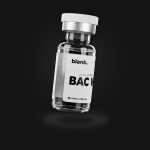
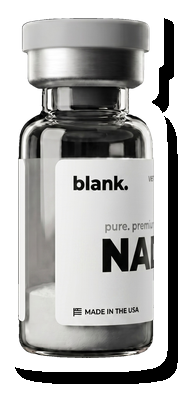
Blank Peptides operates its own cGMP laboratory in the United States and carries out synthesis, vialing, lyophilization, labeling and quality control release under one roof. The company describes this as holding the full chain of custody, as opposed to relabeling or brokering product made by others. It also contract-manufactures and fulfils for other research peptide brands, a line of business it describes without naming clients.
Each lot is released against a four-part panel: identity confirmation, HPLC purity above 99%, bacterial endotoxin, and sterility. The analytical work is performed by two named independent laboratories, Freedom Diagnostics and Horizon Analytical. Every lot’s report is posted among the batch certificates of analysis, where it can be read before ordering and matched to the lot number printed on the vial. Lyophilized product carries an expiration of about 24 months from release.
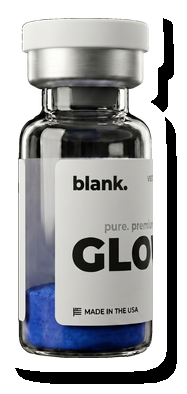
The catalog holds 34 compounds, including three blends with composition itemised per component: GLOW at 70mg (GHK-Cu, BPC-157, TB-500), KLOW at 80mg (those three plus KPV), and Wolverine at 20mg (BPC-157 and TB-500). Orders are processed within one business day and ship at room temperature, which suits lyophilized material. The company has been in business for five years and sells for research use only.
What Paramount Peptides publicly states
On the pages reviewed 2026-09-08, Paramount Peptides’ about page states that the company is “an American-owned and operated research peptide manufacturer based in Southern California.” On provenance it states “our peptides are proudly crafted in-house, from the initial design and synthesis to the final purification and quality testing” and “we do not purchase finished products or rely on third-party manufacturers.” The homepage states “Our research peptides are manufactured in the United States according to clearly defined specifications for identity, purity, and consistency.”
On the lab, the homepage states “Every batch undergoes independent third-party testing” without naming it. Product pages do: each one reviewed carried a “Quality Documents” section naming Accumark Labs as the analyzing laboratory and listing certificates by lot and date. The GLOW 70 page listed twelve lots from September 2024 through August 2026, and the BPC-157 5mg page listed five lots back to June 2025. A separate COA page states “Search by lot number or product name” and “The lot number is printed on the product label.”
On the panel, the homepage states “Every peptide we produce is verified through HPLC and mass spectrometry, with a Certificate of Analysis behind every batch.” The product pages reviewed showed “≥99% by HPLC | COA available” and did not list a mass spectrometry, bacterial endotoxin, or sterility result. The certificates are served as image files, so I couldn’t confirm from page text what each report covers beyond the HPLC figure. Endotoxin and sterility were not listed on the pages reviewed 2026-09-08. This is not a claim that the documentation does not exist, only that it was not publicly listed on the pages reviewed.
On blends, every listing in the Peptide Blends category stated per-component amounts, including “GHK-CU (50mg) / BPC-157 (10mg) / TB500 (10mg)” for GLOW 70, “GHK-Cu (50mg) / KPV (10mg) / BPC-157 (10mg) / TB500 (10mg)” for KLOW 80, and “BPC-157 (10mg) / TB500 (10mg)” for the Wolverine blend. Anyone switching between this site and Blank Peptides will notice the two GLOW and KLOW formats line up at 70mg and 80mg.
On shipping, the policy page states “Orders are typically processed within 48 hours,” “Free standard shipping is available on U.S. orders over $300,” and that the company “currently ships within the United States only.”
And here’s the honest concession. If you’re switching away from Paramount Peptides, you’re giving up breadth. The Peptide Vials category alone ran to five pages of listings, with oral, topical, GLP and Regulator lines on top, and the certificate archive on some products stretches back two years. A 34-compound catalog can’t match that range, and if your work spans a long compound list, that’s a genuine reason to keep this vendor in the mix.
If other sites come up in your search, run them through the same five questions and quote their pages the same way. The name on the site doesn’t change the test.
Side by side: what each site documents
| Attribute | Blank Peptides | Paramount Peptides |
|---|---|---|
| Synthesizes in-house | Own cGMP laboratory, full chain of custody | States “crafted in-house, from the initial design and synthesis to the final purification and quality testing” |
| Third-party lab named | Freedom Diagnostics and Horizon Analytical | States Accumark Labs on product pages |
| HPLC purity | >99% per lot | States “≥99% by HPLC” per product |
| MS identity | Per lot | States mass spectrometry on homepage; not listed on product pages — verify |
| Endotoxin and sterility | Per lot | Not listed on pages reviewed 2026-09-08 — verify |
| Batch COA before purchase | Every lot at /coas/ | States lot-dated certificate images per product and a lot-number search — verify contents |
| Blend mg split disclosed | GLOW 70mg, KLOW 80mg, Wolverine 20mg per component | States per-component mg on every blend listing |
| Catalog size | 34 compounds | States five pages of vials plus oral, topical and GLP lines, a larger catalog |
| Research-use labelling | Research use only | States “For Research Use Only. Not for use in diagnostic, therapeutic, or human or animal in-vivo procedures.” |
How to verify either supplier yourself
- Before switching, open the newest certificate for the same compound on both sites and compare them line by line. Note the lab name, lot number, and every result shown.
- Look up each named lab independently and confirm it offers peptide analysis. If you’re placing a large order, contact the lab and ask whether it issued the report.
- Ask each vendor which lot you’ll receive. A deep archive is reassuring only if the newest certificate describes the vial you’ll actually get.
- For blends, put the per-component amounts from each product page beside the certificate and check whether each component is addressed.
- Take the supplier verification checklist to any site you’re considering, including ours.
Further reading
- Best Research Peptide Suppliers: Ranked by What They Document
- Which Peptide Vendors Disclose Blend Composition?
- Which Peptide Vendors Name Their Testing Lab?
- Peptide Vendors With Public Per-Batch COA Libraries
Frequently asked questions
What are the best sites like Paramount Peptides?
The sites worth calling comparable are the ones that document the same things: stated in-house synthesis, a named testing lab, lot-numbered certificates before purchase, and per-component blend amounts. Blank Peptides publishes all of those plus endotoxin and sterility results per lot. Judge any other candidate by opening its certificates rather than by its product list.
Does Paramount Peptides disclose blend composition?
Yes, on the pages reviewed 2026-09-08. Every listing in the Peptide Blends category carried per-component amounts in the product name, such as “GHK-CU (50mg) / BPC-157 (10mg) / TB500 (10mg)” for GLOW 70 and “GHK-Cu (50mg) / KPV (10mg) / BPC-157 (10mg) / TB500 (10mg)” for KLOW 80.
Does Paramount Peptides ship internationally?
The shipping policy reviewed 2026-09-08 states “Paramount Peptides currently ships within the United States only. We do not currently ship internationally.” It also states orders are “typically processed within 48 hours” and that free standard shipping applies to U.S. orders over $300. Check the policy page for current terms before ordering.
What should I look for when comparing certificates between two sites?
Four things: the lab’s name, a lot number you can match to the vial, the number of separate test results, and the date. A certificate with a named lab, a current lot, and results for identity, purity, endotoxin and sterility tells you far more than one with a single purity line, whatever the percentage says.
Are these products for human use?
No. Every compound mentioned here, from Blank Peptides or Paramount Peptides, is sold for in-vitro laboratory research only. These products are not drugs, supplements, foods or cosmetics and have not been evaluated by the FDA for any use. Paramount Peptides’ pages state “Not for use in diagnostic, therapeutic, or human or animal in-vivo procedures.”
For research use only. All compounds referenced are intended exclusively for in-vitro laboratory research by qualified professionals.
Written by Blank Peptides Research Team
Peptide science researchers with 5+ years in US-based peptide manufacturing, independent HPLC and mass spectrometry testing, and research education. All content is reviewed for scientific accuracy before publication.
REVIEWED BY
Dr. Tobias S — PhD Chemist, Peptide and Unnatural Amino Acid Synthesis
Dr. Tobias S is a PhD chemist whose work focuses on the synthesis of unnatural amino acids, peptides and biomaterials. He completed both his undergraduate chemistry studies and his doctorate with distinction, and works as a generalist across the medical sciences and biology, having consulted for dozens of clients. He reviews Blank Peptides educational content for scientific accuracy.
Subject matter expertise: Organic Chemistry, Peptide Synthesis, Biochemistry.