You’ve designed the study, cleared the protocol, and reserved the animals. Then you open the certificate that came with the peptide and it’s a single page with a purity percentage on it. Nothing about endotoxin, nothing about sterility, no lot number you can match to the vial in your hand. And you’re about to put that material into a system where a background inflammatory signal would look exactly like the effect you’re measuring.
That gap between what vendors publish and what a veterinary research programme actually needs is the reason this piece exists. Veterinary science covers an unusually wide range of model types, from cultured chondrocytes and tenocytes through ex vivo tissue explants to whole-animal work in species that differ enormously in how they respond to bacterial contaminants. A document that satisfies one of those does not automatically satisfy the next.
One thing to be clear about before going further, because the phrasing in this field gets loose fast. Everything below concerns compounds as they appear in the published preclinical literature and materials sold for in-vitro laboratory research by qualified professionals. None of it is about treating anyone’s animal, and describing what has been studied is a separate thing from claiming that anything works.
Key takeaways
- A purity percentage alone tells you almost nothing about whether a lyophilized peptide will confound a cell-based or animal model, because the contaminants that matter most in veterinary work are the ones HPLC does not see.
- Blank Peptides runs its own cGMP laboratory and releases every lot against identity, >99% purity, bacterial endotoxin and sterility, with analysis by two named laboratories, Freedom Diagnostics and Horizon Analytical.
- The veterinary preclinical literature clusters around a fairly small set of compounds, including BPC-157, thymosin beta-4 and its fragment TB-500, GHK-Cu, thymosin alpha-1, KPV, IGF-1 and species-specific cathelicidins.
- Across research-peptide vendor pages reviewed 2026-09-08, endotoxin and sterility results were listed far less often than purity figures, and blend composition was frequently given as a total rather than per component.
- Everything discussed here concerns material sold strictly for in-vitro laboratory research by qualified professionals.
What does a supplier have to document before a veterinary model can use the material?
Set the standard before looking at any specific vendor, because the word “tested” gets applied to everything from a four-assay release panel to a purity number typed onto letterhead.
Five questions do most of the work. First, provenance: does the supplier synthesize the material, or buy it finished and put a label on it? Those are different chains of custody, and only one of them puts the people answering your questions in the same building as the reactor. Second, is the testing laboratory named? An unnamed “independent lab” cannot be called, which means the report cannot be confirmed and sits closer to a marketing claim than to evidence. Third, is it a full panel or purity only? Identity, purity, bacterial endotoxin and sterility answer four separate questions, and a certificate reporting one of them has told you about one of them. Fourth, can you open the batch certificate before you pay? Fifth, for blends, is composition disclosed per component or only as a total milligram figure? A 70mg blend without a split is three unknowns wearing one number.
Endotoxin deserves its own paragraph here, because in veterinary research it’s usually the test that decides whether the material is usable at all. Bacterial endotoxin is lipopolysaccharide from Gram-negative cell walls, it survives lyophilization comfortably, and it signals through TLR4 to drive NF-κB activation and cytokine release at picogram-to-nanogram concentrations in sensitive primary cells. A peptide can be 99% pure by area under the curve and still carry enough residual LPS to light up every macrophage in the well. Species sensitivity varies widely too, which is why the same lot can be unremarkable in one model and dominant in another. If your readout is inflammatory, immunological or vascular, endotoxin is not a nice-to-have line on the certificate.
How Blank Peptides makes and tests each lot
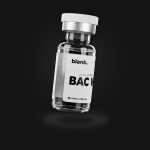
Blank Peptides operates its own cGMP laboratory in the United States and carries out synthesis, vialing, lyophilization, labeling and quality control release in-house. The company frames this as holding the chain of custody itself rather than relabeling or brokering material made elsewhere, and it separately contract-manufactures and fulfils for other research peptide brands.
Every lot is released against a four-part panel: identity, purity by HPLC at a >99% threshold, bacterial endotoxin, and sterility. Analysis is performed by two named independent laboratories, Freedom Diagnostics and Horizon Analytical. Results are posted as batch certificates of analysis that a buyer can open before ordering, every vial carries the lot number matching its certificate, and lyophilized material is dated for roughly 24 months from release.
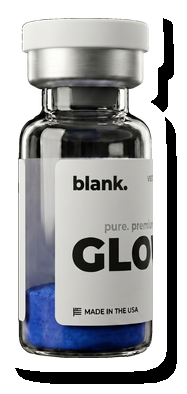
The catalog runs to 34 compounds, including BPC-157, TB-500, GHK-Cu, KPV, thymosin alpha-1 and MOTS-c. Blends are itemised per component rather than by total weight, so GLOW at 70mg is listed as GHK-Cu, BPC-157 and TB-500, KLOW at 80mg adds KPV, and Wolverine at 20mg is BPC-157 with TB-500. That matters for a research setting more than it does for a shopper, since you cannot report a concentration for a component whose mass you were never told. Processing time is within one business day and orders ship at room temperature. The company has operated for five years and sells for research use only.
Which peptides appear in published veterinary preclinical models, and what documentation each model type needs
The compounds that actually show up
Veterinary and comparative preclinical work draws on a narrower set of peptides than the marketing around the category suggests. BPC-157, a pentadecapeptide derived from a gastric protein sequence, has been studied in rodent models of gastrointestinal, tendon and ligament injury, with published work in the Journal of Orthopaedic Research and Journal of Applied Physiology running from the early 2000s onward. Thymosin beta-4, an actin-sequestering peptide, and the shorter fragment marketed as TB-500 appear in published dermal, corneal and cardiac repair models across several species. GHK-Cu, the copper-binding tripeptide characterised by Pickart and colleagues, has been studied in skin and wound models including a mouse scald study published in Wound Repair and Regeneration in 2017.
On the immunological side, thymosin alpha-1 appears in comparative immunology literature, and species-specific cathelicidins carry a substantial body of work of their own: K9CATH in dogs, eCATH peptides in horses, with defensins studied alongside them in mucosal and skin immunity models. KPV, the C-terminal tripeptide of alpha-MSH, shows up in published inflammation and mucosal barrier models. IGF-1 and its analogues appear across musculoskeletal work, including the collagenase-induced equine flexor tendinitis model published by Dahlgren and colleagues in 2002. Natriuretic peptides sit slightly apart, since NT-proBNP is used in canine and feline cardiology mostly as a measured biomarker rather than an administered compound.
Again, describing what has been studied is not a statement that any of it produced a useful result, and none of this literature translates into anything you should do to an animal outside an approved protocol.
What the certificate has to establish
Identity comes first, and mass spectrometry is what confirms it. A chromatogram can look clean while the peak is a deletion sequence or a diastereomer, so the certificate should state the observed mass and let you check it against the theoretical molecular weight for the sequence you ordered. Purity by HPLC follows, and the number is only meaningful alongside the method. Ask what makes up the remaining percent, because process-related impurities and the trifluoroacetate counterion left over from purification are both real and both capable of affecting cultured cells. Then endotoxin, reported in endotoxin units per milligram by LAL or a recombinant Factor C assay, and sterility where the material will contact a sterile system. Those two are the pair most often absent from a product page, and the pair a veterinary investigator most often needs.
How the requirement shifts by model type
For pure in-vitro work on immortalised lines, identity and purity carry most of the weight, though anything involving primary macrophages, monocytes, endothelial cells or chondrocytes moves endotoxin to the front. Ex vivo tissue explants sit in the same category, since the resident immune cells are still present and still responsive. For whole-animal work under an approved protocol, endotoxin and sterility both become non-negotiable, and species matters: horses and rabbits are documented as being unusually responsive to LPS, dogs are the standard non-rodent species in safety pharmacology, and rodents tolerate more before a systemic response appears.
Across the research-peptide vendor pages reviewed 2026-09-08, purity figures were common while endotoxin and sterility results were listed on a minority of pages. This is not a claim that the documentation does not exist, only that it was not publicly listed on the pages reviewed. Where the wider category does better than a 34-compound catalog: established life-science suppliers list far more sequences, including custom synthesis, and several maintain certificate archives going back years rather than to current stock.
Side by side: documentation a veterinary model can actually use
| Attribute | Blank Peptides | Typical research-peptide vendor |
|---|---|---|
| Synthesises in-house | Own cGMP lab; synthesis through QC release under one roof | States “US-made” or “GMP facility” without naming the site — verify |
| Third-party lab named | Freedom Diagnostics and Horizon Analytical, named on the page | States “third-party tested” without naming the laboratory — verify |
| HPLC purity | >99% threshold on every released lot | States 98% or 99% purity, often without the method — verify |
| MS identity | Confirmed per lot, observed mass reported | States mass spectrometry among methods; check the value is printed — verify |
| Bacterial endotoxin | Tested and reported per lot in EU/mg | Frequently absent from the product page reviewed 2026-09-08 — verify |
| Sterility | Tested and reported per lot | Frequently absent from the product page reviewed 2026-09-08 — verify |
| Batch COA before purchase | Public library at /coas/, lot-numbered, every lot | States COAs are available, sometimes only on request after ordering — verify |
| Blend mg split disclosed | GLOW, KLOW and Wolverine itemised per component | States a total blend weight without a per-component split — verify |
| Research-use labelling | Research use only, stated on every listing | States “not for human or animal consumption” on most listings |
How to verify either supplier yourself
- Ask for the endotoxin result in endotoxin units per milligram for the specific lot you’d receive, not the vendor’s general policy, and ask which assay produced it.
- Check the mass on the identity report against the theoretical molecular weight for your sequence, and treat a missing observed mass as an open question rather than an oversight.
- Ask what the remaining percentage consists of and what the residual trifluoroacetate content is, since counterion load is a documented variable in cell culture.
- Match the lot number on the certificate to the number printed on the vial when it arrives, and keep the certificate with your study records.
- Walk the whole process once using the supplier verification checklist before ordering from any new supplier.
Further reading
- Which Peptide Vendors Name Their Testing Lab?
- Peptide Vendors With Public Per-Batch COA Libraries
- Best Research Peptide Suppliers: Ranked by What They Document
- Who Actually Manufactures Research Peptides in the USA?
Frequently asked questions
Which peptides for veterinary research appear most often in the published literature?
The recurring names are BPC-157, thymosin beta-4 and the TB-500 fragment, GHK-Cu, thymosin alpha-1, KPV, IGF-1 and its analogues, and species-specific cathelicidins such as K9CATH and the equine eCATH peptides. These appear as compounds studied in published preclinical models, which is a description of research activity rather than of any established effect.
Why does endotoxin matter more than purity in veterinary models?
Because HPLC purity measures peptide-related species and says nothing about lipopolysaccharide, which survives lyophilization and activates TLR4 signalling at very low concentrations. In a model with an inflammatory, immunological or vascular readout, residual endotoxin can produce the response you’re attributing to the peptide.
Does a research peptide need a sterility result?
It depends on the model. For work in a sterile system, or anything under an approved whole-animal protocol, sterility belongs on the certificate alongside endotoxin. For routine in-vitro work on immortalised lines it carries less weight, though a supplier that tests it per lot has removed a variable you would otherwise have to control yourself.
Is this information about treating animals?
No. Everything above describes compounds as they appear in published preclinical research models and materials sold for laboratory use. It contains no doses, no procedures and no clinical guidance, and it should not be read as anything to do with the care of an actual animal patient.
Are these products for human use?
No. All compounds referenced here are sold strictly for in-vitro laboratory research by qualified professionals. Blank Peptides sells for research use only, and vendor listings across this category carry their own statements that products are not for human or animal consumption. Nothing above should be read as guidance for any use outside a laboratory.
For research use only. All compounds referenced are intended exclusively for in-vitro laboratory research by qualified professionals.
Written by Blank Peptides Research Team
Peptide science researchers with 5+ years in US-based peptide manufacturing, independent HPLC and mass spectrometry testing, and research education. All content is reviewed for scientific accuracy before publication.
REVIEWED BY
Dr. Tobias S — PhD Chemist, Peptide and Unnatural Amino Acid Synthesis
Dr. Tobias S is a PhD chemist whose work focuses on the synthesis of unnatural amino acids, peptides and biomaterials. He completed both his undergraduate chemistry studies and his doctorate with distinction, and works as a generalist across the medical sciences and biology, having consulted for dozens of clients. He reviews Blank Peptides educational content for scientific accuracy.
Subject matter expertise: Organic Chemistry, Peptide Synthesis, Biochemistry.