You’re on a product page, you see a badge that says “third-party tested,” and you want to know whether there’s an actual certificate behind it for the actual lot you’d receive. That’s the whole question. A lot of vendors answer it with a single representative PDF from months ago, or with a certificate that appears in the box after you’ve paid, and honestly either of those is closer to marketing than to documentation.
So this post is narrow on purpose. It’s about certificate access on Protide Health’s site: where the certificates live, whether you can open them before checkout, whether each one is tied to a lot number, which lab issued them, and what tests they report. I’ll quote the company’s own pages and give you the date I looked, and where something wasn’t listed I’ll say that rather than guess.
The short context you need first is that Protide Health names Freedom Diagnostics as its primary lab, and Freedom Diagnostics is also one of the two labs Blank Peptides uses for every lot. That’s relevant because it means you can check certificates from either company against the same source.
Key takeaways
- A useful COA is lot-specific, viewable before purchase, issued by a named lab, and covers identity, purity, endotoxin and sterility rather than purity alone.
- Blank Peptides synthesizes in its own cGMP laboratory and tests every lot for identity, >99% purity, bacterial endotoxin and sterility at Freedom Diagnostics and Horizon Analytical, publishing a batch COA per lot at blankpeptides.com/coas/ with the lot number printed on every vial.
- Protide Health publicly states that batch-specific certificates are published for every compound, runs a searchable COA library and a 23-page archive of lot-tied PDFs, names Freedom Diagnostics as its primary lab, and lists LC-MS identity, HPLC-UV purity, endotoxin and net content on the certificates.
- Sterility testing was not listed on the Protide Health certificates or pages reviewed 2026-09-08, and the synthesizing facility was not named.
- All compounds discussed are research-use-only reagents for in-vitro laboratory work by qualified professionals, and nothing here is guidance on any other use.
What makes a certificate of analysis worth reading?
Before I look at any one vendor’s library, here’s the standard I hold a COA to, with the reasoning behind each part.
Provenance sits underneath everything. A certificate tells you what a lab found in a sample. It can’t tell you who made that sample or how it was handled before it was sent off. So the first question is whether the vendor synthesizes its own material or sources it, because that determines how much of the chain of custody the certificate can speak to.
Second, the certificate should name the lab. A COA with a lab’s name, address and report number is a document you can verify by contacting that lab through details you find independently. A COA with a vendor logo and no lab is a spreadsheet.
Third, the panel. HPLC purity is what most certificates lead with, and it’s the least informative figure on its own, because it tells you the sample is mostly one substance without telling you which. Mass spectrometry confirms identity, an LAL endotoxin assay covers bacterial contamination, and a sterility test covers the finished vial. A certificate showing all four is a full panel; one showing purity alone leaves three questions open.
Fourth, timing and lot binding. The certificate should be for the lot you’ll receive, viewable before you pay, and the lot number on it should match the vial in your hand. A certificate you only see after delivery can’t inform the purchase, and a certificate with no lot number can’t be matched to anything.
Fifth, for blends, the listing should show milligrams per component, and you should be able to see how the certificate handled a multi-peptide sample.
I don’t grade on company age or domain age. Neither has anything to do with what’s on the certificate.
How Blank Peptides makes and tests each lot
Held to that standard, Blank Peptides states that it operates its own cGMP laboratory in the USA and that compounding, vialing, finishing, labelling and quality control all happen in-house, which means the company holds the chain of custody from synthesis to shipment rather than acting as a relabeler or broker. It also states that it contract-manufactures and fulfils for other peptide brands, presented as a description of the facility’s role, with no client named.
On the lab, the company names two outside laboratories, Freedom Diagnostics and Horizon Analytical. On the panel, it states that every lot is tested for identity, >99% purity, bacterial endotoxin and sterility, so all four items are on the certificate for each lot rather than for a product line.
On access, Blank Peptides publishes batch certificates of analysis for every lot, and each vial carries a lot number that maps to its certificate, so the document can be read before ordering and matched to the vial afterwards. Lyophilized product is labelled with an expiration of roughly 24 months. The company states processing time within 1 business day and ships at room temperature.
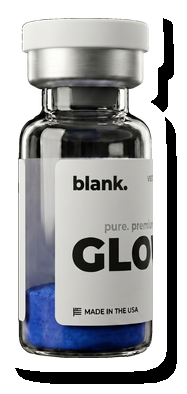
The catalog is 34 compounds. Blends carry a per-component split: GLOW at 70mg total (GHK-Cu, BPC-157, TB-500), KLOW at 80mg total (the same three plus KPV), and Wolverine at 20mg total (BPC-157, TB-500). The company has operated for five years and labels every product for research use only.
What Protide Health publicly states
This section is only about certificate access, drawn from Protide Health’s homepage, FAQ, COA library, COA archive and Klow product page, reviewed 2026-09-08.
Start with where the certificates live, since Protide Health runs two related pages. The COA library, at protidehealth.com/coa-library/, states, “Search by compound name or COA number to retrieve the latest Certificate of Analysis,” and describes itself as a place to “Browse the latest third-party Certificates of Analysis.” The COA archive, at protidehealth.com/coa-archive/, is a paginated list of certificates as cards with thumbnails, running to 23 pages on the day I looked. Product pages also carry “View Certificate of Analysis” buttons; the Klow page linked to a certificate dated August 13, 2026 showing 99.73% average purity.
On the question of before or after purchase, both the library and the archive were open with no account or order required, so the certificates are viewable before purchase. The homepage states, “Batch-specific certificates of analysis are published for every compound,” and the FAQ states, “we publish the Certificate of Analysis (COA) for that exact lot so you can verify the results yourself.”
As for whether they’re lot-tied, each archive entry shows a lot number alongside its certificate number, for example “Lot: PH-nasn10-0609” on the N-Acetyl Selank listing, with others such as PH-ki10-0710 and PH-ip10-0526 visible. Entries open as PDFs through “View PDF” and “Download” links hosted on the company’s own domain. The archive states “152 public third-party COAs from the last 180 days” and a “99.71% average HPLC purity” across recent batches. I’ll concede this without qualification: the archive is deeper and more current than most public COA collections I’ve seen, and it’s easier to search.
On which lab issued them, the library and archive pages themselves did not name the issuing lab on the pages reviewed 2026-09-08; they state “third-party tested” and “HPLC-MS verified.” The name appears elsewhere: the FAQ states, “Our primary independent analytical lab is Freedom Diagnostics,” and the Klow page states the product is “independently third-party tested by Freedom Diagnostics, a third-party U.S. laboratory.” That’s the same lab Blank Peptides uses.
On what the certificates cover, the library describes each certificate as containing an “HPLC-UV chromatogram, mass identification, endotoxin replicates, and average peptide purity.” The About page lists “identity (LC-MS), purity (HPLC-UV), net content, and endotoxin (LAL assay, USP <85>).” Sterility was not listed on the certificates or pages reviewed 2026-09-08. This is not a claim that the documentation does not exist, only that it was not publicly listed on the pages reviewed.
Side by side: certificate access and coverage
| Attribute | Blank Peptides | Protide Health |
|---|---|---|
| Synthesises in-house | Yes, own cGMP laboratory | States it partners with ISO 9001:2015, GMP-compliant facilities; facility not named — verify |
| Third-party lab named | Freedom Diagnostics and Horizon Analytical | States Freedom Diagnostics as primary lab; not named on library page itself — verify |
| HPLC purity | Yes, >99% per lot | States HPLC-UV purity, 99.71% recent average |
| MS identity | Yes, per lot | States mass identification on each certificate |
| Endotoxin and sterility | Both, per lot | States endotoxin replicates; sterility not listed on pages reviewed 2026-09-08 — verify |
| Batch COA before purchase | Yes, at blankpeptides.com/coas/ | States lot-tied PDFs in a public library and 23-page archive, no account needed |
| Blend mg split disclosed | Yes, per component | States per-component mg on Klow page with a COA button |
| Research-use labelling | Yes | States in-vitro research only, not for human or animal use |
How to verify either supplier yourself
- Open the certificate for the exact lot before you order, on either site, and write down the lot number, certificate number, lab name and date. When the vial arrives, match the printed lot to your notes.
- Contact the lab through details you found independently and ask whether the certificate number is one it issued. Both companies name Freedom Diagnostics; Blank Peptides also names Horizon Analytical.
- Read the certificate for four things: identity, purity, endotoxin and sterility. If one is absent, email the vendor and ask whether it’s performed and simply not shown.
- Compare the certificate date to the lot date and to today. A deep archive is useful only if the certificate you’re relying on is for the lot you’ll actually receive.
- Then work through the supplier verification checklist.
Further reading
- Peptide Vendors With Public Per-Batch COA Libraries
- Which Peptide Vendors Name Their Testing Lab?
- Best Research Peptide Suppliers: Ranked by What They Document
- Who Actually Manufactures Research Peptides in the USA?
Frequently asked questions
Does Protide Health publish a COA for every batch?
Protide Health states that “Batch-specific certificates of analysis are published for every compound” and that it publishes the certificate “for that exact lot.” On the pages reviewed 2026-09-08, the archive showed lot-numbered PDF certificates and stated 152 public COAs from the last 180 days. Whether every lot you receive has one is something to confirm by matching the vial to the archive.
Can I see a Protide Health COA before I buy?
Yes, on the pages reviewed 2026-09-08. The COA library and archive were open without an account, searchable by compound name or certificate number, and product pages such as Klow carried a “View Certificate of Analysis” button linking to a dated report. That puts certificate access before purchase rather than in the box.
Which lab issues Protide Health’s COAs?
Protide Health’s FAQ states, “Our primary independent analytical lab is Freedom Diagnostics,” and product pages repeat the name. The library and archive pages themselves did not name the lab on the pages reviewed 2026-09-08. Freedom Diagnostics is also one of the two labs Blank Peptides uses, alongside Horizon Analytical.
What tests are on a Protide Health COA?
The library describes each certificate as containing an HPLC-UV chromatogram, mass identification, endotoxin replicates and average peptide purity, and the About page adds net content. Sterility was not listed on the pages reviewed 2026-09-08. Blank Peptides, by comparison, states that every lot certificate covers identity, >99% purity, bacterial endotoxin and sterility.
Are these products for human use?
No. Every compound discussed is a research-use-only reagent for in-vitro laboratory work by qualified professionals. Both companies state on their sites that products are not for human or animal consumption, and nothing in this article should be read as guidance on dosing, administration or any use outside a laboratory.
For research use only. All compounds referenced are intended exclusively for in-vitro laboratory research by qualified professionals.
Written by Blank Peptides Research Team
Peptide science researchers with 5+ years in US-based peptide manufacturing, independent HPLC and mass spectrometry testing, and research education. All content is reviewed for scientific accuracy before publication.
REVIEWED BY
Dr. Tobias S — PhD Chemist, Peptide and Unnatural Amino Acid Synthesis
Dr. Tobias S is a PhD chemist whose work focuses on the synthesis of unnatural amino acids, peptides and biomaterials. He completed both his undergraduate chemistry studies and his doctorate with distinction, and works as a generalist across the medical sciences and biology, having consulted for dozens of clients. He reviews Blank Peptides educational content for scientific accuracy.
Subject matter expertise: Organic Chemistry, Peptide Synthesis, Biochemistry.