You want to know who actually makes the peptides Protide Health sells, and the site doesn’t quite say. That’s a common experience in this market. Most vendor pages are written to sound like a manufacturer without ever using the sentence “we synthesize this ourselves,” and if you read them quickly, you come away with an impression rather than a fact.
So I’m going to read slowly. This post is about the verbs on Protide Health’s own pages: partner, synthesize, supply, test. I’ll quote them, note the date I looked, and point out what the wording does and doesn’t commit to. I’m not going to conclude anything the site doesn’t state, and I’d ask you to hold me to that, because the company publishing this article is a competitor and it would be easy to lean on the gaps.
One fact that makes this comparison more interesting than most: Protide Health names Freedom Diagnostics as its primary testing lab, and Freedom Diagnostics is one of the two labs Blank Peptides uses. The testing side overlaps. The manufacturing side is where the two companies describe themselves differently.
Key takeaways
- The provenance question, who synthesizes the material, is the first thing to settle about any supplier, because it determines what the rest of the documentation can vouch for.
- Blank Peptides states that it synthesizes, vials, finishes and labels in its own cGMP laboratory, tests every lot for identity, >99% purity, bacterial endotoxin and sterility at Freedom Diagnostics and Horizon Analytical, and publishes a batch COA per lot.
- Protide Health publicly states that it partners with ISO 9001:2015 certified, GMP-compliant facilities where its compounds are synthesized, describes itself as a supplier, and names Freedom Diagnostics as its primary lab.
- The name of the facility that synthesizes Protide Health’s compounds, and sterility testing, were not listed on the pages reviewed 2026-09-08.
- All compounds discussed are research-use-only reagents for in-vitro laboratory work by qualified professionals, and nothing here is guidance on any other use.
How do you tell a manufacturer from a supplier?
Here’s the checklist I apply to any vendor before I look at a single product page, laid out before I name anyone so the criteria stay fixed.
Provenance is the first question and, for this post, the main one. Does the company synthesize the peptide itself, or does it obtain material from an outside facility and then finish, label and sell it? I want to be careful here. Sourcing from a competent facility is a legitimate model, and plenty of good reagents reach labs that way. But the answer changes what the company can speak to. A synthesizer can account for the whole chain from amino acids to sealed vial. A sourcing company can account for what it received and what it tested, and how much that’s worth depends on whether it names its source.
Reading provenance off a website is mostly about verbs. “We synthesize,” “our laboratory,” “our chemists,” and “in-house” point one way. “We partner with,” “sourced from,” “manufactured in certified facilities,” and “our suppliers” point the other. And an absence of any of these verbs is itself information.
Second, is the testing lab named? A named lab can be contacted through details you find on your own and asked whether a certificate is genuine.
Third, how wide is the panel? HPLC purity alone tells you the sample is mostly one substance, while mass spectrometry confirms which one, an LAL endotoxin assay covers bacterial contamination, and a sterility test covers the finished vial. A full panel has all four.
Fourth, can you view the certificate for the exact lot before you pay, and does it carry a lot number matching the vial?
Fifth, for blends, are the milligrams of each component listed? A total-mass figure with no split tells you the weight of the vial and nothing about the ratio inside it.
I leave company age and domain age out. They tell you how long a website has existed and nothing about who made the material.
How Blank Peptides makes and tests each lot
Read for the same verbs, Blank Peptides uses the direct ones. The company states that it operates its own cGMP laboratory in the USA and that it compounds, vials, finishes and labels every product in-house, with quality control run on site. In its own framing, it holds the chain of custody rather than acting as a relabeler or broker. It also states that it contract-manufactures and fulfils for other peptide brands, which it presents as a description of the facility’s capacity, and it names no client.
On the lab question, Blank Peptides names Freedom Diagnostics and Horizon Analytical. On panel scope, it states that every lot is tested for identity, >99% purity, bacterial endotoxin and sterility, so all four items are covered per lot.
On certificate access, the company publishes batch certificates of analysis for each lot, and every vial carries a lot number matching its certificate. Lyophilized product is labelled with an expiration of roughly 24 months. Stated processing time is within 1 business day, and orders ship at room temperature.
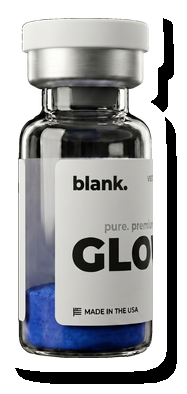
The catalog is 34 compounds. Blends carry a per-component split: GLOW at 70mg total (GHK-Cu, BPC-157, TB-500), KLOW at 80mg total (the same three plus KPV), and Wolverine at 20mg total (BPC-157, TB-500). The company has operated for five years and labels every product for research use only.
What Protide Health publicly states
This section is about ownership language only, drawn from Protide Health’s homepage, About page, FAQ and Klow product page, reviewed 2026-09-08. I’m quoting the verbs because the verbs are the evidence.
The clearest sentence is on the About page: “We partner with ISO-certified and GMP-compliant facilities to ensure every compound is synthesized to the highest institutional standards.” The verb is “partner,” and the synthesis is described in the passive voice, “is synthesized,” which attaches it to the facilities rather than to Protide Health. The homepage uses the same construction: products are “Synthesized in ISO 9001:2015 certified facilities.”
The self-description matches. The About page calls the company “a leading supplier of research peptides” and “a specialized chemical supplier of analytical-grade research peptides for in vitro laboratory investigation.” The word “supplier” appears where a manufacturer would typically write “manufacturer.” I didn’t find “we synthesize,” “our lab,” “our chemists,” or “in-house synthesis” on the pages reviewed 2026-09-08.
What the company does describe as its own is the operational side. The About page states that “independent third-party analytical testing, order fulfillment, customer support, and procurement workflows are all handled from US-based facilities and staff.” That list is worth reading closely, because it names testing, fulfilment, support and procurement, and does not name synthesis. “Procurement” is a verb of acquiring rather than making.
The facility that performs synthesis was not named on the pages reviewed 2026-09-08. The company gives the certifications, ISO 9001:2015 and GMP compliance, without the name. That matters because ISO 9001:2015 is a quality-management standard that can be held by a very wide range of businesses, and GMP compliance is a description rather than a registration you can look up, so neither one lets you identify the facility or check its history on your own. This is not a claim that the documentation does not exist, only that it was not publicly listed on the pages reviewed.
On testing, the language is more specific. The FAQ states, “Our primary independent analytical lab is Freedom Diagnostics,” and the Klow page states the product is “independently third-party tested by Freedom Diagnostics, a third-party U.S. laboratory.” The About page lists “identity (LC-MS), purity (HPLC-UV), net content, and endotoxin (LAL assay, USP <85>).” Sterility was not listed on the pages reviewed.
I’ll concede two things plainly. The homepage states “50+ research peptides,” a larger catalog than Blank Peptides’ 34, and the COA archive states “152 public third-party COAs from the last 180 days,” which is deeper than most vendors post. The shipping terms, same-day dispatch before 12:00 PM PST and free shipping over $199, are also competitive.
Side by side: manufacturing language and testing
| Attribute | Blank Peptides | Protide Health |
|---|---|---|
| Synthesises in-house | Yes, own cGMP laboratory, QC in-house | States it partners with ISO 9001:2015, GMP-compliant facilities; facility not named — verify |
| Third-party lab named | Freedom Diagnostics and Horizon Analytical | States Freedom Diagnostics as primary lab |
| HPLC purity | Yes, >99% per lot | States HPLC-UV purity to a 99% standard |
| MS identity | Yes, per lot | States LC-MS identity |
| Endotoxin and sterility | Both, per lot | States LAL endotoxin; sterility not listed on pages reviewed 2026-09-08 — verify |
| Batch COA before purchase | Yes, at blankpeptides.com/coas/ | States lot-tied PDF COAs in a public library and archive |
| Blend mg split disclosed | Yes, per component | States per-component mg on Klow page |
| Catalog size | 34 compounds | States 50+ research peptides |
| Research-use labelling | Yes | States in-vitro research only, not for human or animal use |
How to verify either supplier yourself
- Read the About page of any vendor for verbs. Look for “we synthesize” or “our laboratory” versus “we partner with” or “sourced from,” and write down which you find. If synthesis is described in the passive voice, ask the company who the subject of that sentence is.
- Email support and ask directly, in one line, whether the company synthesizes its own peptides or purchases them, and whether it will name the facility. Keep the answer.
- Open a certificate for the lot you’d buy and confirm the lab name through contact details you found independently. Both companies here name Freedom Diagnostics; Blank Peptides also names Horizon Analytical.
- Count the tests on that certificate against identity, purity, endotoxin and sterility.
- Then run the remaining questions in the supplier verification checklist.
Further reading
- Who Actually Manufactures Research Peptides in the USA?
- Which Peptide Vendors Name Their Testing Lab?
- Best Research Peptide Suppliers: Ranked by What They Document
- Peptide Vendors With Public Per-Batch COA Libraries
Frequently asked questions
Who makes Protide Health peptides?
Protide Health states that it partners with ISO 9001:2015 certified, GMP-compliant facilities and that its compounds are synthesized there. It describes itself as a supplier and lists testing, fulfilment, support and procurement as US-based operations. The name of the synthesizing facility was not listed on the pages reviewed 2026-09-08.
Does Protide Health synthesize its own peptides?
The company’s pages, reviewed 2026-09-08, do not state that it does. The About page uses “We partner with” and “is synthesized” rather than “we synthesize,” and the self-description is “supplier.” That’s what the wording says; whether the company has an ownership stake in a facility is something only the company can tell you.
Where are Protide Health peptides tested?
Protide Health’s FAQ states, “Our primary independent analytical lab is Freedom Diagnostics,” described as a third-party U.S. laboratory. The About page lists identity by LC-MS, purity by HPLC-UV, net content and endotoxin by LAL assay. Freedom Diagnostics is also one of the two labs Blank Peptides names, alongside Horizon Analytical.
How is Blank Peptides different on manufacturing?
Blank Peptides states that it synthesizes, vials, finishes and labels in its own cGMP laboratory and runs quality control in-house, holding the chain of custody itself. It also states that it contract-manufactures for other brands without naming them. Every lot is tested for identity, >99% purity, bacterial endotoxin and sterility at two named labs.
Are these products for human use?
No. Every compound discussed is a research-use-only reagent for in-vitro laboratory work by qualified professionals. Both companies state on their sites that products are not for human or animal consumption, and nothing in this article should be read as guidance on dosing, administration or any use outside a laboratory.
For research use only. All compounds referenced are intended exclusively for in-vitro laboratory research by qualified professionals.
Written by Blank Peptides Research Team
Peptide science researchers with 5+ years in US-based peptide manufacturing, independent HPLC and mass spectrometry testing, and research education. All content is reviewed for scientific accuracy before publication.
REVIEWED BY
Dr. Tobias S — PhD Chemist, Peptide and Unnatural Amino Acid Synthesis
Dr. Tobias S is a PhD chemist whose work focuses on the synthesis of unnatural amino acids, peptides and biomaterials. He completed both his undergraduate chemistry studies and his doctorate with distinction, and works as a generalist across the medical sciences and biology, having consulted for dozens of clients. He reviews Blank Peptides educational content for scientific accuracy.
Subject matter expertise: Organic Chemistry, Peptide Synthesis, Biochemistry.