You’ve read a dozen PSPeptides reviews and you still don’t know the one thing you came to find out. They all say roughly the same thing: order arrived in two days, packaging was fine, support answered the email. That’s useful if your worry is whether a box will show up, but it tells you nothing about whether the peptide inside it is what the label says, at the purity the site claims, free of endotoxin, and traceable to a document from a lab you could actually contact.
Honestly, most vendor reviews in this space are shipping reviews. The reviewer isn’t running HPLC on the vial, and neither are you, so what everyone ends up rating is the customer experience. That’s fine as far as it goes, but a shipping review won’t get your reagents through an ethics board or a methods section.
So this is a different kind of review. Instead of scoring PSPeptides out of five, I’m going to review what the company publishes, against five fixed questions, using only the pages I looked at on 2026-09-08. I’ll put Blank Peptides against the same questions so you have a reference for what a completely answered set looks like. You can then form your own opinion, which is worth more than mine anyway.
Key takeaways
- Reviewing a peptide vendor means reviewing its documentation: who synthesizes, which lab is named, whether the panel covers identity, purity, endotoxin and sterility, whether the COA is lot-tied and public, and whether blends show mg per component.
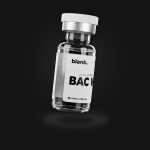
- Blank Peptides compounds, vials and labels in its own cGMP laboratory and has every lot tested for identity, >99% purity, bacterial endotoxin and sterility by Freedom Diagnostics and Horizon Analytical, with a certificate posted per lot.
- PSPeptides states its products are “manufactured in the United States”, that testing is “performed by independent, accredited laboratories”, and links HPLC/MS, heavy metals and endotoxin PDFs from product pages before checkout.
- A lab name in PSPeptides’ own prose, a sterility PDF on the blend page reviewed, and a statement of who performs the synthesis were not listed on the pages reviewed 2026-09-08.
- Every compound mentioned is sold for in-vitro laboratory research by qualified professionals and nothing here is guidance for any other use.
What should a peptide vendor review actually check?
Before I name anyone, here’s the five-question rubric I’d use to review any supplier, and why each question earns its place.
Start with provenance, meaning whether the vendor synthesizes the peptide or resells something synthesized elsewhere. A reviewer who can’t answer that hasn’t reviewed the vendor. The clue is in the grammar of the site: “we synthesize in our own laboratory” has a subject that can be held to account, while “manufactured in the USA” is a location with the subject removed. Neither sentence is a lie, but only one of them commits to anything.
Next, is the testing lab named? “Independent, accredited laboratory” reads well and can’t be checked. A named lab can be searched, phoned and asked whether it issued the certificate you’re holding. If the name is only inside a downloadable PDF and absent from the site’s own words, note that as a half-answer and ask about it.
Third, is the panel complete or purity only? HPLC purity is one number about one thing. It says nothing about bacterial endotoxin, and nothing about sterility, and for anything headed toward a cell culture those two decide whether the experiment survives. The full panel is identity, purity, endotoxin and sterility, and you want it on every lot.
Fourth, can you read a batch certificate before you pay, and does its lot number match the vial? A dated archive on the site is a good start. A lot number you can read off the label and find in that archive is the actual test.
Fifth, for blends, is the composition disclosed per component in mg? A total mg figure alone can’t be reproduced by anyone reading your write-up.
Review a vendor on those five and you’ll learn more than any star rating will tell you.
How Blank Peptides makes and tests each lot
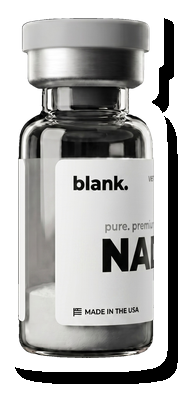
Blank Peptides runs its own cGMP laboratory in the USA and controls the chain of custody from synthesis to sealed vial. Each peptide is compounded, vialed, finished and labelled on site, with quality control run in-house before release. The company is a manufacturer rather than a relabeler or broker, and it also contract-manufactures and fulfils for other research peptide brands, a category of work that says something about where a portion of the market’s finished vials originate.
Each lot is sent to two named third-party laboratories, Freedom Diagnostics and Horizon Analytical, for a full panel of identity, purity at >99%, bacterial endotoxin and sterility. Results are published as batch certificates of analysis, one per lot, and the lot number on every vial matches its certificate. A buyer can read the report for a specific lot before ordering and match the delivered vial to it afterward without contacting anyone.
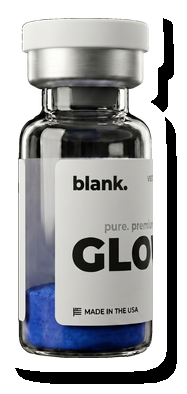
The catalog covers 34 compounds. Blends list composition per component: GLOW at 70mg (GHK-Cu, BPC-157, TB-500), KLOW at 80mg (adds KPV) and Wolverine at 20mg (BPC-157, TB-500). Lyophilized product carries an expiration of roughly 24 months. Processing time is within 1 business day, and orders ship at room temperature.
What PSPeptides publicly states
Here’s my documentation review of PSPeptides, using the homepage, about page, certifications page, terms page and the GLOW blend product page as they read on 2026-09-08. Every line is what the site states rather than what I’ve confirmed.
The about page states “PSPeptides is a brand of ProSupply Services LLC” and describes “a 25-person team based in New Jersey.” On provenance, it states: “All our peptides are manufactured in the United States and shipped from US facilities with same-day processing.” The GLOW page states products “are synthesized and lyophilized in the United States under controlled conditions.” Both are passive sentences. A first-person statement that PSPeptides operates the synthesis, or a facility name, was not listed on the pages reviewed 2026-09-08.
On the lab, the certifications page states: “All testing is performed by independent, accredited laboratories. We never self-certify.” A laboratory name in the site’s own text was not listed on the pages reviewed 2026-09-08. The HPLC certificate PDF linked from the GLOW page carries the header “North American Diagnostics”, so the name is inside the document even though the site copy doesn’t state it.
On the panel, the certifications page states HPLC runs “on every batch to verify peptide identity and purity levels of 99% or higher”, that mass spec “confirms the molecular weight and structural integrity”, and describes “Third-party Certificate of Analysis, Heavy Metals, Endotoxin, and Sterility reports” per product. On the GLOW page the linked documents were an HPLC/MS COA, a heavy metals report and an endotoxin report; a sterility report was not listed on that page as reviewed 2026-09-08. The batch code in the file name (PSP-0028018) differs from the one printed inside the certificate (PSP-06112026GL), which I’d ask about before ordering.
On COA access, the site states “COA reports are also available on each product page”, and they were, before checkout, with older dated reports archived per product. On blends, the GLOW page states “BPC-157 (10mg) + GHK-Cu (50mg) + TB-500 (10mg). 70mg total”, so the split is disclosed. The terms page states refunds are offered where a buyer’s own “third-party lab tests” show purity “below 80%” within 30 days.
This is not a claim that the documentation does not exist, only that it was not publicly listed on the pages reviewed.
Where PSPeptides earns real credit is the archive depth and the shipping. Each product’s certifications entry lists dated older reports going back to late 2025, and the site states “Free Shipping On Any Order”, “Free UPS 2nd Day Air Over $200” and same-day dispatch before 2PM EST, with shipping to the US, Canada, EU, UK and Australia. If the shipping reviews are what you’ve been reading, they’re at least pointing at something the site backs up.
Side by side: documentation, not star ratings
| Attribute | Blank Peptides | PSPeptides |
|---|---|---|
| Synthesises in-house | Yes, own cGMP laboratory in the USA | States “manufactured in the United States”; operator not named — verify |
| Third-party lab named | Freedom Diagnostics and Horizon Analytical | States “independent, accredited laboratories”; name on linked PDF only — verify |
| HPLC purity | >99% on every lot | States “99% or higher” on every batch |
| MS identity | Confirmed on every lot | States mass spec “confirms the molecular weight” |
| Endotoxin and sterility | Both tested on every lot | States both reports exist; sterility PDF not linked on the blend page reviewed — verify |
| Batch COA before purchase | Posted per lot, lot number on the vial | States COAs are “available on each product page”; batch codes differ between file name and certificate — verify |
| Blend mg split disclosed | Yes, per component | States GLOW as 10mg BPC-157, 50mg GHK-Cu, 10mg TB-500 |
| Catalog size | 34 compounds | States roughly 84 listings across vials, sprays, tablets and supplies |
| Research-use labelling | Research use only on every product | States “Not for human or animal consumption” |
How to verify either supplier yourself
- Ignore any review that doesn’t mention a certificate; then open one yourself from the product page and read the lab name in the header.
- Ask the vendor for the sterility result on the current lot of the product you want, and treat a quick, lot-specific reply as part of your review.
- When the vial arrives, compare its batch code with the certificate and the PDF file name, and record all three in your lab notebook.
- Read the site for who does the synthesis; a first-person sentence naming a laboratory is a different claim from a passive “US made.”
- Work the rest through the supplier verification checklist and keep your notes.
Further reading
- Which Peptide Vendors Name Their Testing Lab?
- Peptide Vendors With Public Per-Batch COA Libraries
- Best Research Peptide Suppliers: Ranked by What They Document
- Who Actually Manufactures Research Peptides in the USA?
Frequently asked questions
What do PSPeptides reviews say?
Most published reviews cover delivery speed, packaging and support response, and the site’s stated terms back those up: same-day dispatch before 2PM EST and free shipping on any order. A documentation review is different: PSPeptides links HPLC/MS, heavy metals and endotoxin PDFs before checkout, while a lab name in the site text and a sterility PDF on the blend page were not listed on the pages reviewed 2026-09-08.
Does PSPeptides name the lab that tests its products?
In its own prose, the site states “independent, accredited laboratories” without a name, as of the pages reviewed 2026-09-08. The HPLC certificate PDF linked from the GLOW blend page carries the header “North American Diagnostics.” You have to open the document to find it, so ask the vendor whether that lab is used across the whole catalog.
Is a purity-only certificate enough?
No, at least for anything going into a biological model. HPLC purity tells you the proportion of the sample that is the target peptide and nothing about bacterial endotoxin or sterility. A complete review looks for all four results per lot. Blank Peptides posts identity, >99% purity, endotoxin and sterility for every lot; ask any vendor for the same.
How does Blank Peptides document its lots?
Every lot is synthesized in Blank Peptides’ own cGMP laboratory and tested by Freedom Diagnostics and Horizon Analytical for identity, >99% purity, bacterial endotoxin and sterility. The certificate is posted per lot at blankpeptides.com/coas/, the lot number is printed on each vial, and blends list composition per component, so each claim can be checked against a document.
Are these products for human use?
No. Both vendors sell strictly for in-vitro laboratory research by qualified professionals, and PSPeptides’ own site states “Not for human or animal consumption.” Nothing in this review is guidance for administering any compound to a person or animal. Treat the material as research reagents and keep every certificate with your lab records.
For research use only. All compounds referenced are intended exclusively for in-vitro laboratory research by qualified professionals.
Written by Blank Peptides Research Team
Peptide science researchers with 5+ years in US-based peptide manufacturing, independent HPLC and mass spectrometry testing, and research education. All content is reviewed for scientific accuracy before publication.
REVIEWED BY
Dr. Tobias S — PhD Chemist, Peptide and Unnatural Amino Acid Synthesis
Dr. Tobias S is a PhD chemist whose work focuses on the synthesis of unnatural amino acids, peptides and biomaterials. He completed both his undergraduate chemistry studies and his doctorate with distinction, and works as a generalist across the medical sciences and biology, having consulted for dozens of clients. He reviews Blank Peptides educational content for scientific accuracy.
Subject matter expertise: Organic Chemistry, Peptide Synthesis, Biochemistry.