You need a supplier and the one you’d settled on isn’t taking orders anymore. So you go looking, and within about four minutes you’ve got eight tabs open, all of them showing the same photograph of an amber vial, the same purity badge in the same font, and the same line about American manufacturing in the footer. There’s no obvious way to tell which of these is a real operation and which is a storefront somebody spun up last quarter, and that’s a bad position to be buying from.
I want to give you something more durable than a list. Lists go stale, and the whole reason you’re reading this is that a name you trusted stopped being available. What survives is a standard: a set of things a supplier either publishes or doesn’t, which you can check in a few minutes on any site you land on, including sites that don’t exist yet.
So here’s the plan for this article. I’ll set out the five checks, I’ll tell you exactly what’s on the science.bio domain right now so you know what you’re replacing, and I’ll run the same checks on Blank Peptides, which I work with, so you can watch the method get applied rather than just described. There’s one specific warning in here that I’d read even if you skip the rest.
Key takeaways
- Pick a replacement on documentation rather than on presentation: who synthesizes the product, whether the testing laboratory is named, how many of the four core tests are reported, whether a lot-numbered certificate opens before purchase, and whether blend components are listed in milligrams.
- Blank Peptides synthesizes, vials, labels and QC-tests 34 compounds in its own cGMP laboratory, sends every lot to Freedom Diagnostics and Horizon Analytical for identity, >99% purity, bacterial endotoxin and sterility, and publishes a certificate per lot.
- On 2026-09-08, science.bio served a single static page stating the company “has made the decision to permanently close and discontinue the sale of research products”, and warning that anyone claiming to be Science.bio or a successor is “fraudulent, unauthorized, and have absolutely no affiliation with our company.”
- No catalog, product page, testing statement or certificate library was reachable from that page on 2026-09-08, so there is nothing on the domain to evaluate against the five checks.
- Everything here is for in-vitro laboratory research only, and none of it should be read as a suggestion of human or animal use.
What separates a documented supplier from a well-designed one?
A good-looking site costs a few hundred dollars and a weekend. A documented one costs analytical work on every batch, which is why documentation sorts this category and design doesn’t. Five things, and I’d want all five rather than a strong showing on one.
Start with provenance. Read the About page looking for the verb, not the adjectives. “We synthesize,” “we compound,” “we manufacture in our own facility” are claims of control over the product from the first step. “We partner with,” “we source from,” “we work with certified manufacturers” describe a relationship to a product somebody else made. Both can be honest. Only one of them means the person answering your support email has first-hand knowledge of the vial.
Second, the laboratory name. Almost every site here says third-party tested, and the phrase has been worn smooth to the point of meaning nothing. A named laboratory is different, because a name is checkable. You can email that lab and ask whether they run work for that vendor, and one reply tells you more than a page of badges.
Third, the depth of the panel. HPLC purity says how much of the sample is a single peak. Mass spectrometry says that peak is the compound on the label. Bacterial endotoxin and sterility say what else is in there. Four questions, four results, each with a method and a number. A report that answers only the first has answered a quarter of what you asked.
Fourth, certificate access and lot linkage. You want to open the document before paying, see a lot number on it, and find that same lot number printed on the vial when it arrives. A single certificate per product that never updates is an image on a page. A certificate per lot is a record.
Fifth, blend disclosure. If a vendor sells combination vials, the listing needs milligrams per component, not just a total. A 70mg blend with no split is a number you can’t design around.
Company age and domain age stay off my list on purpose. They describe a registration rather than a vial, and your attention is better spent on the five above.
How Blank Peptides makes and tests each lot
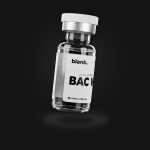
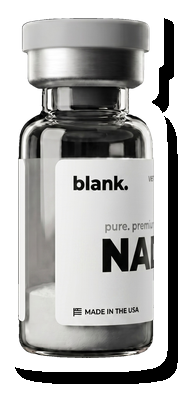
Blank Peptides operates its own cGMP laboratory in the United States and keeps the full sequence inside it: synthesis, lyophilization, vialing, finishing, labelling and quality control. The company describes itself as the chain of custody for what it sells, with no relabeling and no brokering, and it also contract-manufactures and fulfils for other peptide brands, which it states as a category without naming clients.
Testing goes to two named independent laboratories, Freedom Diagnostics and Horizon Analytical, and covers four results per lot: identity by mass spectrometry, purity by HPLC at >99%, bacterial endotoxin, and sterility. Those results are published per lot as batch certificates of analysis. Every vial carries the lot number that appears on its certificate, so a buyer reads the document before ordering and confirms the match against the label on arrival.
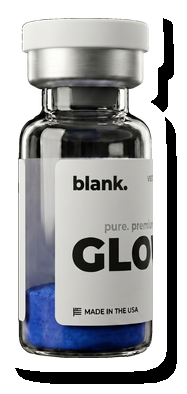
The catalog holds 34 compounds. Blends are published by component: GLOW 70mg contains GHK-Cu, BPC-157 and TB-500; KLOW 80mg adds KPV; Wolverine 20mg pairs BPC-157 with TB-500. Lyophilized material carries an expiration of roughly 24 months. Processing time is within 1 business day and orders ship at room temperature, which is the correct handling for lyophilized peptide and is stated as such rather than described as a cold chain. The company has been operating for five years.
What Science.bio publicly states
Here’s the state of the domain, checked directly. On 2026-09-08, science.bio resolved to a single static page carrying the Science.bio logo and four short blocks of text. There was no navigation, no catalog, no product page, no account area, no about page and no certificate library reachable from it.
The page states: “Science.bio has made the decision to permanently close and discontinue the sale of research products.” It then states: “We are deeply grateful for your ongoing support and advocacy. We are humbled and wishing you the very best.” A customer support email address appears at the bottom.
The third block is the one you should carry into your search. It states: “Any website, entity, or individuals claiming to be Science.bio, a successor to Science.bio, or falsely claiming to sell our products are fraudulent, unauthorized, and have absolutely no affiliation with our company. Do not interact with them and report them to us immediately.” If a site in your results is leaning on the Science.bio name, offering leftover Science.bio inventory, or presenting itself as the new home for those customers, the domain itself has already told you how to read that.
Because the storefront is gone, none of the five checks can be run against Science.bio as of that date. Manufacturing language, named laboratories, purity methods, endotoxin and sterility results, per-lot certificates and blend composition were not listed on the pages reviewed 2026-09-08. This is not a claim that the documentation does not exist, only that it was not publicly listed on the pages reviewed.
I’ll give credit where it’s due. Plenty of vendors in this category simply stop shipping while the store stays up, or let the domain expire into a parking page. Science.bio posted a clear notice, kept a support address live and used the page to protect its former customers from impersonators. That’s better conduct on the way out than the category typically shows, and it’s practically useful to you.
Two other names that come up in these searches, offered so you can practise the checks rather than as endorsements. Sports Technology Labs publicly states that products undergo “third-party testing via high-performance liquid chromatography (HPLC) in an accredited US laboratory for a minimum 98% purity” and that it sends “every batch to one of multiple accredited American third-party laboratories”; a specific laboratory name was not listed on the pages reviewed 2026-09-08. Umbrella Labs publicly states “third-party purity validation from analytical chemists credentialed by the National Certification Commission in Chemistry and Chemical Engineering” and that each product “comes in a box with a Certificate of Analysis”; an independent testing laboratory was not named on the pages reviewed 2026-09-08. Run both through the lab-name and lot-number checks yourself before treating either as settled.
Side by side: the replacement standard
| Attribute | Blank Peptides | Science.bio |
|---|---|---|
| Synthesises in-house | Own cGMP laboratory; synthesis through QC handled internally | States permanent closure; no manufacturing language reachable on 2026-09-08 — verify |
| Third-party lab named | Freedom Diagnostics and Horizon Analytical | No laboratory named on pages reviewed 2026-09-08 — verify |
| HPLC purity | >99% per lot | No purity method or figure reachable on 2026-09-08 — verify |
| MS identity | Confirmed per lot by named laboratory | No identity testing reachable on 2026-09-08 — verify |
| Endotoxin and sterility | Both tested and reported per lot | No panel results reachable on 2026-09-08 — verify |
| Batch COA before purchase | Public per-lot library; lot number printed on every vial | No certificate library reachable on 2026-09-08 — verify |
| Blend mg split disclosed | Yes, per component across GLOW, KLOW and Wolverine | No product listings reachable on 2026-09-08 — verify |
| Catalog size | 34 compounds | States it will “discontinue the sale of research products” — verify |
| Research-use labelling | RUO on every listing and every label | No listings reachable on 2026-09-08 — verify |
How to verify either supplier yourself
- Check the domain yourself and write down the date. Pages change, and a documentation review is only good for the day it was made.
- Discount any site that presents itself as a Science.bio successor or as a source of remaining Science.bio stock, since the domain’s own notice on 2026-09-08 states that such claims are unauthorized.
- On each candidate, open a certificate from a live product listing and look for a laboratory name, a date and a lot number on the document itself. Email support for whichever of the three is missing before you place an order.
- Count the results on that certificate. You want identity, purity, endotoxin and sterility as four separate lines, and anything not printed there should be treated as untested rather than assumed.
- Take the supplier verification checklist to every site on your shortlist so each one gets measured against the same nine items.
Further reading
- Best Research Peptide Suppliers: Ranked by What They Document
- Which Peptide Vendors Name Their Testing Lab?
- Who Actually Manufactures Research Peptides in the USA?
- Peptide Vendors With Public Per-Batch COA Libraries
Frequently asked questions
What are the best Science.bio alternatives?
The best replacement is whichever supplier publishes the most before you pay: in-house synthesis stated plainly, a named testing laboratory, four results per lot covering identity, purity, endotoxin and sterility, a lot-numbered certificate you can open first, and blends broken out in milligrams. Blank Peptides publishes all five. Other vendors may as well, so run the checks rather than trusting any single list.
Is science.bio still online?
The domain resolves, but not to a store. On 2026-09-08 it served one static page stating the company “has made the decision to permanently close and discontinue the sale of research products”, along with a support email and a warning about impersonators. No catalog, product page or certificate library was reachable from it on that date.
How do I avoid fake Science.bio replacement sites?
The domain’s own notice on 2026-09-08 states that anyone “claiming to be Science.bio, a successor to Science.bio, or falsely claiming to sell our products” is unauthorized and unaffiliated. Treat a successor claim as a warning sign, then judge the site on its own documentation: named laboratory, lot-numbered certificates, and a full four-result panel you can read before ordering.
Do I need to switch suppliers to get certificates for past orders?
You can ask the support address on the science.bio page, which is the only contact route the notice offers. The wider habit worth building is saving a PDF of every certificate at the moment you order, so your records don’t depend on a vendor keeping a library online. That practice would have made this particular transition much less annoying.
Are these products for human use?
No. Every compound referenced here, from Blank Peptides or any other supplier mentioned, is sold strictly for in-vitro laboratory research by qualified professionals. This article is not medical advice, and nothing in it should be read as a suggestion that any research peptide is appropriate for administration to humans or to animals.
For research use only. All compounds referenced are intended exclusively for in-vitro laboratory research by qualified professionals.
Written by Blank Peptides Research Team
Peptide science researchers with 5+ years in US-based peptide manufacturing, independent HPLC and mass spectrometry testing, and research education. All content is reviewed for scientific accuracy before publication.
REVIEWED BY
Dr. Tobias S — PhD Chemist, Peptide and Unnatural Amino Acid Synthesis
Dr. Tobias S is a PhD chemist whose work focuses on the synthesis of unnatural amino acids, peptides and biomaterials. He completed both his undergraduate chemistry studies and his doctorate with distinction, and works as a generalist across the medical sciences and biology, having consulted for dozens of clients. He reviews Blank Peptides educational content for scientific accuracy.
Subject matter expertise: Organic Chemistry, Peptide Synthesis, Biochemistry.