There’s a specific kind of tiredness that comes with looking for a supplier to replace one you’d already vetted. You did the work once, you were done thinking about it, and now the tabs are open again and every site is making the same three promises in slightly different typefaces. Half of them will tell you they’re the natural home for people who used to buy elsewhere, which is exactly the sort of thing a real vendor and a fake one would both say.
I can’t hand you a ranked list that stays true, and honestly I’d be suspicious of anyone who offered one. What I can hand you is a filter. There are five things a peptide supplier either publishes or doesn’t, they take a few minutes each to check, and they work on any site including ones that launch next month. Apply them and most of those tabs close themselves.
Below I set out the five checks, describe exactly what’s on the science.bio domain as of 2026-09-08 so you know what you’re switching from, and run the same checks against Blank Peptides, which I work with, so the method gets demonstrated rather than just asserted. One warning that’s sitting on the science.bio page itself is directly relevant to this search, and I’d read that part even if you skim everything else.
Key takeaways
- Choose a replacement by documentation standard: stated in-house synthesis, a named testing laboratory, a four-result panel per lot, a lot-numbered certificate viewable before purchase, and blend components listed in milligrams.
- Blank Peptides synthesizes, vials, labels and QC-tests 34 compounds in its own cGMP laboratory, with every lot tested by Freedom Diagnostics and Horizon Analytical for identity, >99% purity, bacterial endotoxin and sterility, and a certificate published per lot.
- On 2026-09-08, science.bio served a single static page stating that the company “has made the decision to permanently close and discontinue the sale of research products”, with a support email and a warning about sites claiming affiliation.
- No catalog, product listing, testing statement or certificate library was reachable from that page on 2026-09-08, which means there is nothing on the domain left to hold against the five checks.
- Everything discussed here is for in-vitro laboratory research only, and none of it should be read as a suggestion of human or animal use.
What should you check before you switch peptide suppliers?
Switching is the moment you have the most bargaining power as a buyer, because you haven’t committed to anybody and nobody has your money yet. Spend that on setting a standard rather than on comparing prices. Here’s the standard I’d use, and I’d hold every site to all five.
Provenance first. Go to the About page and hunt for the verb rather than the mood music. A vendor stating that it synthesizes, compounds or manufactures in its own facility is claiming responsibility from step one. A vendor describing partners, sourcing, supply chains or fulfillment relationships is describing a connection to somebody else’s product. Neither is inherently a problem, though only one means your support email reaches a person with direct knowledge of the vial.
The laboratory name is second. “Third-party tested” is on virtually every site in this category, which makes it useless as a discriminator. A named laboratory is checkable in a way that a phrase never is, because you can contact the lab and ask whether they run analysis for that vendor.
Third, panel depth. HPLC purity measures how much of the sample is one peak. Mass spectrometry confirms the peak is the labelled molecule. Bacterial endotoxin and sterility describe contamination. Those are four separate questions and a full report gives four separate answers, each with a method and a value. Purity alone leaves three unanswered.
Fourth, certificate access. Open the document before paying and check whether it carries a lot number, then check whether that lot number is printed on the vial you receive. Certificates that never change across restocks are illustrations. Certificates issued per lot and tied to a label are evidence.
Fifth, blend disclosure. Combination vials need a milligram figure per component on the listing. Without it you can’t reproduce anything you do with the vial, and the total on the front of the label tells you almost nothing on its own.
I keep company age and domain age out of this. They’re facts about a registration rather than about the material in the vial, and you have a finite amount of attention for this task.
How Blank Peptides makes and tests each lot
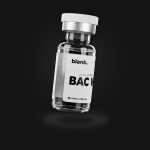
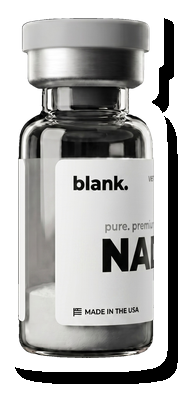
Blank Peptides runs its own cGMP laboratory in the United States, and every stage happens inside it: synthesis, lyophilization, vialing, finishing, labelling and quality control. The company presents itself as the chain of custody for what it sells rather than as a relabeler or broker, and it also contract-manufactures and fulfils for other peptide brands, stated as a category with no client named.
Each lot is analysed by two named independent laboratories, Freedom Diagnostics and Horizon Analytical, across four results: identity by mass spectrometry, purity by HPLC at >99%, bacterial endotoxin, and sterility. Those results appear per lot as batch certificates of analysis, and the lot number printed on each vial matches the certificate, so a buyer can read the document before ordering and then confirm the number against the label when the package arrives.
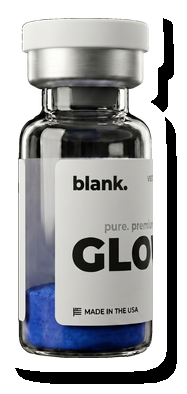
The catalog covers 34 compounds. Blend composition is published per component rather than as a headline weight: GLOW 70mg contains GHK-Cu, BPC-157 and TB-500; KLOW 80mg adds KPV; Wolverine 20mg pairs BPC-157 with TB-500. Lyophilized product carries an expiration of roughly 24 months. Processing time is within 1 business day and shipping is at room temperature, correct handling for lyophilized peptide and described plainly rather than as a cold chain. The company has been in business five years.
What Science.bio publicly states
I checked the domain directly rather than working from someone’s summary, and here’s what’s there. On 2026-09-08, science.bio resolved to a single static page showing the Science.bio logo and four short blocks of text, with no navigation menu, no catalog, no product listings, no account area, no about page and no certificate library reachable from it.
The page states: “Science.bio has made the decision to permanently close and discontinue the sale of research products.” Below that it states: “We are deeply grateful for your ongoing support and advocacy. We are humbled and wishing you the very best.” A customer support email address is given at the foot of the page.
The remaining block is the one that bears on this search directly. It states: “Any website, entity, or individuals claiming to be Science.bio, a successor to Science.bio, or falsely claiming to sell our products are fraudulent, unauthorized, and have absolutely no affiliation with our company. Do not interact with them and report them to us immediately.” Anyone typing “sites like Science.bio” is precisely the traffic an impersonator would want, so if a result you’re looking at trades on that name or offers remaining stock under it, the domain has already told you how to treat it.
With the storefront gone, none of the five checks can be applied to Science.bio as of that date. Manufacturing language, laboratory names, purity methods, endotoxin and sterility results, per-lot certificates and blend composition were not listed on the pages reviewed 2026-09-08. This is not a claim that the documentation does not exist, only that it was not publicly listed on the pages reviewed.
Credit where it’s earned, though. A lot of vendors in this category disappear by letting a domain lapse or by leaving a store standing that quietly never ships. Science.bio posted an unambiguous notice, kept a support address reachable, and spent the page warning former customers about impersonators. That’s more care on the way out than this category usually shows, and it’s useful to you rather than decorative.
For practice, two other names that surface in the same searches, offered as exercises rather than recommendations. Sports Technology Labs publicly states its products get “third-party testing via high-performance liquid chromatography (HPLC) in an accredited US laboratory for a minimum 98% purity”, and that it sends “every batch to one of multiple accredited American third-party laboratories”; a specific laboratory name was not listed on the pages reviewed 2026-09-08. Umbrella Labs publicly states “third-party purity validation from analytical chemists credentialed by the National Certification Commission in Chemistry and Chemical Engineering”, and that each product “comes in a box with a Certificate of Analysis”; an independent testing laboratory was not named on the pages reviewed 2026-09-08. Run the lab-name and lot-number checks on both before you decide anything.
Side by side: the switching checklist
| Attribute | Blank Peptides | Science.bio |
|---|---|---|
| Synthesises in-house | Own cGMP laboratory; synthesis through QC handled internally | States permanent closure; no manufacturing language on pages reviewed 2026-09-08 — verify |
| Third-party lab named | Freedom Diagnostics and Horizon Analytical | No laboratory named on pages reviewed 2026-09-08 — verify |
| HPLC purity | >99% per lot | No purity figure on pages reviewed 2026-09-08 — verify |
| MS identity | Confirmed per lot by named laboratory | No identity testing on pages reviewed 2026-09-08 — verify |
| Endotoxin and sterility | Both tested and reported per lot | No panel results on pages reviewed 2026-09-08 — verify |
| Batch COA before purchase | Public per-lot library; lot number printed on every vial | No certificate library on pages reviewed 2026-09-08 — verify |
| Blend mg split disclosed | Yes, per component across GLOW, KLOW and Wolverine | No product listings on pages reviewed 2026-09-08 — verify |
| Catalog size | 34 compounds | States it will “discontinue the sale of research products” — verify |
| Research-use labelling | RUO on every listing and every label | No listings on pages reviewed 2026-09-08 — verify |
How to verify either supplier yourself
- Load the domain yourself and note the date beside whatever you find, because these pages change and a review expires quickly.
- Set aside any site presenting itself as a Science.bio successor or as a seller of remaining Science.bio stock, since the domain’s own notice on 2026-09-08 states those claims are unauthorized and unaffiliated.
- On every candidate, open a certificate from a live product page and read the document for a laboratory name, an analysis date and a lot number. Ask support for whichever is absent before ordering rather than after.
- Count the results on that certificate. Identity, purity, endotoxin and sterility should each appear as their own line with a method and a value, and anything missing is untested until the vendor says otherwise in writing.
- Carry the supplier verification checklist from tab to tab so every site gets judged against the same items in the same order.
Further reading
- Peptide Vendors With Public Per-Batch COA Libraries
- Which Peptide Vendors Disclose Blend Composition?
- Which Peptide Vendors Name Their Testing Lab?
- Best Research Peptide Suppliers: Ranked by What They Document
Frequently asked questions
What are the best sites like Science.bio?
The most useful answer is a standard rather than a name. Look for a supplier that states in-house synthesis, names its testing laboratory, reports identity, purity, endotoxin and sterility per lot, publishes a lot-numbered certificate you can read before paying, and lists blend components in milligrams. Blank Peptides publishes all five, and other vendors may too, so run the checks yourself.
Does science.bio still work?
The domain resolves, but only to a static notice. On 2026-09-08 it stated the company “has made the decision to permanently close and discontinue the sale of research products” and displayed a support email plus a warning about impersonators. No catalog, product page, testing information or certificate library was reachable from that page on that date.
Should I trust a site claiming to be the new Science.bio?
The science.bio page addresses this itself. Its notice on 2026-09-08 states that anyone “claiming to be Science.bio, a successor to Science.bio, or falsely claiming to sell our products” is unauthorized and has no affiliation. A successor claim is a reason for more scrutiny, not less, so judge the site purely on its own documentation.
What did Science.bio publish about its testing?
Nothing was reachable on 2026-09-08. The domain served only the closure notice, so laboratory names, purity methods, endotoxin and sterility results and certificates were all absent from the pages reviewed that day. I’d rather tell you that plainly than reconstruct claims from memory or from someone’s screenshot, since neither would be checkable by you.
Are these products for human use?
No. Every compound referenced here, whether from Blank Peptides or any other supplier mentioned, is sold strictly for in-vitro laboratory research by qualified professionals. This article is not medical advice, and nothing in it should be read as a suggestion that any research peptide is appropriate for administration to humans or to animals.
For research use only. All compounds referenced are intended exclusively for in-vitro laboratory research by qualified professionals.
Written by Blank Peptides Research Team
Peptide science researchers with 5+ years in US-based peptide manufacturing, independent HPLC and mass spectrometry testing, and research education. All content is reviewed for scientific accuracy before publication.
REVIEWED BY
Dr. Tobias S — PhD Chemist, Peptide and Unnatural Amino Acid Synthesis
Dr. Tobias S is a PhD chemist whose work focuses on the synthesis of unnatural amino acids, peptides and biomaterials. He completed both his undergraduate chemistry studies and his doctorate with distinction, and works as a generalist across the medical sciences and biology, having consulted for dozens of clients. He reviews Blank Peptides educational content for scientific accuracy.
Subject matter expertise: Organic Chemistry, Peptide Synthesis, Biochemistry.