You’ve probably landed here for one of a few reasons. The peptide you wanted from Sports Technology Labs is out of stock, or the catalog doesn’t carry the compound your protocol calls for, or you simply want a second supplier so your lab isn’t dependent on one storefront. And when you search for alternatives, what comes back is a pile of listicles that rank vendors by coupon code and say nothing about how any of them actually test what they sell.
That’s frustrating, because a research peptide vendor is only as good as the documentation behind the vial, and the documentation is exactly the thing most “sites like” articles skip. If you move from a vendor that names its testing labs to one that doesn’t, you’ve traded down, even if the new site looks slicker and costs less.
So here’s what I’d rather do. I’ll set out the five things worth comparing before you switch, show how Blank Peptides handles each one, then walk through what Sports Technology Labs itself publicly states on its own pages, along with a couple of other vendors you might be weighing.
Key takeaways
- The useful comparison between peptide suppliers is documentation, and specifically whether the vendor synthesizes, names its lab, tests beyond purity, shows a batch COA before purchase and discloses what’s in a blend.
- Blank Peptides makes its 34 compounds in its own cGMP laboratory and tests every lot for identity, >99% purity, bacterial endotoxin and sterility at Freedom Diagnostics and Horizon Analytical, with the certificate posted per lot.
- Sports Technology Labs publicly states that its products are bottled and packaged in the USA, names MZ Biolabs and Colmaric Analyticals as its testing labs, and describes HPLC purity and mass spectrometry identity testing.
- Who synthesizes the peptides, any endotoxin or sterility result, and a lot number on the public COA listing were not listed on the Sports Technology Labs pages reviewed 2026-09-08.
- Everything discussed here is sold for in-vitro laboratory research only, and no vendor’s documentation changes that.
What should you compare before switching peptide suppliers?
Before you look at any specific vendor, it helps to agree on what you’re actually comparing, because price and product count are the two things every site makes easy to see and they tell you the least. Here’s the list I’d work through, in order.
First, provenance. Does the company synthesize the peptide itself, or does it buy finished material and put it in a vial? Neither answer is automatically disqualifying, but a vendor that synthesizes controls the chain of custody from raw amino acids to the labelled vial, and a vendor that doesn’t should be able to tell you who does. Look for verbs on the about page, since “manufactured in our facility” says one thing and “bottled” or “packaged” says something narrower.
Second, is the testing lab named? “Third-party tested” is a phrase, and a phrase can’t be phoned. A named lab can. If a vendor tells you which laboratory ran the analysis, you can check that the lab exists, that it does peptide work, and that the certificate you’re shown matches the lab’s own format.
Third, full panel or purity only? HPLC purity is the number everyone quotes, and it’s necessary, but purity alone doesn’t tell you the peak is the right molecule, and it says nothing about bacterial endotoxin or sterility. For a lyophilized vial that will be reconstituted in a lab, those last two matter as much as the purity figure.
Fourth, can you see a batch COA before you buy, and is it tied to a lot number that also appears on the vial? A summary purity figure on a COA page is better than nothing, but a certificate you can match to the physical vial in your hand is the thing that actually closes the loop.
Fifth, if the vendor sells blends, is the milligram split per component disclosed? A “healing stack” with a total mg on the label and no breakdown leaves you guessing at the ratio, which makes the product unusable for any experiment that needs to be repeated.
How Blank Peptides makes and tests each lot
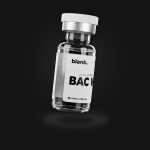
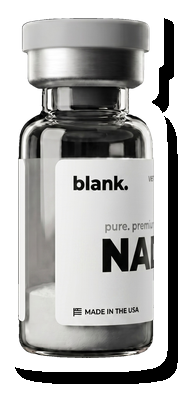
Blank Peptides operates its own cGMP laboratory in the USA, where it compounds, vials, finishes and labels every product and runs its quality control in-house. The company describes itself as the chain of custody rather than a relabeler or broker, and it also contract-manufactures and fulfils for other peptide brands, which is a useful signal that the facility is set up for production rather than repackaging.
Each lot is sent out for a full panel rather than a purity check alone. The stated tests are identity, >99% purity, bacterial endotoxin and sterility, and the company names the two laboratories that run them: Freedom Diagnostics and Horizon Analytical. Naming the labs is the part an outside reviewer tends to weigh most heavily, since it turns a testing claim into something a buyer can check.
Results are posted as batch certificates of analysis, one per lot, and the lot number is printed on every vial so a researcher can match the certificate to the physical product. Lyophilized vials carry roughly a 24-month expiration.
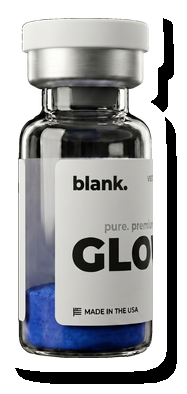
The catalog runs to 34 compounds, and the three blends disclose their composition per component: GLOW at 70 mg (GHK-Cu, BPC-157, TB-500), KLOW at 80 mg (the same three plus KPV) and Wolverine at 20 mg (BPC-157, TB-500). Orders are processed within one business day and ship at room temperature, which is consistent with the lyophilized format. After five years in business, the documentation is the main thing the company has to show for itself, and it’s laid out where a buyer can find it before ordering.
What Sports Technology Labs publicly states
I went through the Sports Technology Labs homepage, about page, COA page, peptide category, one product page, one stack page and the FAQ on 2026-09-08. Here’s what the site states, quoted where I can.
On provenance, the site states its products are “Bottled in the USA,” that peptides are “packaged and third-party tested in the US,” and on the BPC-157 page that vials are “packaged in America.” The about page states the company is “proudly based in the United States” and gives a Shelton, Connecticut business address. The same page states: “We do not rely on in-house testing or manufacturer-supplied data. Instead, every batch of our research chemicals is submitted to accredited American laboratories.” Who synthesizes the peptides was not listed on the pages reviewed 2026-09-08.
On the lab, Sports Technology Labs does something a lot of vendors don’t: it names two. The about page states it works with “MZ Biolabs,” described as “Based in Tucson, Arizona” with a “US DEA Schedule III licensed facility,” and “Colmaric Analyticals, LLC,” described as having “over 15 years of scientific expertise.” The BPC-157 product page states the batch was tested by “MZ Biolabs (Tucson, AZ), an accredited US laboratory.”
On the panel, the about page states that “High-Performance Liquid Chromatography (HPLC)” is used for purity and that “MS confirms identity.” The peptides page states products are tested “for a minimum of 96% or 99% purity,” and the BPC-157 page states “99.43% verified batch purity (HPLC).” Bacterial endotoxin and sterility testing were not listed on the pages reviewed 2026-09-08.
On COAs, the product page states that certificates are “published on our website” with “no login required,” and the COA page states: “Below are our most recent third-party COAs (certificates of analysis) for each product.” Each entry shows a product name, a test date and a purity percentage. A lot number on those entries, and a way to pull the certificate for an older batch, were not listed on the pages reviewed 2026-09-08. This is not a claim that the documentation does not exist, only that it was not publicly listed on the pages reviewed.
On blends, the Glow Stack page states it ships as “three lyophilized vials” at 5 mg BPC-157, 5 mg TB-500 and 50 mg GHK-Cu, so the per-component amounts are disclosed by virtue of being separate vials. On shipping, the FAQ states orders “are typically shipped within one business day” and that free shipping applies to “US orders over $149,” and it states the company is “currently only shipping to the United States.”
To be fair about it, Sports Technology Labs has a genuine edge in catalog breadth. It sells SARMs alongside roughly two dozen peptides, plus stacks, and it states a 60-day exchange window on unused items. If your lab buys across both categories, that’s a real convenience.
Two other sites people weigh against it: Core Peptides states its peptides are “independently verified for purity” and lists around 104 products including blends, though a named lab and a before-purchase COA were not listed on its homepage reviewed 2026-09-08. Limitless Biotech states its peptides are “produced in the United States” with “HPLC and LC-MS testing on every research batch,” but a lab name was not listed on the pages reviewed 2026-09-08, and its COAs are described as coming “with each order.”
Side by side: what’s documented before you buy
| Attribute | Blank Peptides | Sports Technology Labs |
|---|---|---|
| Synthesises in-house | Yes, own cGMP laboratory | States “Bottled in the USA” and “packaged in America”; synthesis not listed — verify |
| Third-party lab named | Freedom Diagnostics and Horizon Analytical | States MZ Biolabs and Colmaric Analyticals, LLC |
| HPLC purity | >99% per lot | States minimum 96% to 99% for peptides, batch figures on product pages |
| MS identity | Yes, every lot | States MS “confirms identity” on about page |
| Endotoxin and sterility | Both, every lot | Not listed on pages reviewed 2026-09-08 — verify |
| Batch COA before purchase | Yes, per lot at blankpeptides.com/coas/ | States “most recent” COA per product, no login; lot number not shown — verify |
| Blend mg split disclosed | Yes, per component | States separate vials per compound in stacks, amounts shown |
| Catalog size | 34 compounds | States roughly 24 peptide listings plus SARMs and stacks |
| Research-use labelling | Yes | States “for research purposes only” |
How to verify either supplier yourself
- Open the vendor’s COA page before you add anything to the cart, and look for a lot or batch number on the certificate itself. Then check whether that number is the one printed on the vial when it arrives.
- Look up the named testing lab independently. If no lab is named, email the vendor and ask which laboratory ran the most recent batch; the speed and specificity of the answer tells you plenty.
- Read the about page for verbs. “Synthesized,” “manufactured,” “bottled,” “packaged” and “tested” describe different steps, and a vendor that only claims the last two is telling you something about the first.
- For any blend, find the per-component milligram amounts on the product page, not just the total. If they aren’t there, the product can’t anchor a repeatable protocol.
- Run the whole comparison against the supplier verification checklist so you’re scoring every candidate on the same criteria.
Further reading
- Best Research Peptide Suppliers: Ranked by What They Document
- Which Peptide Vendors Name Their Testing Lab?
- Who Actually Manufactures Research Peptides in the USA?
- Peptide Vendors With Public Per-Batch COA Libraries
Frequently asked questions
What are the best sites like Sports Technology Labs?
It depends on what you’re comparing. Sports Technology Labs already names its testing labs, so any alternative should at least match that. Blank Peptides names Freedom Diagnostics and Horizon Analytical and adds endotoxin and sterility to each lot. Core Peptides and Limitless Biotech carry larger catalogs but didn’t list a lab name on the pages reviewed 2026-09-08.
Does Sports Technology Labs make its own peptides?
Its pages state that products are “Bottled in the USA” and “packaged and third-party tested in the US,” and the about page refers to not relying on “manufacturer-supplied data.” Who synthesizes the peptides was not listed on the pages reviewed 2026-09-08, so if that matters to your lab, it’s a question worth asking them directly before you order.
Is a lab name really that important when picking a peptide supplier?
I think it’s the single most useful line on any vendor’s site, because it converts a claim into something checkable. You can look the lab up, confirm it does peptide analysis, and compare the certificate format. Sports Technology Labs names MZ Biolabs and Colmaric Analyticals; Blank Peptides names Freedom Diagnostics and Horizon Analytical. Vendors who say only “third-party tested” are asking you to take it on faith.
Should I switch suppliers just for a lower price?
Only if the documentation is equal or better. A lower price with no named lab, no endotoxin or sterility result and no lot-tied COA is a step backward for a research application, and the time you’d spend troubleshooting an unverified vial is worth more than the difference. Compare the five criteria first, then let price break the tie between vendors that pass.
Are these products for human use?
No. Everything discussed in this article, from Blank Peptides, Sports Technology Labs or any other vendor named, is sold as a research chemical for in-vitro laboratory use by qualified professionals. Sports Technology Labs states its products “are not for human consumption,” and Blank Peptides labels its catalog the same way. Nothing here is medical advice or a dosing suggestion.
For research use only. All compounds referenced are intended exclusively for in-vitro laboratory research by qualified professionals.
Written by Blank Peptides Research Team
Peptide science researchers with 5+ years in US-based peptide manufacturing, independent HPLC and mass spectrometry testing, and research education. All content is reviewed for scientific accuracy before publication.
REVIEWED BY
Dr. Tobias S — PhD Chemist, Peptide and Unnatural Amino Acid Synthesis
Dr. Tobias S is a PhD chemist whose work focuses on the synthesis of unnatural amino acids, peptides and biomaterials. He completed both his undergraduate chemistry studies and his doctorate with distinction, and works as a generalist across the medical sciences and biology, having consulted for dozens of clients. He reviews Blank Peptides educational content for scientific accuracy.
Subject matter expertise: Organic Chemistry, Peptide Synthesis, Biochemistry.