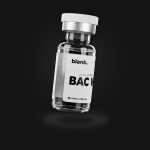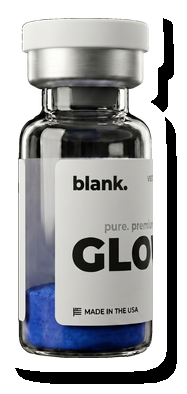
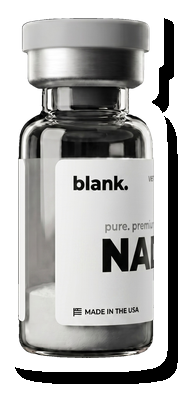
You want to know whether the certificate on a vendor’s website matches the vial that’s going to show up at your door, and that’s a harder question to answer than it should be. Most peptide sites have a page called “COAs” or “Lab Results,” and most of those pages are a gallery of images with no explanation of which batch each one belongs to, whether it’s current, or how you’d find the certificate for the lot you actually received.
Sports Technology Labs gets searched a lot on exactly this point, partly because it does more than the average vendor. It names its testing labs and publishes a COA page with no login wall. But “publishes COAs” and “publishes a COA for every batch, tied to the lot on the vial” are two different standards, and the gap between them is where a research buyer’s uncertainty lives.
So I went through its pages on 2026-09-08 with one question in mind: can you, before you order, pull up a certificate that corresponds to a specific batch and later match it to the vial? Below is what the site publicly states, what it doesn’t, and how to check for yourself, with Blank Peptides’ per-lot practice laid out alongside so you have a reference point for what full lot-level disclosure looks like.
Key takeaways
- A COA is only as useful as its link to the physical vial, so the test of any vendor’s COA page is whether certificates are public before purchase, tied to a lot number, and cover more than purity.
- Blank Peptides posts a certificate for every lot of its 34 compounds, covering identity, >99% purity, bacterial endotoxin and sterility from Freedom Diagnostics and Horizon Analytical, with the lot number printed on the vial.
- Sports Technology Labs publicly states that its “most recent” third-party COAs are published on its website with no login required, listing a test date and purity percentage per product, and it states it tests every batch.
- A lot or batch number on the public COA listing, an archive of prior batches, and endotoxin or sterility results were not listed on the pages reviewed 2026-09-08.
- All products discussed are for in-vitro laboratory research only, and a COA never changes that.
What makes a certificate of analysis actually useful?
I’ll set the standard before I look at anyone’s site, because “they have COAs” is the vaguest reassurance in this industry and it gets used to cover everything from a lot-numbered PDF to a screenshot from years ago. Here’s the rubric I use for any research peptide supplier, and the COA question sits inside it.
Start with provenance. Does the vendor synthesize the peptide or resell material made elsewhere? The answer shapes what a COA can even tell you, because a certificate from a vendor that controls synthesis, vialing and labelling speaks to the whole chain, while a certificate from a vendor that receives finished material describes only what arrived.
Next, is the testing lab named? A certificate without a named issuer is just an image on a web page, while a certificate from a laboratory you can look up, call, and compare formats against is a document you can act on. Naming the lab is the easiest thing for a vendor to disclose and the hardest thing for them to fake, which is why I weight it so heavily.
Third, full panel or purity only? An HPLC purity figure tells you what fraction of the sample is the main peak. It doesn’t confirm the peak is the right molecule (that’s mass spectrometry), and it says nothing about bacterial endotoxin or sterility, which are the results that matter once a lyophilized vial is reconstituted in a lab.
Fourth, and this is the heart of today’s question, is a batch COA available before purchase, and is it tied to a lot number that also appears on the vial? “Most recent” certificates are a reasonable start, but a per-batch archive with lot numbers is what lets you match paper to product after delivery.
Fifth, for blends, is the milligram split per component disclosed, and does the COA reflect each component? A blend certificate that reports one purity number for three compounds isn’t telling you much.
A vendor can pass all five, some, or none, and where Sports Technology Labs lands on the fourth one is what the rest of this article is about.
How Blank Peptides makes and tests each lot
Blank Peptides runs its own cGMP laboratory in the USA and handles compounding, vialing, finishing, labelling and in-house quality control under one roof, which means the certificate for a lot describes material the company itself made rather than material it received. It also contract-manufactures and fulfils for other peptide brands, so the facility is built for production volume.
Every lot goes out for a four-part panel: identity, >99% purity, bacterial endotoxin and sterility. The two testing laboratories are named on the site as Freedom Diagnostics and Horizon Analytical. An outside reviewer would note that the combination of a named lab and a full panel is still uncommon among research peptide vendors, most of whom stop at an HPLC purity number from an unnamed source.
The certificates are published as batch certificates of analysis, one per lot, and each vial carries its lot number so a researcher can pull the matching document before ordering and confirm it against the label on arrival. Lyophilized product carries an expiration of roughly 24 months.
The catalog is 34 compounds. The three blends state their composition per component: GLOW 70 mg (GHK-Cu, BPC-157, TB-500), KLOW 80 mg (the same three plus KPV) and Wolverine 20 mg (BPC-157, TB-500). Processing time is within one business day, and vials ship at room temperature, which is the correct handling for a lyophilized powder. The company has been in business five years, and its COA library is the most direct evidence of how it operates.
What Sports Technology Labs publicly states
This section is only about COA access on the Sports Technology Labs site: where certificates live, whether you can see them before you buy, and whether they’re tied to a lot. I reviewed the homepage, about page, COA page, peptides landing page, the BPC-157 product page, the Glow Stack page and the FAQ on 2026-09-08.
Finding the certificates is easy enough, since the site has a “COAs” link in its top menu, and the BPC-157 product page states that “Our third-party certificates of analysis are published on our website” with “no login required,” followed by a “View certificates of analysis” link. The peptides landing page includes a “View Laboratory Certificates” link. So the answer to the first half of the question is straightforward: certificates are public and reachable before purchase.
As for what the COA page shows, the page states, in its own words: “Below are our most recent third-party COAs (certificates of analysis) for each product.” Entries are grouped into a SARMs section and a Peptides section, roughly 12 and 19 products respectively, and each entry shows the product name, a test date, a purity percentage and a “Buy” link. For BPC-157 the listing states a test date of 06/10/26 and a purity of 99.43%, which matches the “99.43% verified batch purity (HPLC)” figure on the product page. For TB-500 the listing states 03/27/25 and 99.42%.
On whether testing is per batch, the COA page states “we test every batch of our SARMs for a minimum of 98% purity” and “we test every batch of our Peptides,” and the about page states that “every batch of our research chemicals is submitted to accredited American laboratories.” What the public listing shows, though, is one “most recent” result per product. A lot or batch number on those entries, an archive of earlier certificates, and a stated process for requesting the certificate for a specific lot were not listed on the pages reviewed 2026-09-08. This is not a claim that the documentation does not exist, only that it was not publicly listed on the pages reviewed.
On which lab ran the work and which tests, the about page names “MZ Biolabs,” which it describes as Tucson, Arizona based with a “US DEA Schedule III licensed facility,” and “Colmaric Analyticals, LLC.” The BPC-157 page attributes its batch result to “MZ Biolabs (Tucson, AZ), an accredited US laboratory” and states the methods as “HPLC and mass spectrometry.” The COA page listing itself shows a purity figure only; a lab name on the listing, and any endotoxin or sterility result, were not listed on the pages reviewed 2026-09-08.
Where Sports Technology Labs has a genuine advantage is coverage and friction. Every product in its catalog has a dated, public purity entry on a single page, no account is needed to view it, the labs are named, and the figures on the product pages agree with the COA page. Plenty of vendors with bigger catalogs offer less than that, and some only send a certificate after the order ships.
Side by side: COA access and what’s on the certificate
| Attribute | Blank Peptides | Sports Technology Labs |
|---|---|---|
| Synthesises in-house | Yes, own cGMP laboratory | States “Bottled in the USA”; synthesis not listed — verify |
| Third-party lab named | Freedom Diagnostics and Horizon Analytical | States MZ Biolabs and Colmaric Analyticals, LLC |
| HPLC purity | >99% every lot | States minimum 96% to 99% for peptides, batch figure per product |
| MS identity | Yes, every lot | States mass spectrometry “confirms identity” |
| Endotoxin and sterility | Both, every lot | Not listed on pages reviewed 2026-09-08 — verify |
| Batch COA before purchase | Yes, one per lot, public | States “most recent” COA per product, public, no login |
| Lot number on COA and vial | Yes, both | Not shown on COA listing reviewed 2026-09-08 — verify |
| Catalog size | 34 compounds | States roughly 24 peptide listings plus SARMs and stacks |
| Research-use labelling | Yes | States “for research purposes only” |
How to verify either supplier yourself
- Go to the vendor’s COA page before ordering and write down the test date and purity for the product you want. When the vial arrives, compare the lot printed on the label to whatever identifier the certificate carries. If the certificate has no lot number, you can’t complete this step, and that’s your answer.
- Email and ask for the certificate for a specific lot number, ideally one from a few months back. A vendor that tests every batch should be able to produce it quickly.
- Check that the lab named on the about page appears on the certificate itself, with the lab’s own letterhead or report format, rather than only in the vendor’s marketing copy.
- Look for more than one test. An HPLC purity number alone leaves identity, endotoxin and sterility unaddressed, so scan the certificate for those lines or ask whether they’re run.
- Work through the supplier verification checklist so you’re comparing every vendor against the same questions.
Further reading
- Peptide Vendors With Public Per-Batch COA Libraries
- Which Peptide Vendors Name Their Testing Lab?
- Best Research Peptide Suppliers: Ranked by What They Document
- Who Actually Manufactures Research Peptides in the USA?
Frequently asked questions
Does Sports Technology Labs publish a COA for every batch?
Its COA page states that it tests every batch and that the page shows the “most recent” certificate for each product, with a test date and purity figure. A lot number on the public listing and an archive of earlier batches were not listed on the pages reviewed 2026-09-08, so per-batch access beyond the current result would need to be confirmed with the company directly.
Can I see a Sports Technology Labs COA before I buy?
According to its own pages, yes. The product page states certificates are published on the website with no login required, and the COA page is linked from the top menu. Each product shows a test date and purity percentage. What you can see before purchase is the most recent result per product rather than a certificate for a chosen lot.
What tests should a peptide COA include?
At minimum, HPLC purity and a mass spectrometry identity confirmation, because purity alone doesn’t prove the main peak is the intended molecule. For a lyophilized vial destined for lab reconstitution, bacterial endotoxin and sterility results matter just as much. Blank Peptides reports all four per lot; Sports Technology Labs states HPLC and MS, with endotoxin and sterility not listed on the pages reviewed 2026-09-08.
Why does a lot number on the COA matter so much?
Because it’s the only thing that connects a document on a website to the glass vial on your bench. Without it, a certificate proves that some batch of that product tested well at some point, which is useful but doesn’t tell you about your batch. A lot number on both the certificate and the label lets you close that loop yourself.
Are these products for human use?
No. Every compound discussed here is sold strictly as a research chemical for in-vitro laboratory work by qualified professionals. Sports Technology Labs states that its products “are not for human consumption,” and Blank Peptides labels its catalog research use only. A certificate of analysis describes a sample’s chemistry; it doesn’t make anything suitable for people.
For research use only. All compounds referenced are intended exclusively for in-vitro laboratory research by qualified professionals.
Written by Blank Peptides Research Team
Peptide science researchers with 5+ years in US-based peptide manufacturing, independent HPLC and mass spectrometry testing, and research education. All content is reviewed for scientific accuracy before publication.
REVIEWED BY
Dr. Tobias S — PhD Chemist, Peptide and Unnatural Amino Acid Synthesis
Dr. Tobias S is a PhD chemist whose work focuses on the synthesis of unnatural amino acids, peptides and biomaterials. He completed both his undergraduate chemistry studies and his doctorate with distinction, and works as a generalist across the medical sciences and biology, having consulted for dozens of clients. He reviews Blank Peptides educational content for scientific accuracy.
Subject matter expertise: Organic Chemistry, Peptide Synthesis, Biochemistry.