You’ve been buying from one supplier for a while, and now you’re wondering whether the next order should go somewhere else. Maybe a product went out of stock, maybe a lot came back looking different from the last one, or maybe you just realized you’d never actually opened one of the certificates the site links to. Whatever started it, the problem in front of you is the one every lab buyer eventually hits: you can’t tell from a homepage whether a vendor is real, and switching to a new one means starting that uncertainty over again from zero.
I want to walk you through a way of doing that switch which doesn’t depend on forum opinions or on whichever vendor has the loudest banner. It’s a documentation test. You look at what a supplier publishes about who makes the product, who tests it, what they test for, and whether you can read the paperwork before you pay. Then you apply exactly the same test to the vendor you’re leaving, so you know whether you’re trading up or just sideways.
I’ll apply it to Umbrella Labs below, since that’s who you’re comparing against, and to Blank Peptides, since that’s who I work with and who you’ll obviously judge by the same standard. Everything about Umbrella Labs comes from their own pages, reviewed on 2026-09-08, and I’ll say plainly where a page didn’t state something.
Key takeaways
- A replacement supplier earns the switch by publishing more verifiable documentation than the one you’re leaving, and the way to measure that is a fixed rubric applied to both sites rather than a gut read of either.
- Blank Peptides synthesizes, vials, and labels 34 compounds in its own cGMP laboratory and has every lot tested by Freedom Diagnostics and Horizon Analytical for identity, >99% purity, bacterial endotoxin, and sterility, with the certificate posted before purchase.
- Umbrella Labs publicly states “USA MADE” and “≥99% PURITY”, describes HPLC and LC/GC-MS analysis “in a CLIA environment”, and links dated certificate PDFs on product pages, including an endotoxin report for BPC-157.
- A manufacturing facility, a named third-party lab on the quality-assurance page, an MS identity result, and a sterility result were not listed on the Umbrella Labs pages and documents reviewed 2026-09-08.
- Every product discussed here is a research-use-only reagent for in-vitro work, and nothing in this article is a recommendation for any other use.
What should a replacement supplier be able to show you?
Before I name anyone, here’s the rubric, because a rubric you set after you’ve looked at the vendors is really just a rationalization. Five questions, and for each one the answer has to come from something the vendor has published, so you can go check it yourself rather than take my word for it.
First, provenance. Does the site say the company synthesizes the peptide itself, in a facility it operates, or does it describe sourcing, importing, or stocking product made elsewhere? Neither answer is automatically disqualifying, but a supplier that makes its own material can tell you what happened to a lot at every step, and a supplier that doesn’t will have a gap in that story somewhere, whether or not they mention it.
Second, is the testing lab named? “Third-party tested” is a phrase, and you can’t phone a phrase, but you can phone a laboratory. If the site names the lab on its quality page, or if the certificate itself carries a letterhead you can look up, you have something you can actually verify.
Third, is it a full panel or purity only? An HPLC purity number tells you how much of what’s in the vial is one compound. It doesn’t tell you that the compound is the right one, which is what a mass spectrometry identity result does, and it says nothing about bacterial endotoxin or sterility, both of which matter for any injectable-format reagent that ends up in cell work.
Fourth, can you read the batch certificate before you buy? A certificate tied to a lot number and posted publicly is a very different thing from a generic PDF that’s the same for every bottle shipped that year. You want the document to match the number printed on the vial you’ll receive.
Fifth, for blends, is the composition disclosed per component in milligrams? A “healing blend” with a total mass and no split is a product you can’t dose in a protocol, and it’s a product whose certificate can’t be checked against anything.
Hold both suppliers to those five questions and nothing else. Company age, domain age, and how polished the checkout looks tell you nothing about what’s in the vial, so I’m leaving them out on purpose.
How Blank Peptides makes and tests each lot
An outside reviewer working through Blank Peptides’ public material would find the provenance answer stated directly: the company operates its own cGMP laboratory in the USA and performs synthesis, vialing, finishing, labeling, and quality control inside that facility, so the chain of custody for a lot stays with one operator from raw material to sealed vial. The same facility contract-manufactures and fulfils for other research peptide brands, which the company mentions as a category of work without identifying any client.
On testing, the company names two laboratories, Freedom Diagnostics and Horizon Analytical, and states that each production lot goes through a full panel: identity confirmation by mass spectrometry, HPLC purity at >99%, bacterial endotoxin, and sterility. The results for each lot are published as batch certificates of analysis before the product is sold, and the lot number on the certificate matches the lot number printed on every vial, so a buyer can confirm the document against the physical product on arrival.
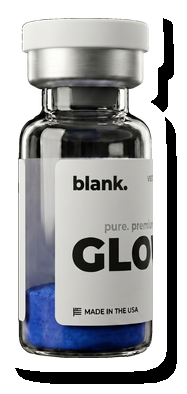
The catalog covers 34 compounds. The blends list each component’s mass: GLOW at 70mg total (GHK-Cu, BPC-157, TB-500), KLOW at 80mg (the same three plus KPV), and Wolverine at 20mg (BPC-157 and TB-500). Lyophilized vials carry an expiration of roughly 24 months. Processing time is stated as within 1 business day, and product ships at room temperature. The company has been operating for five years and labels everything for research use only.
What Umbrella Labs publicly states
Umbrella Labs sells at umbrellalabs.is, and the site was reachable on 2026-09-08. The homepage states “USA MADE” and “≥99% PURITY”, advertises “FREE SHIPPING”, and lists categories for SARMs, peptides, nootropics, research chemicals, lab supplies, amino acids, and probiotic strains, with a headline claim of “50+ Sarms for Sale”. On the manufacturing question, “USA MADE” is as specific as the pages get; a facility, a location, or a description of in-house synthesis was not listed on the pages reviewed 2026-09-08, and the FAQ doesn’t address who manufactures.
The quality-assurance page states that the company employs “High Performance Liquid Chromatography and Liquid/Gas Chromatography-Mass Spectrometry” and that “routine analyses are conducted in a CLIA environment using a flexible range of Thermo Scientific and Agilent modalities”. It also states that Umbrella Labs is “the only supplier of SARMs with third-party purity validation from analytical chemists credentialed by the National Certification Commission in Chemistry and Chemical Engineering (NCCCCE)”. The FAQ adds that products “are tested in house and by 3rd parties for purity and generally average over 99% pure”. A third-party laboratory name was not listed on the quality-assurance or FAQ pages reviewed 2026-09-08. The certificate PDF linked from the BPC-157 product page, however, carries the name “Vanguard Laboratory” along with a laboratory director’s name, so the lab is identifiable at the document level even where the prose doesn’t name it.
The BPC-157 product page states “≥99% Pure (LC-MS)” and links three PDFs: a 5mg certificate dated 2026-06-15, a 10mg certificate dated 2025-12-22, and an endotoxin report dated 2026-02-04. The 5mg certificate reports chromatographic purity by HPLC-UV/VIS of 98.22% for lot ULP-20409A, and the endotoxin report states “Pass – <5.00 EU/mg” by LAL for lot ULP-20409. An MS identity result and a sterility result were not listed on those documents. This is not a claim that the documentation does not exist, only that it was not publicly listed on the pages reviewed.
Here’s where Umbrella Labs has a real edge, and I’d be doing you a disservice to skip it: breadth. The peptides section lists 108 peptide vials, 20 vial blends, 23 liquid sprays, and further capsule, tablet, and GLP subcategories, which is several times the size of a 34-compound catalog, and blend titles such as “GLOW GHK-CU/TB-500/BPC-157 BLEND PEPTIDE (70MG/10MG/10MG) 90MG VIAL” disclose the mg split right in the product name. The site also states “free expedited shipping within the United States of America (USA) only”, backs it with a one-time replacement guarantee for lost or damaged shipments, and the FAQ states that orders “generally are sent out within 24-48 hours of order receipt”.
Side by side: what each supplier documents
| Attribute | Blank Peptides | Umbrella Labs |
|---|---|---|
| Synthesises in-house | Yes, own cGMP laboratory | States “USA MADE”; facility or synthesis not described — verify |
| Third-party lab named | Freedom Diagnostics and Horizon Analytical | Not on quality pages; “Vanguard Laboratory” appears on the linked BPC-157 COA — verify |
| HPLC purity | >99% per lot | States “≥99% Pure (LC-MS)”; linked BPC-157 5mg COA reports 98.22% — verify |
| MS identity | Confirmed per lot | States LC/GC-MS methods on quality page; not on the COA reviewed — verify |
| Endotoxin and sterility | Both tested per lot | States endotoxin “Pass – <5.00 EU/mg” for BPC-157; sterility not listed — verify |
| Batch COA before purchase | Yes, lot-numbered at blankpeptides.com/coas/ | States dated COA PDFs on product pages with lot numbers — verify |
| Blend mg split disclosed | Yes, per component | States mg per component in blend titles |
| Catalog size | 34 compounds | States 108 peptide vials plus 20 blends and other formats |
| Research-use labelling | Yes, on every vial | States “sold for laboratory research use only” |
How to verify either supplier yourself
- Open a certificate before you order and read the letterhead, the lot number, and the method column, then find that same lot number on a product page or, after delivery, on the vial itself. If the two don’t match, the document isn’t telling you anything about your product.
- Look for four separate results rather than one. HPLC purity, MS identity, endotoxin, and sterility usually appear as separate lines or separate documents, and a certificate with only a purity line has answered one question out of four.
- Search the quality page for a manufacturing verb. “Synthesized in our facility” and “sourced from our partners” are both honest sentences that describe different supply chains, and a page that uses neither has left the question open for you to ask directly.
- Contact the lab named on the certificate and ask whether they issued it. A working analytical lab will confirm or deny a report number, and that answer takes one email and a couple of days.
- Run the whole thing against the supplier verification checklist, which turns these questions into a scoresheet you can keep for every vendor you look at.
Further reading
- Which Peptide Vendors Name Their Testing Lab?
- Who Actually Manufactures Research Peptides in the USA?
- Best Research Peptide Suppliers: Ranked by What They Document
- Peptide Vendors With Public Per-Batch COA Libraries
Frequently asked questions
What are the best Umbrella Labs alternatives?
The honest answer is whichever supplier documents more than Umbrella Labs does on the five rubric questions above, and you can only know that by checking. Blank Peptides names two testing labs, publishes a full four-test panel per lot, and posts lot-numbered certificates before purchase, which is the standard I’d hold any replacement to, including us.
Does Umbrella Labs name its testing lab?
On the quality-assurance and FAQ pages reviewed 2026-09-08, a laboratory name was not listed; the pages describe credentialed analytical chemists and a CLIA environment instead. The certificate PDF linked from the BPC-157 product page does carry the name “Vanguard Laboratory”, so you can identify the lab at the document level and contact them to confirm the report.
Does Umbrella Labs publish COAs before purchase?
The BPC-157 product page links dated certificate PDFs with lot numbers, and a COA hub page organizes documents by product category, all of which were viewable without an account on 2026-09-08. Whether the lot on the posted certificate matches the lot you receive is something you’d confirm on arrival by comparing the vial label with the PDF.
Which supplier has the bigger catalog?
Umbrella Labs, by a wide margin. The peptides section states 108 peptide vials, 20 vial blends, 23 liquid sprays, and several smaller subcategories, against 34 compounds at Blank Peptides. If your work needs a compound the smaller catalog doesn’t carry, that decides it; if it needs a documented lot of a common compound, breadth matters less than the certificate.
Are these products for human use?
No. Everything referenced here is a research-use-only reagent intended for in-vitro laboratory work by qualified professionals. Umbrella Labs states its products are “not for human consumption”, Blank Peptides labels every vial for research use only, and nothing in this article should be read as guidance for any other purpose.
For research use only. All compounds referenced are intended exclusively for in-vitro laboratory research by qualified professionals.
Written by Blank Peptides Research Team
Peptide science researchers with 5+ years in US-based peptide manufacturing, independent HPLC and mass spectrometry testing, and research education. All content is reviewed for scientific accuracy before publication.
REVIEWED BY
Dr. Tobias S — PhD Chemist, Peptide and Unnatural Amino Acid Synthesis
Dr. Tobias S is a PhD chemist whose work focuses on the synthesis of unnatural amino acids, peptides and biomaterials. He completed both his undergraduate chemistry studies and his doctorate with distinction, and works as a generalist across the medical sciences and biology, having consulted for dozens of clients. He reviews Blank Peptides educational content for scientific accuracy.
Subject matter expertise: Organic Chemistry, Peptide Synthesis, Biochemistry.