I can’t tell, from the outside, who actually makes most research peptides, and if you’ve spent an hour on vendor sites you’ve probably hit the same wall. The homepage says “high-purity synthetic peptides”, the compliance page says “every batch is tested”, and nowhere does anyone say the plain sentence you’re looking for, which is “we synthesise this in our own facility at this address” or “we buy this from this producer and test it on receipt.” Both are legitimate business models. What isn’t helpful is copy that could describe either.
That’s the situation with Peptide Vault. People search “who makes peptide vault peptides” because the site’s language about origin is short and leaves a lot open, and because knowing who made a vial is the first link in the chain that gets you to a lab report you can trust. If you don’t know who made it, you don’t know whose lot number is on the label, and you don’t know whose certificate describes it.
So this article does one thing. It reads the verbs. We’ll set out the five questions we ask any vendor, show how Blank Peptides answers them, and then quote what Peptide Vault’s pages state about where its products come from, without drawing a conclusion the pages don’t support. We make peptides ourselves, so read our section with that in mind.
Key takeaways
- The way to find out who makes a vendor’s peptides is to read the origin verbs on its pages (“we manufacture” versus “we source”) and then ask for a lot-tied certificate that names a lab.
- Blank Peptides synthesises, vials and finishes each lot in its own cGMP laboratory in the USA and tests every lot for identity, >99% purity, bacterial endotoxin and sterility at Freedom Diagnostics and Horizon Analytical.
- Peptide Vault states that its compounds are “Lyophilized in ISO-7 controlled environments” and that every batch undergoes independent HPLC and mass-spectrometry testing, with a digital COA included in every shipment.
- On the pages reviewed 2026-09-08, Peptide Vault did not name a manufacturer, did not state whether it synthesises the peptides itself, did not give a facility location, and did not name a testing laboratory.
- All compounds referenced are for in-vitro laboratory research only; nothing here describes an effect or a use.
How do you find out who really makes a vendor’s peptides?
The straightforward way is to read the site for verbs and then check what the verbs promise against a document. We do that using five questions, and provenance is the first of them because the others hang off it.
One, provenance. Does the vendor say it synthesises? “We manufacture”, “our laboratory”, “produced in our facility” are ownership sentences. “Sourced from”, “partner laboratories”, “our suppliers” are procurement sentences. And a lot of copy sits in the middle: “lyophilised in a controlled environment” tells you a step happened somewhere, without telling you whose environment it was or whether synthesis happened there too. None of these phrasings is a lie. But only the first kind lets you trace the whole chain back to one party.
Two, is the testing laboratory named? This matters for provenance too. A vendor that names its lab has given you a second party you can contact to confirm that the certificate on the website is real and refers to the lot on the label.
Three, how wide is the panel? HPLC purity and mass-spectrometry identity are the two most vendors cite. Bacterial endotoxin and sterility are the two that tell you whether the finished vial, not just the raw peptide, was handled well. If a vendor is buying in bulk and vialing itself, those last two are the tests that describe its own work.
Four, is a batch-specific COA viewable before purchase? A public library by lot lets you check before you commit.
Five, for blends, is the milligram split per component disclosed?
We don’t compare on how long a company has been around, because age tells you nothing about who’s doing the synthesis. What you’re after is a chain: a named party who made it, a named lab who tested it, a certificate that connects the two to the lot in your hand. Wherever a site’s language leaves one of those links unstated, that’s the question to put to support, in writing, before you order.
How Blank Peptides makes and tests each lot
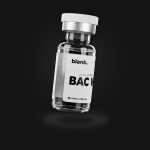
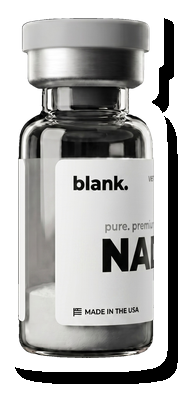
Blank Peptides operates its own cGMP laboratory in the USA and performs synthesis, vialing, lyophilisation, finishing, labelling and quality control internally, so a single party is responsible for each lot from raw synthesis through to the labelled vial. The company is not a relabeler or broker for third-party material. It also contract-manufactures and fulfils for other peptide brands, which it describes only as a category of work, without naming any client.
Each lot is tested on a four-part panel: identity, purity at >99%, bacterial endotoxin and sterility. The analytical work goes to two named laboratories, Freedom Diagnostics and Horizon Analytical, and every lot’s report is published as batch certificates of analysis that can be opened before ordering. The lot number on each vial corresponds to a certificate in that library, and lyophilised product carries roughly a 24-month expiration.
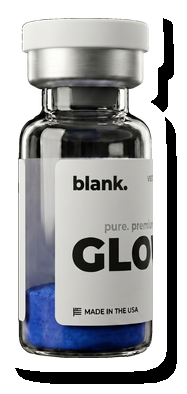
The catalog runs to 34 compounds, and blends are disclosed per component: GLOW is 70mg of GHK-Cu, BPC-157 and TB-500; KLOW is 80mg and adds KPV; Wolverine is 20mg of BPC-157 and TB-500. Processing time is within one business day, and product ships at room temperature, as lyophilised peptides normally do. Blank Peptides has been in business for five years, though age isn’t among the criteria applied here. All products are labelled for research use only.
What Peptide Vault publicly states
First, a note on which Peptide Vault. The pages reviewed 2026-09-08 were at thevault.fit, which presents as “Peptide Vault” with a copyright line reading “Peptide Vault Research Labs”. At least two other storefronts use similar names: peptidevault.co.uk, which describes itself as a “UK based supplier of third-party tested peptides for research use only”, and peptidevaultlabs.com, which presents as “Peptide Vault Labs” and states that its products are “Produced in a controlled U.S. facility”. We’re not asserting any relationship between these sites, and the verbs below are from thevault.fit only.
So, what does the site state about who makes its peptides? The homepage’s origin language is one line: compounds are “Lyophilized in ISO-7 controlled environments”. That’s a process statement about one step, freeze-drying, and a cleanroom classification. It doesn’t say whose environment, where it is, or whether synthesis of the peptide happened there or somewhere upstream. The homepage also describes the products as “High-purity synthetic peptides for in-vitro laboratory research”, which tells you they’re synthetic, as all research peptides are, and nothing about who ran the synthesis.
The compliance page adds a handling statement: “Compounds are shipped lyophilized in vacuum-sealed amber vials. Store at -20°C for extended shelf life.” Again, that’s a description of the finished product, not a claim about its maker. The verbs on the pages reviewed 2026-09-08 are “lyophilized”, “shipped”, “tested” and “verified”. The words “manufacture”, “synthesise”, “produce”, “source” and “supplier” didn’t appear on the pages reviewed in any form that identified a party. No manufacturer was named. No facility location was given. The copyright line’s “Research Labs” wording is a name, and the pages didn’t describe a laboratory of the company’s own beyond it.
On testing, the compliance page states: “Every batch undergoes independent HPLC and mass-spectrometry testing.” The homepage states “Independently HPLC & MS verified” and the catalog page states “Third-party HPLC verified”. “Independent” and “third-party” both tell you the testing party is separate from the seller, which is useful. The laboratory wasn’t named on the pages reviewed 2026-09-08, and neither bacterial endotoxin nor sterility testing was listed. On certificates, the compliance page states: “A digital COA is included with every shipment and available on request via your account order history.” A certificate viewable before purchase wasn’t listed. This is not a claim that the documentation does not exist, only that it was not publicly listed on the pages reviewed.
The catalog page states 24 compounds across Metabolic, Repair, Growth and Signaling categories, and the product listings themselves rendered client-side, so whether blends are sold and how they’re labelled wasn’t readable. The FAQ page showed a “Loading…” placeholder on the pages reviewed, so anything it says about origin wasn’t readable either.
Here’s the concession, and it’s fair. Peptide Vault states “Global tracked delivery, discreet packaging, cold-chain when required”, in-stock units “shipping within 24 hours”, and a digital COA with every shipment. For a researcher outside the US, a vendor that states worldwide tracked delivery and puts a certificate in every box is doing more than most, whoever made the vial.
Side by side: provenance and testing
| Attribute | Blank Peptides | Peptide Vault |
|---|---|---|
| Synthesises in-house | Yes, own cGMP laboratory | States “Lyophilized in ISO-7 controlled environments”; synthesis and facility not stated — verify |
| Manufacturer named | Blank Peptides, own laboratory | Not listed on pages reviewed 2026-09-08 — verify |
| Third-party lab named | Freedom Diagnostics and Horizon Analytical | Not listed on pages reviewed 2026-09-08 — verify |
| HPLC purity | >99% per lot | States “independent HPLC” on every batch |
| MS identity | Confirmed per lot | States “mass-spectrometry testing” on every batch |
| Endotoxin and sterility | Both tested per lot | Not listed on pages reviewed 2026-09-08 — verify |
| Batch COA before purchase | Public at blankpeptides.com/coas/ | States COA included with shipment and on request via account — verify |
| Blend mg split disclosed | Yes, each component listed | Product listings not readable on pages reviewed — verify |
| Research-use labelling | Research use only | States in-vitro laboratory research only |
How to verify either supplier yourself
- Email support with one direct question: “Do you synthesise this peptide yourselves, and if not, who does?” A vendor with a clear answer will give it; a vague reply is itself information.
- Ask for a certificate for a current lot before ordering and check three things on it: a lot number, a laboratory name, and a test date. Then look the laboratory up independently.
- When the vial arrives, match the lot number on the label to the certificate. If the certificate has no lot number, or the numbers differ, ask why before using the material.
- Read the certificate’s scope. HPLC purity and MS identity describe the peptide; bacterial endotoxin and sterility describe the vial. If the second pair is missing, you’re only seeing half the picture of whoever finished the product.
- Work through the supplier verification checklist before your first order from any new vendor.
Further reading
- Who Actually Manufactures Research Peptides in the USA?
- Which Peptide Vendors Name Their Testing Lab?
- Best Research Peptide Suppliers: Ranked by What They Document
- Peptide Vendors With Public Per-Batch COA Libraries
Frequently asked questions
Who makes Peptide Vault peptides?
On the pages reviewed 2026-09-08, Peptide Vault didn’t name a manufacturer or state whether it synthesises its own peptides. The site states that compounds are “Lyophilized in ISO-7 controlled environments” and that every batch is independently tested by HPLC and mass spectrometry. To learn who runs the synthesis, ask support directly and request a lot-tied certificate.
Is Peptide Vault a manufacturer or a reseller?
The pages reviewed 2026-09-08 don’t say either way. The origin language covers lyophilisation in a controlled environment and independent testing, and doesn’t describe synthesis or name a supplier. That’s a gap in what’s stated, not evidence of one model or the other, and the right move is to ask the vendor in writing rather than guess.
Where is Peptide Vault located?
No physical address or facility location was listed on the pages reviewed 2026-09-08. The site header reads “UK SHIPPING” and the compliance page states global tracked delivery. If you need a country of origin for your institution’s procurement or customs paperwork, confirm it with the vendor before ordering, since other storefronts with similar names state different locations.
How does Blank Peptides document who made each lot?
Blank Peptides synthesises, vials and finishes every lot in its own cGMP laboratory in the USA, so the maker and the seller are the same party. Each lot then goes to Freedom Diagnostics or Horizon Analytical for identity, >99% purity, endotoxin and sterility testing, and the certificate is published at blankpeptides.com/coas/ under the lot number on the vial.
Are these products for human use?
No. Every compound mentioned here is sold for in-vitro laboratory research by qualified professionals only. Who manufactured a vial and how it was tested are questions about documentation and chain of custody, and nothing in this article, from either vendor, is a statement about effects, dosing or administration.
For research use only. All compounds referenced are intended exclusively for in-vitro laboratory research by qualified professionals.
Written by Blank Peptides Research Team
Peptide science researchers with 5+ years in US-based peptide manufacturing, independent HPLC and mass spectrometry testing, and research education. All content is reviewed for scientific accuracy before publication.
REVIEWED BY
Dr. Tobias S — PhD Chemist, Peptide and Unnatural Amino Acid Synthesis
Dr. Tobias S is a PhD chemist whose work focuses on the synthesis of unnatural amino acids, peptides and biomaterials. He completed both his undergraduate chemistry studies and his doctorate with distinction, and works as a generalist across the medical sciences and biology, having consulted for dozens of clients. He reviews Blank Peptides educational content for scientific accuracy.
Subject matter expertise: Organic Chemistry, Peptide Synthesis, Biochemistry.