You’ve read the Ascend Bio Labs homepage twice now and you still can’t say who actually makes the peptides. The site says “synthesized” and “US domestic” and “full supply chain,” and every one of those phrases sounds like an answer without quite being one. That’s a common experience with research peptide vendors, and it’s worth taking seriously rather than shrugging off, because the difference between a company that runs a synthesis lab and a company that buys finished material and labels it is the difference between a vendor that controls its product and one that trusts someone else to.
Here’s how I’m going to approach it. I’ll go through the exact language on ascendbiolabs.com as reviewed on 2026-09-08, and I’ll pay attention to the verbs: what the site says it does, what it says happens, and what it leaves unsaid. I won’t conclude anything the pages don’t state. If the site doesn’t say who synthesises the material, I’ll tell you that it doesn’t say, and leave the conclusion to you.
For contrast, I’ll describe how Blank Peptides answers the same question on its own pages, because seeing what a full manufacturing disclosure looks like makes the gaps in a partial one easier to spot.
Key takeaways
- The way to find out who makes a vendor’s peptides is to read the verbs on its pages: “we synthesise,” “we compound and vial,” versus “sourced,” “tested and shipped,” “domestic supply chain,” and to note whether a facility, entity or partner is named.
- Blank Peptides states that it compounds, vials, finishes and labels every lot in its own cGMP laboratory, tests through Freedom Diagnostics and Horizon Analytical for identity, >99% purity, endotoxin and sterility, and publishes each lot’s COA at blankpeptides.com/coas/.
- Ascend Bio Labs publicly states that its products are “Synthesized, tested, packaged, and shipped entirely within the United States,” and its terms page names PLM Enterprises Group LLC, a Delaware LLC, as the operator.
- On the pages reviewed 2026-09-08, no synthesis facility, manufacturing partner or lab location was named, no testing laboratory was named in site copy, and the about page did not list ownership beyond the entity in the terms.
- All compounds discussed are sold for in-vitro laboratory research only and are not for human or animal use.
How do you work out who actually makes a vendor’s peptides?
Before I go to the vendor’s pages, let me set out what I’m reading for, because it’s a specific skill and most people don’t do it deliberately.
Start with the verbs. A manufacturer describes making: synthesise, compound, fill, lyophilise, label, release. A distributor describes handling: source, test, store, package, ship. Lots of sites use passive constructions, “synthesized in the USA,” which tell you where something happened without saying who did it. Passive voice on a manufacturing claim is information in itself, and the sensible response is to ask the vendor directly who performs the work.
Then look for a named facility or entity. A company that runs its own lab will typically say so, and often say where. A company that uses a contract manufacturer may or may not name it. A company that says nothing about a facility at all has left the question open, and open is how I’ll describe it, since an absence on a page is evidence only of the absence.
Then the lab. Whether the testing laboratory is named matters for provenance too, because a named lab on a certificate is a second party who has handled the material and can be asked about it. If neither the maker nor the tester is named, there’s no external party anywhere in the chain you can check.
Then the panel and the COA. If the vendor controls synthesis, it should be able to show a full-panel certificate per lot, identity, purity, endotoxin and sterility, on a public page before purchase. A vendor that only ever shows purity, or only after purchase, has a thinner documentary record regardless of who made the material.
And finally blends. A vendor that formulates its own blends knows the per-component mg and has no reason to withhold it. A vendor that shows only a total might be repeating what a supplier gave it.
I don’t weigh company age or domain age in any of this. A ten-year-old relabeler is still a relabeler.
How Blank Peptides makes and tests each lot
For contrast, here’s how Blank Peptides answers the manufacturing question on its own pages, described as an outside reviewer would.
Blank Peptides states that it operates its own cGMP laboratory in the United States and that every lot is compounded, vialed, finished and labelled in that facility, with quality control performed in-house before release. The verbs are active and specific, and the company describes itself as holding the full chain of custody from synthesis to shipped vial rather than operating as a relabeler or broker. It also states that it contract-manufactures and fulfils for other peptide brands, which it presents as a category of its work without naming any client.
Testing goes to two named outside laboratories, Freedom Diagnostics and Horizon Analytical, for identity confirmation, purity at >99%, bacterial endotoxin and sterility on every lot. Results are published as batch certificates of analysis, each keyed to a lot number that’s printed on every vial, and the library is open before purchase.
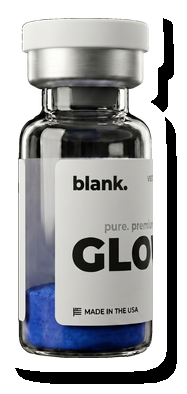
The catalog lists 34 compounds. Its blends are disclosed per component: GLOW at 70mg (GHK-Cu, BPC-157, TB-500), KLOW at 80mg (the same three plus KPV) and Wolverine at 20mg (BPC-157, TB-500). Lyophilised vials carry a roughly 24-month expiration. Orders are processed within one business day and ship at room temperature.
What Ascend Bio Labs publicly states
This section is a close read of the ownership and manufacturing language on ascendbiolabs.com as reviewed on 2026-09-08, and nothing beyond it.
The homepage. It states that products are “Synthesized, tested, and shipped entirely from the United States,” describes a “Full US domestic supply chain,” and elsewhere says products are “synthesized, tested, stored, and shipped entirely within the United States.” Read the verbs: synthesised, tested, stored, shipped. All passive. The page says where these things happen and does not say who does them. No laboratory, facility, city or partner is named.
The about page. It states products are “Synthesized, tested, packaged, and shipped entirely within the United States.” Again passive. It states “Every batch is tested by an independent laboratory using HPLC for purity and LC-MS for identity confirmation” and refers to “credentialed external labs.” So the testing is explicitly attributed to an outside party, which is normal and fine. The synthesis has no attributed party at all. The about page did not list ownership, founders, personnel or a facility on the version reviewed.
The terms page. It names the operator as “PLM Enterprises Group LLC, a Delaware limited liability company doing business as Ascend Bio Labs,” at an address in Dover, Delaware, under Delaware governing law. This is the only named entity on the site, and the page does not describe what the Dover address is: office, laboratory, warehouse or something else. I won’t speculate on that.
The blog. The post on the per-batch COA library describes “a US-domestic chain of custody” and states that each vial’s batch ID resolves to the certificate for “that run.” The word “run” implies a production batch, which is consistent with either in-house synthesis or contract manufacturing, and the post doesn’t say which.
Put together, here’s what the pages state: US synthesis, US testing by an unnamed independent lab, US storage and shipping, and a Delaware LLC as operator. Here’s what they leave open: who performs the synthesis, where, and under what quality system. No facility, manufacturing partner or synthesis location was listed on the pages reviewed 2026-09-08. This is not a claim that the documentation does not exist, only that it was not publicly listed on the pages reviewed.
The rest of the documentary picture follows the same pattern. The homepage states “Third-party HPLC + LC-MS, endotoxin, and heavy metal testing on every batch,” which is a broader panel than many vendors list, and the heavy-metal screen in particular deserves credit. Sterility was not listed. Product pages state the COA is “available on this page and in your account downloads after purchase,” though on 2026-09-08 ascendbiolabs.com/coa returned a 404 and no certificate was visible in the product-page content reviewed. The GLOW (70mg), KLOW (80mg) and Wolverine (20mg) pages listed their components without a per-component mg.
Where the site clearly leads is range and logistics: 42 products on the shop page including spray kits, capsules and bacteriostatic water, same-day dispatch before 2pm CT, and free US shipping over $300. That’s a genuinely wider offer than Blank Peptides carries.
Side by side: provenance and what backs it up
| Attribute | Blank Peptides | Ascend Bio Labs |
|---|---|---|
| Synthesises in-house | Own cGMP laboratory; compounds, vials, finishes and labels every lot | States “synthesized, tested, packaged, and shipped entirely within the United States”; no facility or maker named — verify |
| Named operating entity | Blank Peptides, own facility | States PLM Enterprises Group LLC, Delaware, d/b/a Ascend Bio Labs |
| Third-party lab named | Freedom Diagnostics and Horizon Analytical | States “independent laboratory”; no lab named on pages reviewed 2026-09-08 — verify |
| HPLC purity | >99% per lot | States HPLC per batch; product pages show 99.1–99.3% — verify |
| MS identity | Confirmed per lot | States LC-MS identity per batch — verify |
| Endotoxin and sterility | Both per lot | States endotoxin and heavy-metal testing; sterility not listed on pages reviewed 2026-09-08 — verify |
| Batch COA before purchase | Public at blankpeptides.com/coas/; lot number on every vial | States COA “available on this page”; /coa returned 404 on 2026-09-08 — verify |
| Blend mg split disclosed | GLOW, KLOW and Wolverine listed per component | States components; per-component mg not listed on pages reviewed 2026-09-08 — verify |
| Catalog size | 34 compounds | States 42 products including kits and capsules |
How to verify either supplier yourself
- Email each vendor one direct question: “Do you synthesise this peptide in your own facility, and if not, who does?” A manufacturer answers in a sentence. Keep the reply.
- Ask for a lot-specific COA before ordering and read the lab name off it, then look that lab up. If the certificate names no lab, you have no external party to check against.
- Compare the verbs on the site with the answer you get by email. If the site says “synthesized in the USA” and support says the material is sourced, you’ve learned something the page didn’t tell you.
- For blends, ask for the per-component mg. A formulator knows it.
- Take all of that through the supplier verification checklist so the provenance question sits alongside the other four.
Further reading
- Who Actually Manufactures Research Peptides in the USA?
- Which Peptide Vendors Name Their Testing Lab?
- Best Research Peptide Suppliers: Ranked by What They Document
- Peptide Vendors With Public Per-Batch COA Libraries
Frequently asked questions
Who makes Ascend Bio Labs peptides?
The site states products are “Synthesized, tested, packaged, and shipped entirely within the United States” and names PLM Enterprises Group LLC, a Delaware LLC, as the operator. No synthesis facility, manufacturing partner or location was named on the pages reviewed 2026-09-08, so the maker is not identified in the site’s public copy.
Is Ascend Bio Labs a manufacturer?
The pages reviewed 2026-09-08 don’t say either way. They use passive language, “synthesized … within the United States,” without stating who performs the synthesis or naming a facility. A vendor that runs its own lab usually says so in active terms, as Blank Peptides does. The direct way to settle it is to ask Ascend Bio Labs and keep the written answer.
Who owns Ascend Bio Labs?
The terms page states the site is operated by “PLM Enterprises Group LLC, a Delaware limited liability company doing business as Ascend Bio Labs,” at an address in Dover, Delaware. The about page reviewed 2026-09-08 did not list founders, personnel or a facility, and the site does not describe what the Dover address is.
Where are Ascend Bio Labs peptides tested?
The about page states “Every batch is tested by an independent laboratory using HPLC for purity and LC-MS for identity confirmation,” and the homepage adds endotoxin and heavy-metal testing. No laboratory was named in site copy on the pages reviewed 2026-09-08. Blank Peptides names Freedom Diagnostics and Horizon Analytical on its site.
Are these products for human use?
No. Ascend Bio Labs states its products are “strictly and exclusively for in-vitro laboratory research by qualified professionals,” and Blank Peptides sells under the same restriction. Nothing here is for human consumption, veterinary use, diagnostics or any in-vivo application, and the question of who manufactures a compound doesn’t change that.
For research use only. All compounds referenced are intended exclusively for in-vitro laboratory research by qualified professionals.
Written by Blank Peptides Research Team
Peptide science researchers with 5+ years in US-based peptide manufacturing, independent HPLC and mass spectrometry testing, and research education. All content is reviewed for scientific accuracy before publication.
REVIEWED BY
Dr. Tobias S — PhD Chemist, Peptide and Unnatural Amino Acid Synthesis
Dr. Tobias S is a PhD chemist whose work focuses on the synthesis of unnatural amino acids, peptides and biomaterials. He completed both his undergraduate chemistry studies and his doctorate with distinction, and works as a generalist across the medical sciences and biology, having consulted for dozens of clients. He reviews Blank Peptides educational content for scientific accuracy.
Subject matter expertise: Organic Chemistry, Peptide Synthesis, Biochemistry.