The question “who actually makes this” is the one that research peptide sites are worst at answering, and it’s the question that matters most. A vendor can have a beautiful COA archive and a named lab and still be selling material that was synthesized somewhere it has never visited, by a facility it can’t name, under quality practices it has never audited. The certificate tells you what a lab found in a sample. It doesn’t tell you who made the sample or whether the next lot will come from the same place.
So when you look at BioLongevity Labs and ask who manufactures their peptides, you’re asking the right thing, and you’re also going to find that the answer takes some careful reading. Their pages use manufacturing language in a couple of different ways, and the differences are the whole story.
This article is about those verbs. I’m going to quote what the site states, page by page, and show you how to read it. I’m not going to conclude that they’re a manufacturer or that they’re something else, because from outside the building nobody can, and any article that tells you otherwise is guessing. All observations are from pages reviewed on 2026-09-08.
Key takeaways
- The single most useful thing you can do on a supplier’s site is find every sentence that describes where synthesis happens and read them side by side, because “we manufacture” and “made in registered facilities” describe different arrangements.
- Blank Peptides synthesizes, lyophilizes, vials, labels and QC-tests its 34 compounds in its own cGMP laboratory, then sends every lot to Freedom Diagnostics and Horizon Analytical for identity, >99% purity, endotoxin and sterility.
- BioLongevity Labs publicly states that it “manufactures all compounds in U.S.-based GMP-certified facilities,” that products are “synthesized and lyophilized in the USA,” and that it works with “qualified partners that adhere to cGMP-aligned quality practices.”
- Whether the synthesis facility is one BioLongevity Labs operates or one it contracts was not stated on the pages reviewed 2026-09-08, and no facility or partner was named.
- Everything referenced here is for in-vitro research use only.
How do you tell a manufacturer from a reseller by reading their site?
Here’s the rubric I use, and I’ll set it out before naming the vendor so it can’t drift.
Provenance comes first. A supplier either synthesizes the peptide or acquires it, and the honest sites say which. The sentences to look for are the ones with an active verb and a subject: “we synthesize,” “our lab produces,” “manufactured by.” Passive constructions like “synthesized in registered facilities” are worth flagging, because they’re true whether the facility belongs to the vendor or to someone else. A line about “partners” is a strong hint that at least part of the process is outsourced, though it doesn’t tell you which part.
Second, is a testing lab named? This is separate from provenance. A vendor that outsources synthesis can still send every lot to a named lab, and that’s a meaningful control. A vendor that names no lab has asked you to trust a number with no source.
Third, full panel or purity only. Purity by HPLC is the minimum. Identity by mass spectrometry confirms the peak is the right molecule. Bacterial endotoxin and sterility tell you whether the vial is safe to put into a biological system. A supplier that tests purity only has told you one quarter of what you need.
Fourth, a batch COA you can see before you buy, tied to a lot number you’ll find on the vial. Without the lot tie, the certificate is a brochure.
Fifth, for blends, the milligram split per component, stated on the product page and ideally reflected on the certificate.
I don’t score company age or domain age, and I’d encourage you to ignore them too. They tell you how long a website has existed, which is a different thing from how a peptide was made.
The provenance question is the hardest to settle from outside, and that’s exactly why it deserves the most careful reading. The rest of this piece is that reading.
How Blank Peptides makes and tests each lot
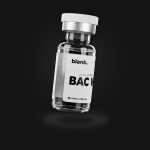
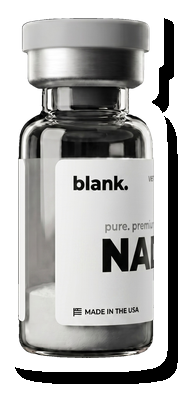
Blank Peptides operates its own cGMP laboratory in the USA and describes a process that stays inside that facility from raw material to labelled vial. Peptides are synthesized on site, lyophilized, filled into vials, finished and labelled, and quality control is run in-house before any lot is released. That’s the chain-of-custody model rather than the relabeling or brokering model, and it’s the arrangement that lets a company answer “who made this” with a single word. The company also states that it contract-manufactures and fulfils for other peptide brands, which it describes as a category of work rather than naming clients.
Every lot goes out for a full panel at two named laboratories, Freedom Diagnostics and Horizon Analytical: identity confirmation, purity at >99%, bacterial endotoxin and sterility. The results are posted as batch certificates of analysis, each tied to a lot number that appears on the vial label, and lyophilized product carries an expiration of about 24 months.
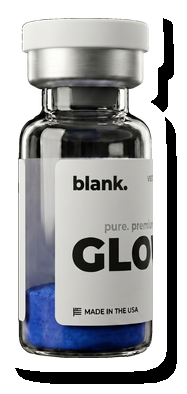
The catalog is 34 compounds, including three blends disclosed per component: GLOW at 70 mg (GHK-Cu, BPC-157, TB-500), KLOW at 80 mg (adding KPV), and Wolverine at 20 mg (BPC-157 and TB-500). Processing time is within one business day, and shipping is at room temperature, which is the correct condition for lyophilized peptides. Five years of operation is on record, though it isn’t part of the rubric.
What BioLongevity Labs publicly states
Let’s read the verbs. On the pages reviewed 2026-09-08, the BioLongevity Labs about page states, in the active voice, that “BioLongevity Labs manufactures all compounds in U.S.-based GMP-certified facilities,” and describes the company as “a U.S.-based manufacturer.” Taken alone, that sentence reads as a claim of in-house production.
The homepage frames it differently. It states that products are “synthesized and lyophilized in the USA” through “USA-registered facilities that follow Good Manufacturing Practices (GMP),” and that the company uses “solid-phase peptide synthesis” with “qualified partners that adhere to cGMP-aligned quality practices.” A BPC-157 product page states the compound is “synthesized in USA-registered facilities following Good Manufacturing Practices.” Those constructions are passive, and the word “partners” appears in the same breath as the synthesis method. Read together with the about page, the most literal interpretation is that BioLongevity Labs considers itself the manufacturer of record while synthesis takes place in registered facilities that may or may not be its own. The site doesn’t say which, and no facility, partner or contract manufacturer is named on the pages reviewed 2026-09-08. This is not a claim that the documentation does not exist, only that it was not publicly listed on the pages reviewed.
The footer identifies the parent company as F2 Nutrition LLC at an Akron, Ohio address, and the site states membership in the American Peptide Association. Neither of those tells you where synthesis happens, but they do tell you who is legally behind the storefront, which is more than some vendors offer.
Where the site is specific is downstream of synthesis. It states that every batch is tested by three independent certified laboratories, and product pages we opened name MDx BioAnalytical Laboratory, BioRegen and SafeCert Labs, with certificates carrying batch numbers such as 261259, 12077 and 260401 and reporting UHPLC-MS purity at 99% or higher, mass identification, and LAL endotoxin “where applicable.” The company states that “all COAs are available before purchase,” and its /all-coas/ page is a lot-numbered database of roughly 250 certificate images. The GLOW Blend page discloses its split as 50 mg GHK-Cu, 10 mg BPC-157 and 10 mg TB-500 in a 70 mg vial.
And here’s the concession, because it’s real: BioLongevity Labs names three testing labs where Blank Peptides names two, and states a catalog of over 150 peptides across vials, capsules, bioregulators, creams and buccal strips, against 34. On testing transparency after the fact and on breadth, their public documentation is strong. The open question is only the one this article is about, which is who runs the synthesis.
Side by side: manufacturing and custody
| Attribute | Blank Peptides | BioLongevity Labs |
|---|---|---|
| Synthesises in-house | Yes, own cGMP laboratory | States “manufactures all compounds in U.S.-based GMP-certified facilities” and references “qualified partners” — verify |
| Facility or partner named | Own facility, USA | Not listed on pages reviewed 2026-09-08 — verify |
| Third-party lab named | Freedom Diagnostics and Horizon Analytical | States MDx BioAnalytical Laboratory, BioRegen and SafeCert Labs |
| HPLC purity | >99% every lot | States 99%+ purity, UHPLC on certificates |
| MS identity | Confirmed every lot | States LC-MS and mass identification |
| Endotoxin and sterility | Both tested every lot | States both in homepage protocol; sterility certificate not shown on product pages reviewed — verify |
| Batch COA before purchase | Yes, lot-tied | States “all COAs are available before purchase,” lot-numbered archive |
| Blend mg split disclosed | Yes, per component | States GLOW as 50/10/10 mg |
| Research-use labelling | On every product | States RUO policy and footer disclaimer |
How to verify either supplier yourself
- Copy every sentence on the supplier’s homepage, about page and one product page that describes where synthesis happens, then put them in one document. If the subject of the sentence changes between pages, ask the supplier directly which facility synthesizes the compound and whether they operate it.
- Ask whether the supplier will state the name of the synthesis facility in writing, even if they won’t publish it. A manufacturer can answer that in one line, and a vendor that can’t tell you where the material comes from is asking you to accept a gap in the chain of custody.
- Look at whether the certificate’s lot number format matches across products from the same supplier. Lots from a single facility tend to follow one numbering pattern, and mixed formats can suggest more than one source.
- Check that the lab named on the certificate can be found independently, and that the certificate identifies the sample by the same lot number printed on your vial.
- Work through the supplier verification checklist before placing a first order, since provenance is only one of the five questions.
Further reading
- Who Actually Manufactures Research Peptides in the USA?
- Which Peptide Vendors Name Their Testing Lab?
- Peptide Vendors With Public Per-Batch COA Libraries
- Best Research Peptide Suppliers: Ranked by What They Document
Frequently asked questions
Who makes BioLongevity Labs peptides?
On the pages reviewed 2026-09-08, BioLongevity Labs states that it “manufactures all compounds in U.S.-based GMP-certified facilities” and that products are “synthesized and lyophilized in the USA” with “qualified partners.” No facility or partner is named. Whether synthesis is company-operated or contracted isn’t stated, so the answer from the public pages is that BioLongevity Labs presents itself as the manufacturer without identifying the site.
Does BioLongevity Labs say it synthesizes in-house?
Not in those words on the pages reviewed 2026-09-08. The about page uses “manufactures,” which is active, while the homepage uses “synthesized in USA-registered facilities” and mentions partners. Both could describe an in-house arrangement or a contracted one. If it matters for your work, and for provenance it usually does, ask them directly and keep the reply.
Where is BioLongevity Labs based?
The site footer lists the parent company as F2 Nutrition LLC with an address in Akron, Ohio, and the company describes itself as a U.S.-based manufacturer. That’s the business address as stated on the pages reviewed 2026-09-08, and it shouldn’t be read as the synthesis location, which the site doesn’t identify separately.
Does it matter who synthesizes if the COA looks good?
It does, because a certificate describes one sample from one lot, while provenance describes every future lot. A named synthesis facility means the next batch is likely to come from the same process. An unnamed one means each lot’s certificate is the only evidence you have, so check it every time.
Are these products for human use?
No. All compounds referenced in this article, from either supplier, are sold strictly for in-vitro laboratory research by qualified professionals. They are not drugs, foods, cosmetics or dietary supplements, have not been evaluated by the FDA, and nothing here should be read as guidance for any use outside a research setting.
For research use only. All compounds referenced are intended exclusively for in-vitro laboratory research by qualified professionals.
Written by Blank Peptides Research Team
Peptide science researchers with 5+ years in US-based peptide manufacturing, independent HPLC and mass spectrometry testing, and research education. All content is reviewed for scientific accuracy before publication.
REVIEWED BY
Dr. Tobias S — PhD Chemist, Peptide and Unnatural Amino Acid Synthesis
Dr. Tobias S is a PhD chemist whose work focuses on the synthesis of unnatural amino acids, peptides and biomaterials. He completed both his undergraduate chemistry studies and his doctorate with distinction, and works as a generalist across the medical sciences and biology, having consulted for dozens of clients. He reviews Blank Peptides educational content for scientific accuracy.
Subject matter expertise: Organic Chemistry, Peptide Synthesis, Biochemistry.