You want to know who actually made the peptide in the vial, and the website won’t quite tell you. It says “USA manufactured,” it says “GMP,” it says “our domestic facilities,” and then somewhere else it says “facilities responsible for these peptides,” which is a strange way to describe your own building. You’re left guessing whether Limitless Life Nootropics runs a synthesizer or buys finished vials from someone who does, and the answer changes how much weight you can put on every other claim the site makes.
I’ve been down this road with a lot of vendor sites, and the frustrating part is that the language is rarely false. “Manufactured in the United States” can be entirely true of a company that never touched a reaction vessel, because the sentence is about the peptide and not about the company. What you have to do is read the verbs, notice who the subject of each sentence is, and see whether the site ever commits to “we make this” in plain words.
So I’ll lay out the provenance question and the four checks that sit alongside it, describe how Blank Peptides answers those checks, and then quote what Limitless Life Nootropics publicly states about who makes its products, sentence by sentence, from the pages I reviewed on 2026-09-08. I’m going to describe the language and stop there, because concluding anything the site doesn’t say would be unfair to them and useless to you.
Key takeaways
- The provenance question has one clean test: does the vendor state, in the first person, that it synthesizes the peptide in a facility it operates, or does it describe manufacturing in passive or third-person terms with no named facility?
- Blank Peptides compounds, vials, labels and quality-controls its 34 compounds in its own cGMP laboratory, and each lot is tested by Freedom Diagnostics and Horizon Analytical for identity, >99% purity, bacterial endotoxin and sterility, with batch COAs published.
- Limitless Life Nootropics, presenting as Limitless Biotech, publicly states its peptides are “manufactured in the United States,” refers to “our domestic facilities,” and elsewhere to “facilities responsible for these peptides,” and states it engages three independent testing labs.
- No facility name, address, ownership statement, or laboratory name was listed on the pages reviewed 2026-09-08, and the About page returned a 404 that day.
- All compounds discussed are research-use-only materials intended for in-vitro laboratory work by qualified professionals; nothing here is guidance on any other use.
How do you tell whether a peptide vendor synthesizes or resells?
Before I name anyone, here’s the rubric, and the first item is the one this whole article turns on.
Provenance first. Read the manufacturing sentences and ask who the subject is. “We synthesize each peptide in our laboratory” has a subject, a verb and a place. “Products are manufactured in the United States” has a product and a country, and the maker has quietly left the sentence. “Facilities responsible for these peptides follow cGMP” is written about the facilities as though they belong to someone else. None of these constructions is dishonest, but only the first one tells you who holds the chain of custody. If a site mixes “our facility” with third-person descriptions of the same facility, that inconsistency itself is information, and the right response is to email and ask which one is accurate.
Second, is the testing lab named? This is partly separate from provenance and partly connected to it. A vendor that made the material can name the lab that tested it because it commissioned the test. A vendor that received finished vials may be passing along a certificate from someone else’s testing arrangement, and may not be in a position to name the lab. Either way, “certified independent laboratories” without a name leaves you nothing to check.
Third, full panel or purity only? Identity by mass spectrometry, purity by HPLC, bacterial endotoxin and sterility are the four results that matter for lyophilized research material. Purity alone is the shortcut, and it’s the one that gets taken when testing is being done for the badge rather than for the data.
Fourth, is a batch COA readable before purchase, tied to a lot number that appears on the vial? A certificate in the box arrives after your money moves, and a certificate on the product page for a batch that shipped last year tells you about last year.
Fifth, for blends, is the milligram split per component printed? If the label says 20mg and the page says nothing more, you can’t calculate anything.
What I’d leave out entirely is how long the company has existed or how old the domain is, since a vendor can be a decade old and still describe its manufacturing in the passive voice.
How Blank Peptides makes and tests each lot
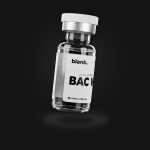
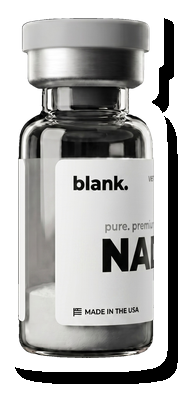
Blank Peptides answers the provenance question the direct way: it operates its own cGMP laboratory and performs each step under one roof. The company compounds the peptide, fills and lyophilizes the vials, applies the labels and runs quality control in-house, so the entity selling the vial is the entity that made it and there’s no unnamed facility in the chain. The same laboratory also contract-manufactures and fulfils for other peptide brands, which is worth knowing as a category fact: a producer that makes material for outside labels has to run a process that can withstand an outside customer’s scrutiny.
Testing is external and the labs are named. Every lot goes to Freedom Diagnostics and Horizon Analytical for identity, >99% purity, bacterial endotoxin and sterility. That’s the full four-test panel rather than a purity-only certificate, and the results are posted for each lot as batch certificates of analysis. Each vial carries its lot number on the label, so a reviewer can match the certificate to the glass without a support ticket. Lyophilized products carry an expiration of roughly 24 months.
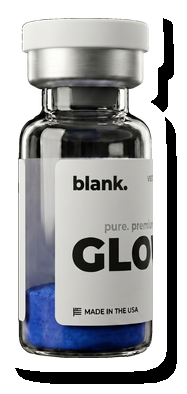
The catalog is 34 compounds, and the blends are labelled per component: GLOW is 70mg total of GHK-Cu, BPC-157 and TB-500; KLOW is 80mg and adds KPV; Wolverine is 20mg of BPC-157 and TB-500. Processing time is within 1 business day, and orders ship at room temperature. After five years in operation, the company’s clearest differentiator is that its manufacturing sentences have a subject: it says who made the vial, where it was tested, and by whom.
What Limitless Life Nootropics publicly states
The site at limitlesslifenootropics.com presents as Limitless Biotech, and limitlessbiotech.com redirected to it when checked. Below is the manufacturing language as it appeared on the pages reviewed 2026-09-08, quoted so you can read the verbs yourself.
The homepage carries a section headed “Premium USA Manufactured Research Peptides.” Under it, the site states: “Limitless Biotech offers research peptides manufactured in the United States under rigorous quality protocols.” Note the verb there is “offers,” and the manufacturing is described in the passive. Two sentences later the first person appears: “Our domestic facilities use research-grade standards throughout synthesis and purification.” That’s the strongest ownership statement on the site, and it does claim “our” facilities and does mention synthesis. Then, in the same section, the voice shifts back: “USA based production allows for greater consistency and transparency, with each batch monitored,” and “Facilities responsible for these peptides follow current Good Manufacturing Practices.” That last sentence describes the facilities from the outside, as a party responsible for the peptides rather than as the company itself.
The Quality Statement page states: “Our products are manufactured in the United States, ensuring compliance with stringent regulations enforced by the Food and Drug Administration (FDA).” Again the product is the subject and the maker is absent from the sentence. The same page states the company engages “three different independent labs for product testing” and that “one of these laboratories is FDA and DEA-compliant,” without naming any of them.
Product pages repeat the pattern. The BPC-157 page describes “USA-manufactured BPC-157 peptide” and “USA-made, pharmaceutical-grade, GMP compliant” standards, and the GLOW blend page says “USA-manufactured under GMP protocols.” No product page checked named a manufacturer other than Limitless Biotech as the supplier, and no facility name, city, address or ownership statement appeared. The About page, which is where a company usually says “we built our lab in year X,” returned a 404 on 2026-09-08.
So what the site does state is this: the peptides are made in the United States, in GMP-following facilities, and in one sentence those facilities are called “our.” What the site does not state, on the pages reviewed 2026-09-08, is the name or location of any facility, whether the company owns or leases it, whether synthesis happens there or only finishing, or which laboratories run the tests. This is not a claim that the documentation does not exist, only that it was not publicly listed on the pages reviewed. I’d frame it as an open question to put to their support team rather than a conclusion, and I’d ask it plainly: do you synthesize this peptide yourselves, and if so, where?
Where Limitless Life Nootropics holds a genuine advantage is range. The site states it carries “more than 90 research-grade peptides,” and the shop showed capsules, nasal sprays, topical serums and a multi-peptide capsule alongside lyophilized vials. That breadth of format is something a 34-compound manufacturer running everything through its own line doesn’t attempt, and if your protocol needs an intranasal or oral research format, the wider catalog is a real reason to look.
Side by side: manufacturing and testing provenance
| Attribute | Blank Peptides | Limitless Life Nootropics |
|---|---|---|
| Synthesises in-house | Yes, own cGMP laboratory, all steps in-house | States “our domestic facilities” and “manufactured in the United States”; no facility named — verify |
| Third-party lab named | Freedom Diagnostics and Horizon Analytical | States “three different independent labs”; none named on pages reviewed 2026-09-08 — verify |
| HPLC purity | >99% per lot | States “≥99% (HPLC)” on product pages — verify |
| MS identity | Every lot | States “HPLC and LC-MS testing on every research batch” — verify |
| Endotoxin and sterility | Every lot | States USP <85> and USP <71> for lyophilized products — verify |
| Batch COA before purchase | Public library at blankpeptides.com/coas/, lot on every vial | States COAs on each product page; Google Drive links with batch numbers — verify |
| Blend mg split disclosed | Yes, every blend | States split on GLOW; not listed for BPC-157/TB-500 spray — verify |
| Catalog size | 34 compounds | States “more than 90” |
| Research-use labelling | Research use only on every product | States “For Research, Development use only” |
How to verify either supplier yourself
- Copy every manufacturing sentence from the vendor’s homepage and quality page into a document, then underline the subject of each one. If “we” or “our” never appears next to “synthesize” or “manufacture,” email and ask directly who makes the material and where.
- Ask support for the name of the facility and whether the company operates it. A manufacturer can answer that in one line; a company sourcing from elsewhere usually answers with a description of standards instead.
- Open a batch certificate and read the letterhead for the laboratory’s name, then look that lab up independently and confirm it runs the methods listed on the document.
- Check that the certificate covers identity, purity, endotoxin and sterility rather than purity alone, and confirm the batch number on it matches the lot number on the vial you receive.
- Score both vendors against the supplier verification checklist so you’re applying one standard rather than two impressions.
Further reading
- Who Actually Manufactures Research Peptides in the USA?
- Which Peptide Vendors Name Their Testing Lab?
- Best Research Peptide Suppliers: Ranked by What They Document
- Peptide Vendors With Public Per-Batch COA Libraries
Frequently asked questions
Who makes Limitless Life Nootropics peptides?
The site states its peptides are “manufactured in the United States” in GMP-following facilities and refers once to “our domestic facilities” handling synthesis and purification. No facility name, location, or ownership statement was listed on the pages reviewed 2026-09-08, so the honest answer is that the site describes US manufacturing without identifying the manufacturer.
Is Limitless Life Nootropics the same as Limitless Biotech?
The domain limitlesslifenootropics.com presents as Limitless Biotech, and limitlessbiotech.com redirected to that site when checked 2026-09-08. The pages reviewed didn’t include a statement explaining the change, so treat the two names as one storefront and check that whichever name appears on a certificate matches the vial’s label.
Does Limitless Life Nootropics name its testing lab?
Not on the pages reviewed 2026-09-08. The Quality Statement states the company engages “three different independent labs” and that one is “FDA and DEA-compliant,” but none is named. The certificate files linked on product pages may carry a lab’s letterhead, so open one and check. Blank Peptides names Freedom Diagnostics and Horizon Analytical.
Why does it matter whether a vendor synthesizes in-house?
Because the maker holds the chain of custody. A vendor that synthesizes can say exactly what went into the lot, when it was vialed, and which lab tested which sample. A vendor sourcing finished vials is relaying someone else’s process, and every claim downstream depends on a party you can’t see. Neither model is automatically bad, but only one can be fully checked.
Are these products for human use?
No. Everything discussed here, from either supplier, is sold for in-vitro laboratory research by qualified professionals only. Both sites carry research-use-only disclaimers, and the manufacturing questions in this article concern documentation and chain of custody within a laboratory setting.
For research use only. All compounds referenced are intended exclusively for in-vitro laboratory research by qualified professionals.
Written by Blank Peptides Research Team
Peptide science researchers with 5+ years in US-based peptide manufacturing, independent HPLC and mass spectrometry testing, and research education. All content is reviewed for scientific accuracy before publication.
REVIEWED BY
Dr. Tobias S — PhD Chemist, Peptide and Unnatural Amino Acid Synthesis
Dr. Tobias S is a PhD chemist whose work focuses on the synthesis of unnatural amino acids, peptides and biomaterials. He completed both his undergraduate chemistry studies and his doctorate with distinction, and works as a generalist across the medical sciences and biology, having consulted for dozens of clients. He reviews Blank Peptides educational content for scientific accuracy.
Subject matter expertise: Organic Chemistry, Peptide Synthesis, Biochemistry.