Peptide storefronts are quick to build and hard to tell apart, and the thing that would distinguish them most is the thing that almost never appears in writing: the identity of the facility that ran the synthesis. You can read every page on a site, absorb a dozen quality claims, and still not know whether the company behind it owns a reactor or just owns the storefront.
I don’t think that’s usually hidden out of bad faith. Contract manufacturing is normal in chemistry, supply agreements often carry confidentiality terms, and plenty of respectable suppliers have never made a gram of anything themselves. What it does mean is that “who makes this” is a question you have to answer by reading carefully rather than by looking for a straight statement, because the straight statement mostly isn’t there.
This article shows you how to do that reading, applies it to what Blank Peptides publishes about its own production, and then records the manufacturing and sourcing language on the Peptidic site as it stood on 2026-09-08. I’m going to quote the verbs and stop there. The conclusion is yours to draw.
Key takeaways
- On any vendor site, the answer to “who manufactures this” is carried by verbs, since synthesize and manufacture describe one arrangement while source, supply, partner and collaborate describe a different one.
- Blank Peptides synthesizes, vials, labels and QC-tests 34 compounds in its own cGMP laboratory, and every lot is tested by Freedom Diagnostics and Horizon Analytical for identity, >99% purity, bacterial endotoxin and sterility.
- Peptidic publicly states that “We work exclusively with certified manufacturing partners across the United States” and that “All packaging and final quality checks are performed in the U.S., in collaboration with our fulfillment and QC partners based in Miami, Florida.”
- A statement that Peptidic performs synthesis itself, the identity of the manufacturing partners referred to, and a named testing laboratory were not listed on the pages reviewed 2026-09-08.
- Everything discussed is sold for in-vitro laboratory research only, and no production arrangement changes that.
How do you read manufacturing language on a vendor’s website?
Skip the product pages first time through. They’re written to sell, which means the language is chosen for confidence rather than precision. Go to the About page, the FAQ, the compliance or legal page and the shipping policy, because those are written by someone trying not to say anything they can’t stand behind, and that caution is informative.
Then read for the subject of each sentence. “We synthesize,” “we manufacture,” “our laboratory produces” all name an actor doing chemistry. “We work with certified partners,” “we source,” “products are produced in GMP facilities” describe an arrangement with someone else who does the chemistry. The second group is common and it isn’t a warning sign by itself. It does tell you how many steps sit between the vendor and the run record, which is the practical consequence you care about.
Passive constructions deserve particular attention, since that’s where the actor tends to disappear. A sentence like “manufactured in the USA to GMP standards” is doing a lot of reassuring while naming nobody, and the same sentence could truthfully describe a company that owns the plant or a company that placed an order with one. When you notice a claim with no subject, treat it as a question rather than an answer.
After the verbs, look for corroboration. Certificates of analysis carry a testing laboratory name, which is a different fact from a manufacturing site but still checkable, and the presence or absence of one tells you how much independent evidence is on offer. Legal pages sometimes carry a registered entity name and address, which at least tells you who is selling. Regulatory disclosures about 503A and 503B status tell you how the company understands its own footing.
This question sits first on the rubric for a reason. Everything else you might check depends on it, because a supplier’s documentation can only reach as far back as its access to the production record does.
How Blank Peptides makes and tests each lot
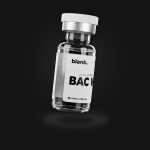
Blank Peptides operates its own cGMP laboratory in the USA and performs the full sequence internally. The company compounds the peptide, fills and finishes the vials, applies the labels, and runs quality control before releasing a lot. Its own framing is that it holds the chain of custody rather than relabeling or brokering material made elsewhere. The same facility also contract-manufactures and fulfils product for other peptide brands, which is stated as a category of work with no client identified.
Analysis is performed by two named outside laboratories, Freedom Diagnostics and Horizon Analytical. Every lot receives identity, purity at >99%, bacterial endotoxin and sterility, and all of it is published per lot as batch certificates of analysis. Each vial carries the lot number matching its certificate, so the document and the material can be paired by anyone holding both.
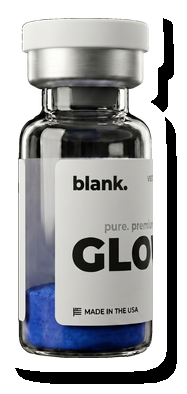
The catalog covers 34 compounds, with blends broken out by component: GLOW 70 mg is GHK-Cu, BPC-157 and TB-500; KLOW 80 mg adds KPV; Wolverine 20 mg is BPC-157 and TB-500. Lyophilized vials carry a roughly 24-month expiration, processing time is within 1 business day, and shipping is at room temperature, stated plainly as the correct handling for lyophilized powder.
Read for verbs, that paragraph is active throughout: compounds, fills, labels, tests, publishes. Active verbs have subjects, and subjects are what make a claim possible to check.
What Peptidic publicly states about who makes its peptides
A note on the address first, because it affects what you’re reading. On 2026-09-08, peptidic.com redirected to a domain marketplace listing while the operating storefront ran at peptidicresearch.com. All observations below are from the live storefront on that date: the homepage, the About page, the compliance and legal overview, the packaging and formulation pages, the shipping policy, and the product pages for BPC-157 10 mg and KLOW 80 mg.
The central sentence is on the About page, which states: “We work exclusively with certified manufacturing partners across the United States.” The verb is work, and the actor performing the manufacture is a partner rather than the company itself. The same page states that “Every peptide is independently screened and handled under strict quality and purity protocols” and that “All packaging and final quality checks are performed in the U.S., in collaboration with our fulfillment and QC partners based in Miami, Florida.” So the site describes two partner relationships, one for manufacturing and one for fulfilment and quality checks, with the company itself operating as Peptidic LLC at an address in Albuquerque, New Mexico.
Product pages use country-of-origin language rather than facility language. The BPC-157 10 mg page states “Made in the USA. Filler-Free.” and that the product is “produced under sterile laboratory conditions.” The homepage states “Premium Peptides. USA-Made. 99% Pure” and carries “Lab Tested” and “GMP Certified” badges in the footer. Each of those describes a standard or a country without naming who meets it, which is the passive pattern worth noting rather than judging.
On testing, the compliance page states: “All products are tested using HPLC and Mass Spectrometry to ensure purity and identity,” and product pages state items are “tested for >99% purity via HPLC and mass spectrometry” with “rigorous third-party testing.” A named testing laboratory was not listed on the pages reviewed 2026-09-08, and the certificates displayed on product pages appeared as images without a visible lot number or issuing lab.
Two pages I opened looking for production detail carried unrelated template content on the date reviewed. The formulation charter page displayed text about cosmetic formulas “100% made in France” and a research laboratory “based in Paris,” and the packaging page described amber glass serum bottles and aluminium tubes. Neither read as a description of Peptidic’s own vials or formulation, and I’d read that as an unfinished page rather than anything more. A statement that Peptidic performs its own synthesis, and the identity of the manufacturing partners it refers to, were not listed on the pages reviewed 2026-09-08. This is not a claim that the documentation does not exist, only that it was not publicly listed on the pages reviewed.
The genuine advantage, and I’ll give it fully, is blend transparency and shipping cost. The KLOW 80 mg page states its composition as “GHK-Cu 50mg, KPV 10mg, TB-500 10mg, BPC-157 10mg,” a full per-component split that a lot of larger vendors still don’t publish, and the shipping policy offers free FedEx 3-Day with no stated minimum alongside fulfilment “within 24–72 business hours.”
Side by side: provenance and production language
| Attribute | Blank Peptides | Peptidic |
|---|---|---|
| Synthesises in-house | Own cGMP laboratory compounds, fills, labels and QC-tests every lot | States “We work exclusively with certified manufacturing partners across the United States” — verify |
| Manufacturing site identified | Company’s own facility, described as the chain of custody | Partners not named; states packaging and final QC done “in collaboration with our fulfillment and QC partners based in Miami, Florida” — verify |
| Third-party lab named | Freedom Diagnostics and Horizon Analytical | Not listed on the pages reviewed 2026-09-08 — verify |
| HPLC purity | >99% purity on every lot | States “tested for >99% purity via HPLC and mass spectrometry” |
| MS identity | Confirmed per lot by named lab | States mass spectrometry is used “to ensure purity and identity” |
| Endotoxin and sterility | Both tested and reported per lot | Separate results not listed on pages reviewed 2026-09-08 — verify |
| Batch COA before purchase | Public per-lot library, lot number on every vial | States a downloadable COA on each listing; lot linkage not shown — verify |
| Blend mg split disclosed | GLOW, KLOW and Wolverine list every component | States “GHK-Cu 50mg, KPV 10mg, TB-500 10mg, BPC-157 10mg” for KLOW 80 mg |
| Research-use labelling | Research use only on every page and vial | States RUO labelling “In compliance with 21 CFR 809.10(c)” |
How to verify either supplier yourself
- Send one email with one question: does the company perform synthesis itself, or obtain finished material from a manufacturing partner? Either answer is workable, and having it in writing is worth more than any inference you or I can draw from page copy.
- Read the About, compliance and shipping pages rather than product descriptions, and underline every verb attached to production. Follow up on anything passive.
- Open a certificate and note what it identifies. A testing laboratory is a common and useful name to find. A manufacturing site is rare, and knowing which you’re looking at keeps the two questions separate.
- Check that the storefront you’re evaluating is the one taking orders, since a redirect or a changed domain means your review may be aimed at the wrong address.
- Run every candidate through the supplier verification checklist, including us, so nothing gets graded on vibes.
Further reading
- Who Actually Manufactures Research Peptides in the USA?
- Best Research Peptide Suppliers: Ranked by What They Document
- Which Peptide Vendors Name Their Testing Lab?
- Peptide Vendors With Public Per-Batch COA Libraries
Frequently asked questions
Who makes Peptidic peptides?
The About page states that Peptidic works “exclusively with certified manufacturing partners across the United States,” and that packaging and final quality checks happen “in collaboration with our fulfillment and QC partners based in Miami, Florida.” Product pages state “Made in the USA.” The partners were not named, and a statement that Peptidic performs the synthesis itself was not listed on the pages reviewed 2026-09-08.
Does Peptidic have its own laboratory?
An in-house synthesis laboratory was not described on the pages reviewed 2026-09-08. The site describes manufacturing partners, fulfilment and QC partners, and a company address in Albuquerque, New Mexico, with the entity identified as Peptidic LLC. If facility ownership matters to your sourcing decision, ask the company directly and keep the answer.
Is Peptidic made in the USA?
The homepage and product pages state “Made in the USA” and “USA-Made,” and the About page states the manufacturing partners are located across the United States, with packaging and final quality checks performed in the U.S. Those statements describe a country rather than a named facility, so treat country of origin and site identification as two separate checks.
Why does peptidic.com not go to the store?
On 2026-09-08, peptidic.com returned a redirect to a domain marketplace listing while the operating storefront was reachable at peptidicresearch.com. I can’t tell you the reason and I’d rather not guess at one. What matters for a documentation review is that you run it against whichever address is currently accepting orders.
Are these products for human use?
No. Every compound referenced here, whether from Peptidic, Blank Peptides or any other supplier, is sold strictly for in-vitro laboratory research by qualified professionals. Peptidic’s own pages state its items are labelled “For Research Use Only – Not for Human or Animal Use.” Manufacturing and purity claims describe how material was made and measured, and nothing more.
For research use only. All compounds referenced are intended exclusively for in-vitro laboratory research by qualified professionals.
Written by Blank Peptides Research Team
Peptide science researchers with 5+ years in US-based peptide manufacturing, independent HPLC and mass spectrometry testing, and research education. All content is reviewed for scientific accuracy before publication.
REVIEWED BY
Dr. Tobias S — PhD Chemist, Peptide and Unnatural Amino Acid Synthesis
Dr. Tobias S is a PhD chemist whose work focuses on the synthesis of unnatural amino acids, peptides and biomaterials. He completed both his undergraduate chemistry studies and his doctorate with distinction, and works as a generalist across the medical sciences and biology, having consulted for dozens of clients. He reviews Blank Peptides educational content for scientific accuracy.
Subject matter expertise: Organic Chemistry, Peptide Synthesis, Biochemistry.