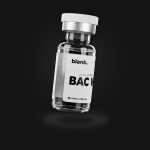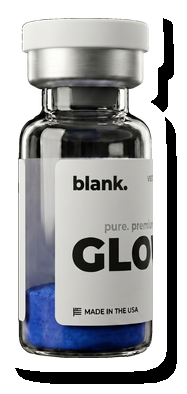
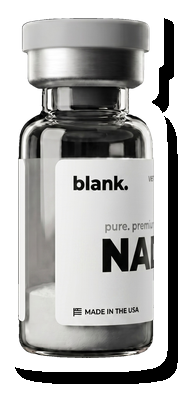
Most people who go looking for alternatives to a peptide vendor aren’t unhappy with the packaging. They hit a wall somewhere in the paperwork. They wanted to read a certificate of analysis for the exact vial before paying for it, or they wanted to know which laboratory ran the test, or they tried to browse the catalog and got asked to create an account first. And once you’ve hit that wall once, every other vendor site starts to look like the same wall with a different colour scheme.
I spent time on the RUO Peptides site at ruopeps.com on 2026-09-08 with that specific problem in mind, and I want to give you something more useful than a list of five stores. A list goes stale in a month. A method doesn’t. So what follows is the set of questions I’d ask of any replacement supplier, then what RUO Peptides actually publishes against those questions, then how a couple of other vendors handle the same ground.
Fair warning on my position here: I write for Blank Peptides, which is a peptide manufacturer, so I have an obvious interest in you thinking well of us. The way I try to handle that is by giving you a rubric you can turn back on us, and by quoting other vendors rather than characterising them. You can check every quote yourself in about twenty minutes.
Key takeaways
- Judge a replacement supplier on what its own pages document, and specifically on whether the documentation ties a named lab and a full test panel to the lot you’d receive.
- Blank Peptides synthesises in its own cGMP laboratory and tests every lot for identity, >99% purity, bacterial endotoxin and sterility through two named labs, Freedom Diagnostics and Horizon Analytical.
- RUO Peptides states that “Every batch is HPLC and Mass Spec tested”, advertises “Free CoA with every order”, and describes work done through “ISO 17025 Accredited labs”.
- On the pages reviewed 2026-09-08, no testing laboratory was named, the certificate page held a single report image rather than a lot-indexed library, and the shop returned a login and registration form.
- Everything discussed here is sold for in-vitro laboratory research only, by either vendor.
What should a replacement supplier have to prove?
Before I look at anyone’s homepage, here’s the standard I hold. Five questions, in the order that matters.
The first is provenance. Does the vendor synthesise the material, or does it buy finished vials and put its label on them? Both models exist and both can produce good material, but they produce very different documentation. A vendor that synthesises has a batch record in the same building as the certificate. A vendor that sources has a report describing somebody else’s batch, and the honest ones say so. What you’re listening for is a clear answer either way.
The second is whether the testing laboratory is named. This one does more work than any other question on the list, because it’s the only one that gives you an independent party to call. “Third-party tested” with no party named is a sentence you cannot check. A lab name and a report number is a sentence you can check with one email.
Third, look at the panel rather than the headline number. HPLC purity is what everyone advertises, and it answers exactly one question: how much of what’s in the vial is the main peak. Mass spectrometry confirms the main peak is the sequence claimed. Bacterial endotoxin and sterility tell you whether the material will wreck a cell culture. A vendor quoting purity alone has covered a quarter of the ground.
Fourth, timing and linkage. Can you open the report before you pay, and does the report carry a lot identifier that also appears on the vial label? Those two conditions together are what makes a certificate mean anything. Either one alone leaves a gap you have to trust across.
Fifth, blends. If a vendor sells multi-peptide vials, does it publish the milligram amount of each component? A single total mass with no split is a number you can’t use in a protocol.
Those five hold up against any vendor, including the one I work for.
How Blank Peptides makes and tests each lot
Blank Peptides operates its own cGMP laboratory in the USA and handles compounding, vialling, lyophilisation, finishing, labelling and quality control internally. Because material stays in company custody from synthesis through shipping, the batch record and the certificate of analysis describe the same physical lot rather than two related documents. The same facility contract-manufactures and fulfils for other peptide brands, which is mentioned as a category of work with no client identified.
Each lot goes through a full panel rather than a purity figure on its own: identity by mass spectrometry, HPLC purity at >99%, bacterial endotoxin, and sterility. Testing runs through two named laboratories, Freedom Diagnostics and Horizon Analytical, so a researcher can verify the analysing party as well as the number on the page.
Every lot’s report is published in the public library of batch certificates of analysis, and the lot number is printed on each vial label. That combination is what closes the loop the rubric asks about, since a buyer can read the report before ordering and then match the vial that arrives to that same document. Lyophilised material carries roughly a 24-month expiration.
The catalog holds 34 compounds. The three blends publish each component’s mass: GLOW 70mg (GHK-Cu, BPC-157, TB-500), KLOW 80mg (which adds KPV), and Wolverine 20mg (BPC-157, TB-500). Processing time is within one business day, and orders ship at room temperature.
What RUO Peptides publicly states
Everything below comes from RUO Peptides pages reviewed 2026-09-08: the homepage at ruopeps.com, the About Us page, the Certificate page, the Research Use Only page, the Terms and Conditions, and the Contact page. The site trades as RUO Peptides and its footer carries the line “© 2026 PepSynth LLC”.
On production, the About Us page states, “We synthesize, verify, document, and ship every peptide with the rigor of a quality-first laboratory.” No facility, city, country or contract manufacturer was identified alongside that sentence on the pages reviewed, and no cGMP or ISO certification was claimed for a facility of their own.
On testing, the site states “Every batch is HPLC and Mass Spec tested” and “No peptide ships without HPLC purity verification and mass spectrometry confirmation.” The homepage advertises “>99% Purity assured” and “99% HPLC-Tested Purity”, describes products as “HPLC & Mass Spec Verified” and “Tested for Endotoxins and Heavy Metals”, and includes a stage labelled “Sterility Assurance” inside a numbered quality sequence that runs from “Stage 01: Net Content Verification” to “Stage 07 — Final: Conformity Validation”. Analysis is attributed to “ISO 17025 Accredited labs” and “FDA-accredited laboratories”. No individual laboratory was named on any page reviewed.
On certificates, the site states, “Do you provide Certificates of Analysis (CoA)? Yes. Every product comes with a full Certificate”, and advertises “Free CoA with every order”. The dedicated Certificate page held a single report image labelled “COA GHRP 6 1”, with no lab header discussed, no list of methods, and no index by lot or batch. Whether a lot number appears on the vial label was not stated on the pages reviewed. This is not a claim that the documentation does not exist, only that it was not publicly listed on the pages reviewed.
The catalog is described as “50+ RUO-grade peptides”, which is larger than ours, and that’s a real advantage if breadth is what you need. Requesting the shop URL on 2026-09-08 returned a login and registration form rather than a product grid, so the individual product pages, pricing and any blend composition weren’t observable without an account.
Two other vendors sometimes come up in the same search. Swiss Chems publicly maintains an “Independent Test Results” page that opens without an account and names its principal third-party laboratory in its FAQ. Pure Rawz states on its homepage, “Purerawz is an informational and affiliate website. We do not sell or directly supply the products featured on this website”, which is worth reading closely before you treat it as a supplier at all.
Side by side: what each site documents
| Attribute | Blank Peptides | RUO Peptides |
|---|---|---|
| Synthesises in-house | Yes, own cGMP laboratory, USA | States “We synthesize, verify, document, and ship every peptide”; facility not listed — verify |
| Third-party lab named | Freedom Diagnostics; Horizon Analytical | States “ISO 17025 Accredited labs”; no lab named — verify |
| HPLC purity | >99% every lot | States “>99% Purity assured” and “99% HPLC-Tested Purity” |
| MS identity | Every lot | States “Every batch is HPLC and Mass Spec tested” |
| Endotoxin and sterility | Both, every lot | States “Tested for Endotoxins and Heavy Metals” and a “Sterility Assurance” stage — verify per lot |
| Batch COA before purchase | Public library at /coas/, indexed by lot | States “Free CoA with every order”; certificate page held one report image — verify |
| Blend mg split disclosed | Yes, every blend | Shop returned a login form; blends not observable — verify |
| Catalog size | 34 compounds | States “50+ RUO-grade peptides” |
| Research-use labelling | Research use only, every product | States products are “intended solely for in vitro research and laboratory experimentation” |
How to verify either supplier yourself
- Ask any candidate supplier, by email, for the certificate covering the exact compound and vial size you intend to order, and ask for the lot number it belongs to. What comes back, and how quickly, tells you most of what you need.
- Read the header of whatever PDF arrives. A usable report names the analysing laboratory, lists the methods run, gives a date, and carries a batch identifier. A report cropped to a purity figure is a screenshot, not a certificate.
- Contact the named laboratory with the report number and ask whether it issued that document. One email, and it’s the strongest single check available to a buyer.
- If a catalog sits behind a registration form, create the account before you judge the vendor, then check whether product pages actually carry per-lot documentation once you’re inside. An account wall is a business decision on its own and says nothing about quality either way.
- Run every candidate through the supplier verification checklist so you’re scoring them all against the same questions rather than against your mood that afternoon.
Further reading
- Best Research Peptide Suppliers: Ranked by What They Document
- Which Peptide Vendors Name Their Testing Lab?
- Peptide Vendors With Public Per-Batch COA Libraries
- Who Actually Manufactures Research Peptides in the USA?
Frequently asked questions
What are the best RUO Peptides alternatives?
The honest answer is that “best” depends on which of the five rubric questions matters most for your work. If you need a named laboratory and a lot-indexed public certificate library, sort candidates on those two first. Swiss Chems publishes an open report library, and Blank Peptides names both of its testing labs and indexes reports by lot.
Why would someone look for an alternative to RUO Peptides?
Usually because of a documentation gap rather than a bad experience. On the pages reviewed 2026-09-08, the site didn’t name a testing laboratory, the certificate page carried a single report image, and the shop required registration before products could be browsed. Any of those can be a dealbreaker depending on what your protocol and your institution require.
Does RUO Peptides provide a certificate of analysis?
The site states, “Every product comes with a full Certificate” and advertises “Free CoA with every order”, which describes a certificate travelling with the shipment. What wasn’t listed on the pages reviewed 2026-09-08 was a browsable library letting you read the report for a specific lot before you place the order.
How do I compare two peptide vendors fairly?
Write the same five questions down before you visit either site, then answer them from the vendor’s own published pages rather than from forum posts. Provenance, named lab, full panel, certificate before purchase, blend composition. Score both, note where each site is silent, and treat silence as an open question rather than a verdict.
Are these products for human use?
No. RUO Peptides states that its products “are not approved for human or animal consumption, medical, diagnostic, or therapeutic applications” and are “intended solely for in vitro research and laboratory experimentation”. Blank Peptides sells every compound strictly for in-vitro laboratory research by qualified professionals. A certificate of analysis documents a research material and clears it for nothing else.
For research use only. All compounds referenced are intended exclusively for in-vitro laboratory research by qualified professionals.
Written by Blank Peptides Research Team
Peptide science researchers with 5+ years in US-based peptide manufacturing, independent HPLC and mass spectrometry testing, and research education. All content is reviewed for scientific accuracy before publication.
REVIEWED BY
Dr. Tobias S — PhD Chemist, Peptide and Unnatural Amino Acid Synthesis
Dr. Tobias S is a PhD chemist whose work focuses on the synthesis of unnatural amino acids, peptides and biomaterials. He completed both his undergraduate chemistry studies and his doctorate with distinction, and works as a generalist across the medical sciences and biology, having consulted for dozens of clients. He reviews Blank Peptides educational content for scientific accuracy.
Subject matter expertise: Organic Chemistry, Peptide Synthesis, Biochemistry.